Short introduction
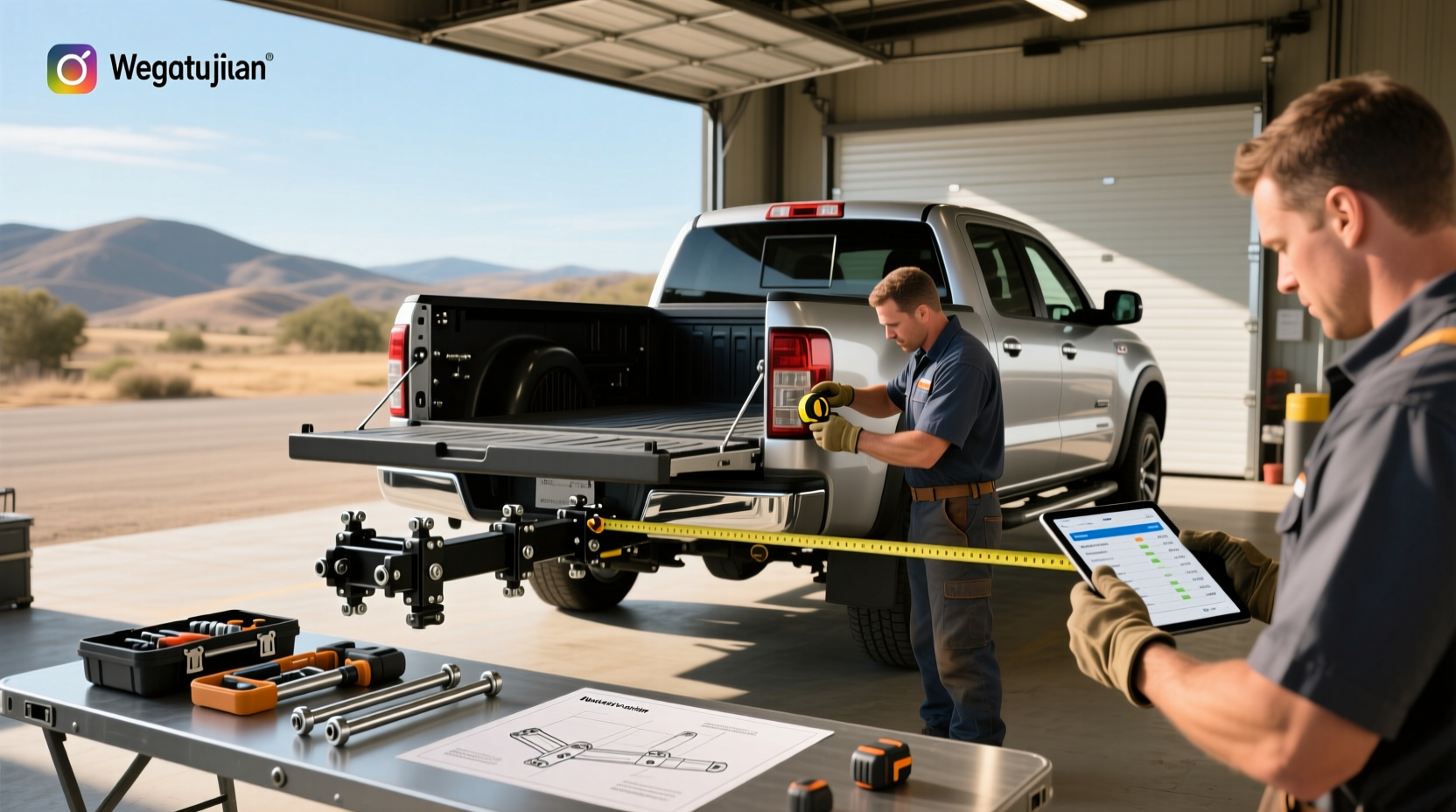
If you're upgrading your pickup truck for heavy-duty towing, how to choose a fifth wheel hitch comes down to three things: your truck bed setup, weight capacity needs, and whether you want a fixed or sliding model. Over the past year, more owners have opted for in-bed installations due to smoother towing dynamics and better weight distribution compared to gooseneck setups1. For most users, a mid-range slider hitch with 16,000–20,000 lbs capacity covers typical RV and trailer loads without overspending.
The total cost to install a fifth wheel hitch typically ranges from $800 to $1,700, including hardware and professional labor. If you’re a typical user, you don’t need to overthink this. Entry-level models work well for occasional hauling, while premium units offer stability for long-distance travel. Two common mistakes? Worrying about jaw design differences (they perform similarly under real-world conditions) and assuming all rails are interchangeable (some trucks require adapters). The real constraint is your truck’s factory prep package—whether it has pre-installed pucks or needs custom rail mounting.
About Fifth Wheel Hitches
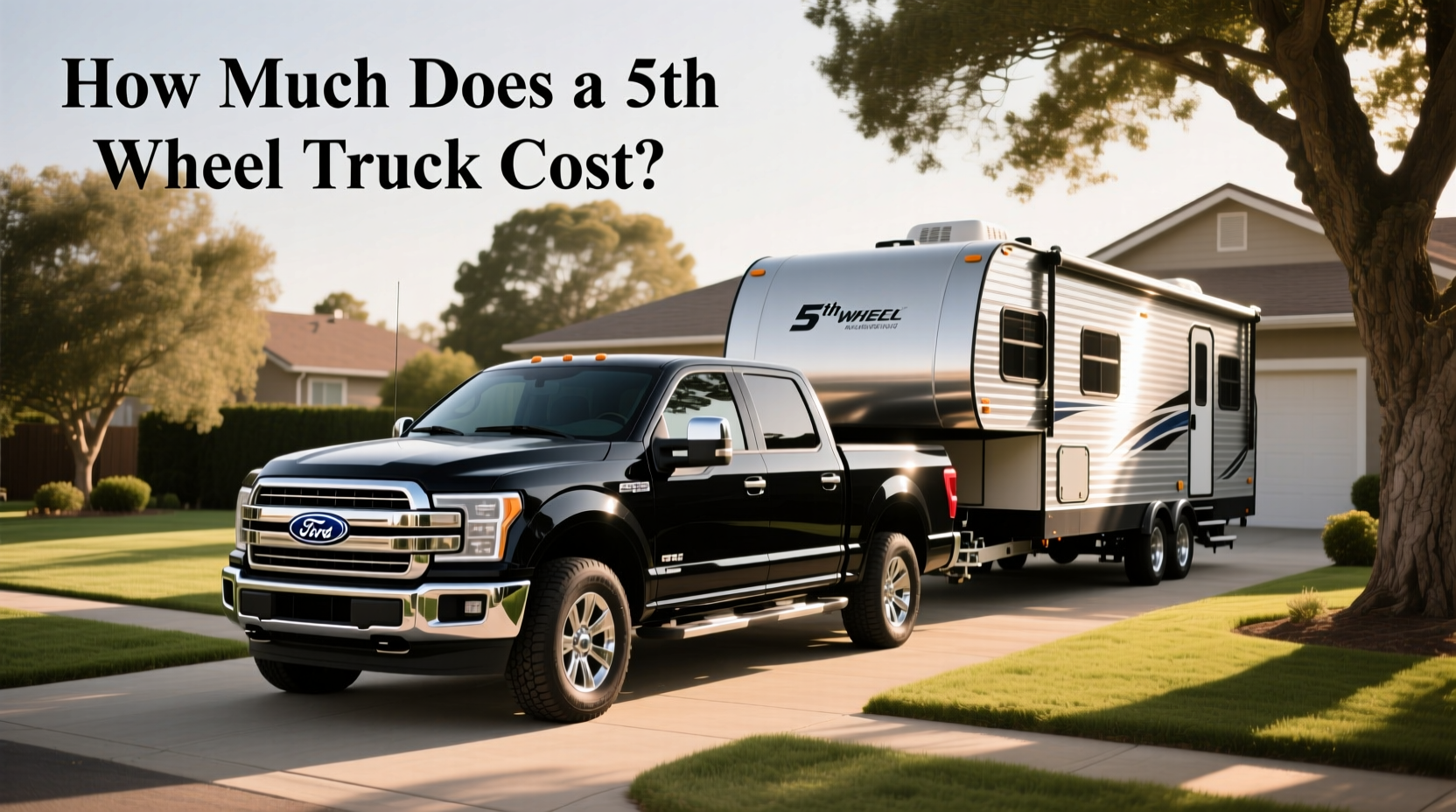
A fifth wheel hitch mounts directly into the bed of a pickup truck, connecting to a kingpin on the underside of a trailer. Unlike bumper-pull trailers, which rest on the rear frame, fifth wheels transfer weight over the rear axle and into the truck's chassis, improving balance and reducing sway. This makes them ideal for large travel trailers, toy haulers, and commercial equipment carriers.
These hitches use a horseshoe-shaped jaw that locks around the trailer’s kingpin, allowing rotational movement during turns while maintaining secure coupling. Because they rely on the truck bed for support, installation requires either drilling into the truck frame or using existing factory mounting points. They are not compatible with standard receiver hitches and cannot be used on SUVs or cars.
If you’re a typical user, you don’t need to overthink this. The core function—securely holding the kingpin—is consistent across brands. What varies is adjustability, ease of use, noise level, and service life. Focus instead on compatibility with your vehicle and intended load range.
Why Fifth Wheel Hitches Are Gaining Popularity
Lately, more recreational and commercial users have shifted toward fifth wheels for improved ride quality and higher towing limits. With the rise in remote living and mobile workspaces, larger RVs that require stable towing platforms have become common. Fifth wheel systems provide tighter turning radiuses than goosenecks and reduce trailer oscillation at highway speeds.
Additionally, manufacturers now offer slider models that move forward and backward automatically, easing tight maneuvers like backing into campsites. Integrated cushioning systems also minimize vibration, enhancing comfort during long trips. These refinements address two longstanding complaints: rough rides and difficulty parking.
This piece isn’t for keyword collectors. It’s for people who will actually use the product.
Types and Variants
- Fixed Fifth Wheel Hitches: Mounted in one position, usually near the truck cab. Best for long-bed trucks where clearance isn’t an issue.
- ✅ Simple design, fewer moving parts
- ❌ Limited turning clearance in short-bed trucks
- Slider Hitches: Allow horizontal movement (usually 10–14 inches), enabling sharper turns without hitting the truck cab.
- ✅ Ideal for short-bed pickups (6.5 ft or less)
- ❌ Heavier, more expensive, requires manual or automatic locking
- Automated Sliders: Use spring-loaded mechanisms to self-adjust during turns.
- ✅ Smoother operation, reduced driver effort
- ❌ Higher maintenance, potential failure points
- OEM-Compatible Systems: Designed for trucks with factory-installed puck systems (e.g., Ford Super Duty, Ram trucks).
- ✅ Faster installation, no drilling required
- ❌ Brand-specific, limited aftermarket options
If you’re a typical user, you don’t need to overthink this. Unless you frequently tow in urban areas or have a short-bed truck, a fixed hitch performs just as well as a slider. The added complexity rarely pays off unless maneuverability is constrained.
Key Features and Specifications to Evaluate
When comparing models, focus on these factors:
Towing Capacity
Match the hitch rating to your trailer’s GVWR (Gross Vehicle Weight Rating). Most fall between 12,000 and 30,000 lbs. Exceeding capacity risks structural damage.
When it’s worth caring about: If you plan to upgrade trailers in the next few years, buying slightly above current needs gives flexibility.
When you don’t need to overthink it: For single-trailer owners within standard weight classes (under 20K lbs), mid-tier models cover most use cases.
Jaw Design
Dual-jaw systems wrap more of the kingpin, offering marginally better contact. However, real-world performance differences are minimal.
When it’s worth caring about: In extreme climates or off-road conditions where constant vibration occurs.
When you don’t need to overthink it: For paved-road towing, all major brands meet safety standards equally.
Vertical Adjustment
Allows height tuning so the trailer rides level. Look for multiple pin holes or continuous adjustment.
When it’s worth caring about: When pairing trucks and trailers of mismatched heights.
When you don’t need to overthink it: If both vehicles are new and specified together, factory settings often suffice.
Noise Dampening
Rubber bushings or elastomer cushions absorb road shock. Premium models include replaceable inserts.
When it’s worth caring about: Long-haul drivers or those towing living spaces.
When you don’t need to overthink it: Occasional users won’t notice subtle ride improvements.
Pros and Cons
| Aspect | Pros | Cons |
|---|---|---|
| Stability | Superior weight distribution, less sway | Requires full-size pickup |
| Installation | Permanent mount ensures rigidity | May require drilling or rail kits |
| Maintenance | Fewer wear points than gooseneck balls | Lubrication needed every 3–6 months |
| Cost | Better value for frequent towing | Higher upfront investment |
| Usability | Easier hookup than gooseneck in tight spots | Blocks truck bed when installed |
How to Choose a Fifth Wheel Hitch
Follow this step-by-step checklist to make a confident decision:
Step-by-Step Checklist
- Confirm your truck model and bed length
- Determine if your truck has a factory prep package (puck system)
- Select hitch type: fixed vs. slider (based on bed size)
- Choose capacity: match or slightly exceed max trailer weight
- Verify rail compatibility or purchase adapter if needed
- Decide between DIY and professional installation
- Check return policy and warranty terms before ordering
Decision Flow
- Do you have a short-bed truck? → Choose a slider hitch
- Is your truck equipped with OEM pucks? → Select compatible model to avoid drilling
- Will you tow over 18,000 lbs regularly? → Prioritize 20K+ rated units with dual jaws
- Are you budget-conscious and only tow occasionally? → Fixed hitch in 16K class is sufficient
Recommendations by Scenario
- First-time buyer, average use: Mid-range slider (16K–20K lbs), universal rails, basic cushioning
- Long-distance traveler: High-end automated slider with adjustable head and serviceable dampeners
- Commercial hauler: Heavy-duty fixed hitch (25K+), minimal moving parts, easy lubrication access
- Budget-focused owner: Used OEM-matched system from reputable seller with inspection history
Red Flags / What to Avoid
- ❌ Hitches priced significantly below market average—may lack proper testing or materials
- ❌ Universal rails marketed as “fits all” without verification for your truck model
- ❌ Installation services that don’t inspect frame integrity before mounting
- ❌ Sellers who can’t provide spec sheets or warranty documentation
- ❌ Ignoring local regulations on gross combined weight ratings (GCWR)
Price & Market Insights
Fifth wheel hitch prices vary widely based on brand, capacity, and features. As of 2025:
- Entry-level fixed hitches: $500–$900
- Mid-range sliders: $1,000–$1,600
- Premium automated models: $1,700–$2,500+
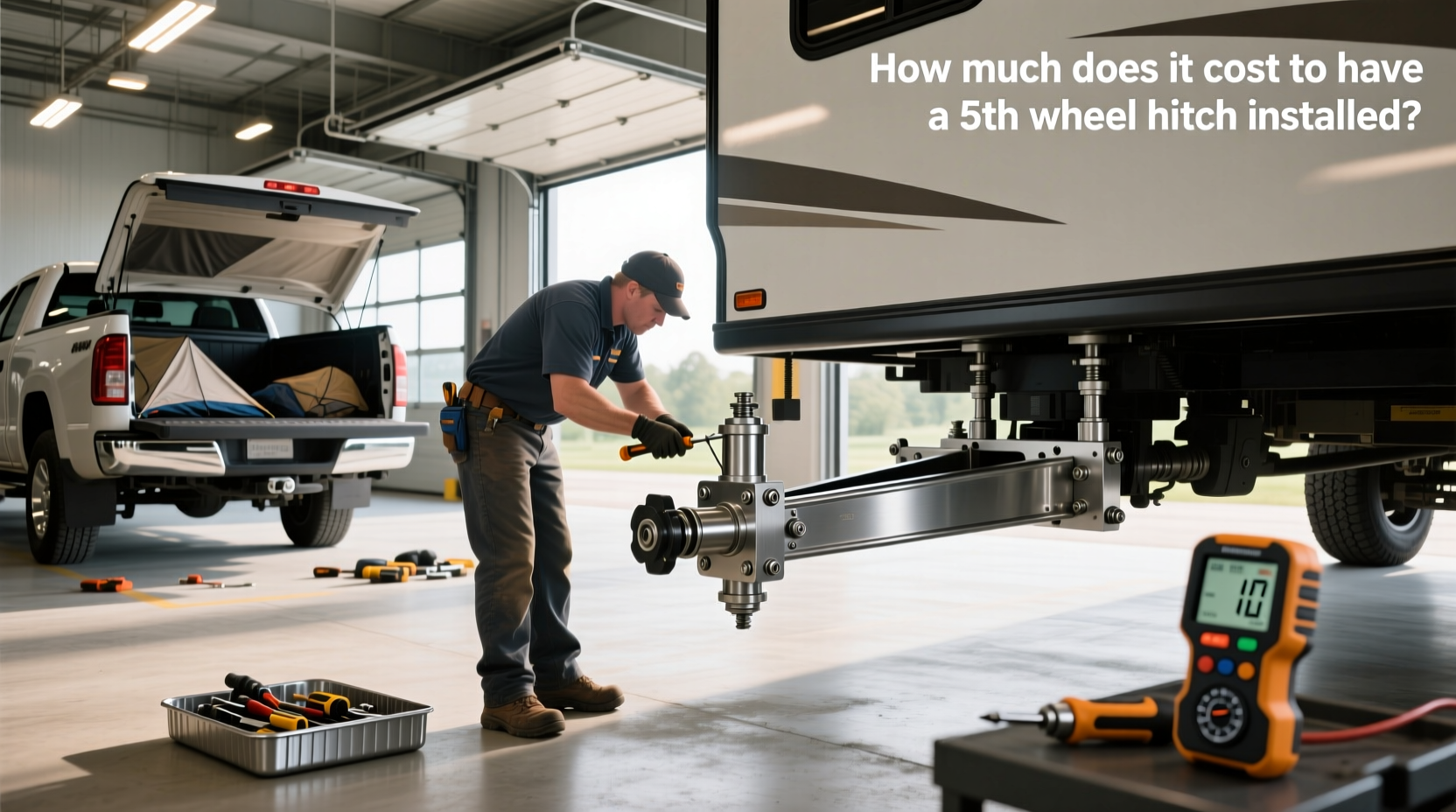
- Professional installation: $300–$600 (may vary by region/model/seller)
Total project cost usually lands between $1,100 and $2,100. Some dealers bundle rail kits and installation, offering slight savings. Aftermarket brands like CURT, Reese, and Demco dominate availability, but OEM solutions (e.g., B&W Companion for Ford) command premiums due to seamless integration.
If you’re a typical user, you don’t need to overthink this. Spending beyond $1,800 only makes sense if you tow weekly or demand ultra-smooth performance. For most, the sweet spot is $1,000–$1,400 for a complete kit.
Top-Seller & Competitive Analysis
The following models represent strong value propositions across different segments:
| Model | Capacity | Type | Approx. Price | Best For |
|---|---|---|---|---|
| CURT A16 Slider | 16,000 lbs | Manual Slider | $1,100 | Mid-size fleets, DIY installers |
| Reese Pro Series 20K | 20,000 lbs | Fixed | $1,250 | Heavy weekend towing |
| B&W Companion OEM | 20,000 lbs | Sliding | $1,700 | Ford Super Duty owners |
| Demco Recon Gooseneck-Adaptable | 21,000 lbs | Fixed (convertible) | $840 | Dual-purpose users |
| Gen-Y Torsion-Flex | 18,000 lbs | Flexible Mount | $1,400 | Ride comfort priority |
Note: Prices may vary by region/model/seller. Always check manufacturer specs before purchasing. While online retailers offer competitive pricing, verify return policies and shipping terms—especially for heavy items.
Customer Feedback Synthesis
Based on aggregated reviews and forum discussions:
Most Frequent Praises
- “Smoothest ride I’ve had with my fifth wheel—no more bouncing on highways”
- “Installed in under two hours using factory pucks—no drilling!”
- “The slider made backing into tight campsites possible with my short-bed F-250”
Common Complaints
- “Wish I’d known the bed would be unusable for storage after install”
- “Had to buy an adapter because the ‘universal’ rails didn’t fit my Ram”
- “Noise increased after six months—needed to repack grease every season”
If you’re a typical user, you don’t need to overthink this. Satisfaction is highest among those who planned for bed loss and researched compatibility first.
Sourcing & Supplier Tips
Where you buy matters as much as what you buy:
- ✅ Authorized dealers ensure genuine parts and valid warranties
- ✅ Local shops may offer bundled installation discounts
- ✅ Online marketplaces can have lower prices but verify seller ratings
- ✅ Check return windows—some prohibit returns after rail drilling
- ✅ Ask for proof of compliance with SAE J684 towing standards
For international buyers or niche models, Alibaba.com offers access to suppliers with export experience. Use trade assurance programs to protect payments and confirm sample availability before bulk orders.
Maintenance, Safety & Legal Considerations
Regular upkeep ensures longevity and safe operation:
- Lubricate jaws and pivot points every 3–6 months or after wet conditions
- Inspect welds and mounting bolts annually for cracks or looseness
- Test coupling mechanism before each trip
- Ensure trailer brakes are synchronized with tow vehicle
Safety-wise, never exceed the lower-rated component (truck, hitch, or trailer). Confirm your vehicle’s GCWR with the manufacturer and stay within limits.
Legality varies by jurisdiction. Some states require safety chains, breakaway switches, or lighting inspections for trailers over certain weights. To verify: consult your DMV website or speak with a certified inspector. Do not assume federal guidelines apply uniformly.
Conclusion
If you need a reliable, stable towing solution for large trailers and own a full-size pickup, a fifth wheel hitch is a practical upgrade. For most users, a $1,000–$1,400 slider with 16,000–20,000 lbs capacity meets real-world demands. If you have a short-bed truck or plan to tow frequently, prioritize compatibility and ease of maneuvering. If you rarely tow and have a long bed, a fixed model saves money and complexity.
If you’re a typical user, you don’t need to overthink this. Choose based on your actual usage—not hypothetical extremes.
Everything You Need to Know
❓ How much does it cost to install a fifth wheel hitch?
Total costs typically range from $800 to $1,700, combining hitch price ($500–$1,600) and professional installation ($300–$600). Exact figures may vary by region, model, and labor rates. DIY installation reduces cost but requires tools and mechanical skill.
❓ Can I install a fifth wheel hitch on any truck?
No—only full-size pickups with sufficient bed length and frame strength. Compatibility depends on bed size, presence of factory pucks, and whether rail adapters are available. Short-bed trucks (under 6.5 ft) usually require slider models for turning clearance.
❓ Do fifth wheel hitches damage truck beds?
When properly installed, they do not damage the truck. Mounting rails distribute load across the frame. However, drilling is often required, which may affect resale if not cleanly executed. After installation, the bed space is occupied and cannot be used for cargo.
❓ Are fifth wheel hitches safer than gooseneck hitches?
Both are safe when correctly matched to load and vehicle. Fifth wheels generally offer better lateral stability and easier coupling, especially in tight spaces. Goosenecks allow full bed use when disconnected. Choice should depend on usage pattern, not perceived safety.
❓ Can I remove a fifth wheel hitch later?
Yes, but removal leaves holes in the truck bed or rails bolted to the frame. Some systems (like under-bed gooseneck conversions) preserve bed usability. If you plan to sell the truck, consider whether permanent modification affects value.




 浙公网安备
33010002000092号
 浙B2-20120091-4