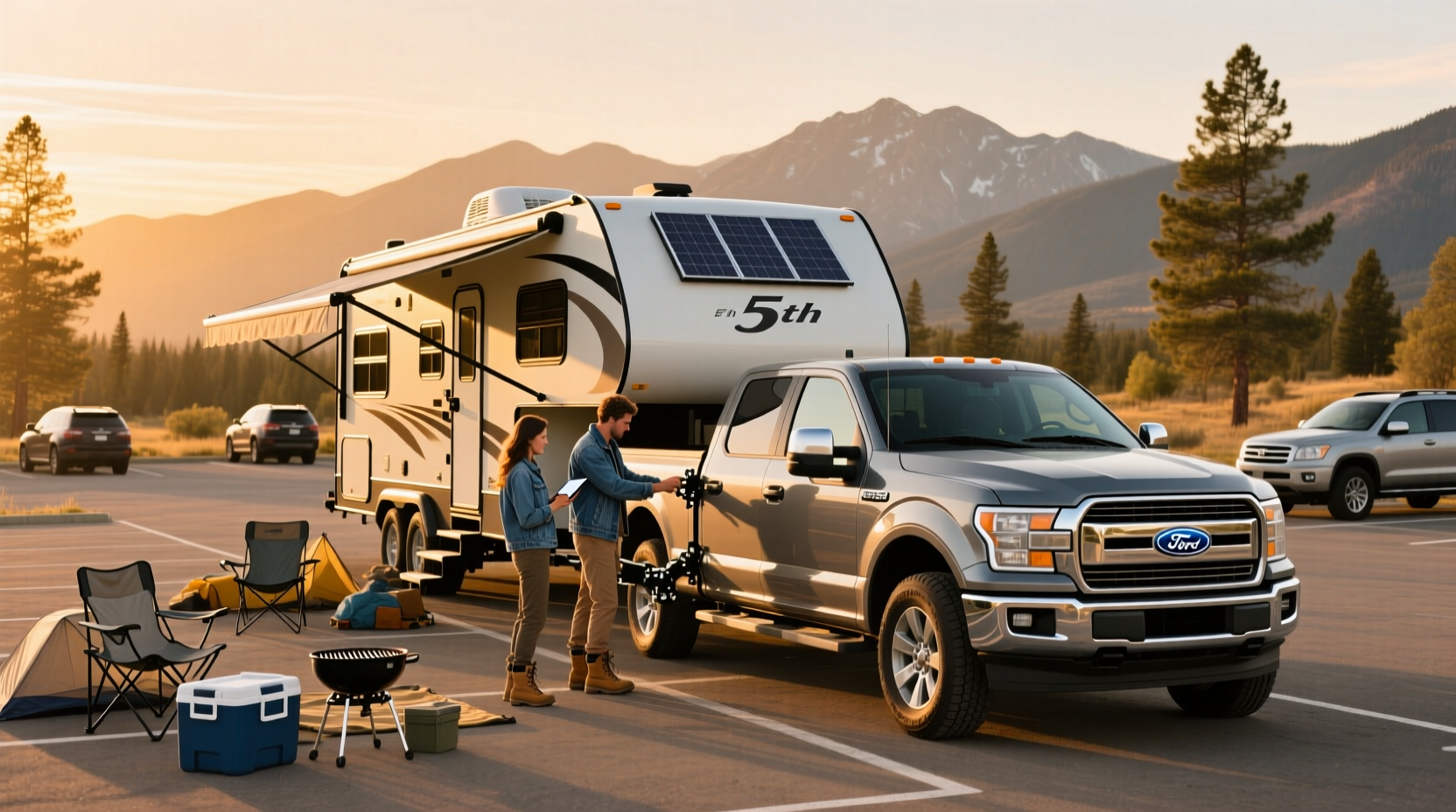
Short introduction
If you’re moving a large RV or heavy equipment, renting a 1-ton pickup like a Ford F-350 or Chevrolet Silverado 3500HD with a factory-installed 5th wheel hitch is your most reliable option. Over the past year, demand for these trucks has risen due to cross-country relocations and seasonal RV migrations. When choosing a 5th wheel pickup truck rental, focus on three things: confirmed hitch compatibility, verified towing capacity above your trailer’s weight, and whether you need a Commercial Driver's License (CDL) based on combined gross weight. If you’re a typical user, you don’t need to overthink this — skip rental agencies that don’t explicitly list the hitch type and avoid one-way drop fees without checking return terms.
Understanding how to choose 5th wheel pickup truck rental comes down to matching real-world constraints — not specs on paper. This piece isn’t for keyword collectors. It’s for people who will actually use the product.
About 5th wheel pickup truck rental
A 5th wheel pickup truck rental involves leasing a heavy-duty truck equipped with a specialized hitch mounted in the bed, designed to connect with the kingpin of a 5th wheel trailer. Unlike standard ball hitches used for smaller trailers, this system provides superior stability and weight distribution, making it essential for towing large recreational vehicles (RVs), horse trailers, or construction equipment.
These rentals are typically offered by industrial equipment companies rather than traditional car rental firms. The trucks involved are usually 3500-series models — commonly referred to as “1-ton” pickups — including dual rear wheel (dually) configurations for added load support. While some personal vehicles can be retrofitted with adapters, renting a purpose-built truck eliminates installation risks and ensures compliance with safety standards.
Why 5th wheel pickup truck rental is gaining popularity
Lately, more individuals are opting to rent instead of own due to rising vehicle costs and infrequent usage. With remote work becoming normalized, many are relocating seasonally or transporting RVs across states without committing to long-term ownership of a heavy-duty tow vehicle.
This shift has increased visibility for 5th wheel pickup truck rental services, especially among retirees, DIY movers, and small contractors. Additionally, improved availability through national rental providers has made access easier outside major urban centers. If you’re a typical user, you don’t need to overthink this — the infrastructure now supports short-term, high-capacity towing needs better than ever before.
Types and variants
Gas-Powered 1-Ton Pickup
Ideal for moderate hauling tasks within local ranges. These trucks offer lower upfront rental rates and wider availability.
- Pros: Lower fuel cost (in some regions), simpler maintenance, quieter engine
- Cons: Lower towing capacity (~18,000 lbs), reduced durability under sustained load
Diesel-Powered 1-Ton Pickup
Built for extended hauls and maximum payload. Diesel engines dominate when reliability and torque matter most.
- Pros: Higher towing range (20,000–27,000 lbs), better fuel economy under load, longer engine life
- Cons: Higher rental price, potential emissions restrictions in certain areas
Ford F-350 / Chevrolet Silverado 3500HD
Top-tier full-size dually models capable of up to 36,900 pounds of towing when properly configured.
- Pros: Highest towing specs, widely supported service network, crew cab comfort
- Cons: Expensive daily rate, challenging maneuverability in tight spaces
✅ When you don’t need to overthink it: For flat routes under 200 miles with a trailer under 15,000 lbs, gas-powered models perform adequately.
Key features and specifications to evaluate
Renting the right truck means verifying technical alignment with your trailer and route. Prioritize these factors:
- Towing Capacity: Must exceed the fully loaded weight of your trailer. Check manufacturer specs directly — do not rely on verbal assurances from rental agents.
- Hitch Type: Confirm it's a true 5th wheel hitch, not just a gooseneck setup unless an adapter is included. Some trucks come with rails pre-installed but no actual hitch head.
- Cab Configuration: Crew cabs provide space for passengers; regular cabs may limit comfort on long trips.
- Drivetrain: 4WD enhances control in adverse conditions but adds cost and complexity if unused.
- Fuel Range: Diesel models often have larger tanks, important for rural highways where refueling options are sparse.
If you’re a typical user, you don’t need to overthink this — prioritize confirmed hitch presence and verified towing margin over minor feature differences.
✅ When you don’t need to overthink it: Your trailer weighs less than 18,000 lbs and your route stays on interstates.
Pros and cons
Advantages
- Greater towing stability compared to conventional hitches
- No need to modify your personal vehicle
- Access to latest-model trucks with modern safety tech
- Suitable for one-time moves or temporary projects
Drawbacks
- Potential CDL requirement if combined GVWR exceeds 26,001 lbs
- Limited availability at standard rental counters
- One-way drop fees can double total cost
- Learning curve for inexperienced drivers
How to choose a 5th wheel pickup truck rental
Step-by-step checklist
- Measure your trailer’s dry weight and add 1,500–2,000 lbs for cargo and fluids.
- Verify required towing capacity exceeds that number by at least 10%.
- Contact rental providers to confirm 5th wheel hitch is installed and functional.
- Ask whether the quote includes insurance coverage for trailer damage.
- Determine if a CDL is needed — calculate combined GVWR of truck and trailer.
- Review return policy, especially for one-way rentals.
- Inspect the vehicle in person: test brakes, lights, and hitch mechanism.
Decision flow
- If your trailer is under 18,000 lbs → consider gas-powered 1-ton pickup
- If over 25,000 lbs or mountainous terrain → choose diesel dually model
- If crossing state lines → confirm one-way availability and drop-off fees
- If unsure about licensing → request GVWR documentation and consult DMV guidelines
Recommendations by scenario
- Local move under 100 miles: Rent locally from United Rentals or similar provider; prioritize convenience.
- Cross-country RV relocation: Book early with national suppliers; opt for diesel for fuel efficiency and reliability.
- Contractor hauling equipment: Choose Ford F-350 or Silverado 3500HD with tool storage options.
Red flags / what to avoid
- Rental company refuses to provide written specs
- Vehicle listed as “heavy-duty” but lacks explicit hitch confirmation
- No clear breakdown of additional fees (cleaning, mileage, insurance)
- Verbal assurance of “it can pull anything” — always verify numbers
If you’re a typical user, you don’t need to overthink this — stick to documented capabilities, not marketing claims.
Price & market insights
Daily rates for 5th wheel pickup truck rentals vary significantly by region, duration, and model. Gas-powered 1-ton pickups may start around $150/day, while diesel dually models can reach $300+/day. One-way rentals often include substantial drop fees ($500+) unless part of a promotional program.
Prices may vary by region/model/seller. To get accurate pricing:
- Check United Rentals, Herc Rentals, or local commercial equipment dealers
- Request itemized quotes including taxes, insurance, and mileage limits
- Compare availability 2–4 weeks ahead of planned use
✅ When you don’t need to overthink it: Off-season local rental with flexible dates.
Top-seller & competitive analysis
National rental platforms have standardized offerings around leading OEM models. Below is a comparison of common rental choices:
| Truck Type | Key Features | Towing Capacity | Common Uses |
|---|---|---|---|
| 1-Ton Pickup (Gas) | Crew Cab, 4WD, Gas Engine | 18,000 lb. | Hauling materials, towing heavy-duty equipment |
| 1-Ton Pickup (Diesel) | Crew Cab, 4WD, Diesel Engine | 20,000–27,000 lb. | Extreme hauling, construction site work |
| Ford F-350 | Varies by model | Up to 36,900 lb. | Towing heavy equipment, RVs |
| Chevrolet Silverado 3500HD | Varies by model | Up to 36,900 lb. | Towing heavy equipment, RVs |
Data sourced from equipment rental providers such as 1. Availability depends on location and seasonal demand.
Customer feedback synthesis
Analysis of user discussions reveals recurring themes:
- Positive: High satisfaction with towing performance and ride stability when matched correctly. Customers appreciate crew cab space and modern braking systems.
- Negative: Most complaints stem from miscommunication about hitch inclusion, unexpected CDL requirements, and opaque one-way fees. Some report difficulty backing up due to lack of experience.
If you’re a typical user, you don’t need to overthink this — prepare questions in advance and insist on clarity before signing.
Sourcing & supplier tips
Start with national industrial rental companies like United Rentals or Herc Rentals, which maintain standardized fleets and online booking tools. Local RV dealerships sometimes partner with rental operators for seasonal demand. Always:
- Call ahead to verify hitch installation
- Request photos of the actual hitch setup
- Ask if they allow test runs or orientation sessions
- Check online reviews focusing on communication and transparency
This piece isn’t for keyword collectors. It’s for people who will actually use the product.
Maintenance, safety & legal considerations
Rented trucks should be mechanically sound, but inspect key components yourself: tires, brakes, lights, and hitch lock pins. Ensure the rental agreement covers roadside assistance.
Legally, if the combined Gross Vehicle Weight Rating (GVWR) of the truck and trailer exceeds 26,001 pounds, a Commercial Driver's License (CDL) is generally required in the U.S. 2. Verify your eligibility through your state’s DMV — do not assume exemptions apply.
To stay compliant:
- Obtain written GVWR values from the rental company
- Calculate total combined weight accurately
- Consult official transportation department resources
✅ When you don’t need to overthink it: Local move under 26,000 lbs combined weight.
Conclusion
If you need to tow a large 5th wheel trailer safely and legally, rent a 1-ton diesel dually with a confirmed factory-installed hitch and verify CDL requirements upfront. If your needs are lighter and local, a gas-powered 1-ton pickup suffices. If you’re a typical user, you don’t need to overthink this — focus on verified specs, not brand prestige or theoretical capabilities.
Frequently Asked Questions
- Do I need a special license to rent a 5th wheel pickup truck? Not necessarily — but if the combined GVWR of the truck and trailer exceeds 26,001 lbs, you’ll likely need a CDL to operate it legally. Confirm weights and check with your state DMV.
- Can I install a 5th wheel hitch on my own truck instead of renting? Yes, but it requires significant modification and investment. For one-time use, renting a compatible truck is safer and avoids potential frame damage.
- Are one-way 5th wheel truck rentals available? Some providers offer them, but expect high drop fees. Confirm terms early and compare total cost versus round-trip rentals.
- What happens if I damage the rental truck while towing? Review the insurance package carefully. Basic liability may not cover trailer-related incidents. Consider supplemental coverage if available.
- How far in advance should I book? For peak seasons (spring/summer), book 3–4 weeks ahead. Off-season or local rentals may be secured within a week.




 浙公网安备
33010002000092号
 浙B2-20120091-4