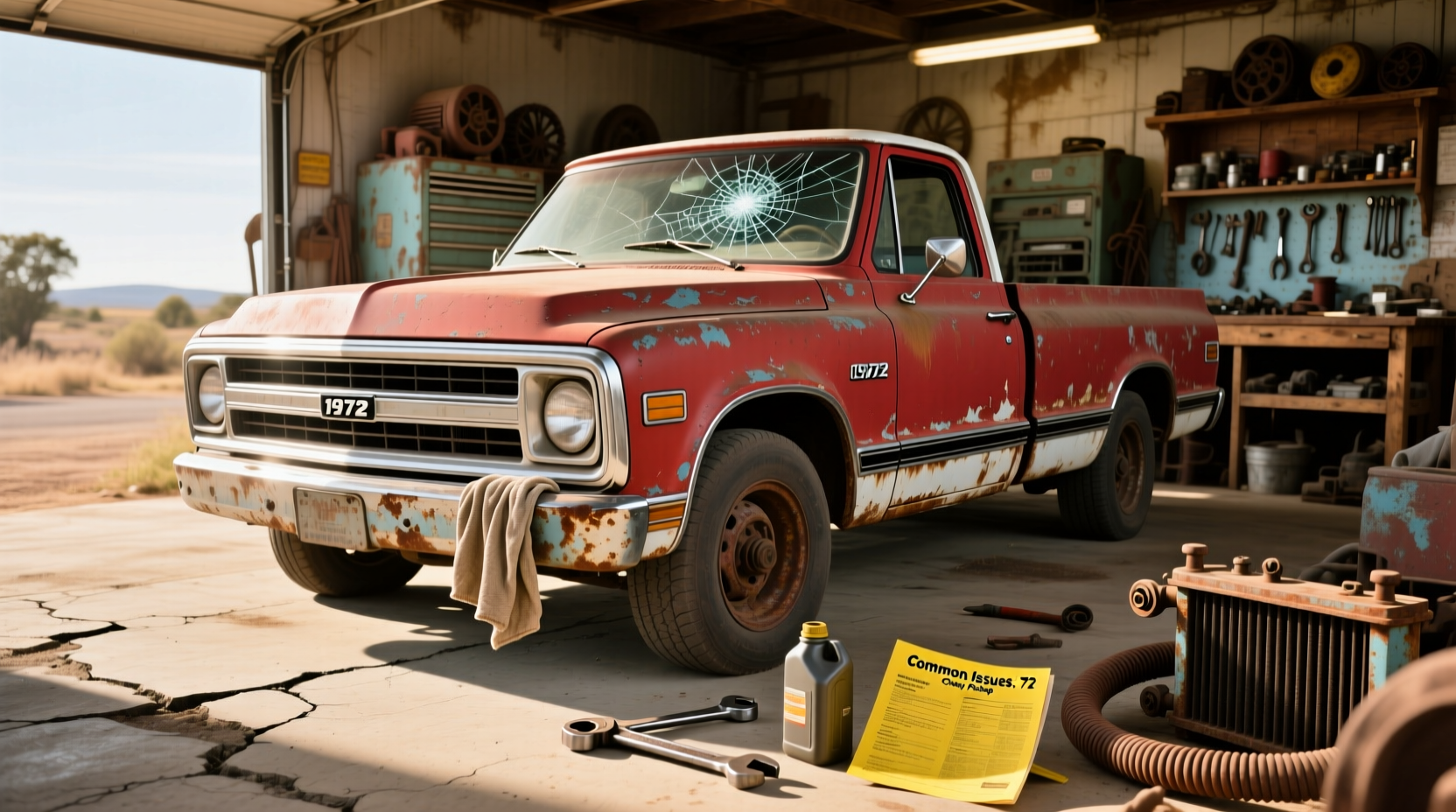
If you’re looking at a 1972 Chevrolet C10, here’s how to choose wisely: prioritize frame and floor pan condition over engine type, and assume electrical and carburetor work will be needed. What to look for in a ‘72 Chevy pickup? Rust in the cab corners, bed supports, and firewall is almost guaranteed—inspect with a flashlight and magnet. If you’re a typical user, you don’t need to overthink this. Most restorations start with metal repair, not performance upgrades. Over the past year, interest in 67–72 C/K trucks has grown, not because they’ve become more reliable, but because their clean lines and mod-friendly platforms suit both collectors and custom builders.
About the 1972 Chevrolet Pickup
The 1972 Chevrolet C10 is part of the fourth generation of GM’s C/K series, produced from 1967 to 1972. Known internally as the "Action Line," these trucks combined utilitarian design with growing consumer demand for comfort and style. Unlike earlier models, the 1967–72 series featured a fully boxed frame, independent front suspension (on two-wheel-drive models), and a more car-like驾驶 position. This generation ended a long production run before GM redesigned the platform in 1973.
Available in half-ton (C10), three-quarter-ton (C20), and one-ton (C30) configurations, the 1972 model year was the final version before emissions regulations and safety standards reshaped truck engineering. Engines ranged from inline-six units to big-block V8s like the 396 and 402 cubic inch options. While factory specs were modest by today’s standards, the mechanical simplicity makes repairs more accessible than on modern vehicles.
Why the 1972 Chevy Pickup Is Gaining Popularity
Lately, the 1972 C10 has seen renewed attention—not due to improved reliability, but because of cultural shifts in vehicle ownership. Restomodding, where classic bodies are paired with modern suspensions, fuel injection, and safety features, has made these trucks viable for daily use. Platforms like YouTube have demystified restoration processes, showing that even complex jobs like floor panel replacement or wiring harness swaps are within reach of dedicated owners.
This piece isn’t for keyword collectors. It’s for people who will actually use the product.
Another factor is availability. Compared to earlier or later generations, parts for 67–72 C/K trucks are widely reproduced. From sheet metal to gauges, reproduction suppliers have filled gaps left by discontinued OEM support. That doesn’t mean quality is consistent—but it does reduce project paralysis.
Types and Variants
The 1972 C/K series came in several configurations, each with trade-offs:
C10 (Half-Ton)
- Pros: Lighter weight, better fuel economy, easier to modify, most common body style
- Cons: Limited towing capacity (~5,000 lbs max), less stable when loaded
C20 (Three-Quarter-Ton)
- Pros: Heavier frame, larger brakes, better for towing or hauling
- Cons: Rarer, often command premium prices, heavier steering without power assist
Cheyenne Trim Level
- Pros: Factory chrome trim, upgraded interior, wood-grain dash (on some), higher resale
- Cons: More complex systems (e.g., dual fuel tanks), original parts harder to source
Stepside vs. Fleetside Bed
- Fleetside: Smooth-sided bed, easier to patch or replace panels, more popular
- Stepside: Fender-well extensions, iconic look, but harder to repair due to compound curves
If you’re a typical user, you don’t need to overthink this. The Fleetside C10 offers the best balance of usability and parts availability.
Key Features and Specifications to Evaluate
When assessing a 1972 C10, focus on these areas:
Engine Options
Common engines include:
- 250ci Inline-Six – Basic, durable, low power
- 307ci V8 – Smaller block, decent torque
- 350ci V8 – Most sought-after; widely supported
- 402ci Big Block – High output, but thirstier and rarer
When it’s worth caring about: If you plan to drive regularly or tow, the 350ci is the logical upgrade path. Originality matters only if you’re aiming for concours correctness.
When you don’t need to overthink it: Don’t pay a premium for a numbers-matching engine unless you’re building a show truck. Swaps are common and accepted.
Transmission
Options included 3-speed manual, 4-speed manual, and Turbo 350/400 automatics.
When it’s worth caring about: Automatics are preferred for street driving. Check fluid color and shift firmness.
When you don’t need to overthink it: Manual transmissions are simpler, but finding a clean shifter linkage may be harder.
Rear Axle Ratio
Ratios ranged from 3.08 to 4.10. Higher ratios improve acceleration and towing.
When it’s worth caring about: For highway cruising, 3.42–3.73 is ideal. Lower ratios increase engine RPM at speed.
When you don’t need to overthink it: Gears can be changed. Focus first on axle condition and leaks.
Pros and Cons
| Aspect | Pros | Cons |
|---|---|---|
| Design | Timeless styling, wide stance, easy to admire | Bulky for city driving, poor visibility rearward |
| Parts Availability | Reproduction panels, trim, and hardware widely available | Quality varies; some repro fenders don’t fit right |
| Mechanical Simplicity | No computers, easy diagnostics, DIY-friendly | Vacuum leaks, carb issues, points ignition require tuning |
| Rust Resistance | Boxed frame resists twisting | Poor factory rustproofing; cab corners, floors, rockers rot easily |
| Customization | Ideal for restomods, bagged builds, or rat rods | Value drops if poorly executed |
How to Buy a 1972 Chevy Pickup
Follow this checklist to avoid expensive mistakes.
Step-by-Step Checklist
- Inspect for rust: Check cab corners, firewall, rocker panels, and bed mounts. Use a magnet—thin metal won’t hold.
- Test drive: Listen for driveline clunks, brake drag, or transmission slippage.
- Check electrical system: Look for brittle wires, corroded connectors, non-functional gauges.
- Verify engine condition: Cold start quality, oil pressure, exhaust smoke.
- Review service history: Even partial records help identify chronic issues.
- Assess previous repairs: Are welds clean? Are patches homemade or OEM-style?
Decision Flow
Ask yourself:
- Will I drive it weekly? → Prioritize mechanical soundness over appearance.
- Am I restoring it? → Start with the best metal, not the nicest paint.
- Do I want to modify it? → Accept that stock components will be replaced.
Recommendations by Scenario
- Budget beginner: Look for a running 350ci C10 with minor rust. Expect $8,000–$12,000.
- Restoration project: Choose a complete truck with solid floors, even if non-running.
- Daily driver candidate: Ensure brakes, steering, and cooling system are updated.
Red Flags / What to Avoid
- "Barn find" with no documentation: Hidden damage is likely. Restoration costs can exceed value.
- Non-original engine without wiring harness: Indicates incomplete swap; future headaches.
- Repainted truck with closed doors: May be hiding rust or poor alignment.
- No title or salvage history: Legal complications possible. Verify VIN through state DMV.
Price & Market Insights
Prices vary significantly by region, condition, and modifications. A driver-quality C10 may sell for $10,000–$18,000, while restored examples reach $30,000+. Fleetside models generally cost more than Stepsides. Trucks with aftermarket suspensions or LS swaps often command premiums—but not always justified by build quality.
Market trends may vary by region/model/seller. In rust-belt states, trucks tend to have more corrosion but lower asking prices. In dry climates like Arizona or Texas, cleaner examples exist but at higher cost. Always verify seller claims with an independent inspection.
Top-Seller & Competitive Analysis
While no single "top-seller" exists in the classic truck market, certain traits correlate with faster sales:
- 350ci V8 with automatic transmission
- Fleetside bed
- Updated brakes or dual master cylinder
- Clear title and service history
Compared to similar-era Ford F-100s or Dodge Darts, the C10 benefits from broader aftermarket support. However, Ford models often have tighter tolerances in steering and suspension. Dodge trucks of this era suffer from lower parts availability.
| Model | Aftermarket Support | Rust Risk | Typical Price Range |
|---|---|---|---|
| 1972 Chevy C10 | ⭐⭐⭐⭐☆ | High | $10k–$30k+ |
| 1972 Ford F-100 | ⭐⭐⭐☆☆ | High | $9k–$25k+ |
| 1972 Dodge D100 | ⭐⭐☆☆☆ | Very High | $8k–$20k+ |
Customer Feedback Synthesis
Based on owner forums and community discussions:
Common Praises
- “Simple to work on—my son and I rebuilt the carb in a weekend.”
- “Gets compliments everywhere. Feels solid at highway speeds.”
- “After installing electronic ignition, starts every time.”
Frequent Complaints
- “Spent $3,000 on floor pans alone. Rust was much worse than advertised.”
- “Carb floods after shutdown. Adjusted float, still happens.”
- “Original heater box rotted out—no heat in winter.”
If you’re a typical user, you don’t need to overthink this. Most complaints stem from underestimating restoration scope, not inherent flaws in the design.
Sourcing & Supplier Tips
Buy from reputable repro parts suppliers like Classic Chevy Trucks, LMC Truck, or Year One. Compare fitment notes—some reproduction bed wood or door seals run slightly oversized. For hard-to-find items (e.g., correct gauge clusters), consider joining enthusiast forums or Facebook groups where members trade or locate NOS (New Old Stock).
When sourcing a complete truck, private sellers often offer better value than dealers, but lack warranties. Auctions (online or in-person) can yield deals, but inspect remotely via video call if possible.
Maintenance, Safety & Legal Considerations
Maintenance needs are predictable: tune-ups every 12,000 miles, brake inspections annually, and coolant flushes every two years. Points-style distributors require periodic adjustment; upgrading to electronic ignition reduces long-term hassle.
Safety upgrades worth considering:
- Seat belts (if absent)
- Power front disc brakes
- Dual-circuit master cylinder
- Improved lighting (LED bulbs in housings)
Legal requirements vary by state. Some jurisdictions require seat belts and functioning emissions equipment (even on classics). Confirm local regulations through your DMV website or a certified inspection station.
Conclusion
If you need a classic truck for weekend drives and light hauling, a 1972 C10 with a 350ci V8 and solid frame is a reasonable choice. If you’re chasing perfection, expect high costs and long timelines. If you’re a typical user, you don’t need to overthink this—start with the best metal you can afford, and upgrade systems as needed.
Everything You Need to Know
❓ What are common problems with the 1972 Chevy pickup?
The most frequent issues are rust in cab corners, floor pans, and bed mounts; vacuum leaks; carburetor tuning; and aging wiring. Brake systems often need rebuilding, and original heaters fail due to clogged cores or rotted ducts. These are manageable with routine maintenance and targeted repairs.
❓ What engine does a 1972 Chevy pickup have?
Factory engines included the 250ci inline-six, 307ci V8, 350ci small-block V8, and 402ci big-block V8. The 350ci is the most common today, either original or swapped in. Transmission pairings vary, but Turbo 350 automatics are frequent in V8 models.
❓ How much is a 1972 Chevy C10 worth?
Values range from $8,000 for a rough driver to over $30,000 for a professionally restored or restomodded example. Condition, engine type, and provenance affect price. Prices may vary by region/model/seller—always compare recent sales in your area.
❓ Is the 1972 C10 reliable for daily driving?
It can be, but only if properly maintained. Upgraded ignition, brakes, and cooling systems improve dependability. Be prepared for occasional stalls, slow starts in cold weather, and higher fuel consumption. Regular use prevents gaskets from drying out.
❓ Where should I look for rust on a 1972 Chevy truck?
Focus on cab corners (where A-pillar meets rocker), firewall behind heater box, floor pans near pedals, bed-to-frame mounts, and rear wheel wells. Use a magnet to test metal thickness—rust weakens steel and won't hold magnetic force. Don’t ignore the frame rails, especially near suspension mounts.




 浙公网安备
33010002000092号
 浙B2-20120091-4