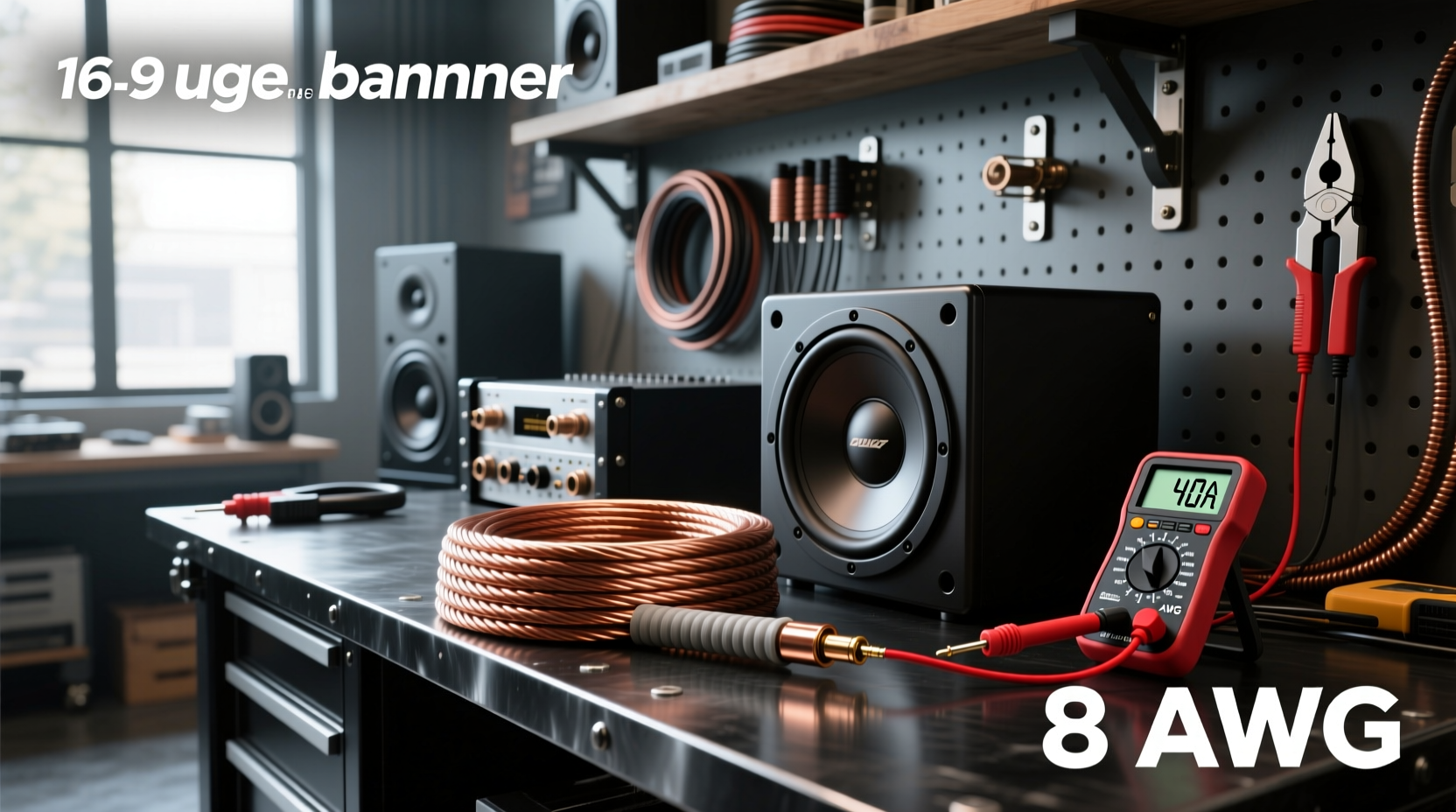
If you’re a typical user, you don’t need to overthink this. For most car audio setups drawing up to 40 amps—especially over short distances (under 10–15 feet)—8 AWG subwoofer wire made from oxygen-free copper (OFC) is more than sufficient. How to choose the right wire comes down to three things: material quality, run length, and actual current demand. Avoid copper-clad aluminum (CCA) if you're pushing high power; it can overheat under sustained 40A loads. If you're asking what to look for in subwoofer wiring, focus on pure copper, correct gauge for your amp’s draw, and clean terminations. This piece isn’t for keyword collectors. It’s for people who will actually use the product.
About 8 Gauge Subwoofer Wire
8 AWG (American Wire Gauge) refers to the thickness of electrical wire commonly used in car audio systems to deliver power from the battery to the amplifier or signal from the amp to the subwoofer. The lower the gauge number, the thicker the wire—and the more current it can safely carry. In recent years, 8 gauge has become a go-to choice for mid-power systems, balancing cost, flexibility, and performance.
In car audio, two types of wiring matter: power/ground cables (high-current DC from battery to amp) and speaker wires (AC signal from amp to sub). While both may use similar gauges, their load profiles differ. Power cables handle steady current; speaker wires deal with fluctuating signals. Using 8 AWG correctly depends on which role it plays and how much real-world current flows through it.
Why 8 Gauge Wire Is Gaining Popularity
Lately, more DIY car audio enthusiasts have turned to 8 AWG as a default option—not because amplifiers are getting weaker, but because component efficiency has improved. Over the past year, Class D amplifiers have become standard, delivering high RMS output with less current draw than older designs. That means a 1000W RMS mono block might pull only 80–90 amps at peak, making 8 AWG viable where thicker 4 AWG was once assumed necessary.
This shift reflects better engineering, not relaxed safety standards. As compact, efficient amps dominate the market, users are realizing that oversized wiring adds cost and complexity without benefit—unless they’re running extreme systems. The trend toward modular installations also favors 8 AWG: it’s easier to route through tight spaces, terminates cleanly, and works well with common fuse holders and distribution blocks.
Types and Variants
Not all 8 AWG wire is created equal. The key differences lie in materials and construction:
Oxygen-Free Copper (OFC)
- Pros: Highest conductivity, minimal resistance, handles 40–50A continuously in typical conditions, resists corrosion
- Cons: More expensive, heavier than alternatives
Copper-Clad Aluminum (CCA)
- Pros: Lower cost, lighter weight, widely available
- Cons: Up to 45% higher resistance than pure copper, prone to overheating under sustained load, may degrade faster at connection points
Tinned vs. Bare Copper
- Tinned: Coated with tin to resist moisture and oxidation—ideal for vehicles exposed to humidity or salt
- Bare: Slightly better conductivity but more vulnerable to corrosion over time
If you’re a typical user, you don’t need to overthink this: choose OFC tinned wire unless budget is extremely tight. CCA may work for low-duty cycles, but under continuous 40A load, especially over longer runs, it risks voltage drop and heat buildup.
Key Features and Specifications to Evaluate
When assessing 8 AWG subwoofer wire, these factors determine whether it’s truly suitable for a 40-amp system:
Conductor Material
Always verify if the wire is OFC or CCA. Marketing terms like “high-conductivity” or “premium copper” are vague. Look for explicit labeling. Pure copper conducts about 1.6 times better than aluminum, so even a thin aluminum core reduces effective capacity.
Wire Length
Length directly impacts voltage drop. For a 40-amp draw:
- Under 10 ft: 8 AWG OFC is generally safe
- 10–15 ft: Acceptable with minimal drop (~3%)
- Over 15 ft: Consider upgrading to 4 AWG to maintain stable voltage
Ampacity Rating
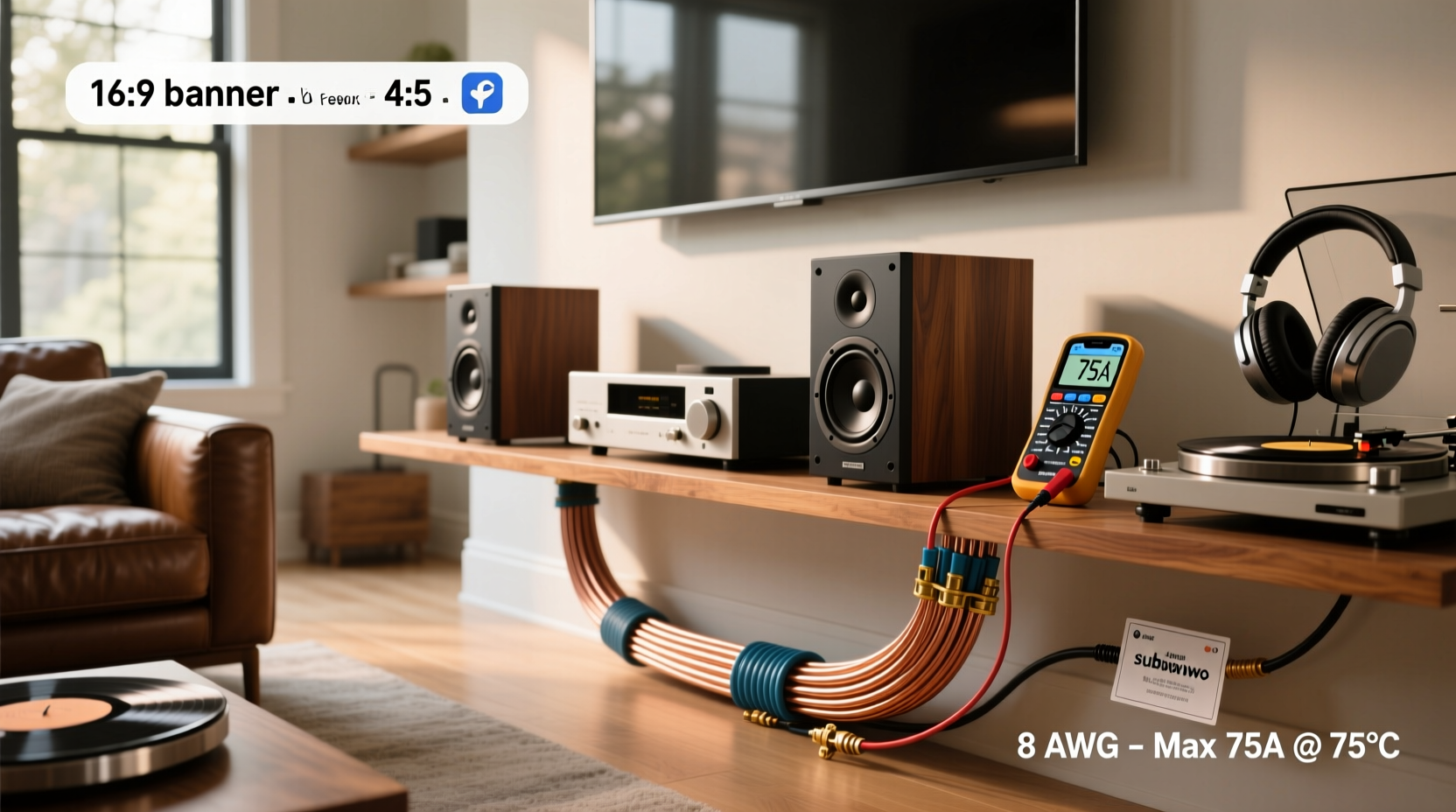
According to general electrical standards, 8 AWG copper wire is rated for 40–55 amps depending on insulation temperature 1. However, automotive environments allow higher transient ratings due to shorter duty cycles. Still, continuous draw near 40A pushes the limit, especially with poor ventilation or bundled cables.
Insulation Quality
Thick, abrasion-resistant jacketing prevents shorts. Look for UV resistance and flexibility across temperatures. Some kits include separate power, ground, and remote turn-on wires—all should match in quality.
Pros and Cons
| Aspect | Pros | Cons |
|---|---|---|
| Cost | Lower than 4 AWG, widely priced under $30 for 20-ft kit | High-end OFC versions can approach 4 AWG pricing |
| Installation Ease | Fits standard fuse holders, easy to route in most vehicles | May still require drilling or panel removal |
| Performance | Sufficient for 800–1200W RMS systems with proper setup | Risk of voltage drop in long or high-draw configurations |
| Durability | OFC lasts years with proper termination | CCA degrades faster, especially at terminals |
If you’re a typical user, you don’t need to overthink this: 8 AWG performs reliably when matched to realistic system demands. The biggest mistake isn’t choosing the wrong gauge—it’s ignoring installation quality.
How to Choose 8 Gauge Subwoofer Wire
Selecting the right wire isn’t just about matching numbers. Follow this step-by-step guide to avoid common pitfalls.
Step-by-Step Checklist
- Determine your amplifier’s maximum current draw: Check specs for fuse rating or calculate using:
Amps = Total RMS Power / 13.8V(nominal car voltage) - Measure the total run length: From battery positive to amp location, including ground path
- Select conductor type: Prefer OFC over CCA for any system above 500W RMS
- Verify insulation and flexibility: Should bend easily around corners without kinking
- Include proper fusing: Install an inline fuse within 18 inches of the battery
- Use correct terminals: Crimp and solder connections; avoid loose or corroded fittings
Decision Flow
- Is your amp drawing ≤40A? → Yes → Is run ≤10 ft? → Yes → 8 AWG OFC is acceptable
- Is your amp drawing >40A or run >15 ft? → Upgrade to 4 AWG
- Are you using CCA? → Only if draw is <30A and run <10 ft
Recommendations by Scenario
- Single 500–800W RMS sub amp: 8 AWG OFC, 10–15 ft run — ideal fit
- Dual amps totaling 1500W+: Use 4 AWG main feed, then split with distribution block
- Trunk-mounted battery: Shorter run allows thinner wire—but still use OFC
Red Flags / What to Avoid
- Vague labeling: “Ultra-conductive alloy” or “industrial-grade copper” without material disclosure
- Extremely low prices: Often indicates CCA disguised as copper
- No temperature rating: Insulation should be rated at least 105°C
- Poor strand count: Fewer, thicker strands reduce flexibility and increase fatigue risk
- Mismatched kits: Power wire in 8 AWG but ground in 10 AWG—always match gauges
Price & Market Insights
Prices for 8 gauge subwoofer wire kits vary significantly based on material, brand, and included components. A basic 20-foot OFC kit typically ranges from $25–$50. CCA versions may sell for $15–$30 but offer lower long-term value. Kits labeled as “tinned OFC” with heat-shrink connectors and proper ferrules command premium pricing.
Cost may vary by region/model/seller. Always check manufacturer specs before assuming equivalence between products. Premium brands emphasize strand count, insulation thickness, and corrosion resistance—features that improve longevity but aren’t always visible in photos.
Top-Seller & Competitive Analysis
While specific top-sellers change frequently, the competitive landscape shows a clear divide: budget-focused CCA kits versus performance-oriented OFC offerings. Below is a representative comparison of common types:
| Feature | Budget CCA Kit | Mid-Range OFC Kit | Premium Tinned OFC |
|---|---|---|---|
| Conductor | Copper-clad aluminum | Oxygen-free copper | Tinned oxygen-free copper |
| Max Current (est.) | 30–35A continuous | 45–50A | 50A+ |
| Typical Price (20 ft) | $15–$25 | $30–$45 | $50–$70 |
| Best For | Short runs, low-power systems | Most 800–1200W setups | High-reliability or humid environments |
| Red Flag Risk | High – mislabeled as copper | Low – reputable brands disclose specs | Very low |
If you’re a typical user, you don’t need to overthink this: spending $40 on a known-brand OFC kit beats risking system damage with a $20 mystery wire.
Customer Feedback Synthesis
Analysis of real-world reviews reveals consistent patterns:
Common Praises
- “Easy to install and made a noticeable difference in bass response”
- “No voltage sag even during heavy bass drops”
- “Tinned ends haven’t corroded after two winters”
Recurring Complaints
- “Wire felt thin—turned out to be CCA despite ‘copper’ in title”
- “Frayed during installation—strands were brittle”
- “Needed to buy separate connectors; kit was incomplete”
The most frequent issue isn’t performance—it’s mismatched expectations. Users who assume “8 gauge” guarantees quality often end up with CCA and blame the gauge, not the material.
Sourcing & Supplier Tips
When sourcing 8 AWG subwoofer wire:
- Buy from suppliers that clearly state conductor material (OFC or CCA)
- Look for product images showing cut ends—real copper has a bright pinkish hue
- Prefer vendors offering spec sheets or technical support
- Check return policies—some sellers don’t accept opened electrical items
- Verify shipping origin—imported kits may lack consistency
If you’re a typical user, you don’t need to overthink this: a reputable audio specialty brand is safer than a generic listing—even if pricier.
Maintenance, Safety & Legal Considerations
Proper maintenance ensures long-term reliability:
- Inspect connections annually for corrosion or looseness
- Ensure fuse is correctly rated (usually matches amp’s internal fuse)
- Avoid routing near sharp edges or heat sources
Safety risks include fire from undersized wire, short circuits, or improper fusing. Always disconnect the battery before working on power lines. While no universal law governs aftermarket audio wiring, some regions inspect vehicle modifications for electrical safety. To stay compliant:
- Confirm local regulations if modifying commercial vehicles
- Use flame-retardant insulation where possible
- Document upgrades in case of insurance claims
Conclusion
If you need reliable power delivery for a car audio system drawing up to 40 amps over moderate distances, 8 AWG OFC subwoofer wire is a practical and effective choice. If your run exceeds 15 feet or your system demands sustained current beyond 50 amps, upgrade to 4 AWG. This isn’t about chasing extremes—it’s about matching components to real needs. If you’re a typical user, you don’t need to overthink this: prioritize material quality over marketing, measure your run, and install it cleanly.
Everything You Need to Know
Is 8 gauge wire good for a 1000-watt amplifier?
Yes, 8 AWG wire is generally sufficient for a 1000W RMS amplifier if it’s built with oxygen-free copper and the power run is under 15 feet. Calculate actual current draw: 1000W ÷ 13.8V ≈ 72 amps peak, but average draw is lower. Use 4 AWG for longer runs or multiple amps.
Can 8 AWG handle 40 amps continuously?
Yes, 8 AWG copper wire is rated for 40–55 amps depending on conditions. In car audio applications with proper ventilation and short duty cycles, it safely handles 40A. Avoid CCA for continuous loads—use OFC instead.
What’s the difference between OFC and CCA wire?
OFC (oxygen-free copper) has higher conductivity and durability. CCA (copper-clad aluminum) is cheaper but has higher resistance and may overheat under high current. For any system above 500W, OFC is strongly preferred.
Does wire length really affect performance?
Yes. Longer runs increase resistance, causing voltage drop. For 40-amp loads, keep 8 AWG runs under 15 feet. Beyond that, upgrade to 4 AWG to maintain stable voltage at the amplifier.
Do I need tinned subwoofer wire?
Tinned wire resists corrosion and is recommended for coastal areas or vehicles exposed to moisture. It costs more but improves longevity. For dry climates, bare OFC is acceptable.




 浙公网安备
33010002000092号
 浙B2-20120091-4