Short Introduction
If you're asking how to choose an 8 inch ported subwoofer box or wondering what happens if a ported box is too small, here's the key insight: always match the enclosure volume to your subwoofer’s manufacturer specifications. An undersized ported box increases internal pressure, reduces cone excursion headroom, and raises the risk of mechanical damage like voice coil impact or surround tearing 1. It also detunes the port, leading to inefficient output, distorted bass, and potential warranty voiding. For most users seeking deep, efficient low-end response in vehicles with moderate space, a correctly tuned 8-inch ported box offers strong value—but only when built to spec. Avoid guessing; use design tools like WinISD or follow pre-designed plans based on your driver’s Thiele-Small parameters.
About 8 Inch Ported Subwoofer Box, What Happens If a Ported Box Is Too Small?
An 8 inch ported subwoofer box is a bass reflex enclosure designed to enhance low-frequency efficiency by using a tuned port (or vent) that resonates at a specific frequency. This resonance amplifies output near the tuning point, making the system more efficient than a sealed design of similar size. These enclosures are commonly used in compact cars where deeper bass extension is desired without requiring large drivers or excessive amplifier power.
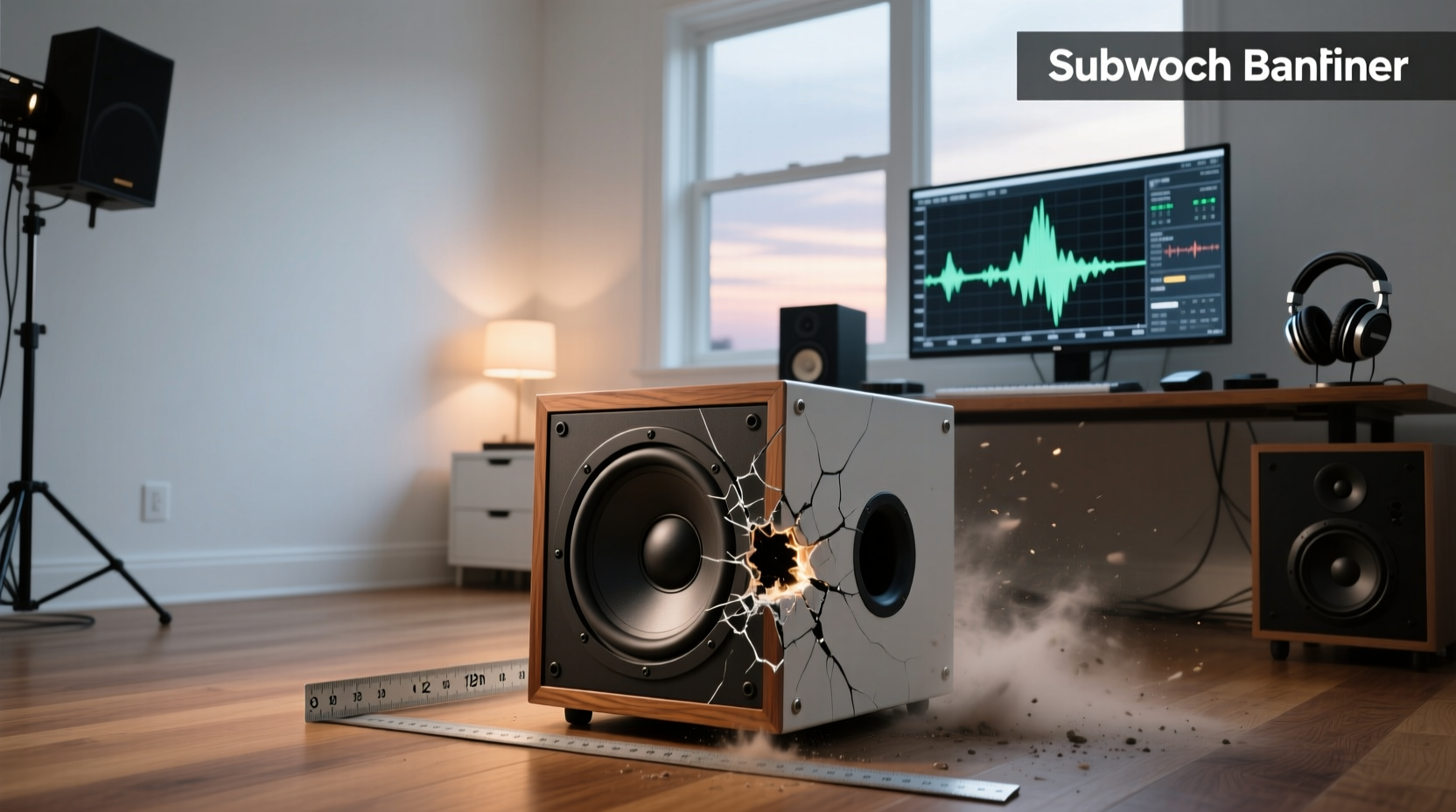
The question "what happens if a ported box is too small?" addresses a critical design flaw. When the internal volume falls below the manufacturer’s specified range, several interrelated problems occur. The air inside becomes overly pressurized, stiffening the suspension and reducing the driver’s ability to move freely. This not only limits maximum linear excursion but also shifts the port tuning higher than intended, resulting in a peaky, less natural bass response. In practical terms, this means louder mid-bass but weaker sub-bass performance and increased likelihood of audible chuffing or mechanical failure under high drive levels.
Why 8 Inch Ported Subwoofer Box, What Happens If a Ported Box Is Too Small? Is Gaining Popularity
Despite their modest size, 8-inch ported subwoofers have gained traction among urban commuters and compact vehicle owners who want improved bass without sacrificing cargo space. Their popularity stems from advancements in motor strength and suspension design, allowing modern 8-inch drivers to perform closer to larger models when paired with optimized enclosures.
However, misinformation about “tightening” bass by reducing box size has led some DIYers to intentionally build undersized enclosures—often misunderstanding the trade-offs. While a slightly smaller box can increase damping and perceived punchiness, going too far compromises both sound quality and hardware safety. As online communities grow, discussions around what to look for in 8 inch ported subwoofer box, what happens if too small reflect rising awareness of proper alignment between driver characteristics and enclosure physics.
Types and Variants
There are several common configurations for 8-inch ported subwoofer boxes, each suited to different spatial and acoustic goals:
Single-Chamber Down-Firing Box ⚙️
- Pros: Compact footprint, easy installation under rear seats; downward-facing port minimizes direct obstruction.
- Cons: Requires clearance beneath the box; tuning precision depends on floor proximity.
Front-Ported Sealed-Back Chamber ✨
- Pros: Direct wave launch improves transient response; ideal for shallow trunk mounting.
- Cons: More sensitive to nearby objects blocking airflow; requires front clearance.
Dual-Vent Helmholtz Tuning 🔧
- Pros: Reduces port turbulence and chuffing noise; allows flexibility in port placement.
- Cons: More complex construction; takes up more internal volume due to multiple ports.
Bass-Reflex with Passive Radiator 📊
- Pros: Eliminates port noise; sleek appearance with no visible openings.
- Cons: Less predictable tuning; passive radiator adds cost and weight.
Key Features and Specifications to Evaluate
When evaluating options as part of your 8 inch ported subwoofer box buying guide, focus on these measurable criteria:
- Internal Volume (Net Airspace): Must match or closely follow the subwoofer manufacturer’s recommendation (usually in cubic feet). Even a 10–15% reduction can negatively affect performance 2.
- Port Tuning Frequency: Typically between 30–45 Hz for 8-inch subs. Lower tuning extends bass depth; higher tuning emphasizes punch.
- Port Dimensions & Shape: Rectangular or round ports must be sized to minimize air velocity and prevent chuffing. Use displacement calculations to adjust net volume accordingly.
- Construction Material: MDF (medium-density fiberboard) is standard; thickness should be at least ¾ inch to resist flexing.
- Bracing: Internal braces reduce panel vibration and improve clarity, especially important in larger or irregularly shaped boxes.
- Finish Options: Carpeted, painted, or vinyl-wrapped exteriors affect durability and aesthetics but not acoustics.
Pros and Cons
Advantages ✅
- Greater efficiency than sealed boxes—produces louder bass with same amplifier power.
- Better low-frequency extension when properly tuned.
- Ideal for music genres needing impactful bass (hip-hop, EDM).
Disadvantages ❗
- Larger physical size compared to sealed alternatives.
- Sensitive to dimensional inaccuracies—small errors in volume or port length affect tuning.
- Risk of port noise (chuffing) if airflow is restricted.
- Increased chance of mechanical damage if box is too small 3.
How to Choose 8 Inch Ported Subwoofer Box, What Happens If a Ported Box Is Too Small?
Follow this step-by-step decision framework to avoid common pitfalls:
- Identify Your Subwoofer Model: Obtain the make and model number. Check its datasheet for recommended ported enclosure volume and tuning frequency.
- Measure Available Space: Use a tape measure to determine maximum dimensions in your vehicle. Account for speaker depth, port clearance, and amplifier placement.
- Select Enclosure Type: Based on space constraints, choose down-firing, front-firing, or compact dual-port design.
- Verify Internal Volume: Ensure the chosen box provides the correct net airspace after subtracting speaker and port displacement.
- Use Simulation Software: Input your sub’s Thiele-Small parameters into WinISD or similar tool to simulate frequency response and optimize tuning 2.
- Avoid These Red Flags:
- Boxes marketed as “universal fit” without specifying volume.
- Premade enclosures significantly smaller than manufacturer recommendations.
- Ports that appear too narrow or short for the box size.
Price & Market Insights
Pricing for 8-inch ported subwoofer boxes varies widely based on materials, craftsmanship, and whether they’re custom-built or mass-produced:
- $40–$80: Basic prefab MDF boxes with carpet covering; often sold online or at auto parts stores.
- $80–$150: Higher-density wood, internal bracing, premium finishes; may include adjustable ports.
- $150+: Custom CNC-cut enclosures with advanced damping materials and aesthetic upgrades.
Prices may vary by region and retailer. Always compare net internal volume and construction quality rather than price alone. A cheaper box that doesn’t meet specs can cost more in damaged components later.
Top-Seller & Competitive Analysis
Below is a comparison of popular 8-inch ported enclosure types available in the market. Note: Always verify compatibility with your specific subwoofer model.
| Model Type | Internal Volume (ft³) | Tuning Freq (Hz) | Port Design | Price Range |
|---|---|---|---|---|
| Single 8" Front-Ported | 0.75 | 38 | Round PVC, 3" x 12" | $65 |
| Dual 8" Bandpass | 0.6 + 0.9 (chambers) | 45 (front chamber) | Integrated tunnel | $110 |
| Compact Downfire | 0.65 | 40 | Rectangular slot, 2.5" x 15" | $75 |
| Custom Low-Tuned | 1.0 | 32 | Dual round ports | $160 |
Customer Feedback Synthesis
Analysis of user reviews across forums and retail platforms reveals consistent themes:
Frequent Praises ✅
- “Much louder and deeper than my old sealed box.”
- “Easy installation with clear port orientation labels.”
- “Well-braced and feels solid—no rattling at high volume.”
Common Complaints ❗
- “Box was smaller than advertised—had to return it.”
- “Port produces chuffing noise below 40 Hz.”
- “No instructions included; had to look up tuning math myself.”
Sourcing & Supplier Tips
When purchasing or building an 8-inch ported subwoofer box:
- Buy Pre-Made: Reputable brands include MTX, Kicker, and Dual. Confirm internal volume before ordering.
- Custom Builders: Platforms like eBay or local audio shops offer made-to-measure enclosures. Request detailed build plans.
- Diy Kits: Available from specialty retailers; ensure all dimensions align with your driver’s requirements.
- Verification Steps: Upon delivery, measure internal dimensions and check for structural integrity. Verify port length and cross-sectional area match design specs.
Maintenance, Safety & Legal Considerations
While no major legal regulations govern subwoofer boxes themselves, some jurisdictions limit in-car sound pressure levels. Check local ordinances before installing high-output systems.
- Safety: Secure the enclosure to prevent movement during sudden stops. Avoid placing near fuel lines or electrical components.
- Maintenance: Inspect seals and joints periodically. Clean exterior surfaces to prevent moisture buildup.
- Compliance: Ensure any modifications do not interfere with factory safety systems (e.g., airbag sensors).
Conclusion
Choosing the right 8 inch ported subwoofer box requires balancing space, performance, and technical accuracy. The central issue—what happens if a ported box is too small—cannot be overlooked: reduced excursion headroom, increased distortion, mechanical stress, and potential warranty loss are real risks. If you need efficient, extended bass and have adequate space, a correctly sized and tuned ported box is a strong choice. However, if space is tight, consider a sealed enclosure instead of compromising with an undersized ported design. Always refer to manufacturer guidelines and use simulation tools to validate your setup before final assembly.
FAQs
- Can I use an 8-inch ported box in a small car?
- Yes, provided the enclosure fits within available space and maintains the recommended internal volume. Measure carefully and prioritize compact designs like down-firing or shallow-profile boxes.
- What happens if my ported box is slightly smaller than recommended?
- A minor deviation (within 10%) may raise tuning frequency and reduce low-end extension slightly. Larger reductions increase risk of damage and distortion. Stay as close to spec as possible.
- How do I calculate the correct port size?
- Use software like WinISD with your subwoofer’s Thiele-Small parameters. Input desired tuning frequency and box volume to determine optimal port length and diameter.
- Is a ported box better than sealed for 8-inch subs?
- It depends on your goal. Ported boxes are more efficient and extend lower, but require more space and precise tuning. Sealed boxes offer tighter response and work well in confined areas.
- Will a too-small ported box blow my subwoofer?
- Not instantly, but it increases mechanical stress. Under high power, the sub may exceed Xmax, causing voice coil rub or surround damage over time. It’s a reliability risk, not an immediate fuse-blow scenario.




 浙公网安备
33010002000092号
 浙B2-20120091-4