Short introduction
If you're deciding how to choose Tesla Model 3 interior ambient lighting, here’s the bottom line: most drivers don’t need more than the factory system. Over the past year, Tesla has improved its built-in RGB lighting with brightness controls and night-only mode via software updates 1. But if you want music sync, blind spot alerts, or segmented color effects, an aftermarket kit from brands like Enhance-auto or TESERY may be worth it. If you’re a typical user, you don’t need to overthink this. Stick with factory lighting unless you value advanced visual feedback or personalization. Key red flags: incompatible kits, poor wiring design, and DIY installations that risk damaging door trims.
About tesla model 3 interior ambient lighting
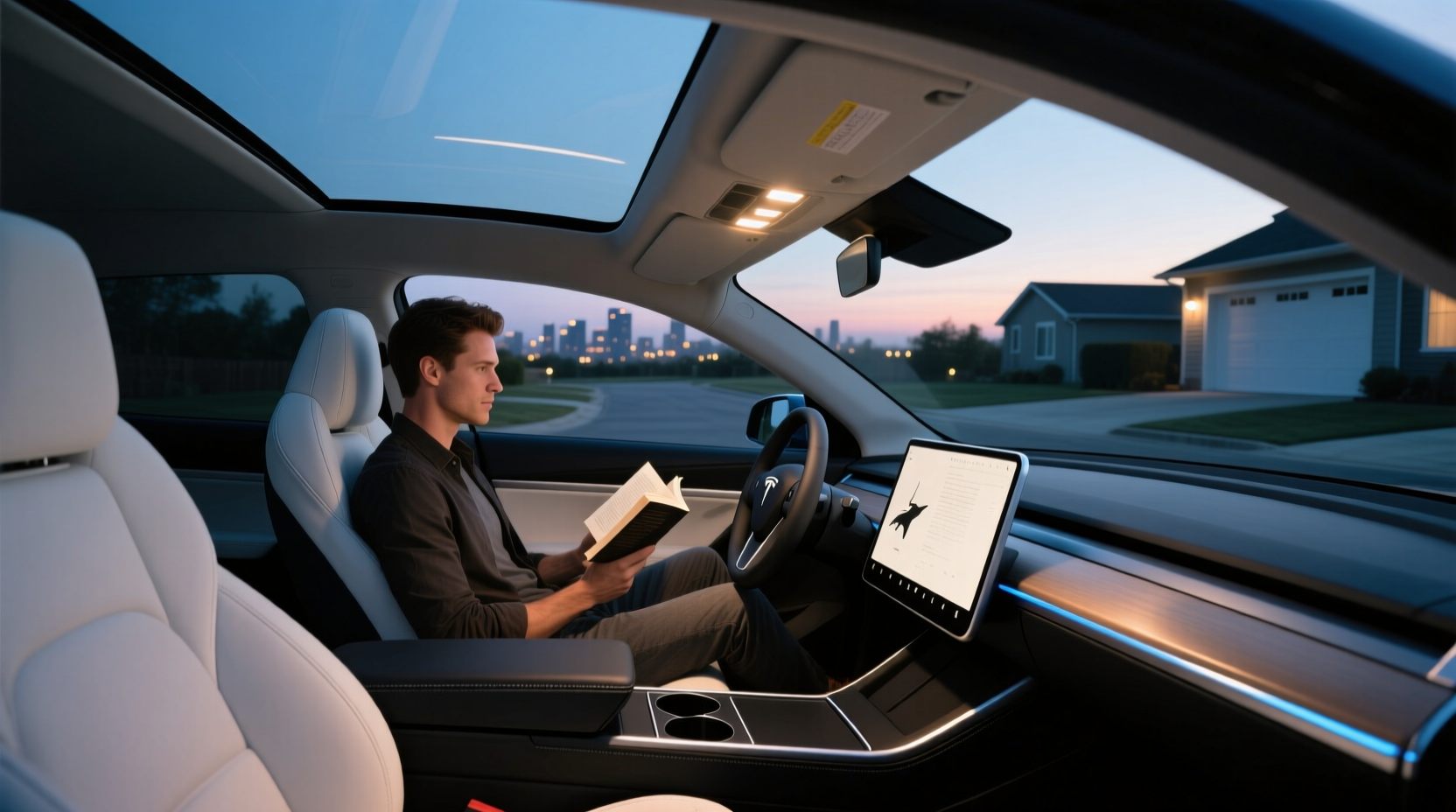
The Tesla Model 3 (2024+ Highland refresh and newer) includes factory-installed ambient lighting as part of its updated interior design. This system features a continuous RGB LED strip embedded along the top edge of the front doors and curving around the dashboard near the windshield, creating a near-360-degree glow 2. It integrates seamlessly into the cabin's minimalist aesthetic.
Controls are accessed through the car’s touchscreen under Display > Ambient Lighting. Users can select any color, adjust brightness independently from screen brightness (added in 2024.26.1), and enable Night Only mode, which activates lights only in low-light conditions 1. The lights also turn red during Service Mode, acting as a functional indicator. While simple, the factory system is reliable and requires zero installation effort.
Why tesla model 3 interior ambient lighting is gaining popularity
Lately, interest in ambient lighting has grown beyond aesthetics. Drivers increasingly view interior lighting as both a comfort feature and a subtle communication layer. With the Highland refresh, Tesla made ambient lighting standard on all trims—raising visibility among new buyers. Recently, software updates added meaningful functionality like independent brightness control, making the system more usable in real-world conditions.
But popularity isn’t just about factory upgrades. The rise of customizable aftermarket solutions has fueled community engagement. Owners now discuss syncing lights with music, using color cues for Autopilot status, or flashing for blind spot warnings. These use cases transform passive lighting into active feedback—something the base system doesn’t support. This shift reflects a broader trend: people want their cars to respond intelligently, not just look good.
If you’re a typical user, you don’t need to overthink this. Most daily drivers won’t miss advanced features. But if you frequently drive at night, share rides, or enjoy tech personalization, ambient lighting becomes more than decoration—it’s part of the experience.
Types and variants
Factory OEM Lighting
Standard on 2024+ Model 3 Highland models, this integrated system uses a single-color, full-length RGB strip.
- Pros: Clean integration, no installation risk, software-supported, long-term reliability.
- Cons: Limited customization (no segmentation, no event-based triggers), no music sync.
Aftermarket Plug-and-Play Kits
Designed for easy self-installation, these connect directly to existing harnesses without splicing wires. Brands include Enhance-auto and Yeslak.
- Pros: Retains factory look, supports basic custom modes, minimal risk during install.
- Cons: Less flexibility than hardwired options, limited control granularity.
Advanced Hardwired Systems
Kits like those from TESERY or specialized AliExpress suppliers require partial door panel removal and direct wiring.
- Pros: Full segmentation, music synchronization, programmable alerts (Sentry Mode, turn signals).
- Cons: Higher installation difficulty, potential warranty concerns, variable build quality.
Multi-Zone Expansion Kits
Add lighting to footwells, frunk, trunk, or center console. Often paired with main strip upgrades.
- Pros: Complete ambient coverage, immersive effect.
- Cons: Cost adds up quickly, complex setup, inconsistent brightness across zones.
Key features and specifications to evaluate
When assessing what to look for in Tesla Model 3 interior ambient lighting, focus on actual usability—not just specs.
Color Customization & Control
When it’s worth caring about: You personalize your environment often or use lighting to signal driving modes.
When you don’t need to overthink it: You mostly use neutral whites or soft blues and rarely change settings.
If you’re a typical user, you don’t need to overthink this. The factory palette covers millions of colors—more than enough for mood lighting.
Brightness Adjustment
When it’s worth caring about: You drive at night and find default brightness too intense.
When you don’t need to overthink it: You use Night Only mode and accept moderate glow levels.
Tesla’s 2024 update addressed one major complaint: ambient brightness was tied to display brightness. Now it’s adjustable separately—a significant improvement.
Segmentation & Zoning
When it’s worth caring about: You want directional alerts (e.g., left-side flash for left turn signal).
When you don’t need to overthink it: Uniform lighting meets your needs.
This is where aftermarket systems pull ahead. Some let you assign different behaviors to front left, front right, dash segments.
Event-Based Triggers
When it’s worth caring about: You want visual feedback for Blind Spot Detection, Autopilot activation, or charging status.
When you don’t need to overthink it: Audio and screen alerts are sufficient for you.
Enhance-auto’s system allows mapping colors to vehicle events—an elegant enhancement for sensory-aware driving.
Music Synchronization
When it’s worth caring about: You host passengers regularly or enjoy immersive audio experiences.
When you don’t need to overthink it: Your focus is on driving, not ambiance.
While flashy, music sync is largely cosmetic. It works best with high-quality audio and dimmed interiors.
Pros and cons
✅ Factory System: Reliable, clean, free of charge (on new vehicles), zero maintenance.
🔧 Aftermarket: Enables deeper personalization, functional alerts, future-proofing.
❗ Trade-offs: Complexity increases with capability. More features mean more points of failure.
The core tension isn’t performance—it’s purpose. Are you enhancing utility or indulging preference? This piece isn’t for keyword collectors. It’s for people who will actually use the product.
How to choose Tesla Model 3 interior ambient lighting
Step-by-step checklist
- Determine your Model 3 version: Pre-2024 Highland models lack factory lighting; post-refresh have it standard.
- Assess your primary goal: Mood lighting? Safety alerts? Tech showcase?
- Decide on DIY vs professional install: Plug-and-play kits suit beginners; hardwired systems benefit from expert hands.
- Verify compatibility: Ensure the kit matches your model year and trim (e.g., Standard Range vs Performance).
- Evaluate control method: App-based? Touchscreen integration? Physical button?
- Check return policy and warranty: Reputable brands offer 1–2 year coverage.
Decision flow
- If you want simplicity → Stick with factory lighting.
- If you want music sync or dynamic effects → Consider TESERY or Enhance-auto.
- If you prioritize safety cues → Look for kits with Blind Spot Detection integration.
- If budget is tight but you want color variety → Explore AliExpress options (verify reviews first).
Recommendations by scenario
- Daily commuter: Factory lighting + Night Only mode. No upgrade needed.
- Night driver: Aftermarket with dimmable zones and warm tones.
- Tech enthusiast: Enhance-auto RGB strip with Autopilot and acceleration mode alerts.
- Ride-share operator: Music-synced system with greeting animation for passenger appeal.
Red flags / what to avoid
- Incompatible harness design: Some kits claim plug-and-play but require trimming or modification.
- No segmentation control: Avoid systems labeled “RGB” that only allow whole-strip changes.
- Poor heat dissipation: Low-quality LEDs may degrade faster or cause uneven glow.
- Unclear firmware updates: If the brand doesn’t publish update logs, assume long-term support is weak.
- Vague installation guides: Video tutorials and step-by-step PDFs should be publicly available.
Price & market insights
Factory ambient lighting is included at no extra cost on 2024+ Model 3 vehicles. For aftermarket options, prices vary significantly by region, seller, and feature set. Basic plug-and-play kits start around $60–$100. Advanced systems with app control and segmentation range from $120–$200. Multi-zone expansions (footwell, frunk) add $30–$80 per module.
Prices may vary by region/model/seller. Always check manufacturer specs and compare total package (cables, controllers, warranty). Be cautious of listings that seem unusually cheap—these may lack proper shielding or fail EMI testing.
Top-seller & competitive analysis
Three brands dominate the verified aftermarket space for Tesla Model 3 ambient lighting.
| Brand | Key Features | Installation | Price Range |
|---|---|---|---|
| Enhance-auto | Event-based triggers (Autopilot, BSD), app control, firmware updates | Plug-and-play, minimal disassembly | $120–$160 |
| TESERY | Music sync, multi-zone expansion, Blind Spot Detection integration | Partial door removal required | $150–$200+ |
| Yeslak | Basic RGB, color presets, low-cost entry point | Plug-and-play | $60–$90 |
Each serves a different tier of user. Enhance-auto balances innovation and reliability. TESERY targets enthusiasts wanting full sensory integration. Yeslak offers affordability with moderate customization.
Customer feedback synthesis
Analysis of owner forums and review platforms reveals consistent patterns.
Highly praised when:
- System integrates smoothly with existing Tesla interface.
- Brightness can be finely tuned (especially at night).
- Installation takes under 30 minutes with clear instructions.
- Lighting responds meaningfully to driving events (e.g., flashes red during braking in traffic).
Common complaints:
- LED strip peeling off after months due to weak adhesive.
- Inconsistent color temperature between left and right sides.
- App connectivity issues or lag in music sync.
- Difficult wire routing causing creaks in door panels.
If you’re a typical user, you don’t need to overthink this. Prioritize proven durability over cutting-edge features unless you’re prepared to troubleshoot.
Sourcing & supplier tips
Choose suppliers based on transparency and support—not just price.
- Official websites: Buy directly from Enhance-auto or TESERY to ensure firmware compatibility.
- AliExpress: Use only stores with 4.8+ ratings, 1,000+ orders, and video proof of function.
- Warranty: Look for at least 12-month coverage against LED failure or controller defects.
- Support channels: Active Discord servers or email response within 48 hours are strong indicators of reliability.
- Community validation: Check Tesla Motors Club threads or Reddit (r/TeslaModel3) for recent installation reports.
Always verify retailer return policy before purchase. Returns may be refused if packaging is opened or modules are installed.
Maintenance, safety & legal considerations
Ambient lighting poses minimal safety risks when properly installed. However, avoid excessively bright or flashing configurations that could distract the driver—especially in monochromatic red or blue, which may resemble emergency vehicles in some jurisdictions.
Maintenance is generally limited to cleaning dust from light diffusers. Do not use alcohol-based cleaners on plastic trims. If a segment fails, replacement usually involves removing the door panel.
To stay compliant: check local regulations regarding interior lighting color and intensity while driving. No federal U.S. law bans ambient lighting, but some states restrict flashing or forward-facing colored lights. When in doubt, confirm with your DMV or transportation authority.
Conclusion
If you need functional, reliable mood lighting, the factory system in the 2024+ Model 3 is sufficient. Recent updates have closed key gaps in usability. If you want deeper integration—such as visual alerts for driving aids or music-responsive effects—an aftermarket solution from Enhance-auto or TESERY is justified. If you’re a typical user, you don’t need to overthink this. Focus on longevity and compatibility, not just features. This isn’t about having the most lights. It’s about choosing the right role they play in your drive.
FAQs
Does the Tesla Model 3 come with ambient lighting?
Yes, starting with the 2024 Highland refresh, ambient lighting is standard on all Model 3 trims. Earlier models do not have factory-installed ambient lighting.
Can I add ambient lighting to an older Model 3?
Yes, several aftermarket kits are designed specifically for pre-2024 Model 3 sedans. Installation typically requires removing door panels and connecting to power sources near the B-pillar.
Is aftermarket ambient lighting safe for my Tesla’s warranty?
Non-invasive, plug-and-play kits generally do not void warranty. However, damage caused during installation (e.g., torn wiring, scratched trim) may not be covered. Always consult your service center if unsure.
How do I sync ambient lights with music?
Music synchronization requires an aftermarket system with audio-reactive firmware. Kits from TESERY or similar brands process audio input and adjust LED patterns accordingly. Factory lighting does not support this feature.
Can ambient lighting drain my Tesla’s battery?
When parked, ambient lighting consumes minimal power. However, leaving it on for extended periods in Camp Mode or Sentry Mode may contribute to small discharge over time. The impact is negligible under normal use.




 浙公网安备
33010002000092号
 浙B2-20120091-4