🛒 Short Introduction
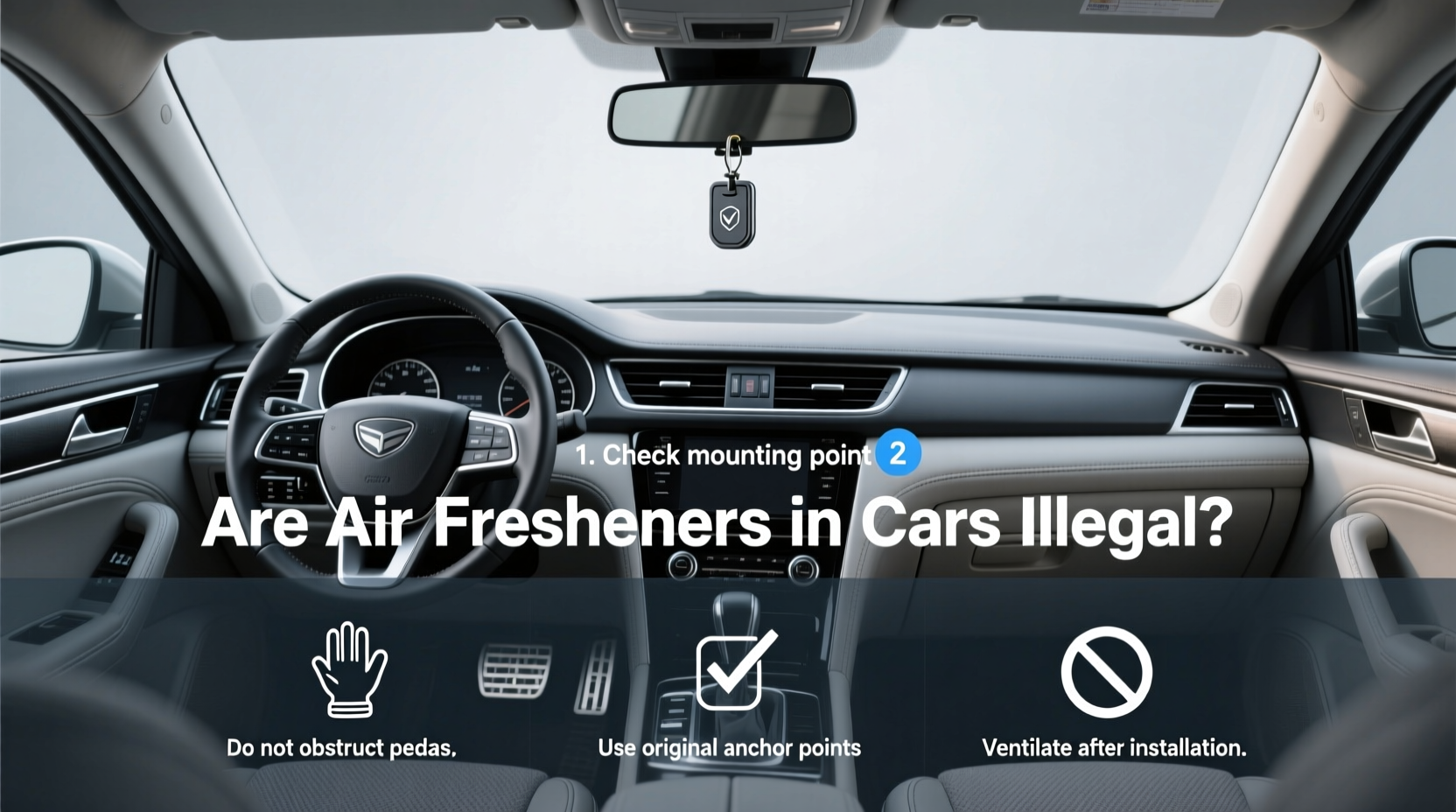
No, car air fresheners are generally not illegal, but their use can become problematic depending on placement, design, and local traffic laws. The key concern is whether an air freshener obstructs the driver’s view through the windshield or side windows — which is illegal in many U.S. states and other countries. When choosing a product, prioritize compact, low-profile designs that attach to vents or hang discreetly without blocking visibility. Avoid large hanging trees or bulky units near the windshield. Always check your state or local regulations before installing any type of freshener. This guide covers what to look for in are air fresheners in cars illegal scenarios, including safe mounting options, material safety, and compliance tips to help you make a responsible choice.
📍 About Are Air Fresheners in Cars Illegal
The phrase \"are air fresheners in cars illegal\" typically refers to concerns about whether using scented products inside vehicles violates traffic safety laws. While the scent itself is never illegal, the placement and size of certain air fresheners — especially dangling types — may breach laws related to driver visibility. Most jurisdictions regulate objects placed on windshields or within the front window area. For example, in California (Vehicle Code §26708), it's unlawful to place items that impair the driver’s clear view. Similar rules exist in Texas, New York, and across Europe under general road safety statutes.
Common usage scenarios include personal vehicles, rideshares, rental cars, and delivery fleets. Drivers often use air fresheners to mask odors from food, pets, smoking, or mildew. However, improper installation — such as hanging a large pine-scented tree from the rearview mirror — could result in a citation. Understanding this distinction between product legality and usage compliance is essential when selecting a model.
📈 Why Are Air Fresheners in Cars Illegal Is Gaining Popularity
Search interest around “are air fresheners in cars illegal” has increased due to rising awareness of distracted driving and stricter enforcement of vehicle modification laws. Social media videos showing drivers receiving tickets for hanging air fresheners have gone viral, prompting consumers to research before buying. Additionally, with more people using ride-sharing platforms like Uber or Lyft, professional appearance and odor control are priorities — but so is compliance with transportation regulations.
Another factor is the growth of subscription-based and eco-friendly air care brands promoting transparent labeling and safer ingredients. Consumers now want products that not only smell good but also meet safety and legal standards. As a result, buyers are searching for guidance on how to choose are air fresheners in cars illegal-compliant options that balance effectiveness, discretion, and regulatory alignment.
🔧 Types and Variants
Different air freshener styles offer varying levels of convenience, scent intensity, and legal risk. Here’s a breakdown of common types:
🌱 Vent Clips
Attach directly to HVAC vents, releasing fragrance as air flows through. These are among the safest choices because they don’t hang into the driver’s line of sight.
- ✅ Minimal visual obstruction
- ✅ Easy to install and replace
- ✅ Often adjustable scent strength
- ❌ May reduce airflow slightly
- ❌ Scent duration usually shorter (2–4 weeks)
🪞 Hanging (Mirror or Sun Visor)
Classic cardboard or felt shapes (like the iconic \"pine tree\") that dangle from mirrors or visors. Popular for nostalgia and strong scent throw.
- ✅ Long-lasting (up to 6 weeks)
- ✅ Inexpensive and widely available
- ❌ High risk of violating visibility laws if too large
- ❌ Can swing while driving, causing distraction
🧈 Gel-Based Containers
Sit on dashboards or cup holders, slowly releasing fragrance over time. Some include decorative lids.
- ✅ No hanging parts
- ✅ Long lifespan (30–60 days)
- ❌ Can melt in high heat (above 100°F/38°C)
- ❌ May leave residue if tipped
⚡ Plug-In Diffusers
Powered by 12V cigarette lighter sockets, these actively diffuse essential oils or synthetic fragrances.
- ✅ Strong, consistent scent coverage
- ✅ Adjustable settings on higher-end models
- ❌ Requires power source
- ❌ Not suitable for all vehicles (older models may lack ports)
- ❌ Potential electrical load if left plugged in long-term
⚙️ Key Features and Specifications to Evaluate
When evaluating options for how to choose are air fresheners in cars illegal-appropriate models, consider these measurable criteria:
- Size & Profile: Choose compact units under 4 inches in height/width to avoid field-of-vision issues.
- Mounting Method: Vent clips and dashboard gels pose lower legal risks than hanging variants.
- Scent Duration: Ranges from 1 week (sprays) to 8 weeks (some gels). Check packaging for estimated life.
- Material Safety: Look for phthalate-free, non-toxic formulations, especially if children or pets ride frequently.
- Heat Resistance: Ensure gel or liquid types won’t degrade in temperatures above 90°F (32°C).
- Adjustability: Some vent clips allow scent intensity control via sliding covers.
- Allergen Information: Fragrance sensitivity varies; unscented or natural oil blends may be preferable.
✨ Pros and Cons
👍 Advantages
- Improves cabin air quality and comfort
- Helps neutralize persistent odors (tobacco, pet, food)
- Vent and gel types comply easily with visibility laws
- Wide range of scents and price points available
👎 Disadvantages
- Hanging types may violate local traffic codes
- Potential distractions if swinging or visually prominent
- Some chemical fragrances may trigger allergies or headaches
- Gels can leak or degrade in extreme heat
📋 How to Choose Are Air Fresheners in Cars Illegal
Follow this step-by-step checklist to ensure your selection aligns with safety and legal expectations:
- Assess Your State or Country’s Laws: Search “[your state] + windshield obstruction law” or consult DMV resources. Many ban any object hanging within the windshield area.
- Avoid Windshield-Hanging Models: Especially large or swinging ones. Even if enforcement is rare, the risk exists.
- Choose Low-Profile Mounting: Opt for vent clips, small dashboard gels, or sun visor mounts (if allowed).
- Check Dimensions: Keep height under 4 inches and width under 3 inches for minimal visual impact.
- Evaluate Scent Needs: Mild daily use? Try a vent clip. Heavy odor masking? Consider longer-lasting gels.
- Review Ingredient Labels: Avoid known irritants like formaldehyde or parabens if sensitivities are a concern.
- Test Placement: Install temporarily and sit in the driver’s seat to verify no view obstruction.
- Products marketed as “large hanging trees” without compliance warnings
- No listed dimensions or material details
- Claims like “blocks bad vibes” instead of factual performance data
- Designed to attach to rearview mirrors in jurisdictions where banned
💰 Price & Market Insights
Car air fresheners vary significantly in cost based on type, brand, and technology:
- Budget ($1–$5): Basic hanging cards, single-use vent clips, or gel jars. Suitable for short-term or trial use.
- Mid-Range ($6–$15): Refillable vent systems, premium gel containers, or smart diffusers with timers.
- Premium ($16+): USB-powered ionizers, HEPA-filter combos, or organic essential oil kits.
Value isn’t always tied to price. A $3 vent clip may perform better than a $12 plug-in if used correctly. Consider total cost per month of use — some cheaper gels last longer than pricier sprays. Prices may vary by region and retailer, so compare online and in-store options. Subscription services often offer volume discounts but require ongoing commitment.
📊 Top-Seller & Competitive Analysis
Popular models dominate due to reliability, scent variety, and low-profile design. Below is a comparison of leading types commonly reviewed and purchased:
| Product Type | Avg. Price | Scent Duration | Legal Risk | User Rating |
|---|---|---|---|---|
| Vent Clip (e.g., Febreze, Ozium) | $3–$6 | 3–4 weeks | Low | ⭐ 4.2 |
| Hanging Cardboard Tree | $1–$4 | 4–6 weeks | High | ⭐ 3.8 |
| Gel Container (e.g., Glade, Air Wick) | $4–$8 | 30–60 days | Medium | ⭐ 4.0 |
| Plug-In Diffuser (e.g., Zerostat, AirSpex) | $15–$25 | Adjustable (weeks to months) | Low | ⭐ 4.1 |
Note: Ratings based on aggregated e-commerce reviews (Amazon, Walmart) as of 2024. Legal risk assessment assumes standard installation; misuse increases violation potential.
📌 Customer Feedback Synthesis
Analysis of thousands of user reviews reveals consistent themes:
✅ Frequent Praise
- “Lasts longer than expected” – especially true for gel types
- “Doesn’t block my view” – common praise for vent clips
- “Easy to swap out” – users appreciate simple replacement mechanisms
- “Smells natural, not overpowering” – preferred in enclosed spaces
❌ Common Complaints
- “Scent faded after one week” – particularly budget hanging types
- “Leaked in hot weather” – mostly gel or liquid units left in direct sun
- “Too strong at first” – some plug-ins emit intense fragrance initially
- “Got a ticket for hanging it” – real-world consequence reported in strict states
🌐 Sourcing & Supplier Tips
Whether buying individually or in bulk, consider these sourcing strategies:
- Retailers: Major chains (Walmart, Target) and auto stores (AutoZone, O'Reilly) carry compliant options with return policies.
- Online Marketplaces: Amazon, eBay, and brand websites offer wide selection but verify seller ratings and return terms.
- Bulk Purchasing: Ideal for fleet managers or rideshare drivers. Look for wholesale suppliers like Uline or Costco Business Center.
- Private Label/Resale: Some manufacturers allow rebranding; request samples to test scent and build quality before ordering.
- Verification Steps: Always check expiration dates, packaging integrity, and safety certifications (e.g., CPSC compliance) upon receipt.
⚠️ Maintenance, Safety & Legal Considerations
To maintain performance and stay compliant:
- Replace expired units promptly — old gels can grow mold.
- Clean surfaces before applying adhesive-backed models to prevent residue.
- Remove devices during extreme heat to prevent melting or fumes.
- Never modify a freshener to fit in a restricted zone (e.g., gluing to windshield).
- Legal Reminder: Traffic laws vary by jurisdiction. What’s allowed in one state may be prohibited in another. To verify compliance:
- Visit your local DMV website
- Search for “vehicle equipment restrictions”
- Contact law enforcement non-emergency lines for clarification
If you drive commercially (Uber, Lyft, taxi), follow platform-specific guidelines — some prohibit hanging items entirely.
✅ Conclusion
While air fresheners themselves are not illegal, their installation method can lead to violations if they obstruct driver visibility. The safest choices are vent-mounted clips and small gel containers placed away from critical viewing areas. When learning how to choose are air fresheners in cars illegal-compliant products, focus on size, placement, and local regulations rather than scent alone. If you need strong odor control with minimal legal risk, go for a refillable vent system. If you prefer passive diffusion, select a heat-stable gel container positioned on the console. Always double-check your local laws and test placement before finalizing your decision.
❓ FAQs
Yes, in states like California, Illinois, and New York, hanging objects that obstruct the windshield view are illegal and can result in fines.
Generally yes, since they don’t block vision. However, confirm local rules — some regions restrict any foreign object on vents.
Some contain VOCs or allergens that may irritate sensitive individuals. Opt for fragrance-free or plant-based formulas if concerned.
Attach it to the sun visor (when not in use) or rear window hook — never where it swings into the driver’s sightline.
Every 2–6 weeks depending on type. Replace sooner if scent fades, discoloration occurs, or irritation develops.




 浙公网安备
33010002000092号
 浙B2-20120091-4