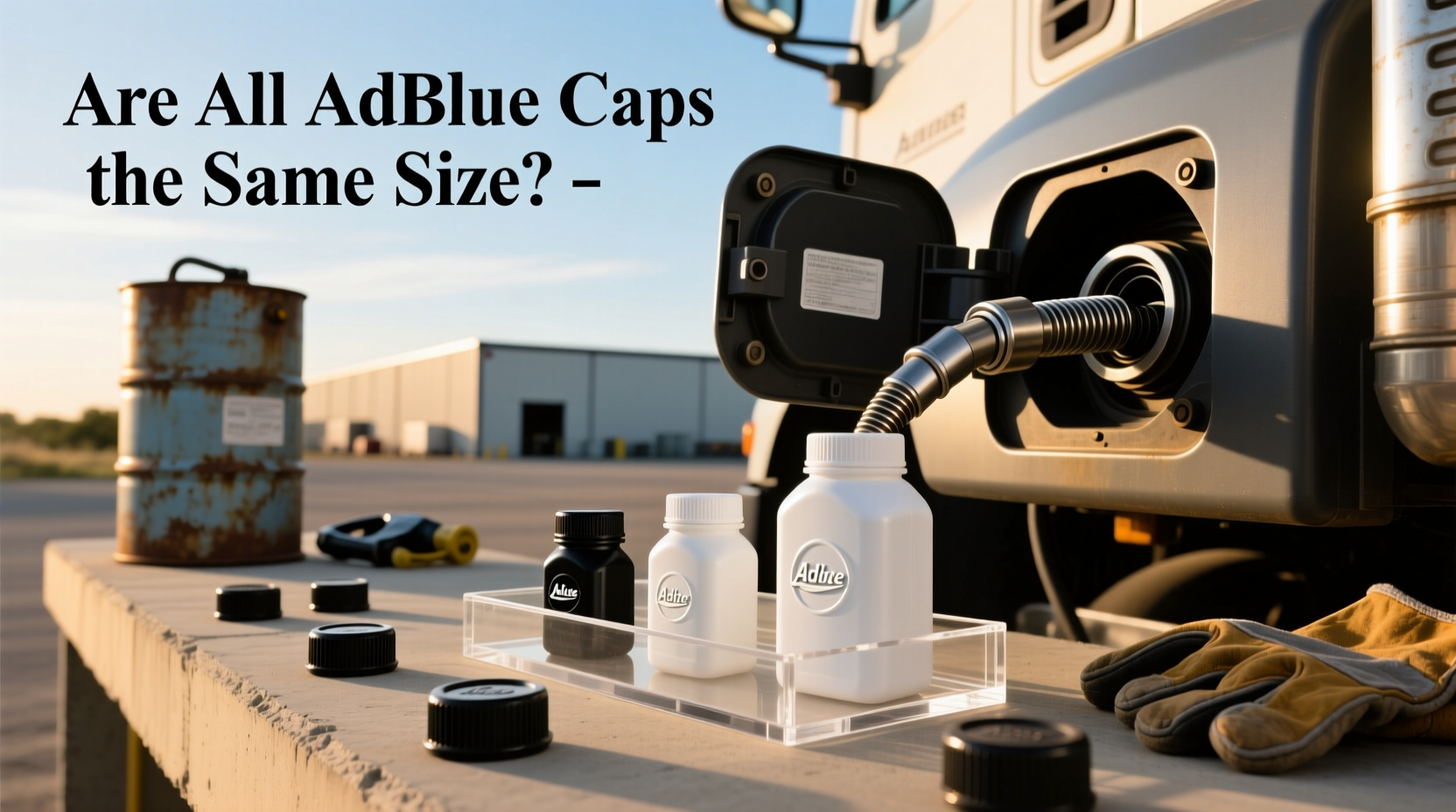
No, not all AdBlue caps are the same size. Choosing the correct cap is critical to prevent contamination, evaporation, and SCR system damage. Key factors include your vehicle’s make, model, year, filler neck diameter (common sizes: 40mm, 46mm, 60mm, 80mm), and locking mechanism. Always verify specifications before purchase — using an incompatible cap can trigger dashboard warnings or void warranties 1. For mixed fleets or uncertain models, measure the tank opening or consult OEM documentation to ensure proper fit.
🛒 About AdBlue Caps: Are All AdBlue Caps the Same Size?
AdBlue caps are protective covers for the diesel exhaust fluid (DEF) tank used in Selective Catalytic Reduction (SCR) systems found in modern diesel vehicles. Their primary function is to maintain a clean, sealed environment that prevents contaminants like dirt, dust, or water from entering the AdBlue solution. Contamination can lead to SCR system malfunctions, reduced emissions efficiency, and costly repairs 1.
The question “Are all AdBlue caps the same size?” arises frequently among fleet managers, truck owners, and maintenance technicians. The answer remains consistent: no, they are not interchangeable. Caps vary significantly in diameter, thread type, locking mechanism, and venting design depending on the manufacturer and vehicle generation. Unlike standardized fuel caps, AdBlue caps are engineered to match specific filler neck dimensions across brands such as DAF, Scania, Mercedes-Benz, Renault, and Ford Transit.
Using the wrong cap may result in poor sealing, leakage, or even physical incompatibility. In some cases, modern vehicles detect improper closure through sensors and display warning messages, potentially limiting engine performance until resolved.
📈 Why Understanding AdBlue Cap Compatibility Is Gaining Importance
As global emissions regulations tighten under Euro VI and similar standards, SCR technology has become nearly universal in commercial diesel engines. This widespread adoption increases demand for reliable AdBlue system components, including caps. Fleets operating across regions or managing multiple vehicle types face growing complexity in sourcing correct replacement parts.
Additionally, theft of AdBlue fluid — due to its urea content — has led to increased use of locking caps. However, these security features add another layer of variation, as locking mechanisms differ between manufacturers and are often integrated into the cap body, affecting overall size and fit.
With rising DEF prices and downtime costs, preventing contamination and evaporation through proper capping has become a cost-control priority. Misfitting caps contribute to unnecessary service calls and compliance risks, making accurate selection more important than ever.
🔧 Types and Variants of AdBlue Caps
AdBlue caps come in several configurations based on design, functionality, and security level. Below are the most common types:
📌 Standard Non-Locking Caps
- Description: Basic threaded or bayonet-style caps without anti-theft features.
- Pros: Low cost, easy to replace, widely available.
- Cons: Vulnerable to fluid theft; less secure in high-risk areas.
- Best for: Private vehicles, low-theft-risk environments.
🔒 Locking Caps (Screw-Type)
- Description: Feature a built-in lock requiring a key to open. Often have reinforced threading.
- Pros: Deters unauthorized access; maintains seal integrity.
- Cons: Higher price; risk of losing keys; potential for over-tightening damage.
- Best for: Commercial fleets, urban delivery trucks, overnight parking zones.
🔩 Bayonet-Style Caps
- Description: Twist-and-lock mechanism common in certain Renault and Volvo models.
- Pros: Quick operation; secure fit when properly engaged.
- Cons: Less common; requires precise alignment; limited aftermarket availability.
- Best for: Specific OEM applications where original design mandates it.
🌬️ Vented vs. Non-Vented Caps
- Description: Some caps include pressure-relief vents to manage internal tank pressure changes.
- Pros: Prevents vacuum buildup during fluid drawdown.
- Cons: Vent filters can clog; improper venting may allow moisture ingress.
- Best for: Vehicles specified by OEM to use vented designs.
📋 Key Features and Specifications to Evaluate
When selecting an AdBlue cap, consider the following technical and functional attributes:
- 📏Diameter & Thread Type: Measure the inner diameter of the filler neck or refer to OEM specs. Common sizes include 40mm, 46mm, 60mm, and 80mm 2.
- 🚚Vehicle Compatibility: Match cap to make, model, and production year. Even within one brand, newer models may require different caps.
- 🔐Locking Mechanism: Decide whether security justifies added cost and complexity.
- 🛡️Seal Quality: Look for intact rubber gaskets or O-rings that ensure watertight closure.
- 🔄Material Durability: High-quality polypropylene or engineering-grade plastics resist UV degradation and chemical exposure.
- ⚙️OEM vs. Aftermarket: OEM parts guarantee fit but cost more. Reputable aftermarket brands may offer equivalent performance at lower prices — verify certifications.
✅ Pros and Cons: Who Should Buy What?
| Cap Type | Advantages | Limitations | Suitable For |
|---|---|---|---|
| Standard Non-Locking | Inexpensive, simple replacement | No theft protection | Private owners, low-risk use |
| Locking (Keyed) | Reduces theft risk | Key management required | Fleets, city operations |
| Bayonet-Style | Fast, secure attachment | Limited compatibility | Specific OEM requirements |
| Vented Design | Prevents vacuum issues | Potential for filter clogging | Vehicles with pressurized tanks |
Avoid universal or adjustable caps unless explicitly approved by the vehicle manufacturer. These may create partial seals that allow slow evaporation or contamination.
🔍 How to Choose AdBlue Caps: Step-by-Step Buying Guide
Selecting the right cap involves verification, measurement, and attention to detail. Follow this checklist:
- Identify Your Vehicle’s Make, Model, and Year: Start with the VIN or owner’s manual. Cross-reference with cap size databases or supplier charts.
- Check Existing Cap or Filler Neck Diameter: Remove the current cap and measure the inner diameter of the filler pipe using calipers. Compare against known standards (e.g., 40mm for many Mercedez trucks, 60mm for Volvo).
- Determine Locking Needs: Assess theft risk based on parking conditions. If needed, opt for a locking version compatible with your model.
- Verify Seal and Venting Requirements: Ensure the new cap includes a functional gasket. If replacing a vented cap, confirm the replacement also vents appropriately.
- Review Return Policy Before Purchase: Buy from suppliers offering returns if the cap doesn’t fit — especially when ordering online without physical verification.
🚩 Red Flags to Avoid:
- Products labeled “universal fit” without specific model confirmation.
- Caps sold without clear dimensional data or compatibility lists.
- Missing gaskets or signs of poor mold quality in plastic components.
- Prices significantly below market average — may indicate substandard materials.
💰 Price & Market Insights
AdBlue cap prices vary based on type, brand, and region:
- Non-locking caps: $8–$18 USD
- Locking caps: $15–$35 USD
- OEM replacements: $25–$50+ USD (sold through dealerships)
Aftermarket options often provide value, but quality varies. Premium brands invest in precise tooling and durable seals, while budget versions may degrade faster under UV exposure or temperature swings. For large fleets, bulk purchasing from certified distributors can reduce unit costs by 10–20%.
📊 Top-Seller & Competitive Analysis
| Brand/Type | Size Options | Locking? | Price Range (USD) | Notes |
|---|---|---|---|---|
| AligoParts (Aftermarket) | 40mm, 60mm, 80mm | Yes/No variants | $12–$28 | Wide truck compatibility; good reviews for DAF/Scania |
| BisonParts | 40–90mm range | Selective | $10–$32 | Offers rare sizes like 90mm bayonet for Renault |
| OEM (Mercedes, Volvo, etc.) | Model-specific | Varies | $25–$55 | Guaranteed fit; higher cost |
| Generic Universal | Adjustable | No | $6–$15 | Not recommended; inconsistent sealing |
Top sellers emphasize exact fitment data and include installation instructions. Look for products with verified buyer photos showing real-world mounting success.
📝 Customer Feedback Synthesis
Analyzing hundreds of customer reviews reveals recurring themes:
👍 Frequent Praise Includes:
- “Exact match for my 2021 Scania 80mm port.”
- “Strong lock mechanism gives peace of mind during long stops.”
- “Included spare O-ring was helpful for maintenance.”
👎 Common Complaints:
- “Ordered 60mm but received 40mm — poor labeling.”
- “Plastic cracked after six months in direct sun.”
- “Wouldn’t seal properly; had to return and try OEM.”
Issues typically stem from incorrect sizing, material brittleness, or misleading product titles. Buyers stress the need for accurate descriptions and clear images.
🏭 Sourcing & Supplier Tips
For individuals:
- Purchase from specialized auto parts retailers with detailed fitment guides.
- Use platforms that allow filtering by vehicle make/model/year.
- Confirm return policies before ordering.
For fleet managers or resellers:
- Work with B2B suppliers offering volume discounts and technical support.
- Request samples before bulk orders to test fit and material quality.
- Ensure suppliers provide traceability (batch numbers, compliance statements).
When importing or sourcing globally, confirm that caps meet regional material safety standards (e.g., resistance to hydrolysis, UV stability). Differences in manufacturing tolerances between regions can affect fit.
🧼 Maintenance, Safety & Legal Considerations
To extend cap life and ensure system integrity:
- Inspect the gasket regularly for cracks or deformation.
- Clean the cap and filler neck periodically to remove debris.
- Do not overtighten screw-type caps — this can strip threads or compress gaskets unevenly.
- Store spare caps in a cool, dry place away from sunlight.
While there are no direct legal penalties for using non-OEM caps, improper sealing leading to system failure could affect emissions compliance during inspections. Always follow manufacturer-recommended procedures for component replacement.
📌 Conclusion: Matching the Right Cap to Your Needs
If you're replacing a lost or damaged AdBlue cap, do not assume interchangeability. The variety in size, design, and function means only the correct cap will protect your vehicle’s SCR system effectively. Always prioritize fitment accuracy over convenience or cost savings.
Summary recommendations:
- If you drive a DAF, MAN, or Mercedes truck, check for 40mm or 60mm threaded caps.
- If you operate a Renault or Scania, verify whether your model uses 68mm, 80mm, or 90mm bayonet styles.
- If you run a mixed fleet, maintain a reference chart of required sizes per vehicle ID.
- If theft is a concern, invest in locking models — but ensure they’re designed for your specific filler neck.
By verifying dimensions and matching specifications carefully, you’ll avoid contamination, maintain warranty coverage, and keep your vehicle running efficiently.
❓ Frequently Asked Questions (FAQs)
Can I use any AdBlue cap as long as it screws on?
No. Even if a cap appears to fit, it may not create a proper seal. Incorrect caps can allow contamination or evaporation, risking SCR system damage.
What happens if I lose my AdBlue cap?
Replace it immediately. Driving without a cap exposes the fluid to contaminants and airborne particles, which can clog injectors or damage the catalyst.
How do I know what size AdBlue cap I need?
Check your owner’s manual, measure the filler neck diameter with calipers, or consult a parts diagram using your VIN. When in doubt, contact the dealer or a trusted supplier.
Are aftermarket AdBlue caps reliable?
Some are, provided they list exact compatibility and include quality seals. Read reviews and buy from reputable sellers. Avoid generic 'one-size-fits-all' claims.
Do all AdBlue caps have locks?
No. Locking caps are optional upgrades for theft prevention. Many vehicles come with standard non-locking caps from the factory.




 浙公网安备
33010002000092号
 浙B2-20120091-4