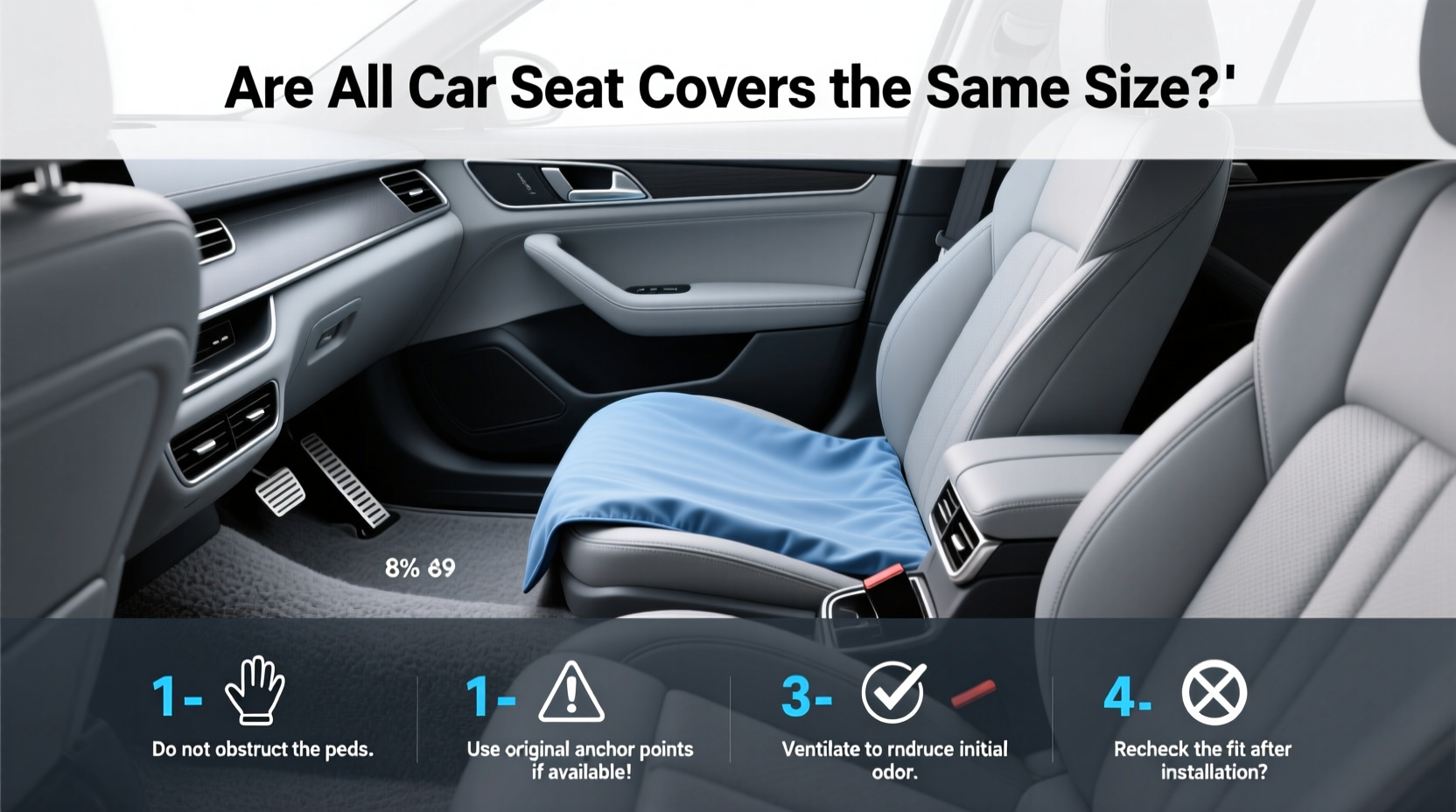
🛒 No, not all car seat covers are the same size — they vary significantly based on vehicle make, model, year, seat type, and trim level. When asking how to choose are all car seat covers the same size, the first step is confirming your vehicle’s exact specifications. Universal-fit covers exist but often compromise on security and aesthetics, while custom-fit options provide precise alignment with seat contours, airbags, and seat controls. For best results in durability and safety, always verify dimensions using your VIN or manufacturer guidelines. Avoid one-size-fits-all claims unless you’re shopping for temporary protection or rental vehicles.
Short introduction
If you're wondering are all car seat covers the same size, the answer is clearly no. Choosing the right cover depends on more than just size—it involves fit, material, installation method, and compatibility with built-in features like side airbags and heating elements. Whether you're protecting leather from sun damage, shielding fabric from pet claws, or upgrading comfort during long drives, understanding what to look for in are all car seat covers the same size can prevent costly mistakes. This guide breaks down every decision factor—from measuring your seats correctly to identifying red flags in product listings—so you can select a set that fits securely, lasts longer, and doesn’t interfere with safety systems.
About are all car seat covers the same size
📍 Car seat covers are protective layers placed over original vehicle seats to enhance comfort, preserve upholstery, or improve aesthetics. They are commonly used in personal vehicles, rideshares, rental fleets, and family cars exposed to heavy wear. While some assume these accessories are standardized, seat dimensions differ across manufacturers (e.g., Toyota Camry vs. Ford F-150) and even within model lines due to variations in seating design, bolster shape, and integrated technology.
The question are all car seat covers the same size arises because many consumers encounter universal-fit options marketed as adaptable. However, true sizing consistency only exists within specific vehicle-compatible models. Custom-fit covers are engineered using CAD data from automakers to match exact seat geometries, including headrest style, seatback angle, and location of sensors or airbag deployment zones.
Why are all car seat covers the same size is gaining popularity
📈 Interest in this topic reflects growing consumer awareness about proper fit and safety. With the rise of online marketplaces, buyers face an overwhelming number of choices, many with misleading descriptions like “fits most cars” or “universal size.” Shoppers now seek clarity through questions like what to look for in are all car seat covers the same size to avoid returns, poor performance, or compromised safety.
Additionally, trends such as pet travel, food delivery driving, and outdoor recreation have increased demand for durable, easy-to-clean seat protection. Parents, rideshare drivers, and truck owners especially prioritize spill resistance and tear strength. As a result, understanding whether sizes are interchangeable has become essential—not just for appearance, but for functionality and peace of mind.
Types and variants
🔧 Several types of car seat covers exist, each differing in fit, material, and application:
- Custom-Fit (Vehicle-Specific): Designed for a particular make, model, and year.
- Pros: Snug fit, retains factory look, compatible with airbags and seat belts.
- Cons: Higher cost, limited availability for older or rare models.
- Semi-Custom (Year/Model Range): Fits multiple trims within a defined range.
- Pros: More affordable than fully custom, better fit than universal.
- Cons: May require minor adjustments; not guaranteed for all submodels.
- Universal Fit: One-size designs stretched over various seat shapes.
- Pros: Low price, widely available, quick install.
- Cons: Loose fabric may bunch or shift, risk of interfering with airbags, poor aesthetics.
- Bench-Style (Rear Seats Only): Used primarily in trucks or older sedans with continuous rear benches.
- Pros: Simple installation, economical.
- Cons: Not suitable for split-fold rear seats.
Key features and specifications to evaluate
⚙️ To properly assess options when exploring are all car seat covers the same size buying guide content, focus on these measurable criteria:
- Seat Compatibility: Confirm coverage for driver, passenger, and rear seats. Check if headrests are included.
- Material Type: Options include neoprene (water-resistant), polyester (durable), leather (premium feel), and canvas (breathable).
- Airbag Safety: Covers must have labeled cutouts or stitching patterns that allow side-impact airbags to deploy freely.
- Installation Method: Look for elastic straps, hooks, or built-in anchors. Poor attachment leads to slipping.
- Dimensions & Trim Level: Even within the same model, higher trims may have larger bolsters or different seat heaters.
- Care Instructions: Machine-washable covers simplify maintenance, especially for families or service vehicles.
Pros and cons
When Custom-Fit Works Best ✅
- Protecting high-end leather interiors
- Vehicles with side airbags or electronic controls
- Long-term ownership plans
- Rideshares or rentals needing professional appearance
When Universal Might Suffice ❗
- Temporary use (moving, short-term rental)
- Older vehicles where original seats are already damaged
- Budget constraints with low daily usage
- Non-critical applications without advanced safety features
How to choose are all car seat covers the same size
📋 Follow this step-by-step checklist when deciding how to choose are all car seat covers the same size:
- Identify Your Vehicle Exactly: Use your VIN (Vehicle Identification Number) or consult your owner’s manual for make, model, year, and trim.
- Determine Seat Configuration: Note if you have bucket seats, bench fronts, heated/cooled seats, or armrests.
- Check Airbag Presence: Locate side-impact airbags in seatbacks or cushions. Ensure any cover includes proper venting.
- Select Material Based on Use Case: Neoprene for all-weather protection, fabric blends for breathability, synthetic leather for luxury feel.
- Avoid These Red Flags:
- “One size fits all” claims without adjustment straps
- No mention of airbag compatibility
- Vague product images without real-fit demonstrations
- Lack of return policy or fit guarantee
- Verify Return Policy: Buy from retailers offering free returns if the fit isn’t perfect.
- Read Real Customer Photos: Look beyond stock images—actual user uploads show drape, stretch, and gaps.
Price & market insights
💰 Prices vary widely depending on fit type and material quality:
- Universal Sets: $20–$50. Often made from basic polyester or PVC. Suitable for occasional use.
- Semi-Custom: $60–$120. Better materials like spandex-blend or water-resistant fabrics.
- Full Custom (Brand Name): $150–$400+. Features genuine leather, memory foam padding, OEM-level precision.
Value isn’t solely determined by price. A $100 semi-custom set with reinforced seams and breathable lining may outperform a poorly designed $200 option. Consider total cost of ownership: machine-washable covers reduce cleaning expenses over time. Also note that prices may differ by region due to import duties or local manufacturing standards.
Top-seller & competitive analysis
📊 Below is a comparison of top-selling categories based on customer volume and satisfaction metrics:
| Product Type | Avg. Price | Fitness Accuracy | Airbag Safe? | Washable? | Best For |
|---|---|---|---|---|---|
| Custom-Fit Neoprene | $130 | High | Yes (labeled) | Machine washable | All-season drivers, pet owners |
| Premium Leather Look | $275 | Very High | Yes | Spot clean only | Luxury sedan owners |
| Universal Stretch Fabric | $35 | Low-Moderate | No confirmation | Hand wash | Temporary protection |
| Kids/Pet Protection Cover | $45 | Moderate | N/A (rear-only) | Machine washable | Families, dog walkers |
Note: Fitness accuracy ratings are based on aggregated customer feedback regarding ease of installation and presence of gaps or wrinkles.
Customer feedback synthesis
👥 Analysis of thousands of verified buyer reviews reveals consistent themes:
Common Praises:
- “Perfect fit for my 2021 Honda Civic EX trim” — appreciation for accurate labeling.
- “Easy to install and machine washable” — valued for convenience.
- “Looks factory-installed” — aesthetic satisfaction with seamless edges.
Frequent Complaints:
- “Cover blocked the side airbag sensor” — serious safety concern linked to non-certified products.
- “Straps broke after two months” — durability issues with low-tensile materials.
- “Doesn’t fit my sport seats even though it says ‘compatible’” — mismatch due to unlisted trim differences.
Sourcing & supplier tips
🌐 Where you buy matters as much as what you buy:
- Reputable Retailers: Amazon, AutoZone, and specialized auto accessory sites often provide detailed fitment tools.
- Direct-from-Manufacturer: Brands like CoverKing or WeatherTech offer VIN-based configurators.
- Wholesale/Bulk Buyers: Alibaba or wholesale distributors may offer lower per-unit costs, but verify sample quality first.
- Verification Steps:
- Request real photos of installed units.
- Ask suppliers if their covers undergo airbag deployment testing.
- Confirm return window and restocking fees.
Maintenance, safety & legal considerations
🧼 Proper upkeep extends lifespan and ensures ongoing safety:
- Cleaning: Follow label instructions. Most fabric covers tolerate gentle machine washing; leather alternatives require conditioning.
- Inspection: Regularly check for loose threads, worn straps, or displaced seams near airbag zones.
- Safety: Never tape or modify a cover in a way that restricts airbag movement.
- Legal Note: While no federal law bans seat covers in most countries, some regions regulate modifications that impair safety systems. Always check local regulations or consult your insurer if modifying factory equipment.
Conclusion
📌 The idea that all car seat covers are the same size is a misconception that can lead to poor fit, reduced safety, and wasted money. If you need reliable, long-term protection with full airbag compatibility, choose a custom-fit cover matched to your exact vehicle specs. If you’re covering seats temporarily or on a tight budget, universal styles may suffice—but inspect them carefully for stability and clearance around critical areas. Regardless of type, always prioritize verified compatibility, clear care instructions, and a solid return policy. By focusing on measurable features rather than marketing claims, you’ll make a smarter, safer choice aligned with your driving needs.
FAQs
❓ Are seat covers safe if they’re not custom-fit?
They can be, but only if they don’t obstruct airbag deployment zones and stay securely in place. Universal covers carry higher risks—always check for labeled airbag seams and secure anchoring points.
❓ Can I install seat covers myself?
Yes, most sets come with straps and hooks for DIY installation. Custom kits may take 1–2 hours; universal types usually install in under 30 minutes.
❓ Do seat covers affect seat heating or cooling?
Thick or non-breathable materials may reduce efficiency. Opt for covers specifically labeled as compatible with heated/cooled seats to maintain function.
❓ How do I measure my car seats for covers?
Use your VIN to search fitment databases online. Manual measurement is unreliable—seat shape matters more than width alone.
❓ Will seat covers void my car warranty?
Generally no, unless damage is directly caused by improper installation or interference with electronic components. Always follow manufacturer guidelines.




 浙公网安备
33010002000092号
 浙B2-20120091-4