If you’re a typical user, you don’t need to overthink this. For most drivers upgrading an Audi A5 sound system, the Bang & Olufsen 3D setup is sufficient—especially if you haven’t experienced high-end aftermarket audio. How to choose a worthwhile upgrade comes down to two things: your sensitivity to flat bass response and whether factory wiring supports expansion. Recently, with the 2025 model shift replacing the A4 sedan and discontinuing the two-door A5 coupe and convertible, more owners are considering retrofitting premium systems before final inventory runs out. If you drive daily and want clarity without complexity, stick with the OEM B&O unless you already own high-resolution audio files and listen critically. Over the past year, forum discussions have intensified around perceived sound flatness in stock systems 1, making this a timely decision point for buyers of outgoing models.
About the Audi A5 and Its Sound Systems
The Audi A5 has been a compact executive coupé since 2007, known for sleek design and integrated tech. In recent years, it expanded into Sportback and convertible variants, all typically offering at least a mid-tier audio package. The current top option is the Bang & Olufsen 3D Sound System—a 20-speaker setup with amplifier-driven spatial processing designed to simulate surround immersion 2. Despite its reputation, some users report underwhelming bass and lack of dynamic range, particularly when compared to Bose systems in other Audi models like the A6.
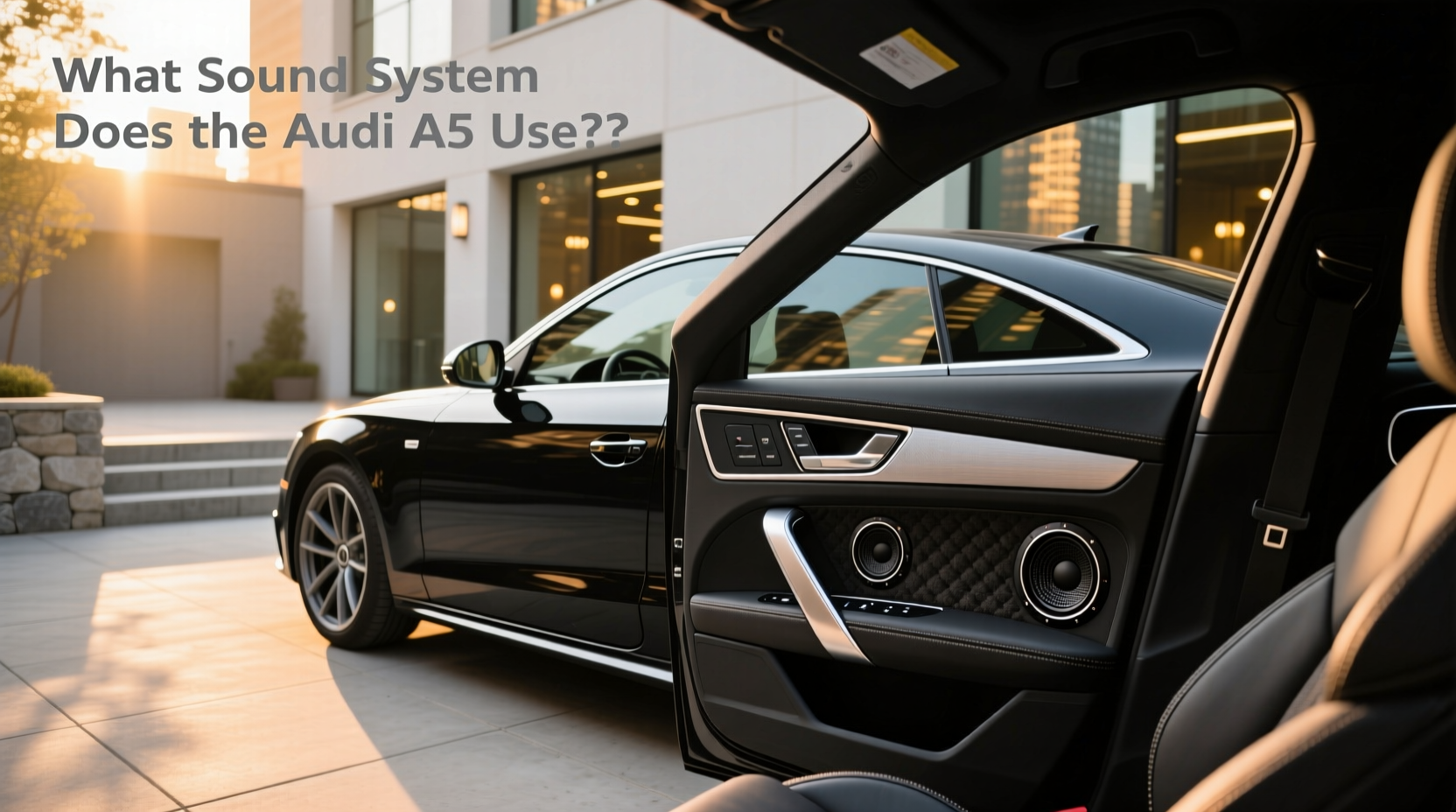
With Audi restructuring its naming convention—discontinuing the A4 sedan and rebranding the next-gen version as the A5 Sportback—the line between old and new can be confusing. The two-door coupe and convertible versions of the A5 are being phased out after 2025. This transition affects availability of both vehicles and compatible parts, including audio components. If you're looking at a '2025' model, verify whether it's the outgoing coupe or the new sedan-style Sportback riding on the Premium Platform Combustion (PPC) 3.
Why Sound Upgrades Are Gaining Popularity
Lately, dissatisfaction with factory-tuned audio profiles has driven interest in upgrades—even among non-audiophiles. Many modern cars prioritize voice clarity and noise cancellation over musical fidelity, which results in compressed dynamics and limited frequency extension. In the case of the A5’s B&O system, reviewers note that while the speaker count is high, the tuning leans conservative, often lacking punch in lower registers and detail in vocals.
This isn’t unique to Audi, but it stands out because of the brand’s premium positioning. When consumers pay extra for a named sound system, expectations rise. Over the past year, YouTube reviews and owner forums have increasingly questioned whether the B&O badge still delivers meaningful value 4. As digital music quality improves—with lossless streaming now available from major platforms—more listeners notice the gap between source and playback.
Types and Variants of Audio Upgrades
Factory-Installed Bang & Olufsen 3D System
- Pros: Seamless integration with MMI, clean aesthetics, automatic calibration, warranty-covered service
- Cons: Tuning prioritizes neutrality over impact, limited headroom at high volumes, difficult to modify post-purchase
If you’re a typical user, you don’t need to overthink this. Unless you frequently listen to live recordings or complex orchestral pieces, the B&O system performs reliably across genres.
Aftermarket Head Unit + Amplifier Combo
- Pros: Full control over EQ, support for high-res formats (FLAC, DSD), ability to integrate modern features like CarPlay/Android Auto
- Cons: High cost, risk of voiding infotainment warranty, requires professional installation, may reduce resale appeal
Worth considering only if you already distrust OEM software interfaces or demand bit-perfect audio reproduction.
Speaker-Only Replacement (Front Components + Subwoofer)
- Pros: Targeted improvement in clarity and bass, retains factory look and functionality, moderate cost
- Cons: Limited by factory amp power, gains depend heavily on crossover matching, front door space constraints
This piece isn’t for keyword collectors. It’s for people who will actually use the product.
Plug-and-Play DSP Modules
- Pros: Preserves factory system, enhances signal processing, adds EQ flexibility via app, minimal wiring changes
- Cons: Expensive per feature gain, compatibility varies by model year, subtle improvements may not justify cost
Only worth it if you’ve already maxed out your current system and want fine-grained acoustic tuning.
Key Features and Specifications to Evaluate
When assessing any upgrade path, focus on these measurable aspects:
Frequency Response Range
Look for systems or components that extend below 50 Hz and above 20 kHz. Factory systems often roll off early on both ends, flattening the listening experience.
When it’s worth caring about: If you listen to electronic music, classical, or film scores with deep sub-bass cues.
When you don’t need to overthink it: For talk radio, podcasts, or pop playlists where vocal presence matters most.
Signal-to-Noise Ratio (SNR)
A higher SNR means cleaner sound at low volumes. Factory systems usually exceed 90 dB, which is adequate for cabin environments.
When it’s worth caring about: Long highway drives at night when ambient noise is low.
When you don’t need to overthink it: City driving with frequent stops and background traffic.
Impedance and Power Handling
Match new speakers to your amplifier’s output. Most OEM amps deliver 40–60 watts RMS per channel. Aftermarket speakers rated below 75 watts peak may not survive long-term use.
When it’s worth caring about: If adding a powered subwoofer or upgrading amplifiers.
When you don’t need to overthink it: Replacing only tweeters or using passive component sets within OEM power limits.
Pros and Cons Summary
✅ Pros of Upgrading: Improved clarity, deeper bass, better instrument separation, personalization
❌ Cons of Upgrading: Cost ($300–$2,500+), potential fitment issues, time investment, possible interference with driver assists
If you’re a typical user, you don’t need to overthink this. Real-world gains are often marginal unless your current system has noticeable distortion or dead zones.
How to Choose and Install an Audi A5 Sound System Upgrade
Step-by-Step Checklist
- Evaluate your current system: Take notes during a familiar drive—where does sound feel thin or muddy?
- Determine budget: Entry-level upgrades start around $300; full rebuilds exceed $2,000.
- Verify model compatibility: Speaker sizes and CAN bus protocols vary by MY2017 vs MY2023.
- Decide on scope: Keep factory head unit? Add sub? Retain steering wheel controls?
- Research harness adapters: Brands like Metra and PAC offer plug-and-play solutions.
- Select installer: Dealerships won’t warranty mods; independents vary widely in expertise.
- Test before sealing: Ensure no rattles, delays, or Bluetooth dropouts post-install.
Decision Flow
- You mostly listen to podcasts → Stick with stock or add small subwoofer
- You care about concert-like realism → Consider component front set + DSP
- You want louder volume without distortion → Add external amplifier
- You dislike touchscreen menus → Aftermarket head unit with physical knobs
Recommendations by Scenario
- Daily commuter: Upgrade front coaxial speakers + add compact 8” sub ($400–$700)
- Weekend enthusiast: Component front set + DSP module + rear upgrades ($900–$1,600)
- Critical listener: Full system replacement with active crossovers and dedicated amp rack ($2,000+)
Red Flags / What to Avoid
- Dealership claims that “wiring cannot be upgraded”—this may be true for certain trims but is rarely universal 5
- Universal-fit kits that require cutting factory harnesses
- Brands not tested for electromagnetic interference (EMI) with ADAS sensors
- Pricing that seems too good—cheap DSPs often introduce latency
- Installers who won’t provide test demo units
Price & Market Insights
Costs vary significantly based on region, trim level, and labor rates. In North America, basic speaker swaps range from $300–$600 installed. DSP modules like HELIX P SIX PRO DSP run $400–$500 before programming. Full Alpine or Focal systems with amplifiers can reach $2,500–$3,500 out the door. Prices may vary by region/model/seller, especially as dealers clear legacy A5 inventory ahead of the model shift.
If you’re a typical user, you don’t need to overthink this. Spending more than 15% of the car’s value on audio is rarely justified unless reselling to enthusiast buyers.
Top-Seller & Competitive Analysis
Popular upgrade paths reflect balance between performance and practicality.
| Solution | Avg. Installed Cost | Complexity | Owner Satisfaction | Resale Impact |
|---|---|---|---|---|
| Bang & Olufsen (OEM) | $800–$1,200 (factory option) | Low | Mixed | Neutral/Positive |
| Alpine SPC-100AU + Amp | $1,100–$1,600 | Medium | High | Slight Negative |
| HELIX Ci Series Front Components | $700–$900 | Medium | High | Neutral |
| DSP Module Only | $400–$600 | Low-Medium | Moderate | Neutral |
Note: Resale impact depends on buyer type. Enthusiasts appreciate upgrades; average used-car shoppers prefer stock configurations.
Customer Feedback Synthesis
Analysis of owner forums, video reviews, and retailer feedback reveals consistent patterns:
高频好评 (Frequent Praise)
- “The front component swap made vocals suddenly clear.”
- “Adding a small sub filled the cabin without booming.”
- “DSP tuning eliminated the ‘echo’ I noticed in tunnels.”
高频抱怨 (Common Complaints)
- “Dealer refused to touch anything aftermarket.”
- “Bluetooth stopped working after head unit change.”
- “Bass was strong but triggered trunk rattle at 60 mph.”
- “Paid $1,200 and still can’t hear cello detail.”
If you’re a typical user, you don’t need to overthink this. Most complaints stem from mismatched expectations, not faulty gear.
Sourcing & Supplier Tips
When purchasing parts:
- Buy from suppliers offering vehicle-specific fitment guides (e.g., SoundTech, Cambridge Car Audio)
- Check return policies—some allow 30-day trials with restocking fee
- Use VIN lookup tools to confirm speaker size and wiring layout
- Avoid eBay sellers without technical support channels
- Prefer brands with firmware update paths (e.g., HELIX, Audison)
This piece isn’t for keyword collectors. It’s for people who will actually use the product.
Maintenance, Safety & Legal Considerations
No safety regulations prohibit audio upgrades, but check local laws regarding maximum volume while driving. Some jurisdictions limit SPL near schools or residential zones. More importantly, ensure modifications don’t interfere with airbag sensors or ADAS cameras—improper routing of wires near pillars can disable side-impact detection.
To verify compliance:
- Confirm wiring paths avoid crush zones
- Retain original head unit if removing screen (for backup camera function)
- Test all warning chimes post-installation
Conclusion
If you need balanced, hassle-free sound with minimal intervention, keep the factory B&O system. If you crave tighter bass and greater transparency—and accept the cost and effort—an aftermarket front component set with a compact subwoofer delivers the best return for most owners. The discontinuation of the two-door A5 doesn’t affect existing vehicles, but it reduces long-term part availability, making proactive upgrades slightly more justifiable for enthusiasts holding onto their cars.
Everything You Need to Know
Audi is restructuring its lineup: the A4 sedan is being retired, and its successor will carry the A5 Sportback name. The two-door A5, S5, and RS5 models are being discontinued to simplify differentiation between combustion and electric models. The new A5 Sportback will ride on the PPC platform and launch for 2025.
Yes, though complexity varies. Basic speaker replacements are straightforward. Adding amplifiers or changing head units requires harness adapters and coding in many cases. Some dealers claim upgrades aren't possible due to full CAN bus integration, but third-party solutions exist. Always verify compatibility with your model year.
For most users, yes—as a convenience feature. It integrates cleanly and sounds good enough for casual listening. However, critical listeners often find it lacks depth and dynamics. If you value accuracy over convenience, consider targeted upgrades instead of relying solely on the OEM package.
Reported issues include flat bass response, limited surround effect despite 3D branding, and occasional amplifier overheating under prolonged high load. Some users also note delayed response when switching audio sources. These may vary by model year and software version.
Not automatically. Under Magnuson-Moss Warranty Act (U.S.), manufacturers can't void warranties simply because of aftermarket parts—unless they cause the failure. However, dealers may deny infotainment-related claims if modifications are present. Keep original parts and document installations to protect your rights.




 浙公网安备
33010002000092号
 浙B2-20120091-4