
Short introduction
If you own or are considering an Audi Q5, here’s the bottom line: yes, it requires premium gas with an octane rating of 91 or higher. This isn’t optional if you want to maintain performance, efficiency, and long-term engine health. Over the past year, more drivers have started questioning whether they can safely switch to regular fuel to save money—especially as premium prices climb. The answer, however, remains unchanged for turbocharged models like the Q5. How to choose the right fuel for your Audi? Start by checking the label inside the fuel door or your owner’s manual. If you’re a typical user, you don’t need to overthink this. Using lower-octane fuel may seem cost-effective short-term but risks knocking, reduced power, and potential engine wear over time.
About Audi Q5 and Fuel Requirements
The Audi Q5 is a midsize luxury SUV known for its refined driving dynamics, advanced engineering, and turbocharged engines. Since most current-generation Q5 models come equipped with turbocharged four-cylinder or V6 engines, they are specifically tuned to run on premium unleaded gasoline (91 octane or higher). These engines operate at higher compression ratios and rely on precise ignition timing, which makes them more susceptible to pre-ignition—or “knocking”—when lower-octane fuel is used.
Audi does not design these engines to adapt fully to regular gasoline (typically 87 octane). While modern engine control units can adjust timing to prevent immediate damage, doing so sacrifices performance, fuel economy, and throttle response. The manufacturer's recommendation is clear across all official channels: use premium fuel. If you’re a typical user, you don’t need to overthink this. The vehicle was engineered around a specific fuel standard, and deviating from it introduces avoidable risk.
This piece isn’t for keyword collectors. It’s for people who will actually use the product.
Why Premium Fuel Is Gaining Attention
Lately, interest in premium fuel requirements has grown—not because engines have changed dramatically, but because consumer behavior is shifting. With rising fuel costs, many owners are reevaluating every expense, including what goes into their tank. Online forums and social media groups, such as discussions on Audi Club NA, reflect increasing debate about whether premium is truly necessary or just a way for automakers to increase ownership costs.
The reality is that high-octane fuel helps manage heat and pressure in performance-oriented engines. Turbocharging, now standard in nearly all new Audis, increases cylinder pressure significantly. Without sufficient knock resistance, the engine must retard ignition timing, leading to sluggish acceleration and increased emissions. Recently, some users report temporary success using regular gas without warning lights—but that doesn’t mean the engine isn’t compensating internally. Long-term effects may only become visible after tens of thousands of miles.
Types and Variants of Audi Engines and Their Fuel Needs
Not all Audis are identical when it comes to fuel requirements. While the Q5 consistently uses turbocharged powertrains, other models vary. Understanding engine type helps clarify why premium fuel matters in some cases and less so in others.
• Requires: Premium gas (91+ octane)
• Why: High compression and forced induction increase knock risk
• Flexibility: Minimal; ECU adjustments do not eliminate long-term trade-offs
• May accept: Regular gas (87 octane), though premium is recommended
• Why: Lower compression allows safer operation on lower octane
• Trade-off: Slight drop in smoothness and responsiveness even if no knocking occurs
• Requires: Premium only—often 93 octane ideal
• Why: Aggressive tuning demands maximum knock resistance
• Risk: Severe performance loss and potential warranty issues if ignored
If you’re a typical user, you don’t need to overthink this. Most modern Audis fall into the first category. Only older or base-trim vehicles without turbos offer any real flexibility—and even then, premium is advised for optimal longevity.
Key Features and Specifications to Evaluate
When determining whether your Audi needs premium gas, focus on three core technical factors:
- Engine Type: Is it turbocharged? Nearly all post-2010 Q5s are.
- Compression Ratio: Higher than 10:1 usually indicates premium requirement.
- Manufacturer Labeling: Look for “Premium Unleaded Recommended” or “Required” on the fuel door.
These specs help answer two critical questions: When is it worth caring about fuel grade? And when can you reasonably relax the rule?
When it’s worth caring about: You have a turbocharged engine, plan to keep the car beyond 80,000 miles, or frequently drive under load (towing, highway merging, hilly terrain).
When you don’t need to overthink it: If your model explicitly states that regular fuel is acceptable—even if premium is preferred—and you’re using the vehicle lightly for city commuting.
Pros and Cons
| Aspect | Premium Fuel (91+ Octane) | Regular Fuel (87 Octane) |
|---|---|---|
| Engine Performance | ✅ Full power delivery, responsive throttle | ⚠️ Reduced torque and delayed acceleration |
| Fuel Economy | ✅ Optimized efficiency under normal conditions | ⚠️ May decrease due to timing adjustments |
| Engine Longevity | ✅ Lower stress, reduced carbon buildup | ⚠️ Increased risk of knocking and deposits |
| Cost per Fill-Up | ❌ Typically $5–$10 more per tank | ✅ Immediate savings |
| Warranty Compliance | ✅ Meets Audi’s operating standards | ⚠️ Potential disputes if engine damage occurs |
How to Choose the Right Fuel: A Practical Buying Guide
Choosing the correct fuel for your Audi Q5 should be straightforward. Follow this step-by-step checklist to make a confident decision.
Step-by-Step Checklist
- Check the fuel door label: Open the fuel flap—most Audis print the required octane rating directly on the inner panel.
- Review the owner’s manual: Confirm the specification under “Fuel” or “Capacities.”
- Determine your engine type: Visit your VIN decoder site or consult dealership records if unsure.
- Evaluate your driving patterns: Frequent highway driving or towing? Stick with premium.
- Assess cost vs. value: Calculate annual fuel spend difference before assuming savings.
Decision Flow
- Is your Audi Q5 turbocharged? → Yes → Use premium.
- Did the manual say “premium recommended”? → Still use premium for best results.
- Are you experiencing knocking on regular fuel? → Switch immediately to premium.
Recommendations by Scenario
- Long-term ownership: Always use premium to preserve engine condition.
- Rental or short-term lease: Follow manufacturer guidelines to avoid penalty charges.
- Budget-conscious driver: Consider total cost of ownership—engine repairs outweigh short-term fuel savings.
Red Flags / What to Avoid
- Ignoring persistent knocking or pinging noises.
- Assuming all gas stations offer equal quality—Top Tier detergent standards matter.
- Using ethanol blends above E10 unless specified (most Audis are not flex-fuel).
- Believing online anecdotes that claim “I’ve used regular for years with no issue.” Survivorship bias is strong in automotive forums.
Price & Market Insights
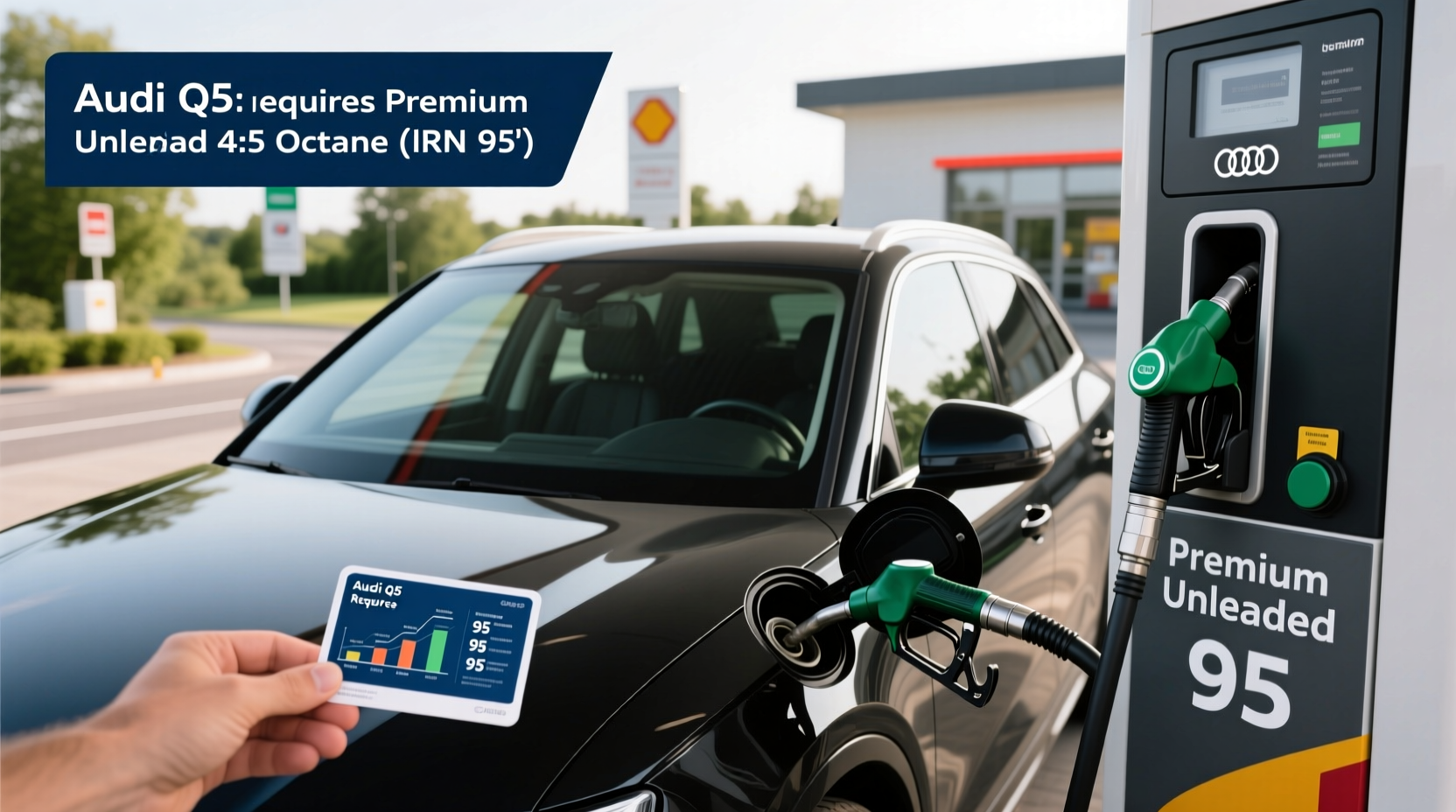
Premium gasoline typically costs $0.40 to $1.00 more per gallon than regular, depending on region and season. In some areas, especially urban centers or states with stricter environmental regulations, the gap widens. Prices may vary by region/model/seller, and station branding also influences perceived quality.
However, price alone shouldn’t dictate your choice. Consider this: over 15,000 miles per year, the extra cost might total $300–$600 annually. Weighed against potential repair bills from prolonged low-octane use—such as damaged sensors, catalytic converters, or internal engine components—that investment often pays off. If you’re a typical user, you don’t need to overthink this. Think of premium fuel as part of routine maintenance, like synthetic oil changes.
Top-Seller & Competitive Analysis
While Audi isn’t alone in requiring premium fuel, its stance is consistent across the lineup. Compare with competitors:
| Model | Fuel Requirement | Notes |
|---|---|---|
| Audi Q5 (2020–present) | Premium (91+) | Turbocharged engine; non-negotiable for peak performance |
| BMW X3 | Premium (91+) | Similar engineering philosophy; slight variance in tuning tolerance |
| Mercedes-Benz GLC | Premium (91+) | Strict adherence recommended; AMG versions require 93 |
| Lexus NX (non-turbo) | Regular (87) | Natural alternative for those avoiding premium dependency |
| Porsche Macan | Premium (91+, 93 ideal) | Shared platform with Q5; higher expectations for fuel purity |
This comparison shows that premium fuel use is common among German luxury SUVs. The distinction lies not in requirement, but in how strictly each brand enforces it through engine calibration. Japanese rivals like Lexus offer more flexibility, making them appealing to cost-sensitive buyers.
Customer Feedback Synthesis
Analysis of customer reviews and community discussions reveals recurring themes:
Common Praise:- “The Q5 runs smoothly and feels powerful when using premium.”
- “I notice better throttle response and quieter operation.”
- “Fuel economy stays stable over time.”
- “I didn’t realize I’d have to pay so much more at the pump.”
- “Knocking started after one tank of regular—I switched back fast.”
- “Dealership staff weren’t clear about fuel needs during purchase.”
The disconnect often stems from inadequate communication at point of sale. Many owners expect luxury cars to be efficient, not realizing that performance tuning comes with operational costs.
Sourcing & Supplier Tips
Not all premium gas is created equal. Some stations add better detergent packages that help keep injectors and intake valves clean. Look for brands certified under the Top Tier Detergent Gasoline program—a voluntary standard adopted by major automakers, including Audi.
To verify supplier quality:
- Check if the station brand participates in Top Tier (list available online).
- Avoid discount chains that don’t disclose additive usage.
- Stick to reputable national or regional brands unless local feedback confirms reliability.
If you’re a typical user, you don’t need to overthink this. Using Top Tier fuel ensures both octane consistency and deposit protection, reducing long-term maintenance needs.
Maintenance, Safety & Legal Considerations
Using incorrect fuel doesn’t violate traffic laws, but it may affect warranty coverage. Audi’s factory warranty assumes proper maintenance and adherence to operating specifications. Repeated use of substandard fuel could be cited in denied claims related to engine damage.
For safety, never mix fuel types hoping to dilute effects. If you accidentally fill with regular gas, finish the tank quickly and refill with premium. Persistent knocking requires diagnostic checks to rule out permanent adjustment or sensor issues.
To protect yourself:
- Keep service records showing consistent use of recommended fuel.
- Confirm local regulations via authorized dealer if importing or relocating.
- Verify retailer return policy if purchasing a used Audi without documentation.
Conclusion
If you need reliable performance, long-term durability, and full access to your Audi Q5’s capabilities, choose premium gasoline with 91 octane or higher. There is no technical workaround that preserves all benefits while cutting fuel costs. If you’re a typical user, you don’t need to overthink this. The engineering trade-offs are well understood, and deviation introduces unnecessary risk. For non-turbo Audis where regular gas is permitted, the same logic applies: savings are minimal compared to potential compromises in refinement and longevity.




 浙公网安备
33010002000092号
 浙B2-20120091-4