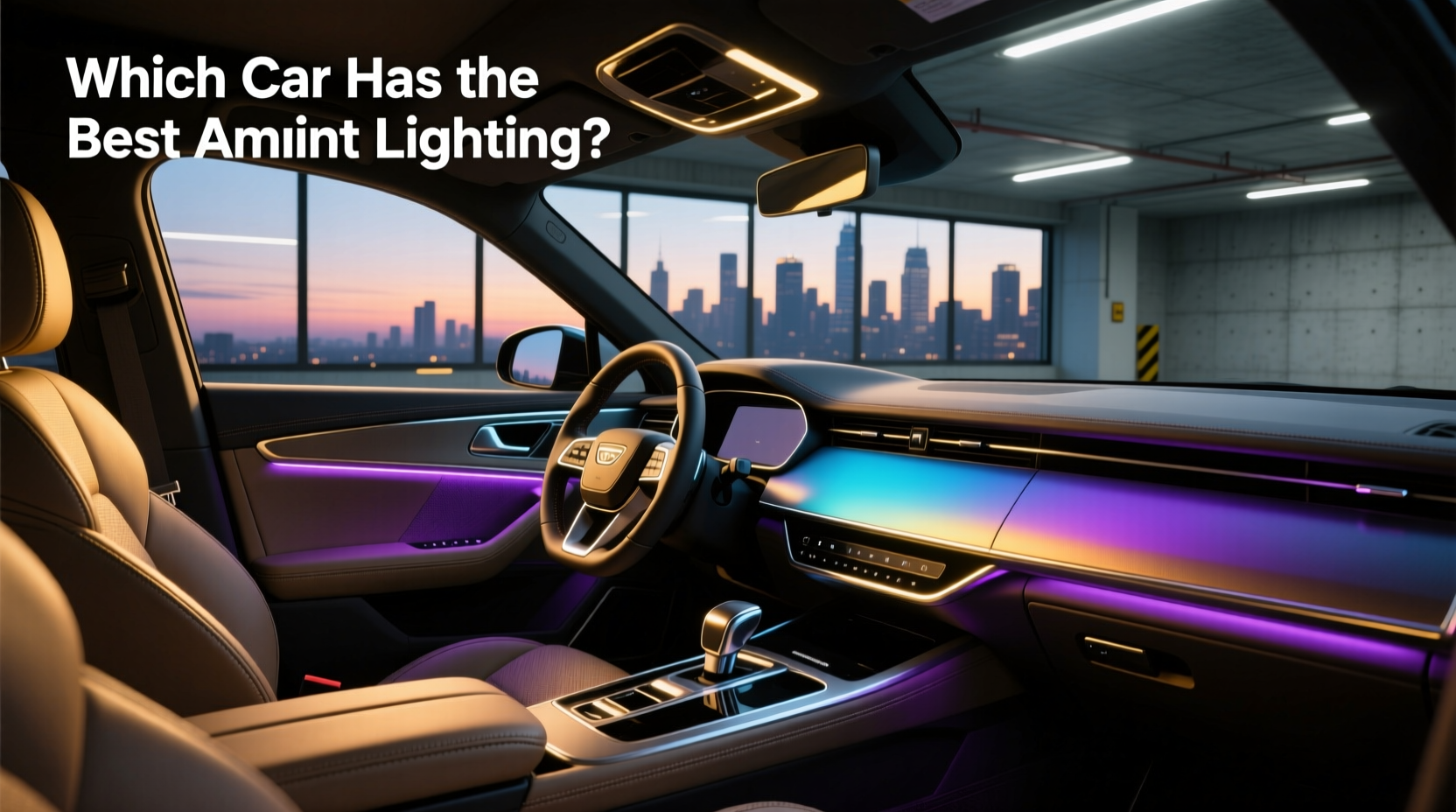
If you’re a typical user, you don’t need to overthink this. The best ambient light color for your car depends on when and how you drive — not what’s trending. For nighttime comfort, soft blue, lilac, or green reduces eye strain and supports focus 1. During daytime or spirited drives, warmer tones like orange or bronze can energize the cabin. What to look for in car ambient lighting? Prioritize adjustable brightness, multi-zone control, and seamless integration with driving modes. Avoid systems locked into a single color or rigid theme — they limit adaptability. If your vehicle already has built-in lighting, stick with it unless customization is severely limited.
This piece isn’t for keyword collectors. It’s for people who will actually use the product.
About Ambient Lighting in Cars
Ambient lighting refers to low-intensity LED illumination strategically placed around a vehicle’s interior — door panels, footwells, dash trim, center console, and overhead areas. Unlike functional lights (like map or dome lamps), ambient lighting serves mood and aesthetics. Over the past year, automakers have shifted from simple monochrome strips to immersive, dynamic environments that respond to speed, music, climate settings, or even GPS location.
It doesn’t improve visibility or safety directly, but it influences driver alertness, passenger comfort, and perceived quality. A well-designed system feels integrated, not tacked on. Poor implementations create glare, uneven brightness, or distracting pulsing patterns that compete for attention.
Why Ambient Lighting Is Gaining Popularity
Lately, ambient lighting has evolved from luxury novelty to mainstream expectation, especially in electric vehicles. Why? Two reasons: sensory design and personalization demand. Drivers spend more time in cars than ever — commuting, running errands, or using vehicles as mobile offices. That extended exposure makes interior atmosphere matter.
Car brands now treat the cabin like a living space. Just as smart homes use tunable white lighting to match circadian rhythms, modern vehicles adjust color temperature based on time of day or driving mode. Some systems sync with audio, creating a subtle rhythm without distraction. Others shift hue when entering Sport or Eco mode — reinforcing behavioral cues through environment.
If you’re a typical user, you don’t need to overthink this. You likely care less about technical specs than whether the light feels right when dropping kids off at night or heading home after work. The real value isn’t in having 64 colors — it’s in quickly switching to one that fits the moment.
Types and Variants
1. Fixed Monochrome
Basic single-color LEDs, often blue or white, found in entry-level trims or older models.
- Pros: Reliable, energy-efficient, minimal distraction
- Cons: No customization, may feel outdated or clinical
2. Multi-Color Static
Allows selection from a preset palette (usually 8–16 colors) via infotainment or physical controls.
- Pros: Simple choice, easy to match mood or exterior paint
- Cons: All zones change together, lacks nuance
3. Dynamic / Thematic Systems
Advanced setups with animated sequences, zone-specific behavior, or themed visuals (e.g., solar system motifs).
- Pros: High engagement, unique branding (Polestar 4, Genesis GV60), adaptive logic
- Cons: Can be gimmicky if overused, harder to disable fully
4. Sound-Syncing Lights
Lights pulse or shift intensity with audio input — common in sporty or youth-focused models like Kia Soul.
- Pros: Fun for passengers, enhances entertainment experience
- Cons: Distracting while driving, drains battery faster in parked mode
5. Driver-Centric Adaptive Lighting
Rare but emerging: systems that adjust color based on biometrics or external conditions (e.g., cooler tones during fatigue detection).
- Pros: Potential cognitive benefits, proactive wellness support
- Cons: Still experimental, limited availability
If you’re a typical user, you don’t need to overthink this. Most drivers benefit most from a solid mid-tier system — multi-color with zonal control and manual presets. Fancy animations are nice once, then ignored.
Key Features and Specifications to Evaluate
When comparing ambient lighting, assess these five elements:
- Zonal Control: Can you set different colors for footwells, doors, and dash independently? Full zoning allows layered moods (calm below, active above).
- Brightness Range: Look for smooth dimming down to near-off levels. Many systems stay too bright at lowest setting, disrupting night vision.
- Custom Presets: Ability to save 2–3 favorite configurations (e.g., “Night Calm,” “Day Focus”) speeds up usability.
- Integration with Driving Modes: Does lighting shift when toggling between Comfort, Sport, or Eco? This reinforces intent without needing extra screens.
- Music Response Quality: Not just whether it syncs, but how — smooth gradients beat strobing pulses for long-term enjoyment.
When it’s worth caring about: If you frequently drive at night, share the car with others, or prioritize cabin ambiance as part of ownership joy.
When you don’t need to overthink it: If you’ll mostly leave it on default or turn it off entirely. No evidence shows ambient lighting improves crash rates or fuel economy.
Pros and Cons
Pros
- Improves perceived interior quality and spaciousness
- Supports circadian alignment when tuned properly (cool tones for alertness, warm for relaxation)
- Enhances brand identity — e.g., Mercedes’ flowing “hyper screen” glow vs. Polestar’s celestial minimalism
- Can reduce stress in stop-and-go traffic with gentle, consistent illumination
Cons
- Potential distraction if overly bright or animated
- Increased complexity — more points of failure over time
- No resale value boost proven; buyers rarely cite lighting as deciding factor
- Aftermarket kits may void warranty or conflict with CAN bus systems
If you’re a typical user, you don’t need to overthink this. The psychological benefit matters more than pixel count or animation frames.
How to Choose the Right Ambient Lighting
This guide helps you cut through marketing noise and pick what works — not what looks good in a brochure video.
Step-by-Step Checklist
- Identify your primary driving context: urban commute, highway cruising, family transport?
- Determine preferred mood: relaxing, focused, energetic?
- Test available options in person — screen renders lie
- Verify zonal control and preset saving capability
- Check ease of adjustment — should take ≤3 taps
- Evaluate off-peak brightness (turn off all other lights)
- Assess integration with existing tech (voice commands, drive modes)
- Confirm dealer or manufacturer allows future upgrades
Decision Flow
→ Do you drive mostly at night? → Lean toward soft blue, green, or lilac
→ Daytime commuter wanting energy? → Try amber or muted orange
→ Sharing car with multiple users? → Prioritize customizable zones and saved profiles
→ Buying an EV or luxury model? → Expect advanced systems; verify functionality before delivery
→ On a budget? → Accept basic lighting — avoid costly add-ons unless deeply valued
Recommendations by Scenario
- Night Shift Worker: Soft blue or green with low brightness. Avoid red/orange — stimulates wakefulness too late.
- Frequent Road Trips: Dual-tone setup (e.g., cool upper, warm lower). Switches mental state without full reset.
- Family SUV: Neutral white or pale blue. Prevents overstimulation in children; easier for all ages to adapt.
- Sporty Coupe: Dynamic red or orange with driving mode sync. Matches performance character.
- Luxury Sedan: Subtle lilac or pearl white with flowing transitions. Reinforces refinement.
Red Flags / What to Avoid
- Non-dimmable LEDs: Creates visual fatigue. Must have adjustable intensity.
- Glare on windshield: Test at night. Any reflection on glass is unacceptable.
- Forced animations: Cannot disable startup sequences or music sync? Walk away.
- Single-color-only in high-end model: Indicates cost-cutting where it shouldn’t occur.
- Aftermarket kits requiring permanent wiring: Risk moisture damage or electrical issues. Prefer plug-and-play.
If you’re a typical user, you don’t need to overthink this. Functionality beats flair every time.
Price & Market Insights
Factory-installed ambient lighting varies widely by brand and trim. In many cases, it’s bundled into higher-tier packages rather than sold à la carte. Entry-level systems appear in vehicles starting around $25,000 (e.g., Honda Civic Touring), while premium implementations start at $50,000+ (Mercedes EQS, Genesis GV80).
Aftermarket kits range from $30 for basic RGB strips to $300+ for addressable, app-controlled systems with sound response. Installation labor adds $100–$200 if not DIY. Prices may vary by region/model/seller, and compatibility is not universal — always check fitment guides.
There’s no clear correlation between price and satisfaction. Some expensive systems receive criticism for being overly flashy; some affordable ones earn praise for subtlety.
Top-Seller & Competitive Analysis
The following models lead in both feature depth and user sentiment. Ratings based on synthesis of owner forums, expert reviews, and configurator data.
| Model | Colors | Zones | Special Features | User Sentiment |
|---|---|---|---|---|
| Mercedes-Benz EQS | 64 | 8+ | Active Light Drive, climate-linked color shifts | High — praised for immersion |
| Genesis GV60/GV70 | 64 | 6 | Milky Way pattern, crystal shifter glow | Very High — noted for elegance |
| Polestar 4 | Thematic (5) | 5 | Solar system themes per planet | Positive — loved by early adopters |
| Kia EV9 | Dual Palette | 4 | Two simultaneous colors, minimalist style | Positive — appreciated simplicity |
| BMW 5-Series/X5 | Multiple | 6 | Personal Mode themes, orange default | Mixed — some dislike forced orange bias |
If you’re a typical user, you don’t need to overthink this. These leaders excel not because of raw specs, but because their lighting feels intentional — not decorative.
Customer Feedback Synthesis
Analyzed across Reddit, Bimmerpost, and owner forums (2023–2025):
Most Common Praise
- “Love being able to switch to soft purple at night — makes the drive feel peaceful.”
- “The way Genesis lights up the gear selector is elegant, not tacky.”
- “Having separate colors for driver and passenger sides is a small touch that matters.”
Most Frequent Complaints
- “Lights are too bright even on lowest setting — blinds me at 2 AM.”
- “Can’t save my favorite blue — resets every time I restart.”
- “Animation won’t turn off. Feels like a nightclub during rain.”
- “Orange is forced in BMWs — takes three menus to change.”
Pattern: Users value control and consistency over sheer variety. Simplicity with depth wins.
Sourcing & Supplier Tips
If considering aftermarket installation:
- Stick to OEM-compatible brands with documented CAN bus safety (e.g., Philips, HELLA)
- Avoid ultra-cheap Alibaba-sourced kits — inconsistent color temperature and short lifespan
- Prefer modular designs: easier to repair individual sections
- Confirm return policy covers electronic returns (many exclude powered items)
- Ask installer about fuse tap vs. direct battery connection — latter risks drain
For factory-equipped vehicles: Review window sticker or build sheet carefully. Lighting is often buried in package names like “Premium Interior” or “Technology Plus.”
Maintenance, Safety & Legal Considerations
No major safety regulations restrict ambient lighting color or intensity in most regions — but practical limits exist. Excessively bright or flashing lights could theoretically draw law enforcement attention if mistaken for emergency signals. Verify local rules if modifying heavily.
Maintenance needs are minimal. LEDs last 50,000+ hours, but water intrusion during detailing or repairs can damage strips. If replacing sections, ensure color matching — batches vary slightly.
Never compromise visibility: lighting should illuminate surfaces, not create glare on mirrors or glass. If you notice reflections during night drive, dim or reposition.
Conclusion
If you need calming atmosphere for night commutes, choose soft blue or lilac with adjustable brightness. If you want energetic vibes for weekend drives, go for dynamic orange or red with mode syncing. But if you’re a typical user, you don’t need to overthink this — most daily drivers gain more from reliable, subtle lighting than from theatrical displays. Prioritize usability, not spectacle.
Everything You Need to Know
❓ What is the best ambient light color for night driving?
Soft blue, green, or lilac are preferred for night driving because they minimize pupil constriction and reduce eye strain. Avoid bright white or blue-white, which mimic daylight and may disrupt melatonin. Warm colors like red or orange can be stimulating — fine for short bursts, but not ideal for prolonged nighttime use. When it’s worth caring about: if you regularly drive after dark or have light sensitivity. When you don’t need to overthink it: if you'll likely keep it off or use only occasionally.
❓ Which car has the best ambient lighting system?
Mercedes-Benz (EQS, S-Class), Genesis (GV60, GV70), and Polestar 4 are consistently rated highest for design, customization, and integration. Mercedes leads in sheer number of colors and motion effects; Genesis excels in subtlety and thematic cohesion; Polestar offers unique celestial themes. When it’s worth caring about: if cabin ambiance significantly affects your ownership satisfaction. When you don’t need to overthink it: if lighting is a minor concern compared to cargo space or fuel efficiency.
❓ Can ambient lighting affect driving safety?
Poorly designed ambient lighting — such as overly bright, flickering, or reflective setups — can distract or impair night vision. However, well-implemented systems with low-glare diffusion and proper dimming enhance comfort without compromising safety. There are no widespread bans, but flashing or emergency-like colors could raise questions in some jurisdictions. When it’s worth caring about: if installing aftermarket kits with aggressive patterns. When you don’t need to overthink it: if using factory-installed lighting at moderate settings.
❓ How do I customize ambient lighting in my car?
Use the vehicle’s infotainment system or steering wheel controls to access lighting settings. Look for menus labeled “Interior Lighting,” “Ambience,” or “Personalization.” From there, select color, brightness, and (if available) zone-specific preferences. Save favorites as presets if supported. If options are limited, consult the owner’s manual or dealership — some features require coding. When it’s worth caring about: if sharing the car with others who prefer different moods. When you don’t need to overthink it: if you're satisfied with the default setting.
❓ Is ambient lighting worth the extra cost?
Only if you personally value interior atmosphere and plan to use it regularly. It adds no measurable performance or safety benefit. On average, premium lighting packages cost $800–$2,500 as part of larger bundles. For many buyers, that money is better spent on heated seats, better tires, or driver aids. When it’s worth caring about: if test-driving a car where the lighting genuinely enhances your emotional connection. When you don’t need to overthink it: if it's just a checkbox item on a spec sheet.




 浙公网安备
33010002000092号
 浙B2-20120091-4