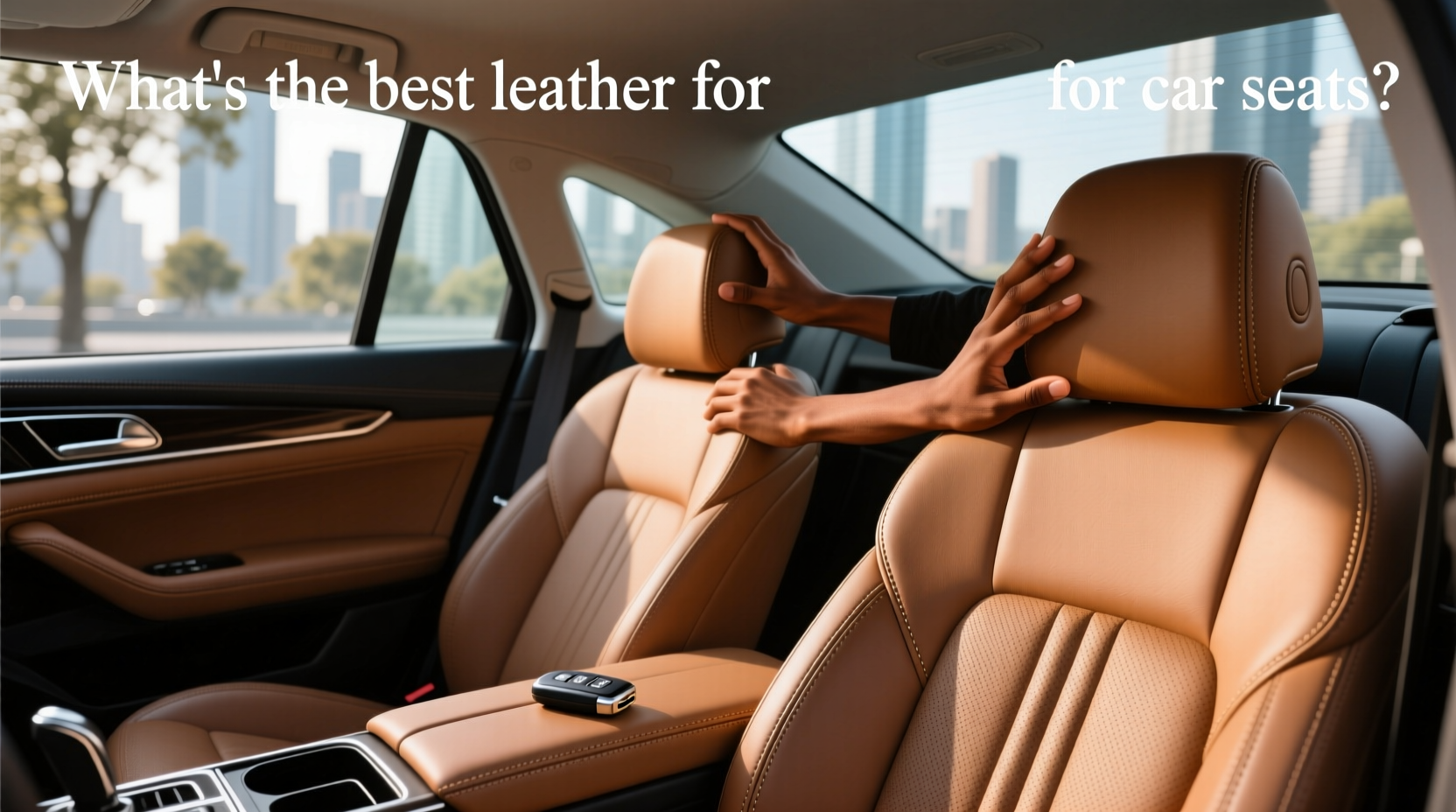
If you’re a typical user, you don’t need to overthink this. For most drivers, top-grain leather offers the best balance of comfort, durability, and ease of maintenance when upgrading or selecting car seat upholstery. Full-grain delivers unmatched longevity and develops a rich patina over time but demands consistent care. Nappa leather, often found in luxury models, feels exceptionally soft but shows wear faster under daily use. When choosing leather for car seats, focus on automotive-grade treatment first—UV resistance and abrasion protection matter more than name-brand labels. Avoid untreated upholstery leathers marketed as ‘premium’—they may crack within two years under sun exposure. This piece isn’t for keyword collectors. It’s for people who will actually use the product.
Lately, more consumers have been replacing damaged factory upholstery or customizing interiors with aftermarket hides. Over the past year, searches for durable, pet- and child-friendly seating materials have increased, shifting attention toward treated top-grain options that resist spills and scratches without sacrificing aesthetics.
About Automotive Leather
Not all leather is built for vehicle interiors. Standard upholstery or furniture leather lacks the chemical stabilization needed to endure temperature swings, constant friction, and prolonged UV exposure. Automotive-grade leather undergoes specific tanning and coating processes to maintain flexibility in cold climates and resist fading in hot, sunny regions. These treatments preserve the material’s integrity far longer than untreated alternatives.
The base hide—usually cowhide—is split into layers, each offering different structural properties. The outermost layer retains the strongest fibers and natural grain pattern, while deeper splits are reinforced or coated for uniformity. What matters most isn’t the animal source but how the hide is processed post-harvest and whether it meets OEM-level performance standards.
Why Leather Car Seats Are Gaining Popularity
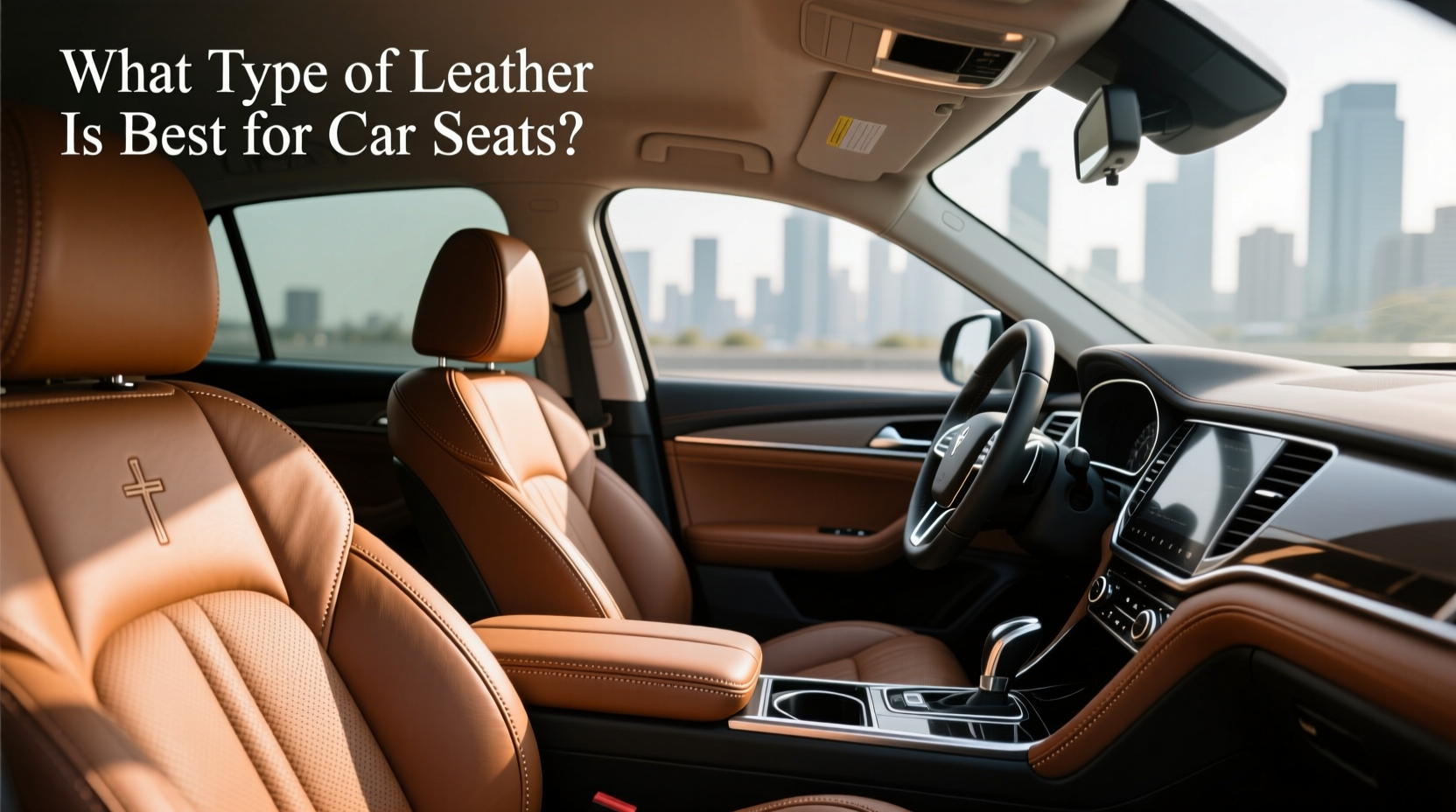
Leather remains a top choice for both OEMs and aftermarket buyers despite synthetic alternatives like vegan leather and Alcantara. Its appeal lies in long-term value: properly maintained leather lasts over a decade, outperforming fabric in resale condition and odor retention. Unlike cloth, it doesn’t trap pet dander, food crumbs, or moisture deep within fibers.
Recent improvements in dye-stabilization and protective topcoats have reduced cracking and discoloration, especially in markets with extreme climates. Consumers also report higher satisfaction with tactile experience—leather warms quickly in winter and stays cooler than vinyl in summer when parked in shade.
If you’re a typical user, you don’t need to overthink this. While marketing pushes terms like ‘semi-aniline’ or ‘European hide,’ what really affects your daily experience is surface resilience and cleanability—not origin or processing philosophy.
Types and Variants
Full-Grain Leather
The entire top layer of the hide is preserved, including natural marks from the animal’s life. This results in unique visual character and superior tensile strength.
- Pros: Most durable, ages beautifully, breathable, develops patina
- Cons: Requires regular conditioning, shows stains easily, expensive
When it’s worth caring about: If you plan to keep your car 10+ years and enjoy hand-maintained finishes.
When you don’t need to overthink it: In high-traffic vehicles (family SUVs, rideshares), where frequent spills make maintenance impractical.
Top-Grain Leather
The most common type in modern premium vehicles. The surface is lightly sanded to remove imperfections and then embossed with a consistent grain pattern.
- Pros: Smooth finish, easier to clean, moderately priced, widely available
- Cons: Less breathable than full-grain, thinner protective layer can wear through over time
When it’s worth caring about: Daily-driven cars needing low upkeep and reliable appearance.
When you don’t need to overthink it: If you're comparing minor differences between brands using the same base material.
Nappa Leather
A soft, fine-grained top-grain leather, typically from calves or lambs, known for its plush feel. Often used in luxury sedans and EVs.
- Pros: Exceptionally comfortable, luxurious hand-feel, minimal stiffness when new
- Cons: Prone to creasing and scuffing, requires gentle cleaning agents
When it’s worth caring about: Low-mileage personal vehicles where comfort outweighs practicality.
When you don’t need to overthink it: If pets or children regularly occupy the backseat—durability trumps softness.
Semi-Aniline Leather
Dyed throughout with a light surface sealant. Offers a more natural look than fully pigmented leather while providing some UV protection.
- Pros: Rich color depth, retains original grain texture, better fade resistance than aniline-only
- Cons: Still vulnerable to water rings and oil transfer, not ideal for humid environments
When it’s worth caring about: Showroom-condition preservation for classic or collector vehicles.
When you don’t need to overthink it: For everyday commuter cars exposed to direct sunlight.
Key Features and Specifications to Evaluate
Don’t rely solely on names or brand claims. Look for these measurable traits:
- Thickness: Measured in ounces per square foot (oz/sq ft); aim for ≥ 0.9 mm for seat cushions
- Tear resistance: Should withstand ≥ 50 lbs force (ASTM D2261 standard)
- Colorfastness: Tested under UV lamps for ≥ 100 hours without significant fading
- Coating type: Polyurethane (PU) or acrylic topcoats improve scratch resistance
- Backing material: Woven fabric backing adds dimensional stability
If you’re a typical user, you don’t need to overthink this. You won’t find these specs listed on retail tags—but reputable suppliers should provide test summaries upon request.
Pros and Cons
| Leather Type | Pros | Cons |
|---|---|---|
| Full-Grain | Longest lifespan, natural beauty, breathable | High maintenance, costly, sensitive to spills |
| Top-Grain | Balanced performance, affordable, easy care | Moderate breathability, can peel if poorly coated |
| Nappa | Luxurious feel, immediate comfort | Wears quickly, needs specialized cleaners |
| Semi-Aniline | Authentic look, good color depth | Fades in sun, vulnerable to liquids |
How to Choose Leather for Car Seats
Selecting the right leather comes down to matching material properties to your driving habits and environment.
Step-by-Step Checklist
- Confirm it’s labeled “automotive-grade” or “for interior vehicle use”
- Check thickness: ≥ 0.9 mm recommended for seating areas
- Evaluate topcoat: shiny = more protection; matte = more natural but fragile
- Ask for sample swatches to test against fingernail scratch and water droplets
- Verify warranty: minimum 3-year coverage against peeling or cracking
- Review return policy: some sellers exclude cut yardage
Decision Flow
- You drive daily in harsh climate → Prioritize UV-resistant top-grain with acrylic coating
- You want luxury feel and rarely expose car to sun → Consider Nappa or semi-aniline
- You have kids or pets → Choose darker-colored, heavily coated top-grain
- You restore classics → Match original spec with full-grain dyed to period-correct shade
Recommendations by Scenario
- 🛒 Budget-friendly daily driver: Top-grain with PU coating (e.g., 1.0–1.2 mm)
- ✨ Luxury sedan upgrade: Nappa or semi-aniline from certified auto supplier
- 👪 Family SUV: Dark brown or black top-grain with stain-resistant finish
- 🏭 Custom restoration: Full-grain with vegetable tanning and minimal topcoat
Red Flags / What to Avoid
If you’re a typical user, you don’t need to overthink this. Focus on verified performance traits, not emotional branding.
Price & Market Insights
Prices vary significantly by region, supplier, and cut size. Raw hides sold by the yard range from $25 to $120 per linear yard depending on type and finish. Custom installation adds $800–$2,500 labor cost for full interior reupholstery.
Top-grain remains the most accessible option across North America and Europe. Full-grain is rarer in mass-market channels and typically ordered through specialty trim shops. Nappa is usually bundled with high-end OEM packages rather than sold standalone.
Note: Costs may vary by region/model/seller. Always check manufacturer specs or verify with supplier before purchase.
Top-Seller & Competitive Analysis
Based on availability, consistency, and technical documentation, several suppliers stand out in the automotive leather space.
| Supplier | Specialty | Transparency | Best For |
|---|---|---|---|
| Rolphord Leather | Full-grain, eco-tanned options | Detailed cut sheets, test reports | Restoration, custom builds |
| BuyLeatherOnline | Top-grain, Nappa by the yard | Swatch samples, finish guides | DIY repairs, partial replacements |
| Hydes Leather | Aniline and semi-aniline hides | Blog-based education, sourcing info | Luxury upgrades, show cars |
| United Automotive | OEM-compatible coatings | Performance data, climate suitability | All-season reliability |
No single brand dominates globally. Regional preferences influence stock—e.g., European suppliers emphasize breathability, while desert-region vendors prioritize reflectivity and heat resistance.
Customer Feedback Synthesis
Analysis of forums 1 and supplier reviews reveals recurring themes:
- 高频好评: Longevity of full-grain after 5+ years, softness of Nappa in climate-controlled garages, ease of wiping spills on coated top-grain
- 常见抱怨: Premature cracking in non-automotive leather, inconsistent dye lots in online orders, difficulty stretching during DIY installs
Most negative experiences stem from mismatched expectations—not product failure. Buyers expecting furniture-like softness in a work truck seat often regret their choice within months.
Sourcing & Supplier Tips
Whether buying by the yard or pre-cut kits:
- Request physical swatches before ordering large quantities
- Ask if the leather is pre-shrunk—critical for tight installations
- Confirm edge finishing method: sealed edges resist fraying better
- Work with suppliers who specialize in auto applications, not general upholstery
If you’re a typical user, you don’t need to overthink this. A $10 sample can prevent a $500 mistake.
Maintenance, Safety & Legal Considerations
Regular cleaning with pH-balanced leather wipes prevents buildup. Recondition every 6–12 months with non-oily moisturizers to avoid drying. Never use household detergents—they strip protective coatings.
From a safety standpoint, intact leather maintains structural integrity during airbag deployment better than degraded or delaminated surfaces. However, no consumer-facing certification guarantees this—verify through manufacturer documentation.
Local regulations may affect flammability standards for installed materials. Confirm compliance via supplier MSDS (Material Safety Data Sheet) or equivalent.
Conclusion
If you need long-term durability and plan to maintain it, choose full-grain leather. If you prioritize low upkeep and consistent appearance, go with top-grain. If comfort is your primary goal and usage is light, Nappa is justifiable. But if you’re a typical user, you don’t need to overthink this—top-grain automotive leather covers most real-world needs effectively.
Everything You Need to Know
❓ What makes leather suitable for car seats?
Automotive-grade leather must resist UV degradation, temperature extremes, and repeated friction. It’s treated with stabilizing dyes and protective topcoats unlike furniture leather. Look for mentions of abrasion testing or outdoor exposure ratings when purchasing.
❓ Is Nappa leather worth it for daily drivers?
Generally no. While extremely comfortable, Nappa shows scratches and body oils quickly. It’s better suited for low-mileage vehicles stored indoors. For daily use, a well-coated top-grain offers similar comfort with greater resilience.
❓ How do I tell if leather is truly automotive-grade?
Ask the supplier for evidence of UV resistance testing (e.g., >100 hours under xenon lamp) and tear strength data. True automotive leather will have a technical datasheet. Generic descriptions like 'soft' or 'luxurious' aren't reliable indicators.
❓ Can I install replacement leather myself?
Yes, for simple components like seat covers or armrests. Full reupholstery requires professional tools and experience. Misaligned tension leads to premature tearing. If attempting DIY, practice on a spare panel first and use adhesive rated for flexible substrates.
❓ Does leather color affect performance?
Dark colors hide scratches and resist UV fading better than light shades. However, black leather absorbs heat—can exceed 70°C (160°F) in direct sun. Lighter tones stay cooler but require more frequent cleaning to maintain appearance.




 浙公网安备
33010002000092号
 浙B2-20120091-4