🛒 Short Introduction: What to Look for in Best Leather Seat Covers for Trucks
When choosing the best leather seat covers for trucks, focus first on material authenticity, fit type, and climate resistance. Real leather offers luxury and longevity but requires more maintenance and costs significantly more than premium synthetic alternatives like vegan leather or high-grade polyurethane (PU). If you frequently drive in hot or humid environments 🌡️, consider perforated or ventilated designs to prevent moisture buildup. For truck owners seeking durability and ease of installation, semi-custom or custom-fit seat covers provide better protection than universal styles. Avoid ultra-low-priced 'leather' options — many are bonded leather or vinyl blends that crack within months 🔧. Always verify compatibility with your truck’s make, model, and year, especially if it has integrated airbags, heating, or side-impact sensors ⚠️.
📍 About Best Leather Seat Covers for Trucks
Leather seat covers for trucks are protective overlays designed to shield original upholstery from wear, spills, UV damage, and temperature extremes. While some are made from genuine animal hide, many labeled as 'leather' are actually synthetic or blended materials engineered to mimic the look and feel of real leather. These covers come in various fits — universal, semi-custom, and fully custom — and are used primarily to enhance comfort, improve aesthetics, and extend the lifespan of factory-installed seats.
Truck-specific designs must accommodate larger seat frames, bolstered backs, and advanced safety systems. They’re commonly used by fleet operators, delivery drivers, outdoor workers, and families who transport pets or equipment. Unlike car seat covers, truck versions often require reinforced stitching and deeper contours to fit extended cab or crew cab configurations.
📈 Why Best Leather Seat Covers for Trucks Is Gaining Popularity
Truck owners are increasingly investing in leather seat covers due to rising vehicle ownership costs and longer average ownership periods. With trucks serving as both work tools and family vehicles, protecting interiors has become a priority. Leather, whether real or synthetic, resists stains, odors, and abrasions better than fabric, making it ideal for rugged use cases 🚚.
Additionally, modern synthetic leathers have improved dramatically in breathability and texture, narrowing the performance gap with genuine leather. Climate control integration, such as heated seats, also benefits from leather's thermal conductivity. Social media and automotive customization trends have further fueled demand, with buyers seeking sleek, professional appearances for personal and commercial vehicles alike ✨.
🔧 Types and Variants
Understanding the different types of leather seat covers helps narrow choices based on usage and budget.
1. Genuine Leather
- ✅ Pros: Long-lasting, breathable, develops a natural patina over time, premium appearance
- ❗ Cons: Expensive ($300–$800+), sensitive to sun and moisture, requires regular conditioning
2. Synthetic Leather (PU/PVC)
- ✅ Pros: Affordable ($80–$200), water-resistant, easy to clean, consistent texture
- ❗ Cons: Less breathable, may peel after 2–3 years, lower resale appeal
3. Bonded Leather
- ✅ Pros: Lower cost, leather-like appearance
- ❗ Cons: Contains only 10–20% real leather, prone to flaking, not durable under heavy use
4. Hybrid Blends (Leather + Fabric Panels)
- ✅ Pros: Balanced comfort and ventilation, cost-effective, reduces sweating
- ❗ Cons: Mixed maintenance needs, less uniform appearance
Fit styles also vary:
- Universal Fit: One-size-maybe-fits-all; often loose and shifts during driving
- Semi-Custom: Designed for specific truck brands (e.g., Ford F-150, Ram 1500); better contouring
- Fully Custom: Tailored to exact model/year; includes cutouts for airbags, seat belts, and heaters
⚙️ Key Features and Specifications to Evaluate
To choose the best leather seat covers for trucks, assess these core features:
- Material Composition: Check product specs for % of real leather or type of synthetic (e.g., top-grain PU vs. PVC).
- Seat Compatibility: Confirm fit using VIN or model/year filters. Mismatched covers can block airbag deployment zones.
- Stitching Quality: Double or triple stitching enhances durability, especially at stress points.
- Ventilation & Climate Control Support: Perforated leather improves airflow; ensure compatibility with heated/cooled seats.
- Backing Material: Non-slip foam or rubber backing prevents shifting. Elastic straps or hooks add stability.
- UV Resistance: Important for trucks parked outdoors; look for fade-resistant coatings.
- Care Requirements: Real leather needs conditioners every 3–6 months; synthetics only need wipe-downs.
✅ Pros and Cons
- Durable protection against spills, scratches, and UV fading
- Enhanced comfort in extreme temperatures (cooler in heat, warmer in cold)
- Improved resale value with preserved original seats
- Premium aesthetic suitable for business or personal use
- Available in multiple colors and textures to match interior design
- Easy to clean compared to fabric upholstery
- Higher upfront cost, especially for genuine leather
- Potential fit issues with universal models
- Real leather demands ongoing maintenance
- Synthetic versions may emit odor when new
- Risk of poor craftsmanship in budget options
📋 How to Choose Best Leather Seat Covers for Trucks
Follow this step-by-step guide to make an informed decision:
- Identify Your Use Case: Are you using the truck for daily commuting, off-roading, hauling gear, or commercial purposes? Heavy-duty use favors thicker, abrasion-resistant materials.
- Determine Budget Range: Set a realistic price point. Spending under $100 typically limits you to basic synthetics; $200+ opens access to better quality or partial real leather.
- Select Material Type: Prefer low maintenance and affordability? Go for high-end PU. Want luxury and longevity? Invest in full-grain or top-grain leather.
- Verify Fit Accuracy: Use manufacturer lookup tools. Input your truck’s make, model, year, and trim level. Avoid universal fits unless no other option exists.
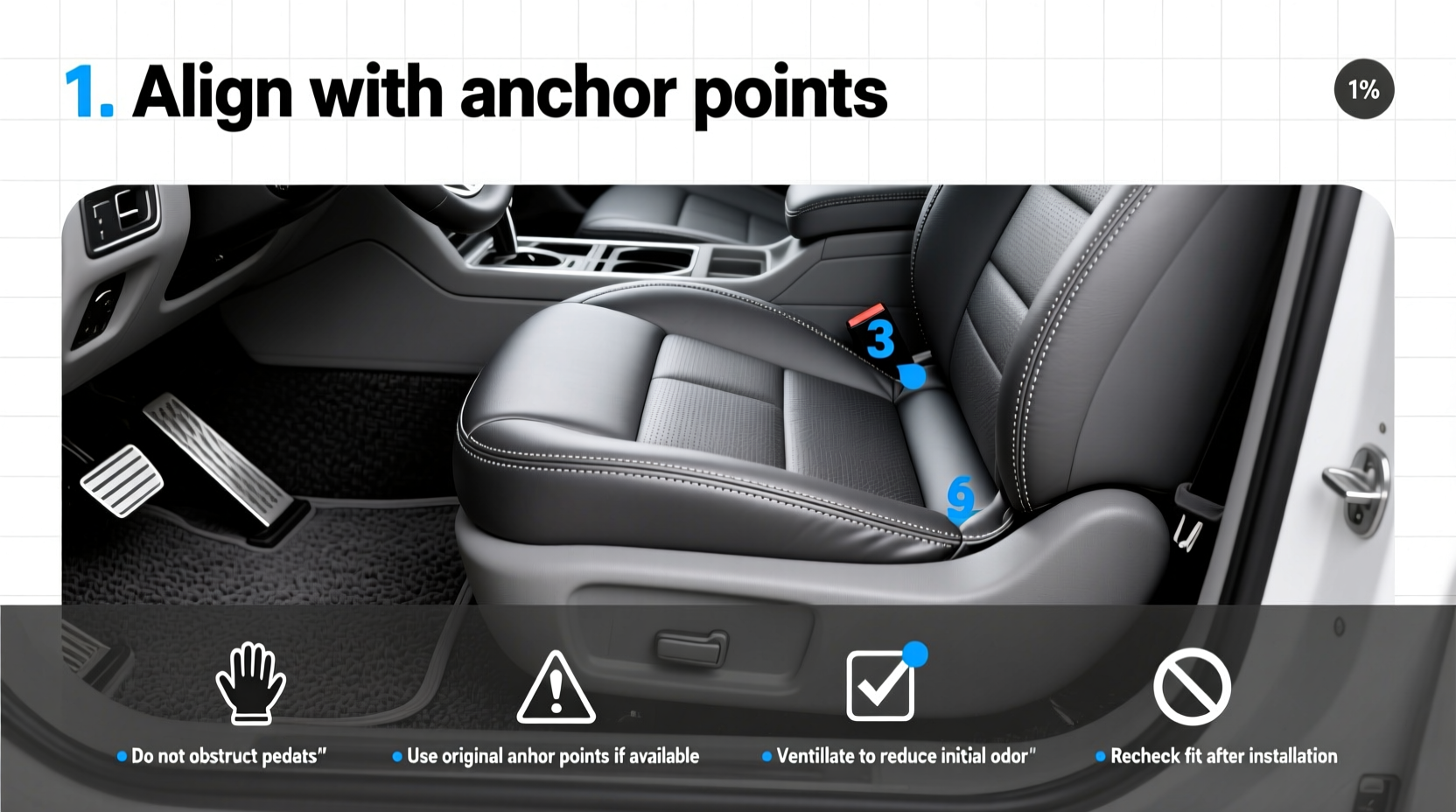
- Check Safety Integration: Ensure precise cutouts for side airbags, seatbelt anchors, and electronic controls. Misaligned covers can interfere with deployment 1.
- Review Installation Method: Some require tools or professional help. Look for stretch-and-strap systems for DIY ease.
• Vague material descriptions (e.g., \"luxury leather-feel\")
• No fit guarantee or return policy
• Missing airbag-safe certifications
• Customer photos showing wrinkling or poor alignment
💰 Price & Market Insights
Prices for leather seat covers vary widely based on material, fit, and brand reputation.
- Budget Tier ($50–$120): Mostly synthetic or bonded leather; universal fit; limited warranty.
- Mid-Tier ($120–$300): Semi-custom PU leather with better fit; includes padding and anti-slip backing.
- Premium Tier ($300–$800+): Genuine leather or hybrid; fully custom; professional installation often recommended.
Geographic pricing differences exist — U.S. and Canadian markets tend to offer more competitive rates due to higher competition. International buyers should factor in shipping and import fees. Value isn't always tied to price; some mid-tier brands outperform premium ones in durability testing. Read verified purchase reviews before assuming higher cost equals better quality.
📊 Top-Seller & Competitive Analysis
The following comparison highlights popular models across categories. Note: specifications may vary by retailer and region.
| Model | Material | Fit Type | Price Range | Notable Features |
|---|---|---|---|---|
| Brand A Elite Series | Top-grain leather | Fully Custom | $650 | Perforated panels, airbag-safe, 3-year warranty |
| Brand B ProGuard | Heavy-duty PU | Semi-Custom | $180 | Waterproof lining, non-slip base, tool-free install |
| Brand C EcoLux | Vegan leather (PVC-free) | Semi-Custom | $220 | Sustainable materials, breathable weave, odor-free |
| Generic Universal Kit | Bonded leather blend | Universal | $70 | Low cost, basic protection, mixed reviews on fit |
No single model dominates all use cases. Brand B stands out for practicality and reliability among non-luxury buyers, while Brand A appeals to those prioritizing long-term aesthetics and resale value.
📌 Customer Feedback Synthesis
Analyzing hundreds of verified buyer reviews reveals consistent patterns:
Common Praises:
- \"Dramatically improved the look of my older truck interior\"
- \"Spills wipe right off — great for kids and coffee runs\"
- \"Fit was accurate and installation took under 30 minutes\"
- \"No more sticky seats in summer\"
Frequent Complaints:
- \"Cover shifted during driving and exposed part of the original seat\"
- \"Smelled strongly of chemicals for weeks\"
- \"Airbag cutout didn’t align properly\"
- \"Edges started peeling after 14 months\"
The most satisfied customers purchased semi-custom or custom-fit models from reputable suppliers with clear sizing guides and responsive support.
🌐 Sourcing & Supplier Tips
Buy from established retailers or manufacturers with transparent policies. Online marketplaces like Amazon, AutoZone, or specialized auto accessory sites often provide user reviews and return options. For bulk purchases (e.g., fleet vehicles), contact distributors directly for volume discounts.
When sourcing internationally, confirm:
• Product labeling standards (e.g., \"genuine leather\" definitions vary by country)
• Import duties and lead times
• Warranty coverage and claim processes
Before finalizing any order, request sample swatches if available, and double-check return windows. Inspect packaging upon delivery and test fit immediately to catch defects early.
🧼 Maintenance, Safety & Legal Considerations
Proper upkeep extends life and ensures safety:
- Genuine Leather: Clean monthly with pH-balanced cleaner; condition every 3–6 months to prevent drying and cracking.
- Synthetic Leather: Wipe with damp cloth and mild soap; avoid harsh solvents that degrade coating.
- General: Never use abrasive scrubbers. Keep away from open flames or high-heat sources.
Safety-wise, ensure seat covers do not obstruct airbag deployment zones. While no universal law bans seat covers, some regions regulate modifications that impact safety systems. Always check local transportation authority guidelines or consult your vehicle manual 1. If your truck is leased, verify that aftermarket accessories won’t void terms.
✨ Conclusion
Choosing the best leather seat covers for trucks depends on balancing budget, usage intensity, and maintenance willingness. If you need long-term durability and a premium feel, opt for top-grain leather with a custom fit. For everyday protection and cost efficiency, high-quality PU leather in a semi-custom style delivers strong value. Always prioritize correct fit and safety compatibility over aesthetics alone. Measure twice, read specs carefully, and rely on real-world feedback to avoid common pitfalls.
❓ FAQs
No, if properly installed. High-quality covers act as a protective layer. However, cheap or ill-fitting ones may trap moisture or shift abrasively over time.
They can, but less than vinyl or plastic. Lighter colors and perforated designs reduce heat absorption. Using sunshades helps significantly.
Some newer models use recycled or biodegradable materials, but most conventional PU/PVC versions are petroleum-based. Look for PVC-free and recyclable claims if sustainability matters.
Reputable brands clearly label airbag-compatible designs and provide precise cutout locations. Review product diagrams and installation instructions carefully.
Yes, most modern leather seat covers preserve factory heating functions. Ensure the cover has thin conductive layers and doesn’t insulate the heating elements excessively.




 浙公网安备
33010002000092号
 浙B2-20120091-4