If you’re a typical user, you don’t need to overthink this. For most modern vehicles with coated leather seats, choose a liquid, pH-balanced conditioner — not heavy cream or wax-based formulas — and apply it every 3–6 months after cleaning. This is how to keep car leather soft without residue buildup or surface damage. Over the past year, more drivers have shifted toward lightweight, penetrating treatments because they work better with today’s factory-finished leathers. The real mistake isn’t skipping conditioning — it’s using the wrong kind. Avoid products with high silicone or lanolin; they sit on top, create shine, and can degrade the coating over time.
About Car Leather Conditioning
Car leather isn’t raw hide — it’s a composite material. Most modern vehicles use ‘protected’ or ‘coated’ leather: a thin layer of genuine animal skin topped with a durable polymer finish. This coating resists stains and wear but limits what can penetrate beneath. That’s why traditional leather oils or thick creams often fail: they don’t reach the fibrous layer that actually dries out. Instead, they build up on the surface, attracting dust and creating a greasy film.
If you’re a typical user, you don’t need to overthink this. Your goal isn’t to restore vintage saddle qualities — it’s to maintain flexibility, prevent micro-cracks, and preserve appearance. The core function of conditioning is moisture replenishment, not deep restoration. And since the protective layer blocks most absorption, formulation matters more than brand reputation.
Why Proper Leather Treatment Is Gaining Popularity
Lately, misinformation has crowded the market. Many assume all leather responds the same way to care products. But changes in automotive manufacturing have made old-school methods ineffective — even harmful. Automakers now use thinner hides with tighter grain finishes, prioritizing cost, consistency, and durability over natural texture. As a result, consumer-grade waxes and lanolin-rich balms no longer serve their purpose.
The shift toward pH-balanced, water-based liquids reflects a broader trend: alignment with material science rather than tradition. These newer formulas match the chemical profile of the leather’s topcoat (typically around pH 4.5–5.5), reducing risk of swelling, peeling, or discoloration. When applied correctly, they hydrate without compromising structural integrity.
This piece isn’t for keyword collectors. It’s for people who will actually use the product.
Types and Variants of Leather Treatments
Liquid/Lotion Formulas
- Pros: Penetrates coated surfaces better, low residue, fast drying, less likely to attract dirt
- Cons: May require more frequent application, subtle finish (not glossy)
When it’s worth caring about: If your car was made after 2010 and has smooth, slightly shiny seats.
When you don’t need to overthink it: If you drive daily and want low-maintenance upkeep.
Heavy Creams
- Pros: Feels rich during application, marketed as ‘deep nourishing’
- Cons: Sits on coated leather, leaves oily residue, attracts grime, hard to buff fully
When it’s worth caring about: Only if you own a pre-2000 vehicle with aniline or semi-aniline leather.
When you don’t need to overthink it: For any new or leased vehicle — skip it.
Wax or Silicone-Based Products
- Pros: High shine, immediate visual impact
- Cons: Blocks pores, accelerates aging of coating, interferes with future repairs or re-dyeing
When it’s worth caring about: Never, for interior automotive use.
When you don’t need to overthink it: If you see “silicone sealant” or “wax protection” on the label — walk away.
Key Features and Specifications to Evaluate
- pH Balance (4.5–5.5): Matches natural acidity of leather proteins; prevents fiber degradation
- Water-Based vs. Solvent-Based: Water-based is safer for interiors and coatings
- Residue Level: Should wipe clean with microfiber; no greasy smudge test
- UV Protection Additives: Optional but useful in sunny climates
- Scent: Unscented or lightly fragranced avoids lingering odors
If you’re a typical user, you don’t need to overthink this. You won’t find exact pH values listed on every bottle, but reputable brands like Colourlock, Carpro, and Gyeon disclose them. Look for terms like “for protected leather” or “compatible with factory finishes.” Avoid anything labeled “universal” or “suitable for shoes and car seats” — those are red flags for mismatched chemistry.
Pros and Cons of Conditioning Car Leather
Pros
- Prevents stiffness and fine cracking
- Maintains suppleness and comfort
- Extends lifespan of upholstery
- Improves resale value perception
Cons
- Risk of over-application leading to sticky surfaces
- Poor product choice can degrade topcoat
- Time investment every few months
- Some formulas may darken light-colored leather temporarily
The benefit far outweighs the effort — provided you select the right product. Skipping conditioning leads to brittle seams and irreversible damage. But misapplying heavy creams creates its own problems: slippery surfaces, odor retention, and interference with heating elements in seats.
How to Choose the Best Leather Treatment for Cars
A clear process beats guesswork. Follow this checklist:
Step-by-Step Checklist
- Identify your leather type: Check owner’s manual or manufacturer website. Terms like “leatherette,” “synthetic leather,” or “Nappa-coated” indicate a sealed surface.
- Clean first: Use a pH-neutral leather cleaner (e.g., Gyeon Mild Leather Cleaner) with a soft horsehair brush to remove embedded dirt.
- Dampen a microfiber applicator: Don’t soak it — excess moisture damages backing layers.
- Apply in small sections: Work into seams and folds like applying hand lotion.
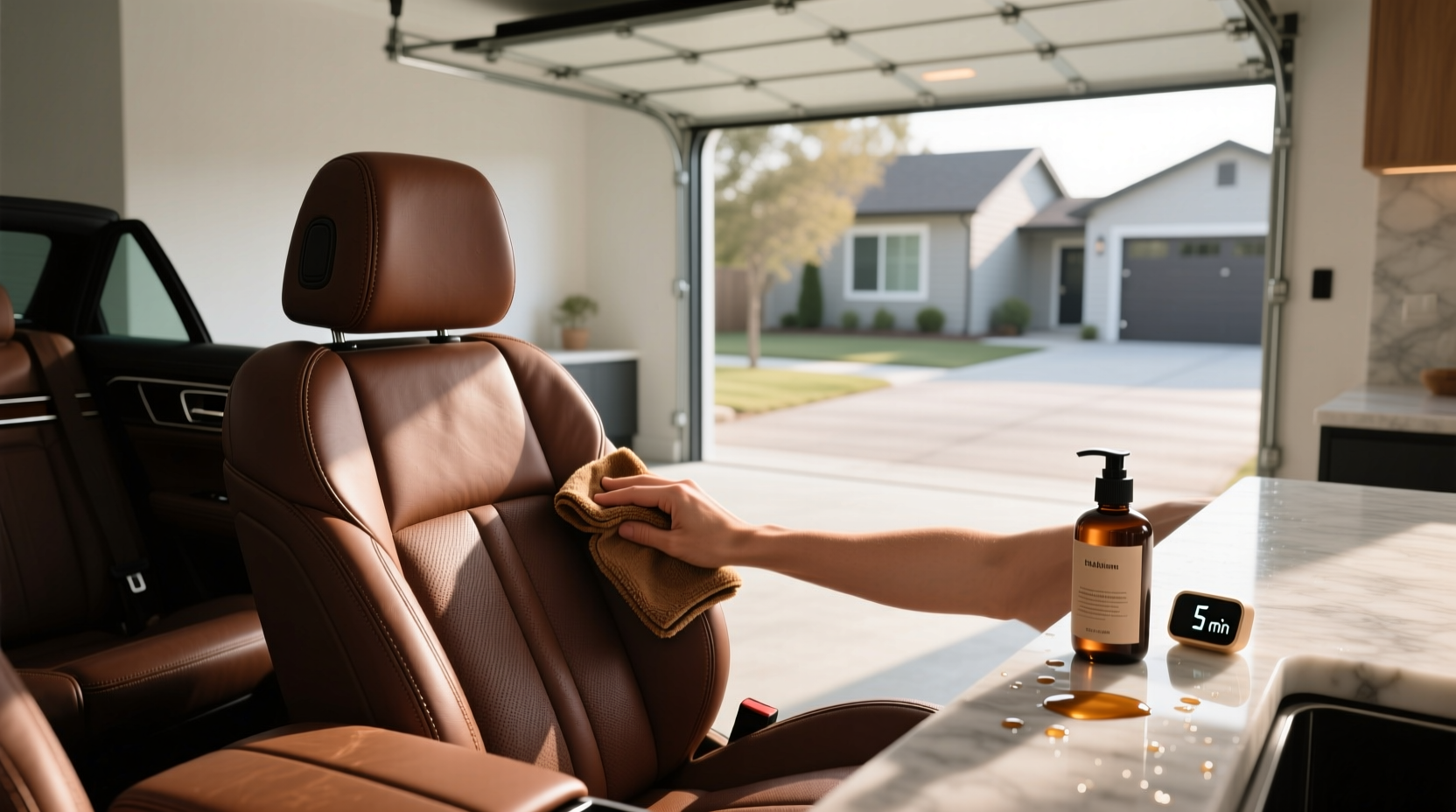
- Wait 5–10 minutes: Allows penetration without pooling.
- Buff thoroughly: Use a dry, lint-free microfiber to remove all residue.
Decision Flow
- Is your car newer than 2010? → Use liquid conditioner
- Do seats feel slick or resist water droplets? → Topcoat present → avoid creams/waxes
- Are seats heavily soiled? → Clean before conditioning, never condition over grime
- Do you live in a hot/sunny climate? → Prioritize UV inhibitors
Recommendations by Scenario
- Daily driver in moderate climate: Liquid conditioner every 4–6 months
- Garaged vehicle, low usage: Once per year sufficient
- Leather with visible cracks: Consult professional — home treatment won’t reverse damage
- Frequent spills (kids/pets): Clean more often; condition only after full drying
Red Flags / What to Avoid
- Products containing lanolin (from sheep wool) — clogs pores, goes rancid
- Silicone-heavy formulas — create artificial shine, trap heat
- “All-in-one” cleaners with built-in conditioner — usually compromise both functions
- Aerosol sprays with propellants — uneven application, inhalation risk
- Claims of “restores cracked leather” — marketing fiction
Price & Market Insights
Prices vary widely based on region, packaging size, and distribution channel. A 100ml bottle of specialty liquid conditioner may cost $15–$35 USD at direct retailers. Larger containers from detailer-focused brands offer better value per ml but may expire before use. Store-branded kits (e.g., Meguiar’s, Turtle Wax) are often cheaper but less precise in formulation.
If you’re a typical user, you don’t need to overthink this. Spending more doesn’t guarantee better results — some affordable options perform well. However, extremely cheap multi-use products (<$10 for 250ml) often rely on silicones to simulate effectiveness. Price may vary by region/model/seller, so verify ingredient lists regardless of branding.
Top-Seller & Competitive Analysis
Based on consistent feedback across independent channels, these brands stand out for compatibility with modern automotive leather:
| Brand | Formula Type | pH Info Available? | Residue Risk | Best For |
|---|---|---|---|---|
| Colourlock | Liquid | Yes | Low | Precision care, long-term preservation |
| Carpro | Lotion | Yes | Low | Detailers seeking clarity in performance |
| Gyeon | Liquid | Yes | Low | Integrated ceramic-compatible systems |
| Koch Chemie | Lotion | Limited | Moderate | European-market vehicles |
| Leathertique | Liquid | No (but tested safe) | Low | Users wanting simplicity |
Note: Availability may vary by region. Always check manufacturer specs before purchase.
Customer Feedback Synthesis
From verified user discussions and review patterns:
- High praise: Products that absorb quickly, leave a matte finish, and don’t stain clothing
- Common complaints: Oily residue, strong chemical smell, darkening light tan/cream seats
- Unexpected issues: Pump dispensers failing after short use, misleading volume claims
- Repeat purchases: Strongest among users who saw improved texture within two applications
If you’re a typical user, you don’t need to overthink this. Satisfaction correlates more with correct application than brand loyalty. Many negative reviews stem from using too much product or skipping the cleaning step.
Sourcing & Supplier Tips
Buy from authorized distributors or directly from brand websites when possible. Third-party sellers on open platforms may offer expired or reformulated batches. Look for batch codes and expiration dates. Independent detail shops often carry trial sizes — useful for testing before committing.
Verify retailer return policy before ordering online. Some specialty products aren’t eligible for return due to contamination risk.
Maintenance, Safety & Legal Considerations
Always test any product on a hidden area (e.g., back of center console) before full application. Observe for 24 hours for discoloration or stickiness. Keep away from children and pets — some solvents are toxic if ingested.
No universal regulation governs aftermarket leather treatments. However, volatile organic compound (VOC) content may be restricted in certain regions (e.g., California). To comply, check product SDS (Safety Data Sheet) or contact the manufacturer directly.
Conclusion
If you need long-lasting, safe maintenance for modern coated leather, choose a pH-balanced liquid conditioner and apply it after proper cleaning. Skip heavy creams and silicone-laden polishes — they do more harm than good. Frequency depends on usage: every 3–6 months for regular drivers, once yearly for occasional use. If you’re a typical user, you don’t need to overthink this. Stick to proven types, avoid outdated myths, and focus on consistency over intensity.




 浙公网安备
33010002000092号
 浙B2-20120091-4