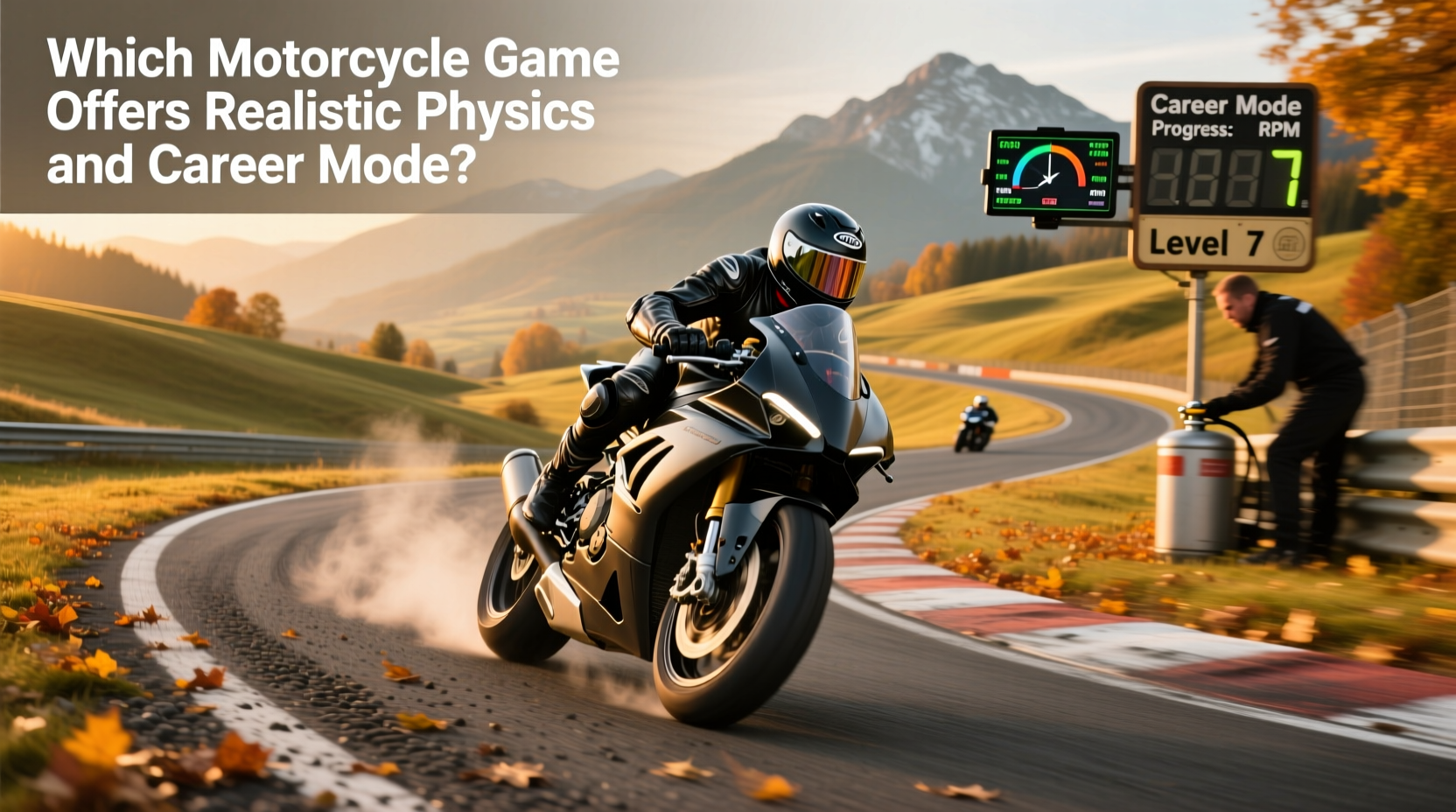
Lately, more riders and sim enthusiasts are turning to games that mirror real-world bike dynamics and structured racing careers. If you're looking for a motorcycle game with realistic physics and a meaningful career mode, Ride 5, the upcoming Ride 6 (Feb 2026), and the annual MotoGP series are your best starting points. How to choose depends on whether you prioritize licensed realism (MotoGP), open customization (Ride), or mechanical authenticity (Rims Racing). Avoid titles labeled 'arcade' if you want tire wear, lean-angle feedback, and suspension behavior that forces deliberate cornering. If you’re a typical user, you don’t need to overthink this—start with Ride 5 or MotoGP 24 unless you're deep into motocross or technical tuning.
This piece isn’t for keyword collectors. It’s for people who will actually use the product.
About Realistic Motorcycle Simulators
Realistic motorcycle games simulate not just speed, but weight transfer, traction loss, engine braking, and suspension compression under load. Unlike arcade racers, they require throttle control, late braking, and smooth steering inputs. The most credible ones are built using real telemetry data from actual bikes and tracks. These titles often include damage modeling, weather changes, and dynamic tire grip based on temperature and wear.
Career mode in this context means structured progression—earning licenses, joining teams, managing contracts, upgrading gear, and competing across seasons. It's not just a sequence of races; it's a narrative of growth. The best blend both elements: physics that punish recklessness and a career path that rewards consistency.
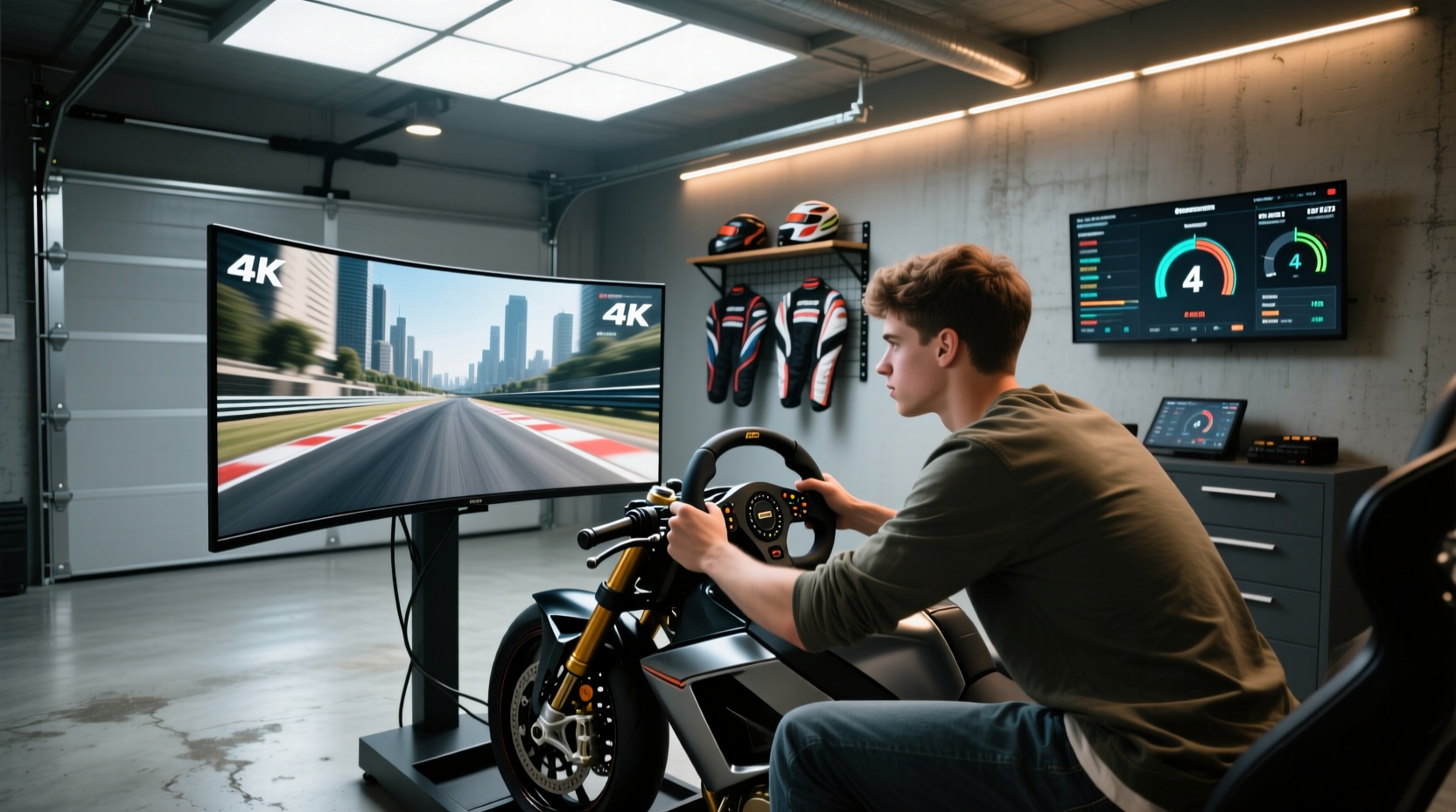
Why Realism Is Gaining Popularity
Over the past year, demand for high-fidelity two-wheeled sims has grown, driven by better hardware, accessible peripherals, and rider education interest. Enthusiasts aren't just playing to win—they're practicing trail braking or analyzing lean angles between sessions. Titles like Ride 6 now show cockpit views where you see your rider shift body position mid-corner, affecting balance. That level of detail wasn't common outside niche PC sims five years ago.
The rise also reflects broader trends in experiential gaming. Players want immersion, not just victory screens. A growing number use these games to prep for track days or understand racecraft fundamentals. If you’re a typical user, you don’t need to overthink this—realism now comes packaged with approachable assists, so you can scale difficulty as you improve.
Types and Variants
Different games target different riding disciplines and fidelity levels. Here’s how they break down:
Road Racing Sims (e.g., Ride Series, MotoGP)
- Pros: Full career ladders, manufacturer partnerships, diverse bike rosters, polished visuals
- Cons: Less mechanical transparency than pure sims; some physics abstraction
Technical Simulators (e.g., Rims Racing)
- Pros: Deep bike tuning, component-level physics, modular builds
- Cons: Minimal career structure; steep learning curve; weaker presentation
Motocross & Off-Road (e.g., MX Simulator)
- Pros: Most accurate dirt bike handling, terrain deformation, rider posture impact
- Cons: Limited career modes; repetitive track loops; less mainstream appeal
Open-World Riders (e.g., TT Isle of Man: Ride on the Edge 3)
- Pros: Free roam on real-world routes, scenic exploration, mixed traffic
- Cons: Career mode is light; physics tuned for accessibility over precision
If you’re a typical user, you don’t need to overthink this—if you ride sport bikes or follow MotoGP, stick with dedicated road racing titles.
Key Features and Specifications to Evaluate
When comparing options, assess these factors:
- Physics Engine Depth: Does it model front-end dive under braking? Rear squat on acceleration? Tire warm-up curves?
- Career Structure: Are there team negotiations, sponsorships, and seasonal objectives?
- Bike Variety: Range of models (sport, naked, vintage) and customization depth
- Platform Support: Native PS5/Xbox Series X performance vs. last-gen compromises
- Assist Options: Can you toggle ABS, traction control, or auto-clutch independently?
When it’s worth caring about: if you plan long-term play or use it for riding prep. When you don’t need to overthink it: if you mainly want weekend fun with friends or casual time trials.
Pros and Cons
- ✅ Pros: Skill transfer potential, immersive progression, detailed audio cues (engine note changes with RPM), replay value
- ❌ Cons: High entry barrier, hardware demands (VR/headset recommended), limited multiplayer depth compared to car sims
- ⚠️ Trade-off: More realism often means slower pacing and fewer instant rewards
This piece isn’t for keyword collectors. It’s for people who will actually use the product.
How to Choose the Right Motorcycle Game
Follow this checklist to narrow your choice:
Step-by-Step Checklist
- Determine your primary interest: racing progression, mechanical simulation, or free riding
- Check platform availability: PS5, Xbox, PC, or mobile
- Verify peripheral support: handlebars, motion rigs, VR headsets
- Review assist settings: look for granular control over driving aids
- Watch recent gameplay footage showing crash recovery and corner exits
Decision Flow
- If you follow MotoGP → MotoGP 24/25
- If you want variety + career → Ride 5 or Ride 6
- If you prefer mechanical depth → Rims Racing
- If you love off-road → MX Simulator
- If you enjoy scenic rides → TT Isle of Man 3
Recommendations by Scenario
- New to sims: Ride 5 with assists enabled
- Track day prep: MotoGP 24 with pro physics
- Tech tinkerers: Rims Racing on PC
- Budget option: Look for sales on Ride 4 or older MotoGP editions
Red Flags / What to Avoid
- Arcade handling masked by flashy graphics
- No option to disable stability control
- Career mode resets progress after one season
- Poor frame rate on next-gen consoles (check Reddit reviews 1)
- Locked content behind microtransactions
If you’re a typical user, you don’t need to overthink this—avoid anything without adjustable physics settings.
Price & Market Insights
New releases like Ride 6 and MotoGP 25 typically launch around $60 USD, though pricing may vary by region/model/seller. Older titles drop to $20–$30 within a year. Digital editions rarely include physical bonuses, but pre-orders sometimes unlock early access or cosmetic packs. PC versions may offer deeper mod support, increasing longevity. Always verify retailer return policy before purchase, especially for digital-only stores.
Top-Seller & Competitive Analysis
The following table compares leading titles on core criteria:
| Title | Physics Fidelity | Career Mode | Platforms | Notable Strength |
|---|---|---|---|---|
| Ride 6 (upcoming) | High | Comprehensive | PS5, Xbox, PC | New track scanning tech, expanded roster |
| Ride 5 | High | Structured | PS5, Xbox, PC | Polished UI, frequent updates |
| MotoGP 24 | Very High (licensed) | In-depth | PS5, PS4, Xbox, PC | Official team data, broadcast feel |
| Rims Racing | Extreme (technical) | Minimal | PC | Component-level simulation |
| MX Simulator | Very High (off-road) | Basic | PC, Mobile | Most authentic dirt physics |
| TT Isle of Man 3 | Moderate | Light | PS4/5, Xbox, PC | Free-roam Isle of Man course |
Data based on community testing and developer disclosures 2. Note: Physics labels reflect community consensus, not standardized scores.
Customer Feedback Synthesis
Based on aggregated user discussions from Reddit and YouTube comment sections:
- Frequent Praise: Ride series praised for bike variety; MotoGP for broadcast authenticity; MX Simulator for terrain interaction
- Common Complaints: Ride 4/5 criticized for AI inconsistency; Rims Racing for outdated visuals; TT Isle of Man 3 for shallow progression
- Unmet Expectations: Some users expected repair mechanics or garage management, which few titles include
If you’re a typical user, you don’t need to overthink this—most complaints stem from mismatched expectations, not broken features.
Sourcing & Supplier Tips
Purchase directly from official storefronts (PlayStation Store, Microsoft Store, Steam) to ensure patch eligibility and refund options. Third-party keys may be cheaper but carry risk of revoked access. Physical copies are rare; when available, confirm region compatibility. For PC, check system requirements against your GPU and RAM—high-fidelity physics engines are memory-intensive. If buying used, ensure prior owner hasn’t activated online passes.
Maintenance, Safety & Legal Considerations
No legal restrictions apply to owning or playing these games. However, prolonged sessions may cause eye strain or hand fatigue—take breaks every 45–60 minutes. Controllers should be cleaned periodically to prevent stick drift. Verify local regulations if streaming gameplay commercially. No in-game settings replace real-world safety training; do not attempt to replicate risky maneuvers on actual roads.
Conclusion
If you need a balanced mix of realism and career depth, choose Ride 5 or the upcoming Ride 6. If you follow premier-class racing closely, go with MotoGP 24 or its successor. If you're focused on mechanical authenticity and don't mind minimal storytelling, Rims Racing delivers unmatched detail. If you’re a typical user, you don’t need to overthink this—start with a title that matches your riding interests, not just specs.
Everything You Need to Know
What motocross games have realistic physics?
MX Simulator is widely regarded as having the most realistic motocross physics, modeling terrain deformation, rider posture, and suspension travel with high accuracy. It’s particularly strong in how it simulates rear-wheel dig and front-end bounce on jumps. While it lacks a robust career mode, its physics engine is unmatched in off-road categories. If you’re a typical user, you don’t need to overthink this—choose MX Simulator if off-road authenticity matters most.
Which driving game has the most realistic physics?
Among two-wheeled titles, Rims Racing pushes mechanical realism furthest, allowing players to adjust individual components like fork oil viscosity or chain tension. However, for overall balance of realism and usability, Ride 5 and MotoGP 24 are more complete packages. If you’re a typical user, you don’t need to overthink this—focus on games that let you disable assists and feel lean-angle feedback.
What is the most realistic bike simulator?
The most realistic experience currently comes from Ride 6 (releasing Feb 2026) and MotoGP 25, both leveraging laser-scanned tracks and real manufacturer data. Ride 6 adds dynamic weather and improved rider animation that affects handling. For pure technical depth, Rims Racing remains unmatched, though its interface is less polished. If you’re a typical user, you don’t need to overthink this—realism today is accessible without needing engineering knowledge.
What is the most realistic MotoGP game?
MotoGP 24 is considered the most accurate MotoGP simulation, developed with official team input and telemetry. It includes real rider animations, team strategies, and season-long championship structures. The physics reflect actual machine behavior at circuits like Mugello and Phillip Island. Upcoming MotoGP 25 aims to refine this further. If you’re a typical user, you don’t need to overthink this—stick with the latest MotoGP title for the closest replica of premier-class racing.
Are there realistic motorcycle games for mobile?
Yes, MX Simulator and Motorcycle Real Simulator offer surprisingly capable physics on Android and iOS, especially when paired with external controllers. They lack the graphical fidelity of console titles but maintain core dynamics like weight transfer and throttle control. Performance may vary by device. If you’re a typical user, you don’t need to overthink this—mobile options are viable for casual practice or travel use.




 浙公网安备
33010002000092号
 浙B2-20120091-4