Short introduction
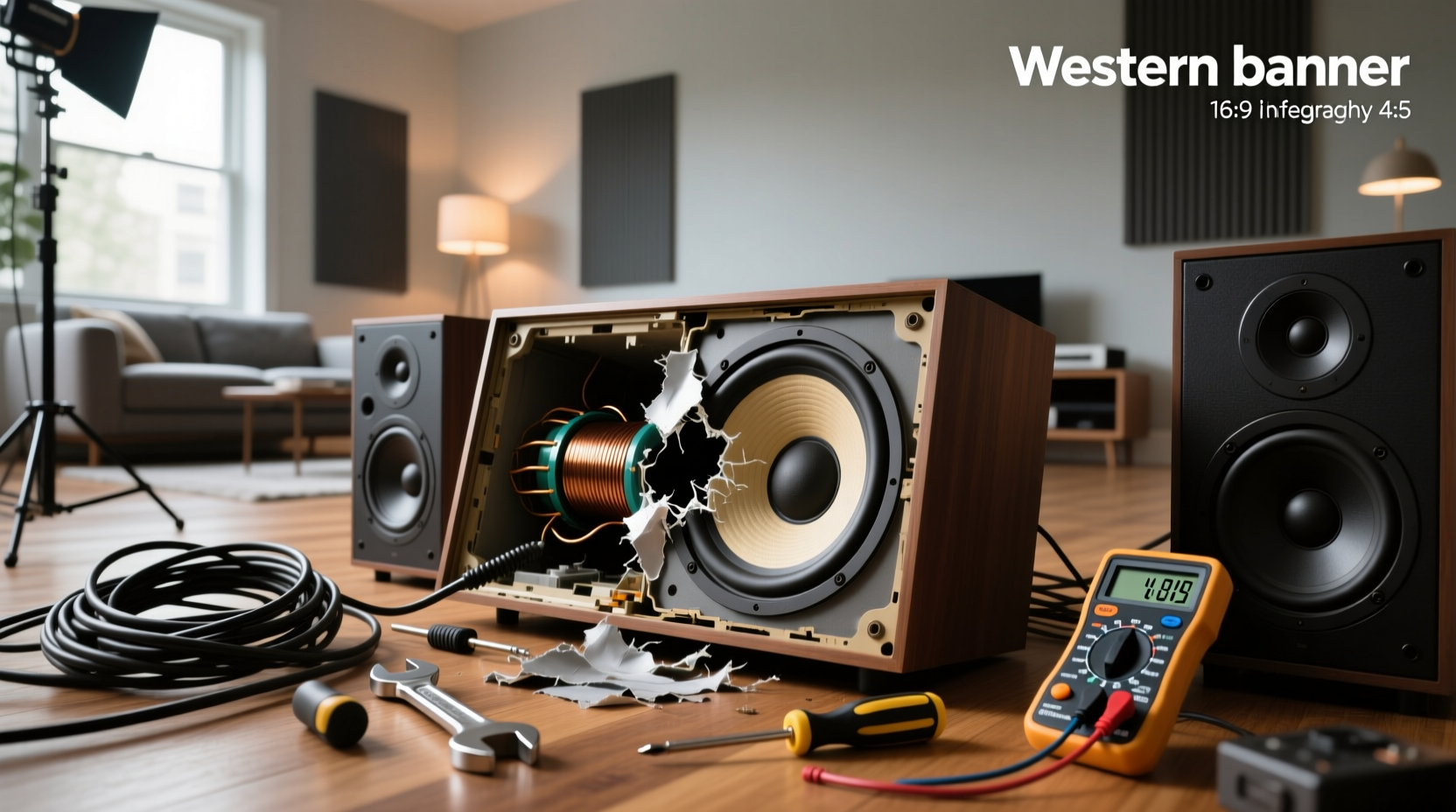
If you’re hearing distorted bass, no low-end output, or unusual scraping sounds when playing audio, you may already have a blown subwoofer. How to tell if your subwoofer is blown? Start with two quick checks: listen for crackling at low volume and gently press the cone to test for smooth movement. If you feel resistance, grinding, or excessive floppiness, the driver is likely damaged. Over the past year, more users have reported premature sub failures—often due to mismatched amplification or poor ventilation in compact enclosures.
What to look for in a failing subwoofer isn’t always obvious. Some units appear intact but produce no sound; others rattle without cutting out completely. If you’re a typical user, you don’t need to overthink this. Most issues stem from one of three causes: mechanical deformation (torn surround or misaligned voice coil), electrical failure (open or shorted coil), or suspension fatigue (worn spider). This piece isn’t for keyword collectors. It’s for people who will actually use the product.

About Blown Subwoofers
A "blown" subwoofer doesn’t mean it exploded—it refers to any permanent damage that degrades performance or stops function entirely. Damage can be mechanical, thermal, or electrical. Unlike minor distortion under heavy load, a blown unit fails even at moderate levels. The term covers partial and total failures alike.
Subwoofers generate deep bass by moving air through large cone excursions. This requires precise alignment between the voice coil, magnet structure, and suspension system (spider and surround). When any part shifts, overheats, or tears, the system loses efficiency. Symptoms vary based on failure mode, which is why diagnosis must combine auditory, tactile, and electrical checks.
Why This Is Gaining Popularity
Lately, high-output audio systems have become standard in both vehicles and home theaters. With increased power comes higher risk of mismatched components. Recently, compact powered subs have gained traction—but their sealed designs trap heat, accelerating voice coil degradation if overdriven. Users upgrading factory car stereos often pair powerful amps with stock-grade enclosures, creating conditions ripe for early blowouts.
Another trend: DIY installations without proper impedance matching. If you’re a typical user, you don’t need to overthink this. But ignoring basic compatibility rules dramatically increases failure odds. More online tutorials now emphasize preventive testing—especially before buying used subs.
Types and Variants
| Type | Pros | Cons |
|---|---|---|
| Sealed Enclosure | Tight bass, resistant to over-excursion | Less efficient, requires more power |
| Ported (Bass Reflex) | Louder output, deeper extension | More prone to bottoming out |
| Passive Radiator | No port noise, compact design | Sensitive to overdrive, harder to repair |
| Free-Air / Infinite Baffle | Simple install in cars | Poor control, easily damaged |
Each type handles stress differently. Ported systems deliver louder perceived bass but increase risk of mechanical impact when pushed hard. Sealed boxes protect against over-excursion but demand clean signal input. If you’re a typical user, you don’t need to overthink this—just match enclosure type to usage intensity.
Key Features and Specifications to Evaluate
- RMS Power Rating: Continuous power handling matters more than peak wattage. Exceeding RMS leads to thermal failure.
- Impedance (Ohms): Must match amplifier output. Mismatches cause clipping or overheating.
- Frequency Range: Realistic specs only. Claims below 20Hz in small enclosures are often misleading.
- Voice Coil Diameter: Larger coils dissipate heat better but require robust suspension.
- Sensitivity (dB): Higher sensitivity means more output per watt—useful for lower-powered setups.
When it’s worth caring about: during initial setup or when upgrading an existing system. When you don’t need to overthink it: if replacing a known working unit with identical specs.
Pros and Cons
- Early detection prevents further damage to amplifiers.
- Simple tests require only basic tools (multimeter, fingers).
- Used market allows testing before purchase.
- Some repairs extend life cost-effectively.
- Diagnosis isn't always definitive without equipment.
- Partial damage may mimic other issues (loose wiring).
- Reconing services are scarce and may cost near replacement value.
- Modern compact designs sacrifice serviceability for size.
How to Tell if a Subwoofer Is Blown (Buying Guide)
This guide applies whether you're diagnosing your own unit or inspecting one before purchase.
Step-by-Step Checklist
- Listen at low volume: Play bass-heavy content. Distortion, buzzing, or silence are red flags.
- Inspect visually: Look for torn surrounds, detached dust caps, or scuff marks near the voice coil gap.
- Test cone movement: Gently press the center of the cone. It should move smoothly inward and return evenly. Any scraping or sticking indicates misalignment.
- Check tinsel leads: These thin wires connect the voice coil to terminals. Frayed or broken strands mean fatigue.
- Measure resistance: Use a multimeter on ohms setting. Disconnect all wires first. A reading significantly off nominal (e.g., 1Ω instead of 4Ω) suggests a short. Infinite resistance means open circuit.
- Smell test: Burnt odor near the magnet assembly confirms overheating.
Decision Flow
- No sound + normal resistance → Check amplifier and wiring first.
- No sound + infinite resistance → Blown voice coil.
- Distorted sound + rough cone movement → Mechanical damage.
- Intermittent output + visible wire damage → Tinsel lead failure.
Recommendations by Scenario
- Home theater: Prioritize sealed enclosures with conservative power matching.
- Car audio: Ensure adequate airspace and secure mounting to prevent vibration damage.
- Budget buyers: Test every used unit personally—don’t rely on seller claims.
- High-power setups: Monitor for thermal shutdown signs; allow cooldown periods.
Red Flags / What to Avoid
- Ignoring clipping indicators on amplifiers.
- Using undersized wiring that limits current flow.
- Mounting subs where airflow is restricted.
- Assuming silence equals blown—always rule out source or amp issues first.
- Purchasing without testing, especially online.
Price & Market Insights
Replacement costs vary widely by size, brand, and build quality. Entry-level 10-inch subs start around $50, while high-end models exceed $500. Repair kits (refoam, recone) range from $15–$40 but require skill to apply correctly. Labor for professional reconing may exceed new unit cost.
Prices may vary by region/model/seller. Used units often sell at 30–60% of retail, but condition is inconsistent. Always verify return policy before purchase. Check manufacturer specs for exact replacement parts if maintaining original system integrity matters.
Top-seller & Competitive Analysis
Popular brands include JL Audio, Rockford Fosgate, and Pioneer. Chinese OEMs dominate budget segments via e-commerce platforms. Performance consistency tends to favor established brands, though some generic units perform well within rated limits.
| Brand | Typical Use Case | Durability Feedback | Repairability |
|---|---|---|---|
| JL Audio | High-fidelity car audio | Consistently positive | Moderate (service network) |
| Rockford Fosgate | Power-focused builds | Good, occasional coil issues | Available kits |
| Pioneer TS-W | Budget upgrades | Mixed under high stress | Limited OEM support |
| OEM Generic (Alibaba) | Entry-level replacements | Inconsistent—verify batch reviews | Rarely supported |
Customer Feedback Synthesis
Most frequent praise: Smooth bass response in matched systems, durability under correct usage, ease of integration with modern AV receivers.
Most common complaints: Premature failure when paired with mismatched amplifiers, lack of clear failure indicators, difficulty sourcing replacement parts for discontinued models, poor labeling of power ratings on budget units.
Sourcing & Supplier Tips
- Buy from suppliers offering bench-test videos for used units.
- Verify warranty terms—some exclude damage from improper amplification.
- For bulk purchases, request sample units before full order.
- On e-commerce sites, filter for sellers with detailed diagnostic photos.
- If you’re a typical user, you don’t need to overthink this—stick to reputable brands unless testing thoroughly.
Maintenance, Safety & Legal Considerations
Regular inspection prevents sudden failure. Keep vents clear, ensure secure connections, and avoid continuous operation at maximum volume. While no universal regulations govern subwoofer safety, local noise ordinances may limit output in residential areas. Confirm local regulations if installing in mobile applications.
To maintain longevity: allow cooling time after extended use, use inline fuses for car systems, and store spares in dry environments. Never operate a damaged subwoofer at high power—risk of fire exists with severely shorted coils.
Conclusion
If you need reliable bass and hear distortion or silence, check the subwoofer using both tactile and electrical methods. If you’re a typical user, you don’t need to overthink this—most failures show clear symptoms. For light use, replace with same-spec unit. For demanding setups, invest in higher headroom and proper enclosure tuning.
Everything You Need to Know
Can a subwoofer partially blow?
Yes. Partial failure includes warped voice coils, frayed tinsel leads, or small tears in the surround. These cause intermittent distortion or reduced output rather than total silence. Testing movement and resistance helps identify subtle damage.
Does a blown subwoofer draw power?
An open-circuit sub draws no current. A shorted coil may still draw power and could overload the amplifier. Always disconnect a suspected blown sub and test the amp with a known-good load.
Can I fix a blown subwoofer myself?
Basic repairs like refoaming or replacing tinsel leads are possible with kits and patience. Reconing requires precision tools and clean workspace. For most users, replacement is faster and more reliable unless sentimental or rare model.
Will a blown sub damage my amplifier?
A completely open sub presents no load and usually won’t harm the amp. A shorted voice coil creates a near-zero impedance path, which can overheat amplifier output stages. Always isolate faulty subs promptly.
How do I prevent my subwoofer from blowing?
Match RMS ratings between amp and sub, avoid clipping by setting gains properly, ensure adequate ventilation, and use a high-pass filter to block non-bass frequencies. If you’re a typical user, you don’t need to overthink this—staying within published specs prevents most failures.




 浙公网安备
33010002000092号
 浙B2-20120091-4