
Short introduction
If you’re hearing distorted bass, rattling sounds, or no output at all—even after checking amplifier settings—it’s time to assess your subwoofer. How to tell if a subwoofer is blown comes down to three key checks: audio behavior, physical movement, and electrical resistance. For most users, a quick push test and multimeter reading are enough to confirm failure. Look for stiff or grinding cone motion, visible tears in the surround, or a lack of expected impedance (e.g., open circuit on a 4-ohm driver). If you’re a typical user, you don’t need to overthink this. Most failures show clear signs—either it moves smoothly and plays clean, or it doesn’t.
This piece isn’t for keyword collectors. It’s for people who will actually use the product.
About what does a blown subwoofer look like
A blown subwoofer refers to a driver that can no longer reproduce low frequencies accurately due to mechanical or thermal damage. This condition may result from over-powering, prolonged clipping, physical impact, or aging components. While some assume a completely dead unit is the only sign, many subwoofers degrade gradually. What does a blown subwoofer look like? Visually, it might show a torn cone, separated surround, burnt voice coil, or misaligned former rubbing against the magnet gap. In less obvious cases, the exterior appears intact, but internal suspension elements have failed.
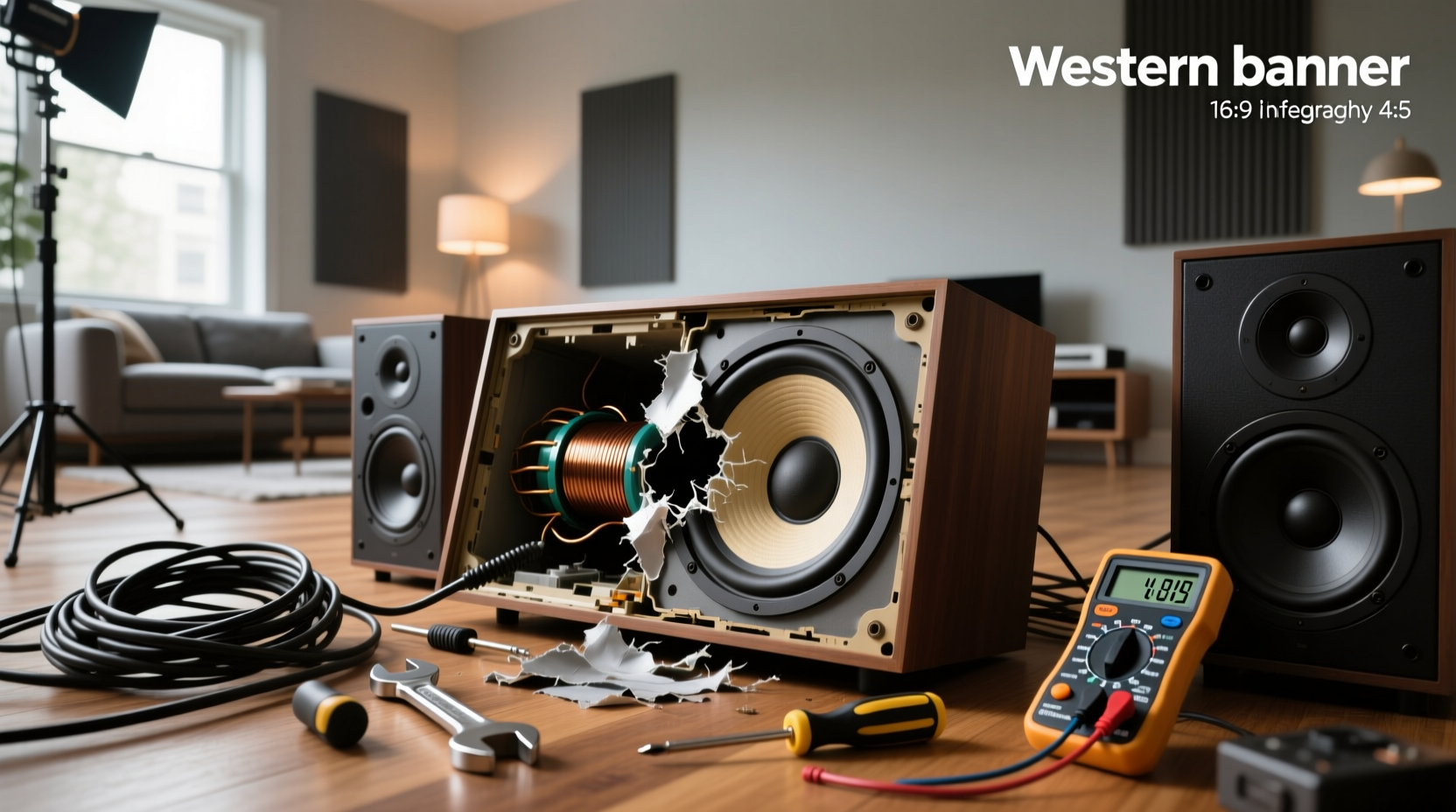
The term “blown” is often used loosely. Technically, it means permanent structural or electrical failure—not temporary distortion under load. Some drivers still produce sound when compromised, leading to confusion about whether they’re fully nonfunctional. Understanding the spectrum of failure helps avoid premature replacement or continued use that risks amplifier damage.
Why this is gaining popularity
Lately, more users are troubleshooting subwoofers at home, especially with the rise of DIY car audio builds and secondhand gear purchases. Over the past year, online searches for symptoms like scratchy bass, weak output, and testing methods have increased—not because subwoofers are failing more often, but because access to repair knowledge has improved. Forums, YouTube teardowns, and affordable multimeters empower owners to diagnose issues without relying on shops.
The shift reflects broader trends: higher-output amplifiers in consumer systems, greater interest in maximizing bass performance, and tighter budgets pushing buyers toward used equipment. These factors increase exposure to damaged units. Knowing how to evaluate a subwoofer before buying—or after noticing problems—has become essential. If you’re a typical user, you don’t need to overthink this. The tools and techniques are straightforward, and the stakes (amp safety, listening quality) justify basic competence.
Types and variants
Subwoofers vary by design, which affects how they fail and how easily you can detect damage.
| Type | Failure Modes | Detectability | Repair Feasibility |
|---|---|---|---|
| Car Audio (Enclosed) | Overheated voice coils, bottomed-out cones, torn surrounds | High – often audible and tactile | Moderate – reconing possible but labor-intensive |
| Home Theater (Ported/Sealed) | Stretched spiders, delaminated cones, shifted magnets | Moderate – may require disassembly to confirm | Low – OEM parts rarely available |
| Powered (All-in-One) | Blown driver + amp protection kicking in | Variable – some units mute entirely when faulty | Very Low – usually replaced as unit |
| Passive Component | Open voice coil, shorted winding, mechanical binding | High – direct access allows full inspection | High – common recone kits exist |
Each type responds differently to stress. Car subs endure vibration and temperature swings; home theater models face long-term creep in foam surrounds; powered units hide diagnostics behind firmware logic. But across types, the core principles of diagnosis remain consistent: observe sound, feel movement, measure resistance.
Key features and specifications to evaluate
When assessing potential failure, focus on measurable traits—not marketing claims.
- Impedance (Ohms): Use a multimeter to check DC resistance. A healthy 4-ohm sub typically reads 3.2–3.8Ω. An open circuit (OL) or near-zero reading indicates a broken or shorted voice coil. When it’s worth caring about: during initial fault diagnosis or when verifying used gear. When you don’t need to overthink it: if audio and movement tests already show clear failure.
- Cone Movement: Gently press the center dome straight inward. It should return smoothly and evenly. Stiffness suggests seized coil; floppiness implies spider damage. When it’s worth caring about: anytime distortion appears suddenly. When you don’t need to overthink it: if the speaker produces clean sound at moderate levels.
- Surround Condition: Inspect the rubber or foam ring connecting cone to basket. Cracks, shrinking, or separation indicate age or stress. When it’s worth caring about: in older systems or high-humidity environments. When you don’t need to overthink it: if the driver performs well and shows no rattle.
- Voice Coil Appearance: Visible charring, melted former, or debris inside the gap confirms thermal overload. Requires removing grille or partial disassembly. When it’s worth caring about: after suspected clipping or sustained high-volume use. When you don’t need to overthink it: if other tests pass and sound remains clean.
If you’re a typical user, you don’t need to overthink this. Most real-world failures present unambiguous evidence across multiple indicators.
Pros and cons
Advantages of early detection:
- Prevents further damage to amplifier via DC offset or short circuits
- Saves time diagnosing system-wide audio issues
- Enables informed decisions on repair vs. replacement
- Protects investment in used or high-end drivers
Limitations and trade-offs:
- Some internal faults aren't externally visible
- Reconing requires skill and proper tools
- False positives possible if wiring issues mimic driver failure
- Time spent testing may not be justified for low-cost units
This isn’t about perfection—it’s about practicality. If you’re a typical user, you don’t need to overthink this. Focus on actionable signals, not edge cases.
How to tell if a subwoofer is blown (Buying guide)
Whether evaluating new, used, or suspect gear, follow this step-by-step process.
Step-by-step checklist
- Listen critically: Play known bass-heavy tracks at moderate volume. Listen for fuzziness, buzzing, or uneven output.
- Inspect visually: Remove grilles and examine cone, surround, and dust cap for tears or warping.
- Perform push test: Press cone gently toward magnet. Should move freely and rebound. Any grit, stickiness, or wobble is suspect.
- Check terminals: Ensure wires aren’t touching frame or each other. Clean corrosion if present.
- Measure resistance: Disconnect leads, set multimeter to ohms, touch probes to terminals. Compare to rated impedance.
- Power test (optional): With amp disconnected from main system, send tone signal and observe cone motion for smooth travel.
Decision flow
- Hearing distortion? → Check cone movement → If stiff/grinding → Likely blown
- No sound? → Measure resistance → Open circuit? → Confirmed blown
- Moves fine and reads correct ohms? → Problem likely elsewhere (amp, wiring, crossover)
Recommendations by scenario
- New installation acting up: Verify wiring first. Many “blown” reports stem from reversed polarity or ground loops.
- Used purchase evaluation: Always perform push and meter tests. Sellers often claim “works great” despite minor distortion.
- Intermittent issues: May indicate partial coil rub or loose tinsel lead. Monitor closely—failure may progress rapidly.
Red flags / what to avoid
- Ignoring a burning smell—this indicates active overheating
- Continuing to drive a sub that makes scraping noises—can destroy amplifier
- Assuming impedance mismatch caused failure—check actual resistance before blaming amp specs
- Using compressed air to clean voice coil gaps—can force debris deeper into motor structure
If you’re a typical user, you don’t need to overthink this. Trust the triad: sound, motion, resistance.
Price & market insights
Replacement costs vary widely based on size, brand, and enclosure type. Standalone component subwoofers range from $30 for basic 10-inch models to over $500 for high-excursion competition-grade units. Fully integrated powered subs often cost more to replace due to proprietary enclosures and electronics.
Pricing may vary by region/model/seller. Used marketplaces frequently list functional-looking units with hidden damage. Bargains below 50% of retail for popular models should prompt thorough testing. Always verify return policy before finalizing purchase, especially online. Check manufacturer specs for exact impedance and power ratings—marketing labels like “1000W max” are often misleading.
Top-seller & competitive analysis
No single brand dominates the replacement subwoofer segment, but certain models appear consistently in repair and upgrade paths.
| Model | Common Issues | Test Reliability | Average Lifespan (User Reported) |
|---|---|---|---|
| Kicker CompC 12" | Foam surround degradation, voice coil rub | High – easy to inspect and test | 5–7 years |
| JL Audio W6v3 | Spider fatigue, terminal corrosion | High – clear failure modes | 6+ years |
| Skar Audio EVL Series | Overpowering susceptibility, basket flex | Moderate – robust build masks early wear | 4–6 years |
| Rockford Fosgate P3 | Torn surrounds, lead wire fatigue | High – predictable failure points | 5+ years |
These models represent different value tiers but share one trait: when they fail, symptoms are usually detectable through standard methods. There’s no benefit in choosing obscurity to avoid failure—common models have better community support and spare part availability. If you’re a typical user, you don’t need to overthink this. Stick with established designs and test thoroughly.
Customer feedback synthesis
Analysis of forum discussions and reviews reveals recurring themes:
Most frequent positive comments:
- “Easy to diagnose using multimeter”
- “Clear improvement after replacing old, degraded sub”
- “Push test confirmed issue immediately”
Most common complaints:
- “Seller claimed working but had stiff cone”
- “Didn’t realize partial blow would still play distorted”
- “Burnt smell appeared suddenly during normal use”
- “Replaced amp first, then realized sub was causing fault”
A key insight: many users delay diagnosis, assuming the problem lies in electronics. Early mechanical testing reduces misdiagnosis. If you’re a typical user, you don’t need to overthink this. Start simple—sound and touch reveal more than assumed.
Sourcing & supplier tips
For replacements or repairs:
- Purchase from suppliers offering return windows (minimum 14 days)
- Verify compatibility: impedance, diameter, mounting depth, displacement
- Consider recone kits for vintage or discontinued models (available from specialty shops)
- Avoid bulk import brands lacking technical documentation
- Check community forums for known batch issues or counterfeit warnings
If sourcing used units, insist on video demonstration of both audio and cone movement. Photos alone miss critical details. Confirm local regulations regarding electronic waste disposal if discarding old drivers.
Maintenance, safety & legal considerations
Regular maintenance extends life:
- Keep vents and ports clear of dust and debris
- Avoid prolonged operation at maximum volume with distorted source material
- Ensure secure mounting to prevent vibration-related damage
- Use clean power sources—dirty electricity stresses amplifiers and speakers
Safety notes:
- Disconnect power before handling terminals
- Wear eye protection when inspecting damaged drivers—fragments can break off
- Do not operate a subwoofer producing burning odors—fire risk exists
To verify compliance or disposal rules, check local environmental agency guidelines. No universal certification governs end-of-life speaker handling, but proper e-waste channels should be used.
Conclusion
If you need reliable bass and your sub fails the push test or shows open circuit on a meter, replacement is the logical step. If you’re a typical user, you don’t need to overthink this. Clear symptoms mean clear actions. Don’t chase marginal performance from damaged hardware—clean input and functional components deliver better results than forcing compromised gear.
Everything You Need to Know
Does a blown subwoofer still work?
Sometimes, but not properly. A partially damaged sub may still produce sound, often with distortion, buzzing, or reduced output. However, continued use risks amplifier damage and degrades listening quality. If you’re a typical user, you don’t need to overthink this. Once performance drops noticeably, treat it as failed.
What does a blown subwoofer sound like?
It typically produces a fuzzy, rattling, or scratching noise instead of clean bass. At low volumes, it might seem quiet or thin. In severe cases, there's no sound at all. Some describe it as an 'air leak' or 'cardboard flapping' effect. When it’s worth caring about: if the issue persists across different music types and volume levels.
Can you fix a blown subwoofer?
Yes, in some cases—especially with component drivers. Reconing services can replace voice coils, surrounds, and spiders. However, labor often exceeds the cost of a new mid-tier sub. Repair feasibility depends on model availability and personal skill level. When it’s worth caring about: for rare, high-end, or sentimental units. When you don’t need to overthink it: for budget or mass-market models.
How do I test a subwoofer without an amplifier?
Use a multimeter to check voice coil resistance and perform a manual push test. Touch the probes to the terminals—if it reads OL (open loop) or zero ohms, the coil is damaged. Gently press the cone: it should move smoothly and return without sticking. You can also connect a 1.5V AA battery briefly to the terminals; a healthy sub will 'pop' outward once. Lack of movement indicates seizure.
Is it safe to run an amplifier with a blown subwoofer?
No. A blown sub with a shorted voice coil can overload the amplifier, triggering protection mode or causing permanent damage. Even an open circuit changes load impedance, affecting stability. Always disconnect faulty drivers before powering the system. When it’s worth caring about: during troubleshooting sequences. When you don’t need to overthink it: if any doubt exists—disconnect and test.




 浙公网安备
33010002000092号
 浙B2-20120091-4