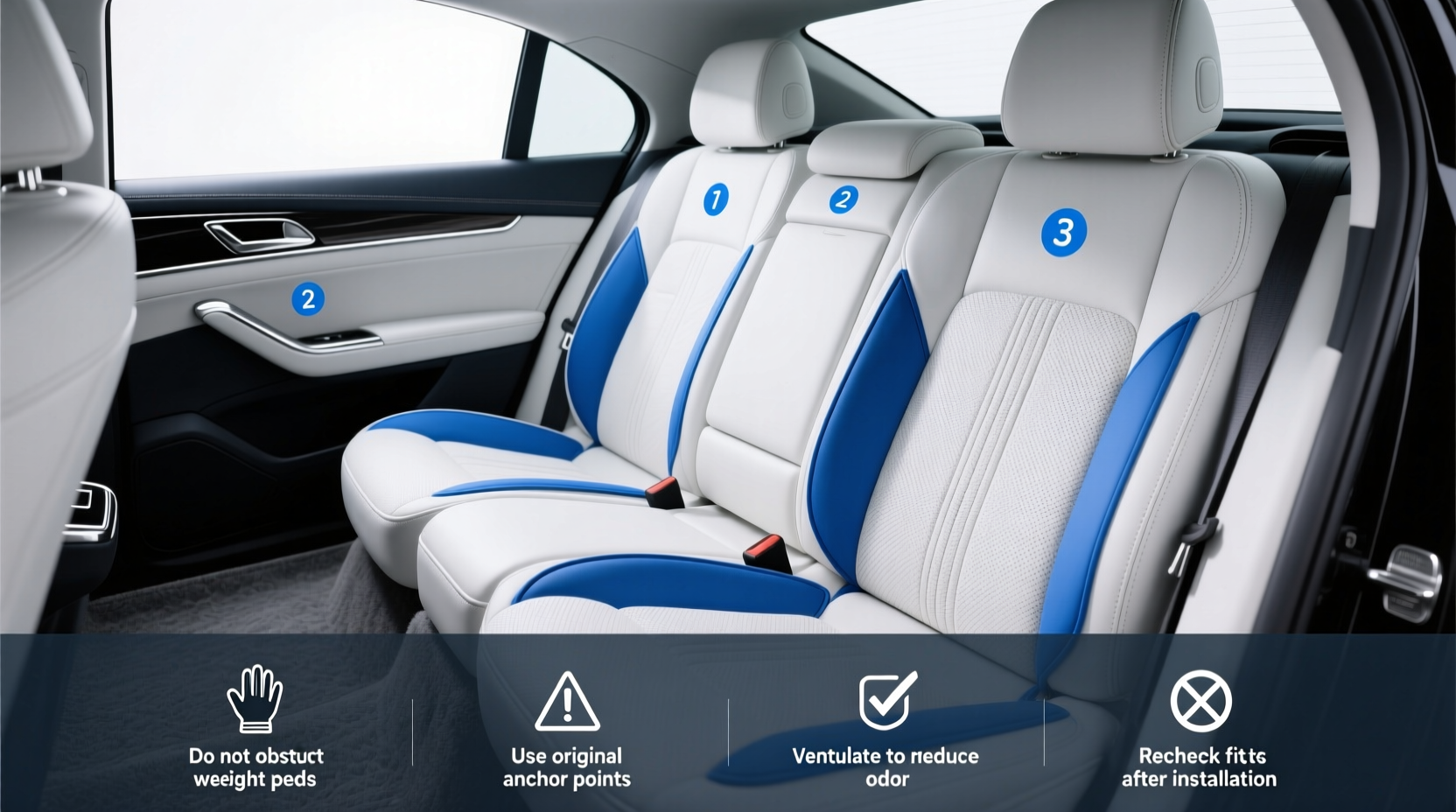
If you're asking how to choose blue and white car seat covers, start by matching the cover type to your vehicle model and usage pattern. For daily drivers, prioritize durable, machine-washable materials like polyester or neoprene with a custom-fit design. Families should look for waterproof liners and easy-clean surfaces, while style-focused buyers may prefer reversible designs or embroidery options. Avoid universal-fit covers if your seats have side airbags or complex contours—misfitting covers can interfere with safety systems ⚠️. Always verify compatibility with headrests, seat belts, and built-in electronics before purchasing.
About Blue and White Car Seat Covers
Blue and white car seat covers are protective fabric overlays designed to fit over original vehicle seating. They combine functional protection with decorative appeal, commonly used to shield factory upholstery from wear, spills, UV fading, and pet damage. The blue-and-white color scheme offers a clean, nautical, or minimalist aesthetic that complements both light and dark interior trims.
These covers are popular among urban commuters, ride-share drivers, parents with young children, and pet owners. They serve dual roles: preserving resale value by reducing direct seat wear, and personalizing cabin ambiance without permanent modifications. Some models include ventilation cutouts, armrest pads, or storage pockets, enhancing utility beyond basic protection.
Why Blue and White Car Seat Covers Are Gaining Popularity
The rise in demand for blue and white car seat covers reflects broader consumer trends toward customization, hygiene, and cost-effective interior maintenance 🌐. Unlike full reupholstery, which is expensive and irreversible, seat covers offer an affordable way to refresh a car’s look.
Parents appreciate light-colored interiors for spotting spills quickly, while the blue accents help mask minor stains better than pure white. Additionally, social media and automotive lifestyle content have amplified visual appeal, making coordinated interiors a subtle status signal ✨. Ride-share operators use them to maintain consistent cleanliness standards across fleets, improving passenger perception.
Types and Variants
Different styles suit different needs. Choosing the right type depends on your priorities: protection level, ease of installation, and long-term usability.
1. Custom-Fit (Vehicle-Specific)
Tailored to exact make, model, and year, these covers align precisely with seat shapes, including cutouts for airbags, seat belts, and heating elements.
- ✅ Pros: Secure fit, professional appearance, safe integration with safety features
- ❌ Cons: Higher price, longer shipping times, limited availability for older models
2. Semi-Custom (Year/Model Range)
Designed for broad vehicle categories (e.g., \"sedans 2015–2020\") rather than specific trims.
- ✅ Pros: More affordable than fully custom, decent fit for common models
- ❌ Cons: May require adjustments, less precise around contours
3. Universal Fit
One-size-fits-most designs stretched over seats using elastic straps or ties.
- ✅ Pros: Lowest cost, immediate availability
- ❌ Cons: Loose fit risks slipping, may block airbag deployment, poor compatibility with contoured seats
4. Reversible or Multi-Pattern
Features two designs in one—often blue/white on one side and solid or contrasting colors on the other.
- ✅ Pros: Flexibility to change aesthetics seasonally or per driver
- ❌ Cons: Slightly thicker material may affect comfort, higher price
Key Features and Specifications to Evaluate
To make an informed decision when selecting blue and white car seat covers, assess these core attributes:
- Fabric Type: Polyester blends offer durability and fade resistance; neoprene provides waterproofing; canvas is breathable but harder to clean 🧼.
- Backing Material: Non-slip rubber backing prevents shifting; mesh backing allows airflow to reduce heat buildup.
- Stitching Quality: Double-stitched seams enhance longevity, especially at stress points like corners and strap anchors.
- Ventilation & Climate Adaptability: Perforated zones or breathable fabrics improve comfort in hot climates.
- Installation Mechanism: Hook-and-loop fasteners, elastic skirts, or integrated straps affect ease of removal and stability.
- Washability: Machine-washable covers save time; hand-wash-only versions require more maintenance effort.
- Safety Compliance: Ensure cutouts match airbag locations and do not restrict movement of adjustable components.
Pros and Cons
✅ Advantages
- Protects original upholstery from tears, stains, and sun damage
- Enhances cabin aesthetics with a fresh, coordinated look
- Cost-effective alternative to reupholstering
- Easy to remove and clean, supporting hygiene routines
- Available in diverse textures and patterns within the blue-white theme
❌ Limitations
- Poorly fitted covers can shift during driving or impair airbag function
- Low-quality materials may fade, shrink, or emit odors over time
- May trap moisture if not breathable, leading to mildew
- Not all models support heated/cooled seats effectively
- Improper installation voids warranty or damages OEM trim
How to Choose Blue and White Car Seat Covers
Follow this step-by-step checklist to avoid common pitfalls and ensure optimal performance:
- Confirm Your Vehicle Specs: Note make, model, year, and trim level. Check if seats have side airbags, bolsters, or electronic sensors.
- Select the Right Fit Type: Opt for custom-fit if safety and precision matter; consider semi-custom for budget balance.
- Evaluate Material Needs: For wet climates or families: choose water-resistant fabric. For hot regions: prioritize breathability.
- Check Installation Requirements: Determine whether tools or disassembly are needed. Most user-installed kits take 20–45 minutes.
- Review Wash Instructions: Prefer machine-washable options unless you’re committed to hand care.
- Verify Safety Clearances: Ensure no part of the cover obstructs airbag panels or seat adjustment levers.
- Avoid These Red Flags:
- Universal-fit claims for vehicles with complex seat geometry
- No product images showing backside or attachment mechanisms
- Absence of return policy or fit guarantee
- Overly cheap prices suggesting subpar stitching or thin fabric
Price & Market Insights
Pricing varies significantly based on fit type, material, and brand reputation:
- Universal Fit: $25–$50 for a full set
- Semi-Custom: $60–$100
- Custom-Fit: $100–$200+, sometimes exceeding $250 for premium materials like leather-look vinyl or climate-adaptive textiles
Higher prices often reflect better fit accuracy and durability, not just branding. However, some mid-tier brands offer excellent value—compare customer reviews and warranty terms before assuming cost equals quality. Prices may vary by region due to import duties or local manufacturing costs 🚚. Always factor in potential shipping fees and return policies when assessing total cost.
Top-Seller & Competitive Analysis
Popular models emphasize fit reliability and ease of maintenance. Below is a comparison of frequently purchased options:
| Model Type | Fabric | Fit Accuracy | Washable | Avg. Price |
|---|---|---|---|---|
| Custom-Fit Polyester | Polyester blend | High (vehicle-specific) | Yes (machine) | $140 |
| Neoprene Universal | Neoprene + mesh | Low-Medium | Yes (hand/wipe) | $45 |
| Semi-Custom Canvas | Cotton-poly canvas | Medium | Limited spot clean | $85 |
| Reversible Jacquard | Synthetic jacquard | High | Spot clean only | $180 |
Note: Availability and pricing may differ by retailer and geographic location. Always check current specs before ordering.
Customer Feedback Synthesis
Analysis of verified buyer reviews reveals recurring themes:
- Positive Feedback:
- \"The blue and white design brightened my SUV’s interior instantly.\"
- \"Easy to install and stays in place even with daily commutes.\"
- \"Spills wipe off easily—great for kids and coffee drinkers.\"
- Common Complaints:
- \"Universal fit slipped constantly despite tightening straps.\"
- \"Color faded after six months of sun exposure.\"
- \"Cover blocked the side airbag sensor warning light.\"
- \"Difficult to dry after washing; developed odor.\"
Long-term satisfaction correlates strongly with accurate sizing and breathable materials.
Sourcing & Supplier Tips
When buying blue and white car seat covers, consider these sourcing strategies:
- Online Retailers: Amazon, eBay, and specialized auto parts sites offer wide selection with customer photos and Q&A sections 🔍.
- Direct-from-Manufacturer: Brands like Coverking or WeatherTech provide fit configurators and extended warranties.
- Bulk Orders: For fleet managers or resellers, contact suppliers via Alibaba or trade platforms—but request samples first.
- Verification Steps:
- Ask for high-resolution images of stitching and backing
- Confirm return policy for incorrect fits
- Check if supplier provides fitment guides or VIN-based lookup tools
Maintenance, Safety & Legal Considerations
Proper upkeep extends lifespan and ensures safety:
- Cleaning: Follow manufacturer instructions. Most synthetic fabrics tolerate mild detergent and cold water. Air-dry completely to prevent mold.
- Safety Checks: Regularly inspect for loose threads, shifting positions, or interference with seat functions.
- Regulatory Notes: While there are no universal laws banning seat covers, some regions restrict modifications that impair safety systems 1. Always ensure airbag zones remain unobstructed. If in doubt, consult your vehicle manual or dealer.
- Warranty Impact: Installing third-party accessories may void parts of your vehicle warranty if damage occurs. Document condition before and after installation.
Conclusion
Choosing the right blue and white car seat covers requires balancing aesthetics, functionality, and safety. If you drive frequently or carry passengers, invest in a custom-fit, washable model made from durable fabric. Families and pet owners should prioritize waterproofing and stain resistance. For occasional use or temporary refreshes, semi-custom or reversible options offer flexibility. Avoid universal-fit covers on modern vehicles with advanced safety features. Ultimately, the best choice matches your vehicle’s specifications and real-world usage—not just online photos.
FAQs
Can blue and white car seat covers be washed in a machine?
Many polyester and nylon-based models are machine washable in cold water, but always check the care label. Neoprene or thick jacquard weaves may require spot cleaning or hand washing to maintain shape and texture.
Do seat covers interfere with side airbags?
They can—if not properly designed. Only use covers with certified airbag cutouts that match your vehicle’s deployment zones. Never use thick or rigid materials over airbag panels.
Are custom-fit covers worth the extra cost?
For most drivers, yes. They offer superior fit, safety compliance, and longevity compared to universal alternatives, especially on newer vehicles with complex seat designs.
How do I know if a cover fits my car?
Use manufacturer fit guides or enter your VIN on reputable retailer sites. Compare seat photos closely, and when possible, consult customer images of the same vehicle model.
Can I install heated seat functionality through covers?
Yes, if the cover fabric is thin and thermally conductive (like knit polyester). Avoid thick insulating materials that block heat transfer. Confirm compatibility before purchase.




 浙公网安备
33010002000092号
 浙B2-20120091-4