
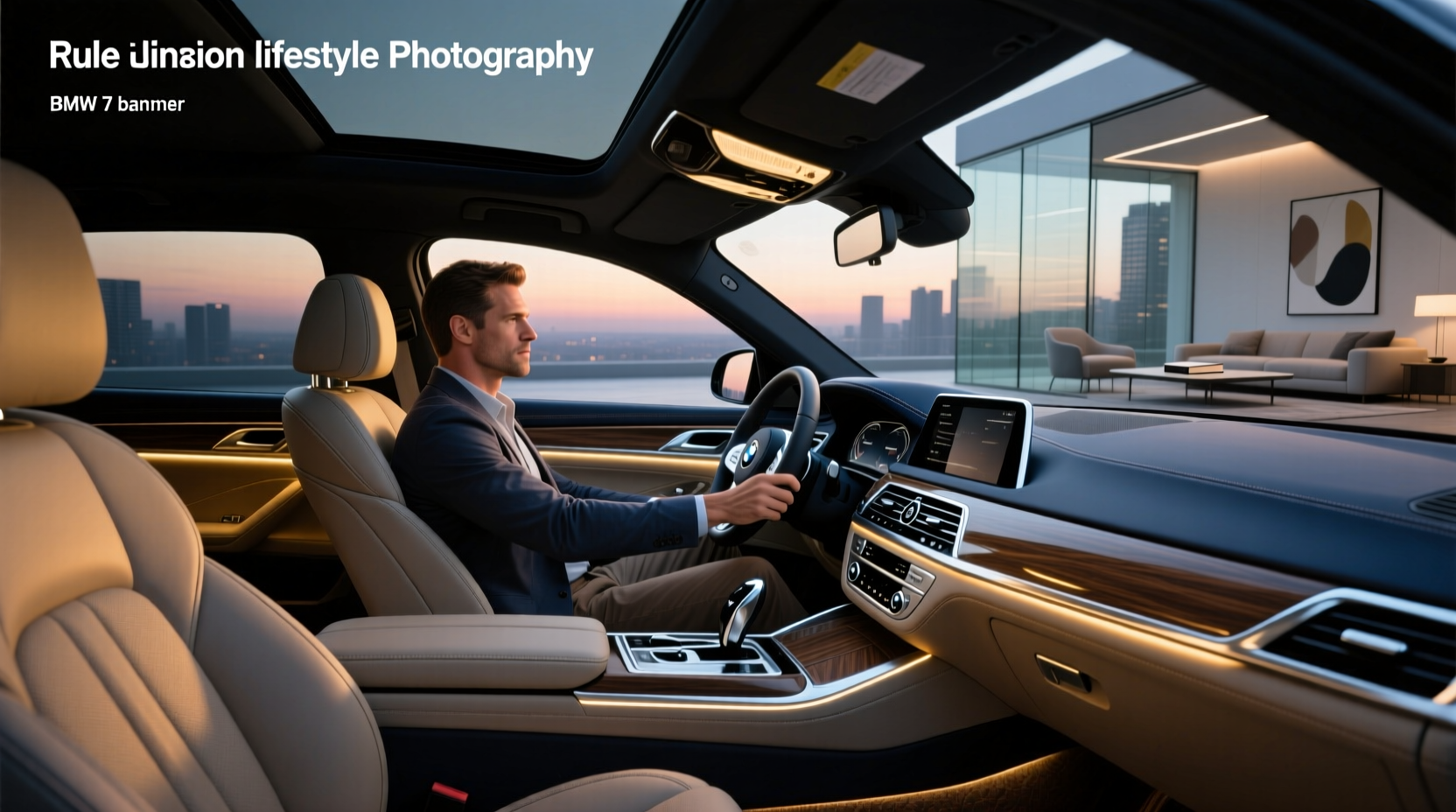
Lately, interest in upgrading the interior ambiance of classic luxury sedans like the BMW E65 has grown—especially around ambient lighting. If you’re a typical user, you don’t need to overthink this. For most E65 owners, factory-installed ambient lighting (if equipped) is sufficient, offering soft illumination in footwells, door panels, and console areas. What to look for in a functional upgrade includes consistent color temperature, ease of installation, and compatibility with existing iDrive settings. Avoid kits that promise 'full RGB control' without verified integration—many fail under real-world use. Aftermarket solutions can enhance brightness or add colors, but only matter if your model lacks factory lighting or if you prioritize visual customization over OEM subtlety.
About BMW E65 Ambient Lighting
The BMW 7 Series E65 (2002–2008) was a technological leap for its time, introducing advanced interior design elements including ambient lighting. This feature used light guides—often supplied by Hella’s CELIS system—and early LED technology to deliver indirect glow along interior contours 1. Illumination typically appears in footwells, lower door trim, center console edges, and illuminated door sills. Unlike modern BMWs with dynamic color shifting, the E65’s system offered limited adjustability: usually between warm amber and cool white tones, controlled via iDrive menu if available.

Not all E65 models came standard with ambient lighting. It was often bundled in higher trims or optional comfort packages. Over the past year, forums and enthusiast communities have seen increased discussion about retrofitting older units with brighter or more customizable systems—a trend driven by improved aftermarket availability and renewed appreciation for analog-digital hybrid interiors.
Why BMW E65 Ambient Lighting Is Gaining Popularity
Classic car ownership is shifting from pure preservation to thoughtful enhancement. The E65, once criticized for its controversial styling, now enjoys cult status among enthusiasts who value its blend of mechanical engineering and early digital innovation. Ambient lighting plays into this resurgence because it directly affects perceived cabin quality at night—a key factor in daily usability and resale appeal.
If you’re a typical user, you don’t need to overthink this. Most people care about whether the lights work consistently and look cohesive—not whether they match factory specs down to the nanometer. But there’s a quiet tension: purists want authenticity; upgraders want visibility and mood control. Recently, this balance has tilted toward modest improvements, especially as reliable plug-and-play kits become more accessible.
This piece isn’t for keyword collectors. It’s for people who will actually use the product.
Types and Variants
1. Factory OEM Lighting (Hella CELIS)
Used fiber-optic-like light guides connected to centralized LED sources. Light diffuses evenly along plastic channels embedded in trim pieces.
Pros:- Nearly invisible when off
- Uniform glow without hotspots
- Fully integrated with vehicle diagnostics
- Aged units dim significantly over time
- Limited color options (usually two presets)
- Difficult and expensive to repair due to modular design
2. Plug-and-Play Aftermarket LED Kits
Direct-replacement LED strips designed to fit original housing locations. Brands like PrecisionLED offer E65-specific sets 2.
Pros:- Easier installation than OEM repairs
- Brighter output than aging factory units
- Some allow color temperature selection (e.g., 3000K vs 6000K)
- May create visible LED dots instead of smooth diffusion
- Color may not perfectly match other interior lights
- No iDrive integration for control
3. Custom RGB Smart Systems
Advanced kits with Bluetooth control, app-based color selection, and sound-reactive modes.
Pros:- Highly customizable aesthetics
- Can sync with music or driving mode (if supported)
- Often include remote controls
- Visually clashes with E65’s understated luxury ethos
- Installation complexity increases risk of damage
- Higher failure rate due to additional electronics
If you’re a typical user, you don’t need to overthink this. Unless you frequently drive at night or show your car, subtle improvement beats flashy novelty.
Key Features and Specifications to Evaluate
Color Temperature (Kelvin)
When it’s worth caring about: Matching new LEDs to existing dome or map lights. Mismatched temperatures (e.g., 3000K footwell + 6000K overhead) look uncoordinated.
When you don’t need to overthink it: If replacing entire set uniformly, any consistent temp between 3000K–4000K works well for warmth and clarity.
Brightness (Lumens)
When it’s worth caring about: Restoring aged lighting where original output has degraded.
When you don’t need to overthink it: Ambient lighting should complement, not illuminate. Avoid >100 lumens per segment unless correcting poor visibility.
Installation Type
When it’s worth caring about: DIY capability. Some kits require removing door panels or console trim.
When you don’t need to overthink it: Plug-and-play connectors reduce risk. Look for kits labeled “direct replacement” for specific E65 zones.
Control Method
When it’s worth caring about: Preserving iDrive functionality. True integration is rare; most aftermarket systems operate independently.
When you don’t need to overthink it: Simple on/off via door switch is sufficient for most users.
Pros and Cons
Advantages
- Enhances nighttime cabin comfort and visibility
- Adds resale value through improved interior presentation
- Modern LED upgrades last longer than aging OEM systems
- Aftermarket kits are generally affordable ($50–$150)
- Easy to test one zone before full rollout
Drawbacks
- OEM parts are costly and increasingly scarce
- Poorly installed kits cause trim rattles or uneven glow
- RGB options may feel out of place in conservative interiors
- No standardized interface for color control on E65
- Some kits void no-touch warranties if dealer-serviced
How to Choose & Install Ambient Lighting for BMW E65
Follow this step-by-step guide to make informed decisions without getting lost in technical rabbit holes.
Step-by-Step Checklist
- ✅ Confirm current setup: Turn off cabin lights at night and observe which areas glow.
- ✅ Access iDrive menu: Navigate to “Vehicle” → “Lighting” to check for adjustable settings.
- ✅ Identify missing/dim segments: Note which zones lack illumination or appear inconsistent.
- ✅ Decide scope: Full restoration? Selective upgrade? Or just fix non-working sections?
- ✅ Choose type: Prioritize OEM replacement for authenticity, or LED kit for brightness and ease.
- ✅ Verify fitment: Ensure kit specifies E65/E66 compatibility (2002–2008).
- ✅ Test before final install: Power kit temporarily to assess color match and brightness.
- ✅ Reassemble carefully: Avoid pinching wires during trim reinstallation.
Decision Flow
- If your E65 already has working ambient lighting → Maintain or replace with OEM-spec LEDs.
- If lighting is missing or completely failed → Consider plug-and-play LED kit.
- If you want color choice or app control → Accept trade-offs in integration and aesthetics.
- If preserving stock condition matters most → Source used OEM modules or avoid modification.
Recommendations by Scenario
- Daily Driver: Replace failed segments with warm-white (3000K–4000K) LED strips.
- Show Car: Restore full system using OEM-style components for accuracy.
- Night Commuter: Upgrade footwell and console lighting for better low-light visibility.
- Budget Fix: Focus on front footwells and door sills—most noticeable areas.
Red Flags / What to Avoid
- ❌ Kits advertising “plug-and-play RGB magic” without physical reviews
- ❌ Sellers refusing to provide voltage specs or beam angle data
- ❌ Modules requiring permanent wiring modifications
- ❌ Products lacking return policies or region-specific support
- ❌ Claims of iDrive integration unless verified by multiple user reports
If you’re a typical user, you don’t need to overthink this. Focus on reliability, consistency, and reversibility.
Price & Market Insights
Prices vary significantly based on type, brand, and region. OEM replacements sourced from salvage yards may cost $200+ per module and require coding. New old stock is rare. Aftermarket kits range from $50–$150 for complete sets, depending on LED quality and coverage. Premium brands like DMC Design market specialized kits emphasizing perfect diffusion 3, though independent verification of superiority is limited.
Note: Pricing may vary by region/model/seller. Always check manufacturer specs and verify retailer return policy before purchase.
Top-Seller & Competitive Analysis
While no official sales rankings exist for E65-specific lighting, community consensus points to several commonly recommended suppliers.
| Brand | Type | Key Feature | Approx. Price | User Feedback |
|---|---|---|---|---|
| PrecisionLED | Aftermarket Kit | E65-specific fitment | $89 | Reliable brightness; minor trimming needed |
| DMC Car Design | Premium Aftermarket | Claimed seamless diffusion | $149 | Limited independent testing |
| Hella (OEM) | Original Equipment | Perfect factory match | $200+ (used) | Rare, fragile, expensive |
| Unbranded AliExpress | Generic LED Strip | Lowest cost | $30–$50 | Mixed results; high return rate |
This piece isn’t for keyword collectors. It’s for people who will actually use the product.
Customer Feedback Synthesis
Analysis of Reddit threads 4, Facebook groups, and YouTube comments reveals recurring themes:
高频好评:- “Lights transformed my night drives—feels luxurious again.”
- “Simple install took under an hour; exact fit for footwell.”
- “Warm white matches factory perfectly.”
- “One side brighter than the other—had to swap resistors.”
- “Trim creaks now after reassembly.”
- “Promised blue/white toggle but only stays white.”
Sourcing & Supplier Tips
- Check BMW specialty forums (e.g., 7-Series Forum) for member-only deals.
- Contact sellers directly to request spectral photos or demo videos.
- Prefer suppliers offering sample testing or partial refunds for mismatched batches.
- Verify shipping origin—some kits labeled “Germany-made” ship from third-party warehouses.
- Use VIN lookup tools to confirm original equipment eligibility before restoring to stock.
Maintenance, Safety & Legal Considerations
No safety risks are associated with properly installed ambient lighting. However:
- Ensure wiring doesn’t interfere with airbag sensors or seatbelt mechanisms.
- Avoid high-heat LEDs near plastic trim to prevent warping.
- Confirm local regulations if modifying lighting in regions with strict vehicle modification laws (e.g., Germany’s TÜV standards).
- For legal compliance, retain original components if planning future resale or inspection.
Always check manufacturer specs and confirm local regulations before modifying interior lighting systems.
Conclusion
If you need functional, subtle improvement in cabin ambiance, choose a well-reviewed plug-and-play LED kit with consistent color temperature. If maintaining originality is your priority, source OEM-compatible modules—even if it takes longer. If you’re a typical user, you don’t need to overthink this. Most upgrades succeed when focused on solving actual problems—not chasing features.




 浙公网安备
33010002000092号
 浙B2-20120091-4