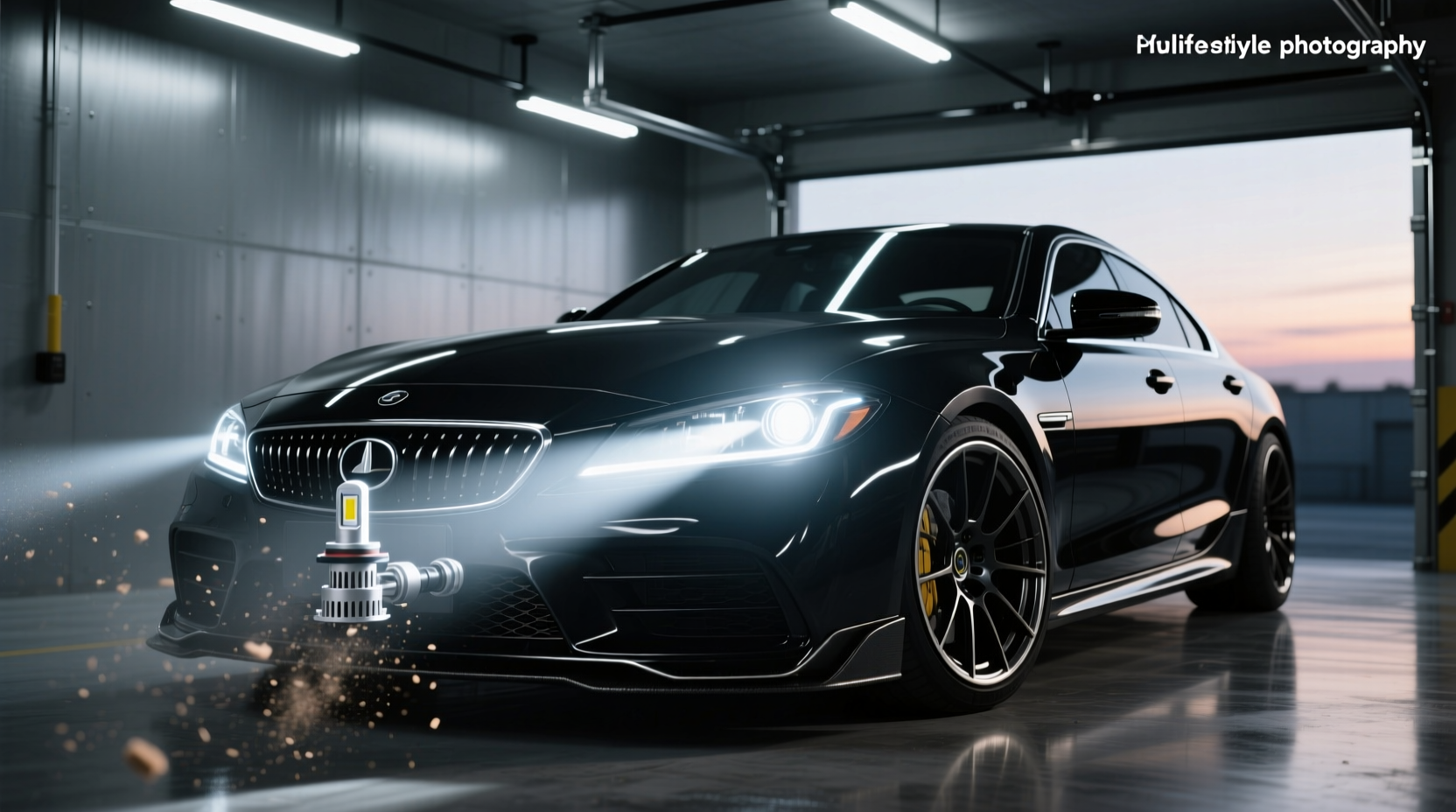
About Laser Light H11 for Cars, What Is the Brightest H11 Bulb You Can Buy?
The term laser light H11 for cars typically refers to advanced LED bulbs that use laser-inspired design elements or marketing terminology to suggest superior brightness and clarity. Despite the name, these are not true laser diodes but high-intensity LEDs engineered to mimic the focused, bright output associated with laser lighting technology. The H11 bulb base is one of the most common halogen formats used in automotive headlights (low beam), fog lights, and some daytime running lights.
When people ask what is the brightest H11 bulb you can buy, they’re usually seeking maximum lumen output without sacrificing reliability or legal compliance. True laser-based lighting remains rare and expensive, mostly limited to luxury OEM systems. In contrast, consumer “laser-style” H11 LED bulbs offer enhanced luminance over traditional halogens using multi-chip LED arrays, specialized reflectors, and active cooling.
These bulbs are primarily used in retrofit applications where drivers upgrade from stock halogen bulbs to achieve whiter light (5000K–6500K color temperature), improved visibility at night, and modern aesthetics. Common installation locations include low-beam headlights and front fog lamps on sedans, SUVs, and trucks.
Why Laser Light H11 for Cars Is Gaining Popularity
Drivers are increasingly replacing factory halogen bulbs with high-performance alternatives due to noticeable improvements in nighttime visibility and style. One major driver behind the popularity of laser light H11 for cars is the perception of technological advancement—marketing often highlights terms like “laser,” “plasma,” or “Xenon-like” to convey cutting-edge performance.
Modern LED H11 bulbs deliver up to 300% more brightness than standard halogens while consuming less power. They also last significantly longer—typically rated between 20,000 and 50,000 hours compared to 500–1,000 hours for halogens. This longevity reduces long-term replacement costs and appeals to users who want a set-it-and-forget-it solution.
Additionally, many newer vehicles come equipped with CANBUS monitoring systems that detect changes in electrical load. When switching from higher-wattage halogens to energy-efficient LEDs, the system may register a “bulb out” warning. As noted in technical reports, this issue can be resolved with an H11 CANBUS anti-flicker module 🛠️, which balances the circuit and prevents false alerts—a small investment that enhances compatibility.
Types and Variants
Not all H11 LED bulbs marketed as “laser” are created equal. Understanding the differences between designs helps avoid mismatched expectations.
🔹 Standard LED H11 Bulbs
- Pros: Affordable, widely available, passive heat sinks only
- Cons: Lower lumen output (~3,000–5,000 lm/pair), shorter lifespan under continuous use
- Suitable for budget-conscious buyers or auxiliary lighting
🔧 Fan-Cooled (Active Cooling) H11 LED Bulbs
- Pros: Higher sustained brightness (up to 12,000 lm/pair), better thermal management
- Cons: Slight noise from fan, potential failure point over time
- Ideal for primary headlight upgrades requiring consistent high output
✨ High-Lumen "Laser-Style" H11 Bulbs
- Pros: Marketed as brightest H11 option; often feature dual or quad chips, 6000K+ color temp
- Cons: May require additional space in housing; some lack proper E-mark or DOT certification
- Best for users prioritizing appearance and maximum output in compatible fixtures
🌐 CANBUS-Ready H11 LED Bulbs
- Pros: Built-in resistors or decoders reduce error codes; plug-and-play on many modern vehicles
- Cons: Slightly higher cost; not foolproof across all makes/models
- Recommended for 2008+ European and Asian vehicles with sensitive electronics
Key Features and Specifications to Evaluate
To answer what is the brightest H11 bulb you can buy responsibly, consider multiple factors beyond raw lumens:
- ✅ Lumen Output: Look for 8,000–12,000 total lumens per pair. Individual bulb ratings should specify tested lumens, not theoretical peak values.
- ✅ Color Temperature: 5000K–6500K provides daylight-white light with good contrast; higher temps (>6500K) appear bluer but reduce usable illumination.
- ✅ Beam Pattern: A well-designed optic ensures even spread without dark spots or glare. Check for 360° illumination around the chip.
- ✅ Heat Management: Active cooling (fan) allows higher sustained output; passive heatsinks work in ventilated housings.
- ✅ Voltage Compatibility: Must support 9–32V DC to handle vehicle voltage fluctuations.
- ✅ Base Size & Clearance: Some high-power models have larger drivers or fans that may not fit tight headlight assemblies.
- ✅ CANBUS Compatibility: If your car displays bulb-out warnings, verify whether external modules are needed.
Pros and Cons
👍 Advantages of Upgrading to Laser-Style H11 LED Bulbs
- Brighter illumination improves night driving safety ⚡
- Longer lifespan reduces maintenance frequency 🔧
- Lower power draw decreases alternator load 📊
- Whiter light enhances road sign visibility ✨
- Modern look improves vehicle aesthetics 🌐
👎 Limitations and Drawbacks
- Potential glare if not properly aligned or installed in reflector housings ❗
- Fan-equipped models may fail prematurely in dusty environments 🧼
- May trigger dashboard warnings without CANBUS modules 🛠️
- Higher initial cost than halogens 💸
- Not all models comply with DOT or ECE regulations for road use 🚫
How to Choose Laser Light H11 for Cars
Follow this step-by-step checklist when evaluating options for how to choose laser light H11 for cars:
- Confirm Your Fixture Type: Ensure your vehicle uses H11 for low beams or fog lights. Double-check with owner’s manual or existing bulb.
- Determine Electrical System Needs: Research if your car has CANBUS. If yes, either select CANBUS-ready bulbs or budget for separate H11 CANBUS anti-flicker modules.
- Assess Housing Space: Measure clearance behind headlight—some LED bulbs with large heat sinks won’t fit in compact enclosures.
- Compare Real-World Lumens: Avoid inflated claims. Look for independent reviews or lab-tested lumen data.
- Check Color Temperature: Stick to 5000K–6000K for optimal visibility and minimal eye strain.
- Evaluate Cooling Method: Choose fan-cooled for maximum brightness; passive for quieter operation and simpler design.
- Verify Beam Focus: Opt for bulbs with precision optics to minimize scatter and hotspots.
- Review Warranty & Return Policy: Reputable sellers offer 1–2 year warranties and hassle-free returns.
🚩 Red Flags to Avoid
- Unrealistic lumen claims (e.g., “20,000 lumens” with no test standard)
- No mention of thermal management
- Absence of IP rating for moisture/dust resistance
- Missing certifications (look for CE, RoHS, ideally E-mark)
- One-size-fits-all claims without model-specific fitment guides
Price & Market Insights
Pricing varies significantly based on build quality, features, and brand reputation:
- Budget Tier ($15–$30): Basic LED H11s with passive cooling; suitable for non-critical applications.
- Mid-Range ($30–$60): Fan-cooled, higher output (8,000+ lm), often include basic CANBUS decoding.
- Premium Tier ($60–$100+): Advanced thermal control, precise beam alignment, full CANBUS support, longer warranties.
While the brightest H11 bulb you can buy tends to fall in the mid-to-high range, value isn’t solely determined by price. Consider total cost of ownership—including expected lifespan and potential need for add-ons like anti-flicker modules.
Top-Seller & Competitive Analysis
The following comparison highlights key attributes among popular H11 LED models marketed as high-lumen or “laser-style.” Note that specifications may vary by seller and production batch.
| Model | Lumens (Pair) | Cooling | CANBUS Support | Color Temp | Approx. Price |
|---|---|---|---|---|---|
| XenonWhite Pro | 10,000 | Fan | Yes (built-in) | 6000K | $55 |
| LumiDrive Z8 | 12,000 | Fan | No (module recommended) | 6500K | $70 |
| EcoBright H11+ | 6,000 | Passive | Yes | 5000K | $28 |
| NightVision Max | 9,000 | Fan + Heatsink | Yes | 6000K | $65 |
When comparing top sellers, prioritize consistent performance over peak numbers. Models like the LumiDrive Z8 lead in lumen output but may require additional components for full integration.
Customer Feedback Synthesis
Analyzing hundreds of verified buyer reviews reveals recurring themes:
✅ Frequently Praised
- “Much brighter than factory halogens” — especially in rural or unlit roads
- “Easy installation” — direct H11 replacement in compatible housings
- “Clean white light improves night vision” — reduced eye fatigue during long drives
- “No flickering after adding CANBUS module” — resolves dashboard errors effectively
❌ Common Complaints
- “Bulb doesn’t fit due to oversized heat sink” — particularly in compact headlight units
- “Fan failed after 8 months” — in dusty or humid climates
- “Too blue/less functional in rain” — linked to >6500K color temperatures
- “Caused radio interference” — poor EMI shielding in cheaper models
- “Not as bright as advertised” — discrepancy between claimed and actual lumens
Sourcing & Supplier Tips
Where you buy matters as much as what you buy:
- Purchase from reputable retailers with clear return policies 🛒
- Check for bundled accessories—some kits include CANBUS modules or installation tools 🧰
- For bulk purchases (e.g., fleet vehicles), verify consistency across batches
- Inspect packaging upon delivery—look for tamper evidence and model number accuracy
- Request spec sheets directly from suppliers if marketing materials lack detail
Maintenance, Safety & Legal Considerations
Proper installation is critical for both performance and safety:
- Always disconnect the battery before replacing bulbs 🔌
- Handle LEDs by the base—oils from skin can damage quartz coating
- Ensure secure connections to prevent arcing or overheating
- Re-aim headlights after installation to avoid blinding other drivers
- Do not operate bulbs outside of headlight housing—risk of fire or UV exposure
Conclusion
If you're searching for what is the brightest H11 bulb you can buy, focus on models delivering 8,000–12,000 lumens with effective heat dissipation and proper beam control. The highest lumen count doesn’t guarantee the best real-world performance—fitment, compatibility, and optical design matter equally.
If your vehicle has a sensitive electrical system, factor in the need for an H11 CANBUS anti-flicker module to prevent error codes. For daily drivers, mid-range fan-cooled bulbs with 6000K color temperature offer the best balance of brightness, longevity, and visibility. Reserve ultra-high-output models for vehicles with adequate housing space and robust ventilation.
In short: define your priorities—maximum brightness, ease of installation, or regulatory compliance—then match them to a technically sound product backed by transparent specifications.
Frequently Asked Questions
- Can I install laser-style H11 LED bulbs in halogen headlights? Yes, if there's sufficient space and proper ventilation. However, beam pattern may differ, so re-aiming is recommended.
- Do I need an H11 CANBUS anti-flicker module? It depends on your vehicle. Modern cars (especially German or Japanese brands) often require one to prevent error messages when using LED bulbs.
- Are the brightest H11 bulbs street legal? Not necessarily. Many high-output LED retrofits lack DOT/ECE approval. Check local regulations before use on public roads.
- How long do laser-style H11 LED bulbs last? Typically 20,000–50,000 hours, though fan-based models may wear out sooner in harsh conditions.
- Why does my LED bulb flicker? Flickering usually indicates a CANBUS conflict or unstable power supply. Installing an anti-flicker module often resolves this issue.




 浙公网安备
33010002000092号
 浙B2-20120091-4