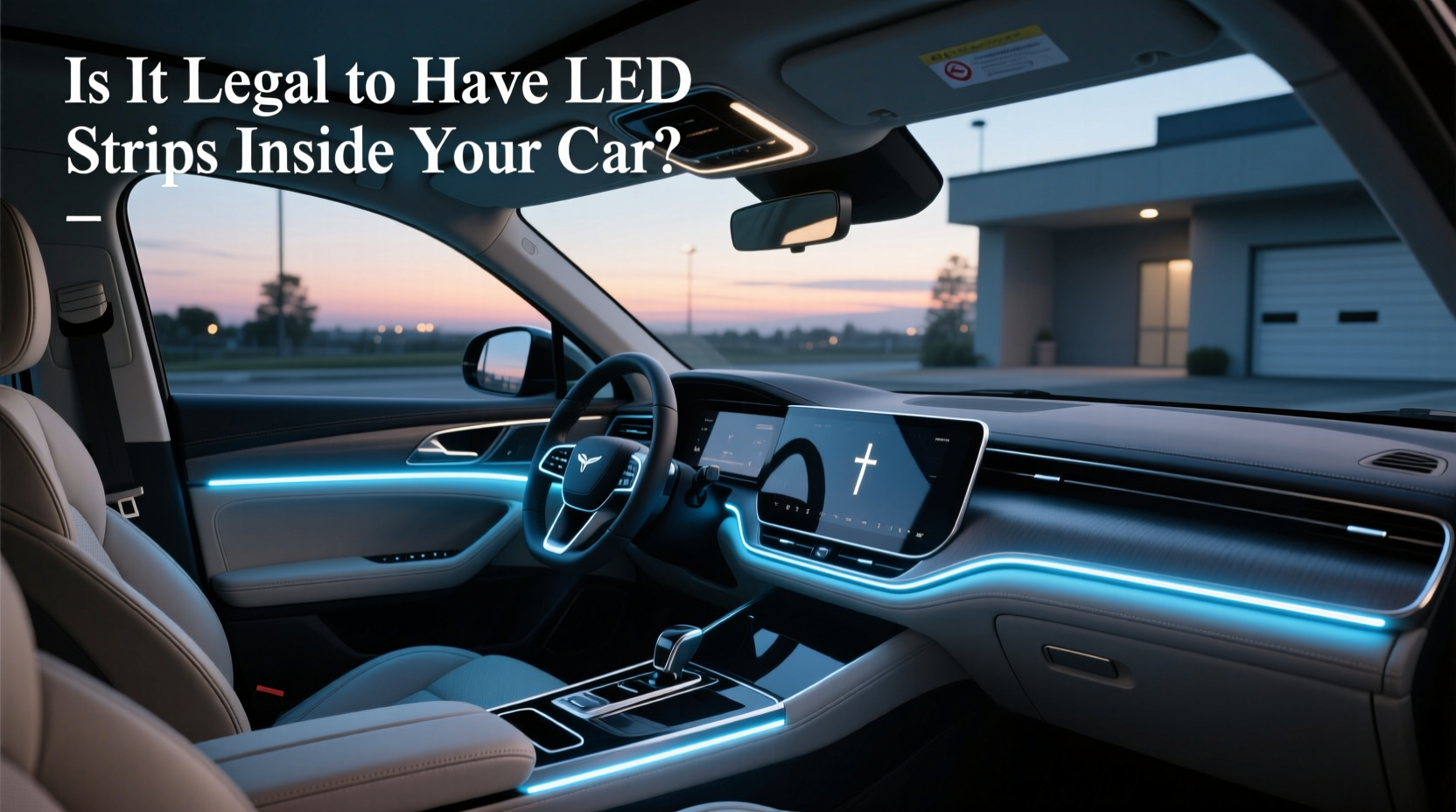
If you're looking for how to choose ambient strip lights for your car, start here: pick low-profile, non-distracting LED strips in warm white, blue, or purple, and install them under footwells or along door bases. Avoid red/blue forward-facing lights, flashing modes, or anything visible from outside. If you’re a typical user, you don’t need to overthink this. Most interior LED kits are legal as long as they don’t impair vision or mimic emergency signals 1. The real decision isn't legality—it's restraint.
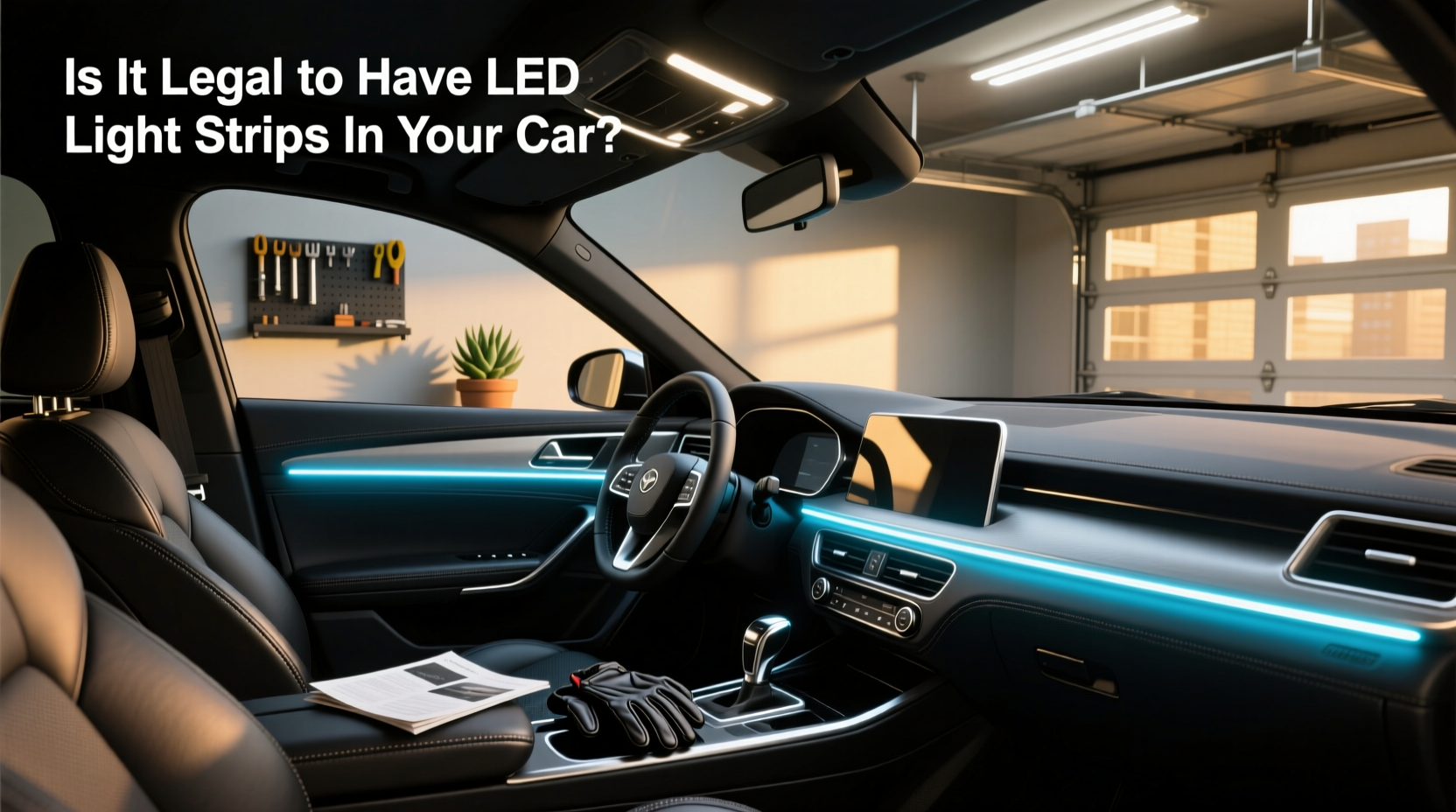
About Ambient Strip Lights for Cars
Ambient strip lights are flexible LED strips designed to add soft, indirect illumination inside a vehicle. Unlike dome or map lights, they’re not for visibility—they serve mood, aesthetics, and nighttime convenience. They typically run on 12V DC power, connect via USB, cigarette port, or direct wiring, and come in single-color or RGB variants.
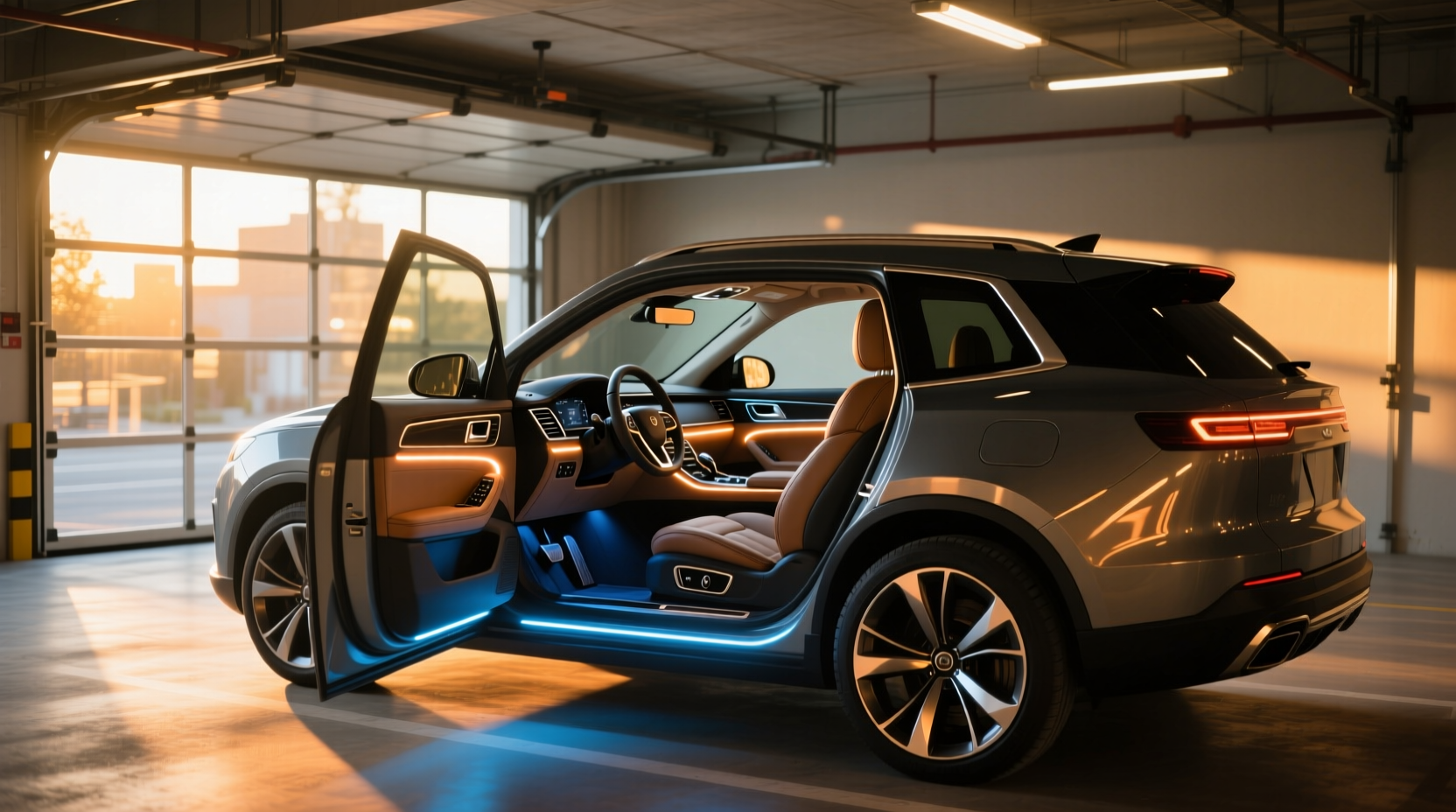
These lights are often adhesive-backed and can be cut to length. Common placements include under seats, along door sills, beneath the dashboard, or behind center consoles. Their purpose isn’t functional lighting but enhancing perceived quality and personalization—like mood lighting in a high-end showroom.
If you’re a typical user, you don’t need to overthink this. You’re not retrofitting a concert stage. You want clean, consistent glow—not glare, not strobes, not neon pulsing with bass. The market offers enough plug-and-play options that installation complexity is rarely a barrier anymore.
Why Ambient Lighting Is Gaining Popularity
Lately, factory-installed ambient lighting has become standard in mid-to-high trim vehicles—from luxury brands to mainstream SUVs. This trend has trickled down to aftermarket demand. Drivers now expect a refined interior experience, even in older or base-model cars.
Two forces drive adoption: affordability and accessibility. Over the past few years, LED efficiency has improved while costs dropped. What once cost $200+ as OEM equipment now sells for under $30 as an aftermarket kit. At the same time, smartphone-controlled RGB strips allow customization without technical skill.
This piece isn’t for keyword collectors. It’s for people who will actually use the product.
Types and Variants
- Single-Color (Warm White/Cool White/Amber)
- ✔️ Pros: Simple, reliable, blends with OEM design
- ❌ Cons: No customization; limited visual impact
- RGB (Multi-Color) with Remote
- ✔️ Pros: Color choice, preset modes, easy control
- ❌ Cons: Risk of overuse; may feel gimmicky if poorly installed
- Smart RGB (App-Controlled via Bluetooth)
- ✔️ Pros: Sync with music, schedule on/off times, fine-tune brightness
- ❌ Cons: Higher price; potential app compatibility issues
- Underglow / Puddle Lights (Integrated into Door Panels)
- ✔️ Pros: Functional + aesthetic; illuminates ground when exiting
- ❌ Cons: More complex wiring; may require drilling
Key Features and Specifications to Evaluate
When shopping, focus on what matters:
- Brightness (Lumens): Look for 300–600 lumens per meter. Brighter isn’t better—it increases glare risk.
- Color Temperature (for White LEDs): Warm white (2700K–3500K) feels cozy; cool white (5000K+) looks clinical.
- IP Rating: For durability, choose at least IP65 (dust-resistant, splash-proof).
- Power Source: USB-powered kits are safest; hardwired ones offer permanence but require fuse tap or relay.
- Adhesive Quality: 3M tape backing lasts longer than generic glue.
If you’re a typical user, you don’t need to overthink this. You won’t be off-roading through monsoon rains. But poor adhesion leads to peeling—ugly and unsafe.
Pros and Cons
| Pros | Cons |
|---|---|
| Enhances cabin ambiance and perceived value | Potential distraction if too bright or animated |
| Easy DIY installation (most kits) | May void warranty if improperly wired |
| Low power draw (~0.5A max) | RGB controls can clutter dash if remote lacks storage |
| Available in budget and premium tiers | Cheap units may flicker or fail within months |
How to Choose Ambient Strip Lights: Buying Guide
Step-by-Step Checklist
- Determine your goal: subtle enhancement or full RGB spectacle?
- Measure target areas (footwells, doors, dash)
- Select color type: single-color for discretion, RGB for flexibility
- Choose power method: USB (plug-and-play) vs. hardwired (clean finish)
- Verify adhesive strength and IP rating
- Test brightness in-store or via video reviews
- Check return policy in case of fitment issues
Decision Flow
- If you want simplicity → go for warm white, USB-powered, pre-cut strips
- If you want customization → choose app-controlled RGB with memory settings
- If you drive at night frequently → avoid cool white or blue-heavy tones (reduces melatonin)
Recommendations by Scenario
- Commuter sedan owner: Single-color warm white under footwells
- Weekend cruiser: RGB strips with remote, installed along door bases
- Night-shift worker: Dimmable amber lighting to reduce eye strain
- Rideshare driver: Neutral white or soft blue—clean look without flashiness
Red Flags / What to Avoid
- Flashing, strobing, or police-siren simulation modes
- Forward-facing red or blue lights visible from outside
- Kits without current-limiting resistors (fire hazard)
- Products labeled "off-road use only"—they bypass safety norms
- No clear manufacturer specs or contact info
If you’re a typical user, you don’t need to overthink this. Avoid anything marketed as "neon party mode." It’s not worth the ticket.
Price & Market Insights
Prices range from $15 for basic single-color USB kits to $80+ for smart RGB systems with voice integration. Premium kits may include aluminum channels for diffused glow or CAN-bus compatibility for seamless OEM integration.
Cost varies by region/model/seller. Kits from automotive specialty retailers often include better support than generic electronics brands. Note: higher price doesn’t guarantee compliance—but it often correlates with build quality and stable color output.
Top-Seller & Competitive Analysis
Based on cross-platform availability and consistency in customer feedback, these types dominate:
| Product Type | Avg. Price | Common Feedback | Known Limitations |
|---|---|---|---|
| USB-Powered Warm White (16ft) | $18–$25 | “Easy setup,” “blends well” | Limited to socket access; cord management needed |
| RGB Remote-Controlled Kit | $28–$40 | “Fun colors,” “remote loses signal sometimes” | Infrared remotes require line-of-sight |
| Bluetooth App-Controlled Strip | $45–$70 | “Love the app,” “connectivity drops near metal” | Android works better than iOS in some models |
Customer Feedback Synthesis
From verified buyer trends across forums and retail platforms:
- Most praised: Ease of installation, immediate ambiance upgrade, low power use
- Most complained about: Poor remote battery life, inconsistent color mixing (pink instead of white), weak adhesive over time
- Surprise insight: Many uninstall flashy RGB modes after 2–3 weeks—settling on one neutral color
If you’re a typical user, you don’t need to overthink this. Flashy features lose appeal fast. Prioritize consistency over novelty.
Sourcing & Supplier Tips
Buy from suppliers specializing in automotive accessories—not general electronics. Look for brands that provide detailed spec sheets and responsive support. Alibaba.com hosts multiple vetted suppliers offering MOQ-friendly batches with QC documentation 2.
For individual buyers: check return windows and whether kits include fuses or inline switches. Avoid sellers who don’t specify voltage tolerance (should handle 12–14.4V).
Maintenance, Safety & Legal Considerations
Safety starts with correct installation. Never splice wires into airbag circuits or primary lighting harnesses. Use tap connectors or OBD2 ports for power. Overheating is rare but possible with cheap drivers—ensure the unit has thermal protection.
Legality hinges on three realities:
- Placement: Under-dash and footwell lighting is widely accepted
- Visibility: Lights must not shine outward or reflect on windshield
- Color: Red/blue in front may mimic emergency vehicles—avoid
There’s no federal ban on interior ambient lighting in most countries, but enforcement varies locally. In the U.S., states like California and New York restrict certain colors or brightness levels 3. In Australia, rules permit interior lights if they don’t affect driver vision 4.
The real constraint isn’t the law—it’s judgment. Even if something is technically allowed, excessive lighting can draw attention from law enforcement.
Always verify local regulations before final installation. Contact your motor vehicle department or consult a licensed installer. If you’re a typical user, you don’t need to overthink this. Subdued, inward-facing glow is almost universally acceptable.
Conclusion
If you need understated elegance, choose a warm white or soft blue USB-powered strip installed under footwells. If you want fun customization without hassle, pick a reputable RGB kit with app control and limit animations to static modes. Restraint beats excess every time.




 浙公网安备
33010002000092号
 浙B2-20120091-4