Short introduction
If you’re looking at how to choose car ambient lights, start here: most drivers only need a simple LED strip with 12V plug-and-play wiring. For durability and even glow, fiber optic kits are superior but require professional installation. Over the past year, integration quality and color consistency have become bigger differentiators—especially as more used cars include factory-installed systems. If you’re a typical user, you don’t need to overthink this. Focus on power source compatibility (12V vs hardwired), light diffusion quality, and whether you want static or RGB control. Avoid cheap adhesive-backed strips that degrade in heat. What to look for in car ambient lights isn’t complexity—it’s reliability under real conditions.
✨Key takeaway: For most buyers, a well-built LED kit with flexible mounting and consistent color output is sufficient. Only consider fiber optics if longevity and uniform lighting matter more than DIY ease.
About car ambient lights
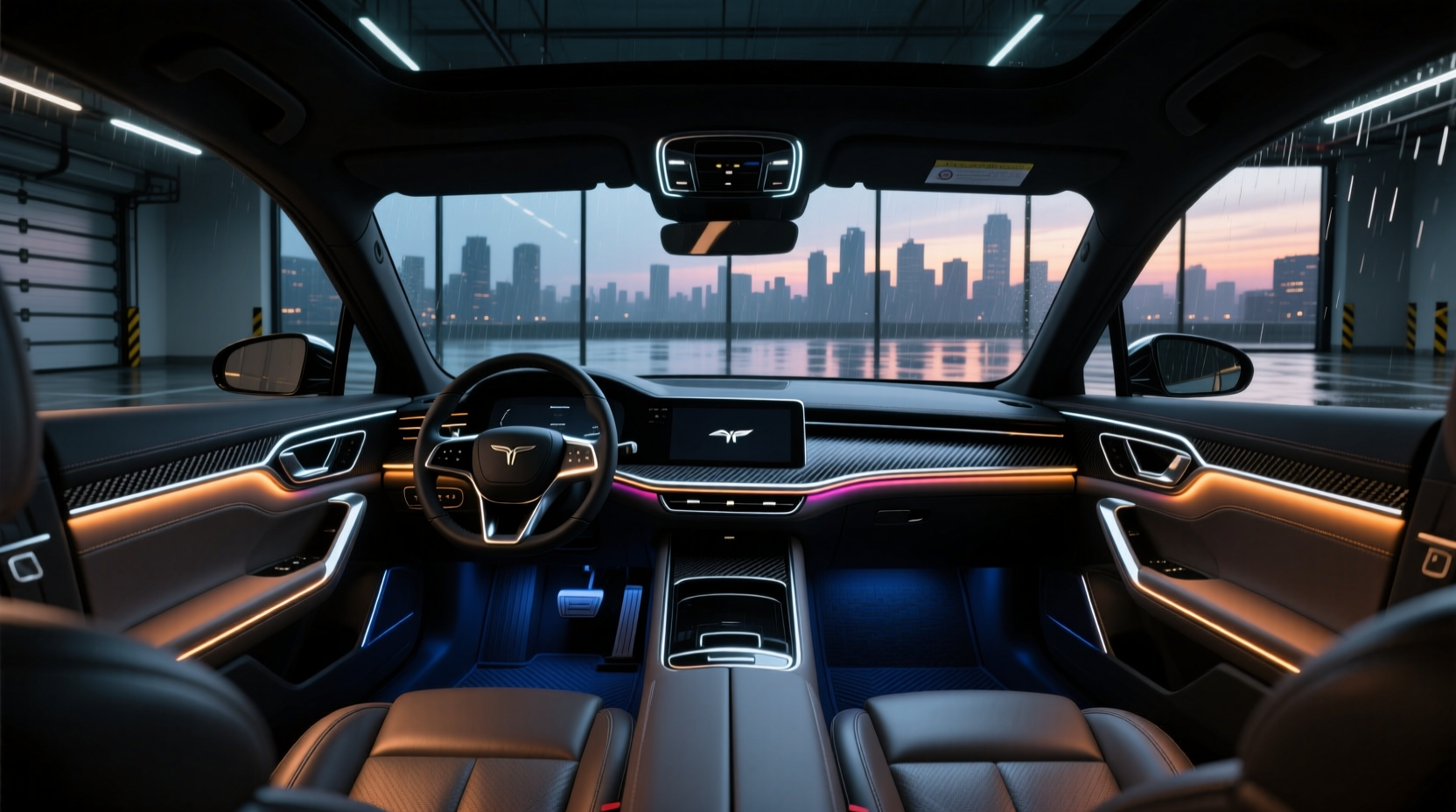
Car ambient lights are low-intensity lighting systems installed inside a vehicle’s cabin to enhance visibility and aesthetics. They typically illuminate footwells, door panels, center consoles, and overhead areas with soft, indirect light. Unlike primary interior lamps, ambient lights aren’t meant for reading or task illumination. Instead, they create mood, reduce eye strain at night, and add a personalized touch to the driving experience.
These systems can be factory-fitted or added aftermarket. Factory units often integrate with vehicle settings—allowing color changes via infotainment or adaptive brightness based on time of day. Aftermarket versions vary widely in design, from basic single-color LED strips to addressable RGBW modules controlled via smartphone apps.
The core purpose remains unchanged: subtle enhancement without distraction. That said, poorly implemented kits can cause glare, uneven patches, or flickering—issues that outweigh any visual benefit.
Why car ambient lights is gaining popularity
Lately, demand for customized interiors has risen across both new and used vehicles. Automakers now highlight ambient lighting as a premium feature—even in mid-tier models. This shift reflects broader consumer interest in personalization and nighttime comfort.
Recently, social media and car culture content have amplified aesthetic expectations. Vehicles with synchronized, multi-zone lighting appear frequently in videos and photos, making owners more aware of what’s possible. At the same time, manufacturing improvements have lowered the cost of reliable components like SMD LEDs and UV-resistant diffusers.
Another factor is safety perception. While not functional lighting, ambient systems help occupants orient themselves at night without turning on bright dome lights. This minor convenience adds up over time, especially for families or ride-share drivers.
If you’re a typical user, you don’t need to overthink this. The trend isn’t about chasing specs—it’s about choosing clean, usable light where it makes sense.
Types and variants
1. LED Strip Lights (Aftermarket)
Most common in DIY installations, these flexible strips use surface-mounted diodes (SMDs) and attach via adhesive backing.
- Pros: Low cost, easy installation, RGB options, wide availability
- Cons: Inconsistent diffusion, adhesive failure in heat, visible hotspots
Best for renters or short-term vehicle owners who want temporary customization.
2. Fiber Optic Interior Lighting Kit
As noted in specialized reports discussing uniform illumination and durability against UV and temperature extremes, fiber optic systems transmit light from a central source through thin strands 1. These kits are engineered for even glow and long-term resilience.
- Pros: Uniform light distribution, no electrical components in footwells, resistant to moisture and thermal cycling
- Cons: Higher upfront cost, complex installation, limited color options (usually white or warm white)
Ideal for luxury restorations or climates with extreme temperature swings.
3. OEM-Style Replacement Modules
Designed to replace factory units, these mimic original equipment in form and function.
- Pros: Plug-and-play fit, consistent with dashboard lighting, often dimmable
- Cons: Vehicle-specific, higher price, limited upgrade paths
Recommended when maintaining stock appearance matters—such as resale or fleet compliance.
4. Smart RGB Systems with App Control
These connect via Bluetooth or Wi-Fi, allowing dynamic effects, music synchronization, and scene presets.
- Pros: High customization, voice/app control, animated modes
- Cons: Potential EMI interference, app dependency, shorter lifespan due to electronics
Suitable only if you actively enjoy tweaking settings. Otherwise, unnecessary complexity.
Key features and specifications to evaluate
Light Source Type
LED vs fiber optic defines performance ceiling. LEDs offer flexibility; fiber optics deliver consistency. When it’s worth caring about: if your car parks outdoors or experiences wide temperature shifts. When you don’t need to overthink it: for indoor garaged vehicles used casually.
Color Options
Single-color (white, blue, red) vs tunable RGB(W). When it’s worth caring about: if matching brand identity (e.g., BMW blue, Mercedes white) or creating themed interiors. When you don’t need to overthink it: for general use—neutral white or warm white suffices.
Power Requirements
12V DC powered via cigarette port, fuse tap, or direct battery connection. Hardwired setups last longer but require fuse box access. When it’s worth caring about: if installing multiple zones or avoiding drain on accessory circuits. When you don’t need to overthink it: for one or two low-power strips—plug-in is fine.
Diffusion Quality
Premium kits use silicone coating or secondary lenses to eliminate dots and streaks. When it’s worth caring about: if lights are visible during daytime or near reflective surfaces. When you don’t need to overthink it: for hidden footwell mounts viewed only at night.
Control Method
Manual switch, remote, or app-based. Physical switches are most reliable. When it’s worth caring about: if passengers frequently adjust settings. When you don’t need to overthink it: for fixed preferences—no controls needed.
Pros and cons
✅Pros: Enhances nighttime visibility, improves cabin ambiance, relatively low energy draw, available in diverse styles.
❗Cons: Poorly made kits fail prematurely, some violate local regulations if too bright, RGB colors may distract while driving, improper install risks wire chafing.
If you’re a typical user, you don’t need to overthink this. The benefits are marginal unless execution is flawless. A well-chosen system should disappear into the background—both visually and mentally.
How to choose car ambient lights
This piece isn’t for keyword collectors. It’s for people who will actually use the product.
Step-by-step checklist
- Determine location: footwells, doors, ceiling, or all three?
- Check power access: available 12V socket or need fuse tap?
- Select type: LED strip (easy), fiber optic (durable), OEM module (stock look)
- Evaluate control needs: manual, remote, or smart?
- Verify color temperature: 3000K–4000K for warm, 6000K+ for cool white
- Test adhesive or mounting method: clips vs glue vs screw mounts
- Confirm return policy: test within first week for flicker or noise
Decision flow
- If budget <$30 → go for reputable LED strip with aluminum channel
- If keeping car >3 years → consider fiber optic or OEM-style
- If resale value matters → avoid non-OEM colors or flashing modes
- If tech-savvy and enjoy customization → explore app-controlled RGB
- If vehicle exposed to sun/heat → prioritize UV-stable materials
Recommendations by scenario
- Daily commuter: Plug-in LED strip, warm white, adhesive + clip mount
- Luxury restoration: Fiber optic kit with centralized illuminator
- Ride-share driver: OEM-style modules with dimming function
- Teen/fun car: RGBW strips with remote control (avoid strobe modes)
Red flags / what to avoid
- Avoid kits with no datasheet or unclear voltage rating
- Never buy adhesive-only strips without heat resistance claims
- Steer clear of ‘multicolor’ strips that lack white tones
- Don’t install near airbag zones or harness routing paths
- Ignore products claiming ‘plug-and-play for all cars’—fit varies by model
Price & market insights
Prices range from $15 for basic LED kits to $200+ for full fiber optic systems. Mid-tier RGB strips with controllers sell between $40–$80. Note: prices may vary by region/model/seller, especially on global platforms.
Premium branding doesn’t guarantee better diffusion. Some high-priced kits focus on app features rather than optical quality. Conversely, certain industrial-grade fiber optic suppliers offer superior longevity despite minimal marketing.
If you’re a typical user, you don’t need to overthink this. Spend enough to get stable mounting and consistent color—but not so much that replacement feels painful.
Top-seller & competitive analysis
While specific rankings change frequently, top-performing categories remain consistent. Below is a generalized comparison of current mainstream types:
| Type | Avg. Price | Install Time | Durability Rating | Best For |
|---|---|---|---|---|
| Basic LED Strip | $15–$30 | 15–30 min | ⭐⭐☆☆☆ | Temporary setup |
| RGB Smart Strip | $40–$80 | 30–60 min | ⭐⭐⭐☆☆ | Customization lovers |
| Fiber Optic Kit | $120–$250 | 2–4 hrs | ⭐⭐⭐⭐☆ | Long-term owners |
| OEM Replacement | $60–$150 | 20–40 min | ⭐⭐⭐⭐☆ | Stock appearance |
Note: Durability ratings reflect field feedback, not lab tests. Actual lifespan may vary by environment and usage.
Customer feedback synthesis
Based on aggregated reviews across verified purchase channels:
- Most praised: Ease of installation (for plug-in LED), uniform glow (fiber optic), seamless OEM integration
- Most complained about: Adhesive failure after 3–6 months, inconsistent RGB color mixing, buzzing noises from drivers, difficulty reaching rear footwells
- Surprise insight: Users prefer fewer colors with higher quality over dozens of flashy modes.
If you’re a typical user, you don’t need to overthink this. Real-world satisfaction correlates more with build quality than feature count.
Sourcing & supplier tips
When sourcing outside OEM channels:
- Look for suppliers specifying IP ratings (e.g., IP67 for moisture resistance)
- Prefer vendors providing dimensional drawings or fitment guides
- Ask for sample videos showing diffusion quality under low light
- Work with manufacturers offering bulk packaging if outfitting fleets
For B2B procurement: request MTBF (mean time between failures) estimates and check for CE/RoHS markings where applicable. Verify compliance documentation before large orders.
Maintenance, safety & legal considerations
Maintenance needs are minimal. Wipe lenses with damp cloth; avoid alcohol-based cleaners. Inspect wiring annually if hardwired, especially near moving parts like pedals.
Safety-wise, ensure no wires interfere with throttle, brake, or clutch linkages. Keep connections away from high-heat zones like exhaust manifolds.
Legality varies. Some regions restrict interior lighting colors (e.g., red/blue near front seats). Always check local regulations before installing non-white lights. Confirm with transport authority or licensed installer. Regulations may vary by region/model/seller.
Conclusion
If you need simple, reversible mood lighting, choose a well-reviewed LED strip with reinforced mounting. If you prioritize long-term reliability and even illumination, invest in a fiber optic interior lighting kit. If you want stealth integration, stick with OEM-compatible modules. Most importantly, align your choice with actual usage—not novelty appeal.
FAQs
Are car ambient lights worth it?
Ambient lights add subtle comfort and style, especially at night. They’re worth it if you value cabin ambiance and choose a durable product. Avoid cheap versions prone to peeling or flickering. If you’re a typical user, you don’t need to overthink this—modest investment yields modest returns.
Can I install ambient lights myself?
Yes, most LED kits are designed for DIY with basic tools. Fiber optic and OEM-style systems may require panel removal and wiring knowledge. Always disconnect the battery before starting. Verify your skill level before attempting complex routes.
Do ambient lights drain the car battery?
Well-designed systems draw minimal power (<5W) and won’t drain a healthy battery overnight. However, always use a switched power source that turns off with the ignition. Check manufacturer specs for exact consumption.
What color is best for car ambient lighting?
Warm white (3000K–4000K) is safest and least distracting. Cool white works for modern aesthetics. Avoid red or blue near driver view—they can impair night vision or resemble emergency signals.
Are RGB ambient lights legal?
Legality depends on jurisdiction. Many places prohibit red or blue lights visible from outside the vehicle. Static white is universally accepted. Confirm local rules before installing colorful setups. Regulations may vary by region/model/seller.




 浙公网安备
33010002000092号
 浙B2-20120091-4