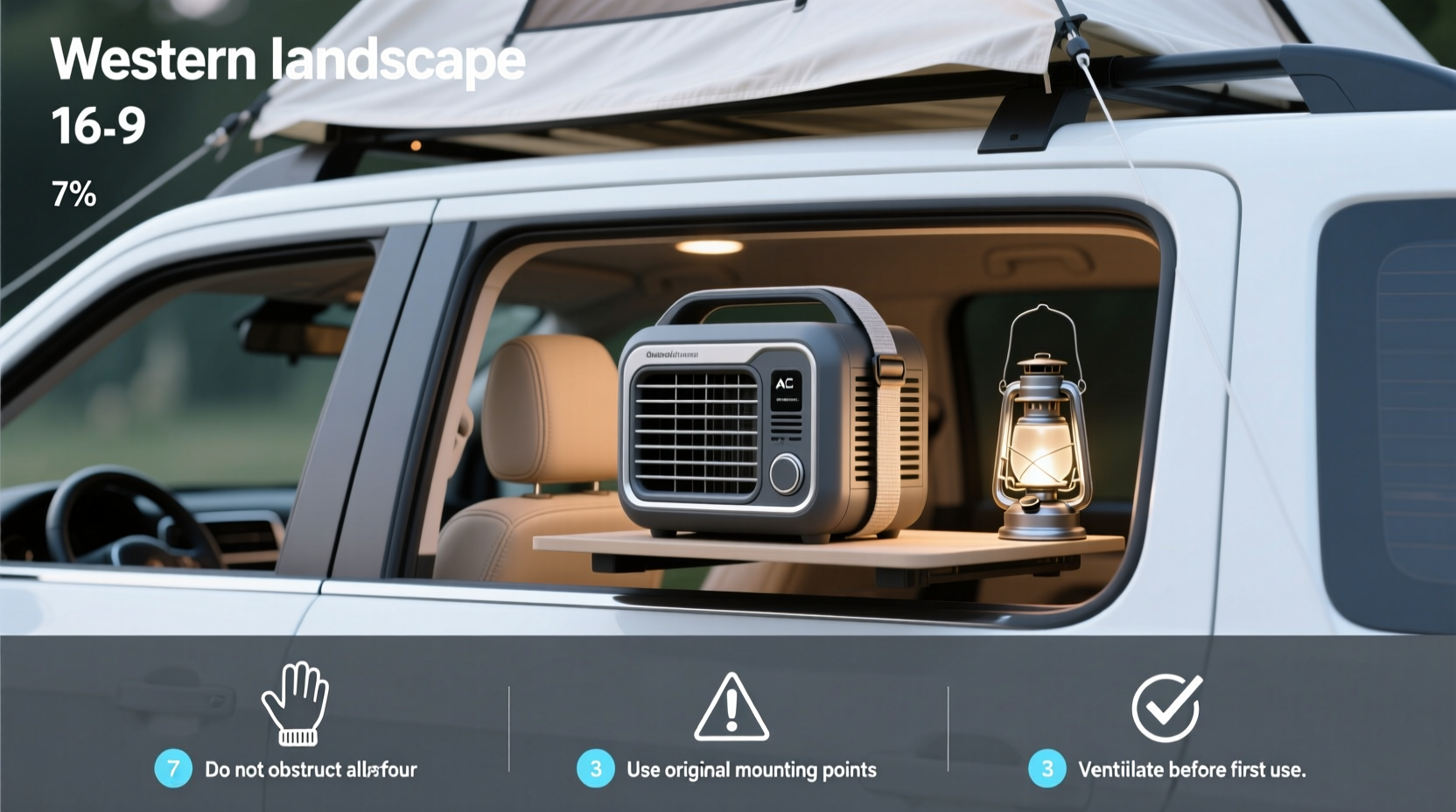
If you're wondering how to choose car camping portable ac units that actually work off-grid, focus on three core factors: power source compatibility (12V DC vs. AC inverter), cooling capacity (measured in BTUs), and portability. For most car campers, a compact unit with 5,000–8,000 BTU output powered by a lithium battery or inverter is ideal. Avoid models requiring hardwiring unless you have electrical experience. Units under 30 lbs with dual exhaust hoses offer better efficiency. Always verify runtime claims—many portable ACs consume more power than advertised, risking car battery drain.
📍 About Car Camping Portable AC
A car camping portable air conditioner is a compact cooling device designed to lower interior temperatures in parked vehicles during hot weather. Unlike standard home AC units, these are engineered for mobility, low power consumption, and compatibility with automotive electrical systems. They typically use 12V DC power from a car battery or connect via an inverter to run on AC power from a portable generator or solar setup.
These units serve various scenarios: overnight rest stops during road trips, weekend camping in SUVs or vans, or heat relief while waiting in traffic-heavy areas. Some users install them in converted cargo vans or overland rigs as part of a semi-permanent climate control system. Most models include features like dehumidification, fan modes, and adjustable vents to direct airflow where needed.
📈 Why Car Camping Portable AC Is Gaining Popularity
Rising summer temperatures and increased interest in van life and self-contained travel have driven demand for effective in-vehicle cooling solutions. Traditional methods—like cracking windows or using sunshades—offer limited relief. Meanwhile, idling the engine to run factory-installed AC wastes fuel and creates noise and emissions, making it impractical for prolonged stationary use.
Portable ACs solve this by offering silent, off-grid cooling. With advancements in battery tech (e.g., LiFePO4 power stations), users can now run small AC units for several hours without draining their starter battery. Social media and outdoor lifestyle influencers have also highlighted real-world benefits, boosting visibility among casual and serious adventurers alike.
🔧 Types and Variants
Understanding the different types helps narrow down options based on your setup and needs:
✅ Single-Hose vs. Dual-Hose Models
- Single-hose: Draws air from inside the car, cools it, then expels hot air through one hose. Creates negative pressure, reducing efficiency over time. Best for short-term use.
- Dual-hose: One hose intakes outside air; the other exhausts heat. Maintains balanced pressure and cools more effectively. Preferred for longer sessions but bulkier.
⚡ Power Source Designs
- 12V DC Only: Runs directly from car cigarette lighter or auxiliary port. Limited cooling power (~5,000 BTU max). Ideal for light use.
- Inverter-Compatible (110V AC): Requires external inverter and deep-cycle battery. Supports higher BTU units (up to 10,000). More flexible but adds complexity.
- Battery-Powered Integrated Units: Built-in rechargeable batteries (e.g., 200Wh–500Wh). Easy setup, fully wireless. Runtime usually under 3 hours at full power.
🧰 Form Factors
- Compact Box Style: Resembles mini-fridge ACs. Lightweight, fits behind seats. Often single-hose.
- Vent-Mounted: Installs into rear window or side vent. Saves floor space but requires modification.
- Roof-Top Units: Permanent installation on roof racks. High performance but costly and complex to install.
⚙️ Key Features and Specifications to Evaluate
When comparing units, assess these technical aspects:
- Cooling Capacity (BTU/h): 5,000–8,000 BTU handles most mid-sized vehicles. Larger vans may need 10,000+ BTU.
- Energy Consumption (Watts): Check both running and surge watts. Units drawing over 400W continuously require robust power sources.
- Noise Level (dB): Look for models under 50 dB for quiet operation. Some exceed 60 dB—equivalent to normal conversation.
- Portability & Weight: Under 30 lbs allows easy transport. Handles and compact dimensions improve usability.
- Hose Length & Flexibility: At least 4 feet recommended for routing out windows without strain.
- Dehumidification Function: Removes moisture, improving perceived comfort even if temperature drop is modest.
- Thermostat & Timer Controls: Digital thermostats maintain set temps. Timers help conserve power automatically.
📌 Pros and Cons
✨ Advantages
- Enables comfortable sleep during hot nights
- Reduces reliance on engine idling
- Can double as indoor AC for tents or sheds
- Most models are plug-and-play with minimal setup
❗ Limitations
- Limited runtime on battery-only setups
- Cooling effect less powerful than home ACs
- Exhaust hose setup can interfere with window sealing
- Potential risk of deep discharging car battery if not monitored
Best suited for: Short-to-medium duration camping, warm climates, daytime naps, or supplemental cooling. Not ideal for extreme desert heat without significant power backup.
📋 How to Choose Car Camping Portable AC
Follow this step-by-step checklist when evaluating options:
- Assess Your Power System: Do you have a secondary battery or power station? If only using the starter battery, stick to 12V DC units under 300W.
- Determine Required BTU: Use 20 BTU per cubic foot of cabin space. Example: A 150 cu ft SUV needs ~3,000 BTU minimum; aim for 5,000+ for faster cooling.
- Check Voltage Compatibility: Confirm whether your intended power source matches the unit’s input (DC vs. AC).
- Evaluate Runtime Needs: Estimate how many hours you’ll run it nightly. Divide battery capacity (Wh) by AC wattage to estimate runtime.
- Measure Installation Space: Ensure there's room for the unit and exhaust hose exit (usually via rolled-down window).
- Review Noise Ratings: Prioritize sub-50 dB models if sleeping nearby.
🚫 Red Flags to Avoid
- Units claiming '10,000 BTU' on 12V DC — physically implausible due to power limits.
- No clear specification of wattage or amperage draw.
- Missing safety certifications (look for CE, RoHS, or ETL marks).
- Customer reviews frequently mention melted hoses or overheating.
- Brands with no official website or poor customer support.
💰 Price & Market Insights
Pricing varies widely based on type, cooling power, and build quality:
- $80–$150: Entry-level 12V DC units (≤5,000 BTU), often single-hose. Suitable for occasional use.
- $150–$300: Mid-tier models with dual-hose design, digital controls, and moderate efficiency. Common sweet spot for value.
- $300–$600: High-performance invertible or hybrid units, some with integrated battery packs. Found in premium camping setups.
- $600+: Roof-mounted or semi-permanent installations with ducted cooling.
Value isn't always tied to price. Some budget models perform well in moderate conditions. Conversely, expensive units may overpromise in marketing. Focus on verified specs and user-reported runtime rather than advertised BTU alone.
📊 Top-Seller & Competitive Analysis
The following comparison highlights representative models across categories. Specifications may vary by region and retailer.
| Model Type | Cooling Output | Power Input | Weight | Key Strengths | Common Complaints |
|---|---|---|---|---|---|
| Compact 12V Unit | 5,000 BTU | 12V DC (300W) | 22 lbs | Simple setup, affordable | Short hose, noisy above 55 dB |
| Dual-Hose Inverter Model | 8,000 BTU | 110V AC (750W) | 28 lbs | Efficient cooling, stable temp control | Requires large power station |
| Hybrid Battery-Integrated | 6,000 BTU | Built-in 300Wh battery | 31 lbs | Wireless operation, portable | Runtime ~2.5 hrs at full power |
Note: Always cross-check manufacturer-provided data with independent testing where available.
🔍 Customer Feedback Synthesis
Based on aggregated reviews from major retail and outdoor forums, common themes emerge:
✅ Frequent Praises
- 'Finally slept through a 90°F night in my Jeep.'
- 'Easy to set up—even my partner installed it.'
- 'Doubled as a dehumidifier in a damp tent.'
- 'Quiet enough not to disturb sleep.'
❌ Recurring Criticisms
- 'Hose didn’t seal well—hot air leaked back in.'
- 'Drained my power station faster than expected.'
- 'Too heavy to move between vehicles easily.'
- 'Remote stopped working after two months.'
- 'Instructions were unclear about safe discharge practices.'
User satisfaction correlates strongly with realistic expectations and proper power pairing.
🛒 Sourcing & Supplier Tips
Purchase from reputable outdoor gear retailers, auto accessory stores, or established e-commerce platforms with return policies. Consider:
- Return Window: Ensure at least 30 days to test under real conditions.
- Warranty: Look for minimum 1-year coverage. Brands offering 2+ years tend to have better build quality.
- After-Sales Support: Verify availability of replacement parts (hoses, filters).
- For Bulk Buyers: Some suppliers offer wholesale pricing for outfitters or rental fleets—request product spec sheets before ordering.
- Pre-Shipment Inspection: If buying internationally, confirm voltage compatibility and included adapters.
When possible, buy locally to reduce shipping risks and support post-purchase service.
🧼 Maintenance, Safety & Legal Considerations
To ensure longevity and safe operation:
- Clean Filters Monthly: Dust buildup reduces airflow and efficiency.
- Store Properly: Drain water reservoirs and keep in dry place to prevent mold.
- Use Ground-Fault Protection: When connecting to inverters or shore power, use GFCI outlets if available.
- Avoid Overloading Circuits: Don’t daisy-chain multiple high-draw devices on one inverter.
- Battery Monitoring: Never let a vehicle’s starter battery drop below 11.8V when powering accessories.
Legally, check local regulations regarding:
- Idling restrictions (some cities ban engine running for AC)
- Voltage converter compliance (FCC/CE standards)
- Window modifications (drilling for permanent vents may affect vehicle legality)
Always consult your vehicle owner’s manual and verify with local authorities when unsure.
📌 Conclusion
Choosing the right car camping portable AC depends on matching your power resources, vehicle size, and usage pattern. If you take short weekend trips and want basic cooling, a 12V DC model under $150 could be sufficient. For extended off-grid adventures, invest in a dual-hose, inverter-powered unit paired with a LiFePO4 battery. Avoid unrealistic BTU claims and prioritize verified energy draw over marketing hype. Ultimately, success hinges not just on the AC itself, but on integrating it safely into your existing power ecosystem.
❓ FAQs
Yes, but only with low-power 12V DC models (under 300W). Higher-wattage units require an inverter connected to a secondary battery to avoid draining the starter battery.
Estimate by dividing the power station’s watt-hour (Wh) capacity by the AC’s wattage. For example, a 500Wh station running a 500W AC lasts about 1 hour (less with inefficiencies).
They provide some relief through dehumidification, but cooling efficiency drops in very humid environments. Set expectations accordingly—comfort improvement doesn’t always mean large temperature drops.
Only if powered by a deep-cycle battery with monitoring. Never run directly from the starter battery for more than 1–2 hours without recharging to prevent being stranded.




 浙公网安备
33010002000092号
 浙B2-20120091-4