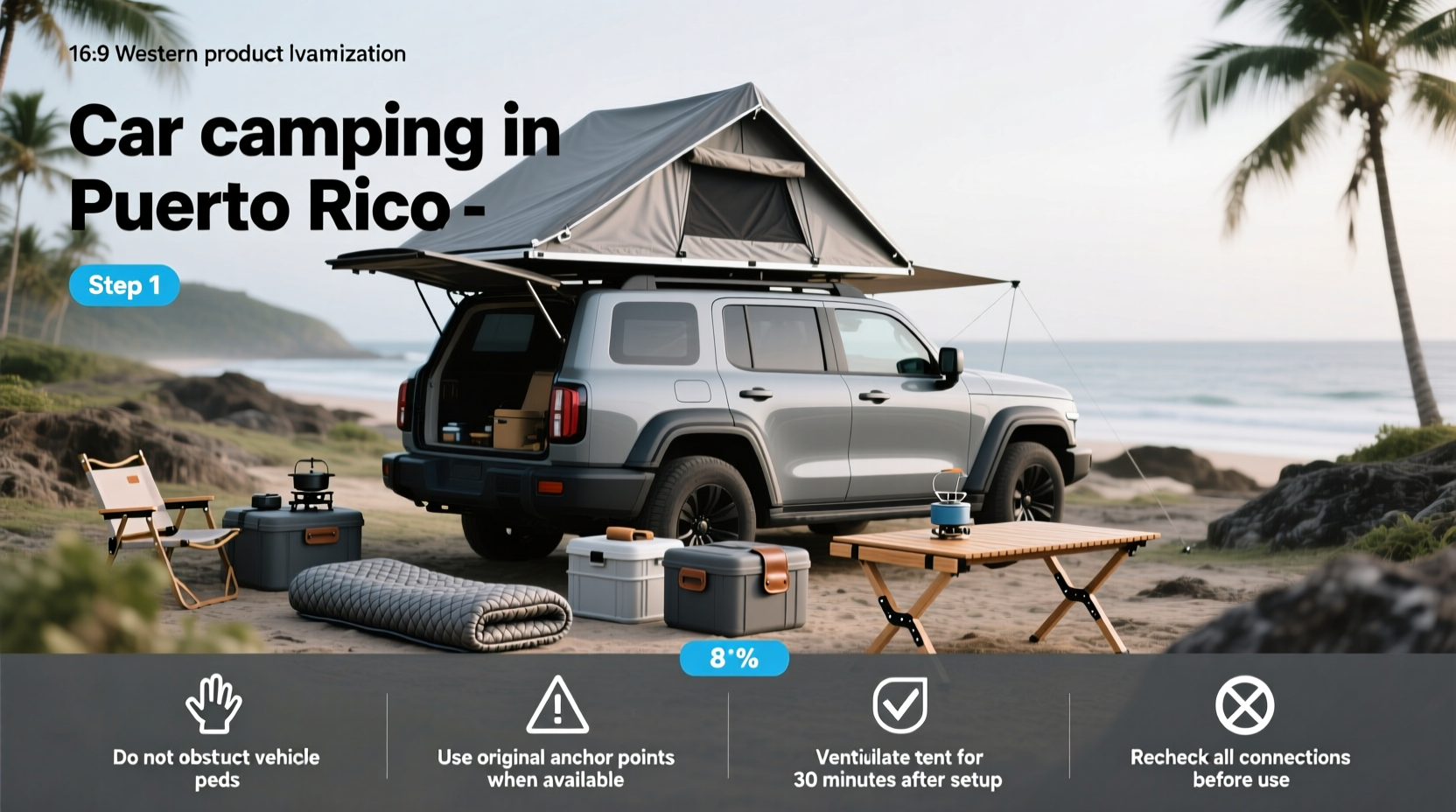
When planning how to choose car camping Puerto Rico gear, focus first on climate resilience, vehicle compatibility, and local terrain access. The best car camping Puerto Rico setup balances portability with comfort, especially given the island’s mix of coastal humidity and mountainous regions 📍. For most travelers, a roof rack tent or compact pop-up camper offers optimal space-efficiency and security. Avoid bulky trailers unless you plan extended stays in designated parks—many rural roads are narrow and unpaved. Prioritize UV-resistant materials, insect protection, and ventilation to handle tropical conditions. If you’re traveling during hurricane season (June–November), ensure your shelter is easy to dismantle and store quickly.
About Car Camping Puerto Rico
Car camping in Puerto Rico refers to using your vehicle as a base for overnight outdoor stays across the island’s diverse landscapes—from El Yunque National Forest to the dry forests of Guánica and beaches like Flamenco in Culebra 🚗. Unlike traditional backpacking, car camping allows you to carry more gear while maintaining mobility. This style is ideal for exploring remote areas where hotels are sparse or fully booked.
Common setups include rooftop tents, rear-hatch awnings, inflatable mattresses inside SUVs, and compact trailer rigs. What sets car camping Puerto Rico apart is the need to adapt to tropical weather, limited infrastructure in rural zones, and potential restrictions in public lands. Many visitors combine road trips with short hikes, beach days, and cultural stops, making versatility a top priority when selecting equipment.
Why Car Camping Puerto Rico Is Gaining Popularity
Adventure tourism in Puerto Rico has surged post-pandemic, driven by demand for flexible, self-reliant travel options 1. Car camping appeals to those seeking affordable alternatives to resorts, especially during peak seasons when lodging prices spike. It also supports sustainable tourism by reducing reliance on large hotels and encouraging visits to under-explored regions.
Additionally, social media exposure of scenic spots like Las Piedras or Cabo Rojo has inspired travelers to pursue immersive experiences. With reliable rental car availability and well-maintained highways connecting major attractions, driving-based exploration feels accessible even to first-time visitors. The freedom to change plans daily—based on weather or local recommendations—adds to the appeal.
Types and Variants
Different car camping styles suit different needs. Here are the most common variants used in Puerto Rico:
Rooftop Tents (RTTs)
- Pros: Elevated sleeping protects against moisture, insects, and uneven ground; quick setup (⏱️ ~5–10 minutes)
- Cons: Requires roof racks; increases vehicle height (may affect garage clearance or wind resistance)
- Ideal for couples or solo travelers prioritizing safety and ease.
Pop-Up Campers / Teardrop Trailers
- Pros: Full kitchenette and storage; stable on rough terrain; can be towed by mid-size SUVs
- Cons: Need hitch installation; not suitable for narrow mountain roads; higher fuel consumption
- Best for families or longer stays at established campgrounds.
In-Car Sleeping Setups
- Pros: Lowest cost; no extra equipment beyond mattress pad or blackout curtains
- Cons: Limited comfort; heat buildup; less privacy
- Suitable for budget travelers using sedans or compact cars.
Awning Shelters & Rear-Hatch Shades
- Pros: Adds covered outdoor space; lightweight; pairs well with in-car sleeping
- Cons: Minimal weather protection; requires stable anchor points
- Great for daytime shade and meal prep near beaches or parking overlooks.
Key Features and Specifications to Evaluate
To make an informed decision on what to look for in car camping Puerto Rico setups, assess these core factors:
Weather Resistance 🌧️
Puerto Rico’s tropical climate means high humidity, sudden rain showers, and intense sun. Look for waterproof fabrics (≥1500mm hydrostatic head), UV-treated coatings, and mesh panels for airflow without compromising bug protection.
Ventilation & Condensation Control
Tropical environments trap moisture. Opt for double-wall tents, roof vents, or models with anti-condensation linings. Poor airflow leads to mold growth over time.
Setup Time & Ease of Use 🔧
If arriving late after dark or in changing weather, fast deployment matters. Rooftop tents typically win here, but some freestanding shelters now offer one-person pitch systems.
Weight & Vehicle Compatibility
Check your car’s roof load limit (usually 165–220 lbs). Exceeding it risks damage. Smaller vehicles should avoid heavy trailers or large RTTs.
Security & Privacy
While crime rates vary, visible gear can attract attention. Consider tinted windows, lockable storage boxes, or removable interiors that can be taken with you.
Storage Capacity
Factor in space for water jugs, coolers, cooking gear, and hiking supplies. Some pop-up trailers include external storage compartments useful for muddy boots or snorkel gear.
Pros and Cons
Pros ✅
- Cost-effective compared to nightly hotel stays
- Greater flexibility in itinerary planning
- Access to scenic, less-crowded locations
- Easier than backpacking for older adults or families
- Opportunity to engage with local communities off the beaten path
Cons ❌
- Limited freshwater access in remote areas
- No electricity at many informal sites
- Road conditions vary—some require 4WD capability
- Regulations unclear in certain public lands
- Heat and humidity may degrade comfort if gear isn’t suited
How to Choose Car Camping Puerto Rico
Follow this step-by-step guide to select the right system:
- Assess Your Vehicle Type – Sedan? SUV? Truck? Confirm weight limits and attachment points (roof rails, hitch receiver).
- Determine Trip Duration & Group Size – Weekend trips favor simpler setups; week-long adventures may justify investing in trailers.
- Map Your Route – Will you stay near developed campgrounds or venture into backcountry? Adjust gear accordingly.
- Budget Realistically – Include costs for accessories: portable stove, water filter, solar charger, leveling blocks.
- Test Setup at Home – Practice assembling your shelter before departure to identify issues.
- Check Local Regulations – Overnight parking is restricted in many urban areas. Use apps like iOverlander to find permitted spots.
Red Flags to Avoid ⚠️
- Unverified Load Ratings: Never assume a roof rack can hold a tent without checking manufacturer specs.
- Non-Removable Interiors: Hard-to-clean materials promote mildew in humid climates.
- Poor Ventilation Design: Single-entry tents with no opposing windows trap heat.
- Missing Rainfly: Essential for tropical downpours—even brief storms can soak unprotected gear.
- Overly Complex Assembly: If it takes more than 15 minutes under ideal conditions, expect delays in real-world use.
Price & Market Insights
Pricing varies widely based on type and origin:
- In-Car Kits: $50–$200 (foam pads, sleep bags, window covers)
- Roof Top Tents: $1,500–$3,500 (hard-shell units cost more but deploy faster)
- Teardrop Trailers: $6,000–$12,000 new; used models start around $4,000
- Accessories Bundle: Add $300–$800 for stove, lighting, power bank, and water container
Value often lies in durability and reusability. While entry-level tents save money upfront, they may fail under repeated exposure to salt air and UV rays. Mid-range options from reputable brands tend to offer better long-term ROI, especially if used across multiple trips.
Top-Seller & Competitive Analysis
Below is a comparison of popular choices adapted for Puerto Rico conditions:
| Model | Type | Weight | Setup Time | Weather Rating | Price Range |
|---|---|---|---|---|---|
| ARB Outback Access RTT | Hard-shell rooftop | 176 lbs | 2–3 min | Excellent (sealed seams, 3000mm HH) | $2,800 |
| Smittybilt Overlander | Soft-shell rooftop | 145 lbs | 8–10 min | Good (1500mm HH, mesh windows) | $1,600 |
| WeBoost Nomad 520 | Teardrop trailer | 1,800 lbs | 15+ min | Very Good (integrated kitchen, AC option) | $9,500 |
| REI Co-op Half Dome SL 2+ | Floor tent (for ground use) | 5.5 lbs | 12 min | Fair (needs separate footprint) | $280 |
Note: Availability in Puerto Rico may require mainland U.S. shipping. Verify delivery timelines and import fees if purchasing locally through dealers.
Customer Feedback Synthesis
Based on aggregated reviews and traveler forums, here are recurring themes:
Frequent Praises ✨
- “Fast setup made rainy nights stress-free.”
- “Elevated bed kept us dry during unexpected flooding.”
- “Perfect for stargazing with panoramic views.”
- “Saved hundreds vs. hotel bookings over a 10-day trip.”
Common Complaints 🛑
- “Condensation built up inside every morning.”
- “Too tall for my garage—had to park outside.”
- “Zippers jammed after three months due to sand exposure.”
- “No instructions included for hitch alignment on slopes.”
Sourcing & Supplier Tips
You can source gear from:
- Mainland U.S. retailers (REI, Amazon, Costco) with shipping to Puerto Rico via UPS/FedEx 🚚
- Local outfitters in San Juan or Ponce (limited inventory, higher markups)
- Rental companies offering weekly packages (ideal for one-time use)
For bulk purchases or resale, verify customs regulations for importing camping equipment. Always inspect used gear for mold, rust, or torn seams—common issues in humid climates. When buying online, confirm return policies; some exclude international shipments.
Maintenance, Safety & Legal Considerations
Maintenance: After each trip, clean all surfaces with mild soap and water. Dry completely before storage to prevent mildew. Lubricate zippers annually and check welds on metal frames.
Safety: Keep a fire extinguisher and first aid kit accessible. Never run engines or generators inside enclosed spaces. Use bear-proof containers if camping near forested reserves, though large predators aren’t present—raccoons and mongoose are common nuisances.
Legal Notes: There is no universal legal framework for car camping in Puerto Rico. Overnight parking is generally prohibited in city centers and commercial zones. Use designated campgrounds such as those in Toro Negro or Susúa State Forest. In national forests, dispersed camping may be allowed but verify current rules with the Department of Natural and Environmental Resources (DNER). Always obtain permits if required and respect private property boundaries.
Conclusion
Choosing the right car camping Puerto Rico solution depends on your vehicle, travel style, and environmental expectations. If you prioritize speed and comfort and have a compatible SUV, a hard-shell rooftop tent delivers strong value. For larger groups needing amenities, a teardrop trailer works well—but only if you’ll stick to paved-access campgrounds. Budget-conscious travelers can succeed with in-car setups, provided they accept trade-offs in comfort and temperature control. Regardless of choice, invest in quality ventilation, UV protection, and secure mounting hardware. Most importantly, research site permissions in advance and leave no trace to preserve Puerto Rico’s natural beauty.
FAQs
It depends on location. Sleeping in vehicles is generally not allowed in cities or tourist zones. Use designated campgrounds or seek landowner permission for rural areas.
Yes, some forests like Maricao and Guilarte require advance registration or permits. Check with the DNER website or local ranger stations before arrival.
No tent is hurricane-proof. If severe weather is forecast, disassemble and store gear securely. Monitor alerts via NOAA and evacuate if advised.
Use reflective sunshades, ventilated tents, battery-powered fans, and camp at higher elevations where temperatures are lower.
Yes, several companies in San Juan and Rincón offer rooftop tents, trailers, and full adventure vans for weekly rentals.




 浙公网安备
33010002000092号
 浙B2-20120091-4