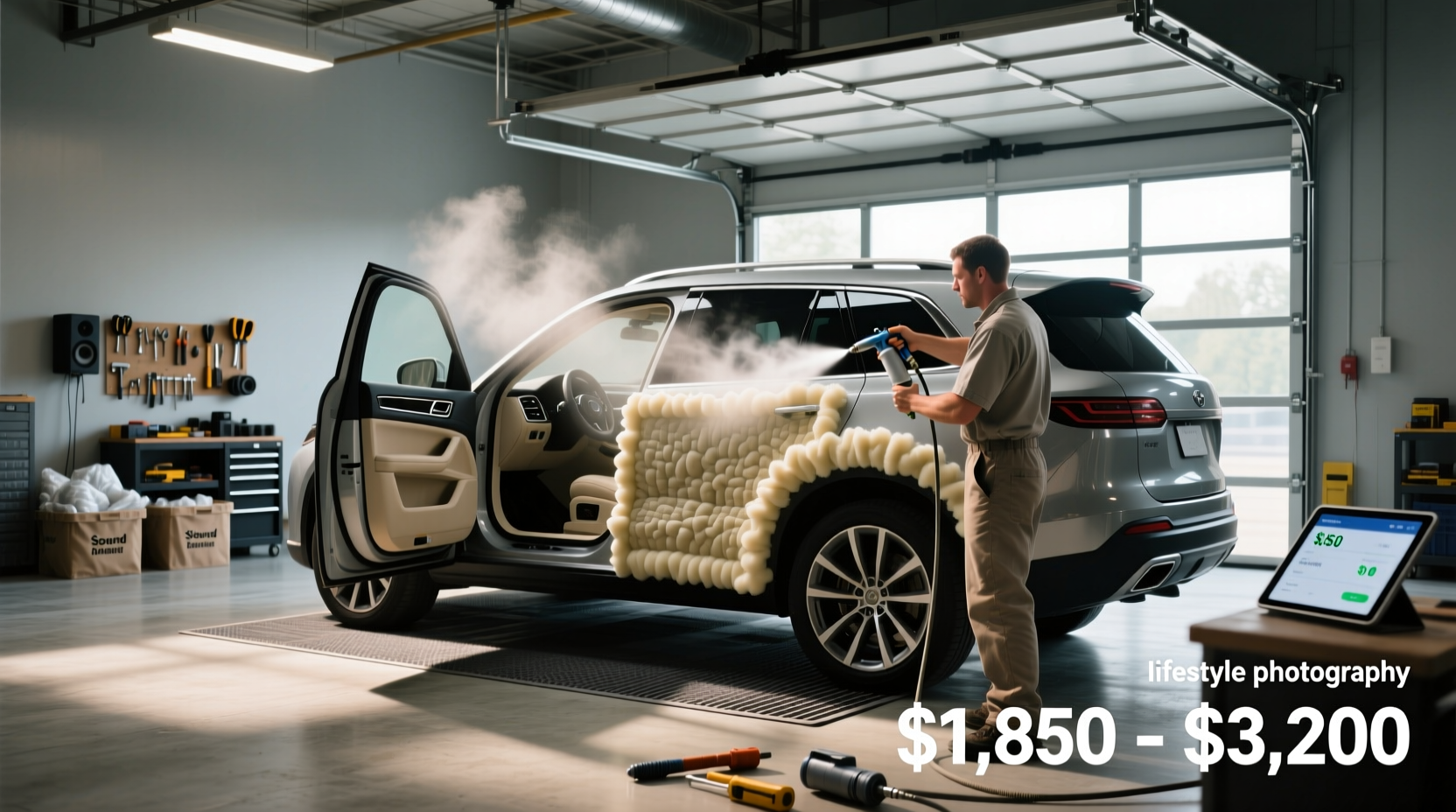
If you’re a typical user, you don’t need to overthink this. For most drivers, installing spray or mat-based sound insulation in high-vibration zones—like doors, floor, and wheel arches—cuts cabin noise noticeably without breaking the bank. How to choose car sound insulation? Focus on coverage area, material density, and heat resistance. Avoid ultra-thin foams that claim full dampening with 10% coverage—they rarely deliver. Over the past year, more compact and midsize sedan owners have opted for DIY kits, especially those using butyl-based damping mats, because they balance cost and performance.
If you’re asking what to look for in car sound insulation, prioritize products that combine mass-loading (to block sound) and viscoelastic properties (to absorb vibrations). Typical users see diminishing returns beyond 60% panel coverage. This piece isn’t for keyword collectors. It’s for people who will actually use the product.
About Spray Sound Insulation for Cars
Spray sound insulation refers to liquid-applied damping materials that harden into a flexible barrier on metal surfaces. Unlike pre-cut mats, these are sprayed directly onto inner panels, fenders, and undercarriage areas. They seal irregular shapes well and reduce both airborne and structure-borne noise. Common formulations include asphalt-based sprays and water-based elastomeric coatings.
These products work by increasing the damping loss factor of thin sheet metal, reducing resonance when exposed to road vibration or wind turbulence. While not true 'soundproofing'—which implies complete noise isolation—they significantly deaden rattles and lower mid-frequency drone common at highway speeds.
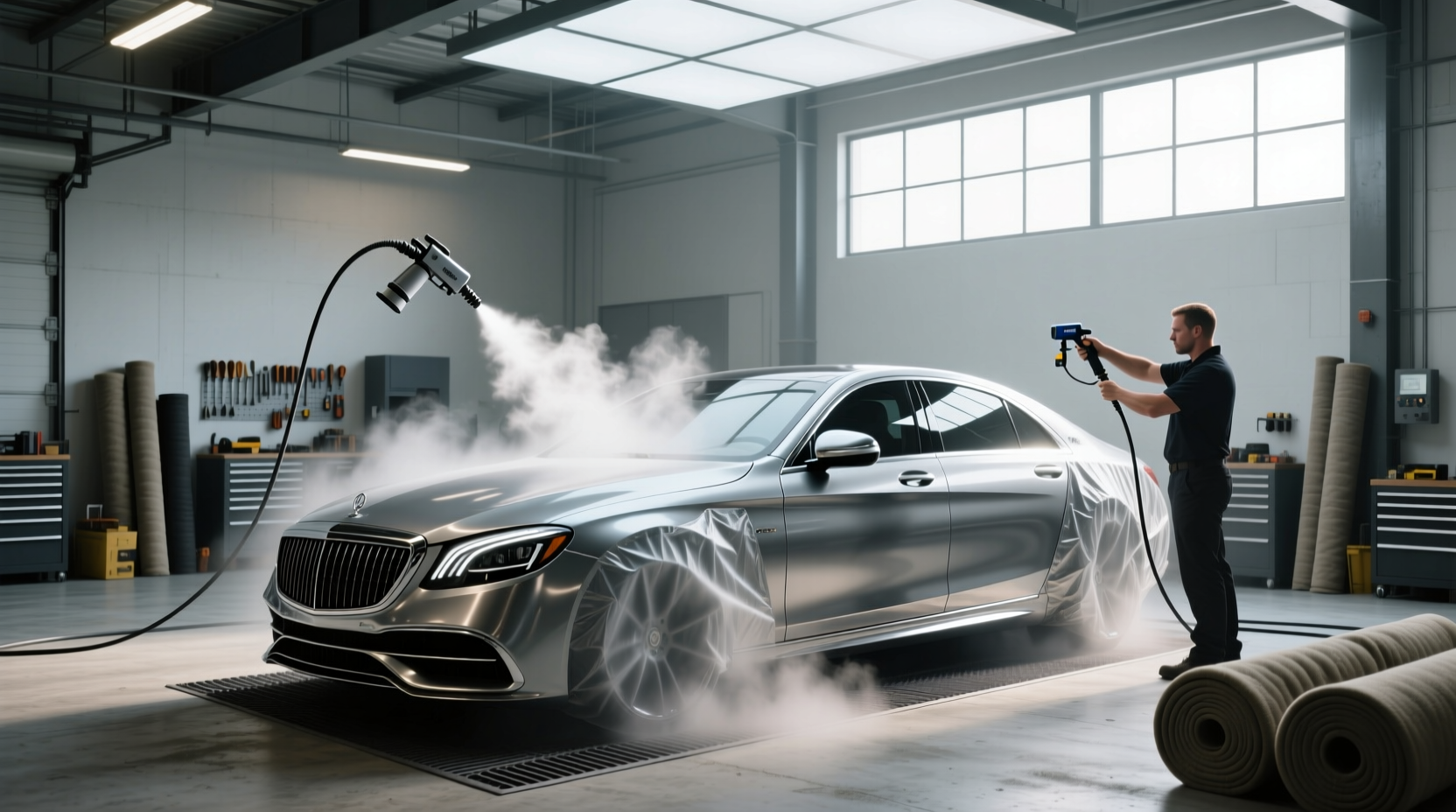
Why Car Sound Insulation Is Gaining Popularity
Lately, urban driving conditions have worsened—increased traffic, rougher road repairs, and higher speed limits on commuter routes. These factors amplify low-frequency rumble and tire harmonics inside vehicles, especially in economy models with minimal factory damping. As a result, even non-audiophiles are seeking relief from constant cabin fatigue.
Another shift: affordable multi-layer composites now mimic premium-brand performance. Where once only high-end audio enthusiasts installed insulation, today’s budget-conscious buyers find value in improved comfort and reduced HVAC strain due to added thermal buffering.
If you’re a typical user, you don’t need to overthink this. The core benefit isn’t studio silence—it’s eliminating the nagging buzz behind your ears after a 30-minute drive. That subtle improvement changes daily usability far more than specs suggest.
Types and Variants
1. Butyl-Based Damping Mats
- Pros: High density, excellent vibration control, long-term adhesion
- Cons: Requires cutting; heavier than alternatives; odor during installation
2. Spray-On Liquid Insulation
- Pros: Conforms perfectly to complex geometries; no seams or gaps; good for undercoating
- Cons: Needs ventilation during application; longer cure time; harder to repair or modify later
3. Foam Panels with Adhesive Backing
- Pros: Lightweight, easy to install, often includes thermal layer
- Cons: Lower mass means limited low-frequency blocking; degrades faster in hot climates
4. Pre-Fitted Composite Kits
- Pros: Tailored to specific makes/models; reduces waste; often include multiple material types
- Cons: More expensive per square foot; availability varies by region
Key Features and Specifications to Evaluate
When comparing options, focus on these measurable traits—not marketing claims.
Coverage vs. Performance
Studies show 60% coverage on critical panels achieves about 95% of maximum possible dampening1. Beyond that, gains are marginal. When it’s worth caring about: if you frequently drive on highways or carry sensitive equipment. When you don’t need to overthink it: for city-only commuting with average road conditions.
Material Density (Mass Loading)
Denser materials block more sound energy. Look for ≥2.0 kg/m² for floor panels. When it’s worth caring about: diesel engines or trucks exposed to heavy vibration. When you don’t need to overthink it: gasoline-powered sedans under 4,000 lbs.
Heat Resistance
Mats should withstand at least 70°C (158°F) without delamination. Critical near exhaust paths or engine bays. When it’s worth caring about: performance vehicles or hot climate operation. When you don’t need to overthink it: temperate zones with standard usage patterns.
Thickness and Layering
Thicker isn’t always better. Multi-layer systems (mass + foam + reflective foil) outperform single-material thick slabs. When it’s worth caring about: converting vans or EVs where silence expectations are higher. When you don’t need to overthink it: standard passenger cars seeking modest improvements.
Pros and Cons
| Aspect | Advantage | Limitation |
|---|---|---|
| Noise Reduction | Reduces mid-to-high frequency resonance and metal ringing | Minimal impact on low-frequency tire roar or wind rush |
| Vibration Control | Stops panel flutter and dashboard buzz | Does not fix mechanical looseness (e.g., trim clips) |
| Thermal Buffering | Slows heat transfer through metal; keeps cabin cooler | Not a substitute for proper insulation in extreme climates |
| Audio Quality | Tighter bass response and clearer mids in upgraded systems | Won’t compensate for poor speaker placement or wiring |
| Resale Impact | Potential perception of quality upgrade | No standardized valuation; may complicate future repairs |
How to Choose Car Sound Insulation (Buying Guide)
Step-by-Step Checklist
- Identify primary noise source: road (tires), wind (seals), or engine (vibration)
- Measure key areas: doors, floor, firewall, trunk lid
- Select material type based on access difficulty and desired outcome
- Calculate required square footage (add 10–15% for trimming waste)
- Verify compatibility with existing wiring and HVAC components
- Check return policy in case of odor or adhesion issues
Decision Flow
- Budget-focused? → Consider butyl roll mats (DIY cut-to-fit)
- Maximizing ease? → Choose pre-fitted kit for your vehicle model
- Targeting undercarriage? → Use spray-on for wheel wells and frame rails
- Upgrading audio? → Combine damping mats with closed-cell foam barriers
Recommendations by Scenario
- City Commuter: Apply damping mats to front doors and floor hump (~$150 kit). If you’re a typical user, you don’t need to overthink this—partial coverage suffices.
- Road Tripper: Full floor + rear wheel arches + trunk liner. Include thermal layer to reduce AC load.
- Audiophile: Multi-stage approach: damping mat + decoupling layer + acoustic foam. Prioritize symmetry and sealing.
- Fleet Manager: Spray-on for durability and uniformity across multiple units.
Red Flags / What to Avoid
- Products claiming 'complete soundproofing': No material can fully block external noise in a mobile environment.
- Ultra-thin adhesive tapes: Often lack sufficient mass to affect structural damping.
- Unbranded sprays with no SDS (Safety Data Sheet): Risk off-gassing toxic compounds inside cabin space.
- Kits priced below $0.80/sq ft: Likely use recycled content with inconsistent thickness or adhesion.
Price & Market Insights
Total cost to sound insulate a car ranges from $200 to $2,000+, depending on vehicle size, material choice, and labor. DIY projects typically fall between $200–$600 for comprehensive treatment. Professional installations add $300–$800 in labor fees.
Material pricing may vary by region/model/seller. Butyl mats average $1.50–$3.00 per sq ft. Spray coatings cost more upfront ($4–$7/sq ft) but save time on complex shapes. Pre-cut kits command a premium (up to $4.50/sq ft) due to design overhead.
If you’re a typical user, you don’t need to overthink this. Spending beyond $600 on materials alone rarely yields proportional benefits unless modifying an EV or luxury conversion.
Top-Seller & Competitive Analysis
Leading brands emphasize balanced performance rather than extreme specs. Most offer modular systems combining different materials for targeted results.
| Brand/Model | Material Type | Strengths | Trade-offs |
|---|---|---|---|
| Second Skin Audio Damplifier | Butyl + Aluminum | High damping coefficient; widely tested | Premium price; requires precise cutting |
| NOXON 4.0 Roll Kit | Multi-layer composite | Includes thermal + acoustic layers | Heavier; not ideal for weight-sensitive builds |
| Barrow Acoustic Coating (Spray) | Elastomeric polymer | Excellent for undercarriage; waterproof | Needs respirator during application |
| Ecotone Green Series | Recycled rubber + fabric | Eco-labeled; low odor | Lower density; best for light-duty use |
Customer Feedback Synthesis
Most frequent praise: Noticeable reduction in door-panel buzzing, quieter idle hum, improved music clarity, and perceived build quality.
Common complaints: Strong chemical smell lasting weeks, difficulty removing old adhesive residue, mismatched pre-cut pieces in generic kits, and unexpected weight gain affecting fuel economy slightly.
Users consistently report that results depend more on installation thoroughness than brand name. One verified buyer noted: “The difference wasn’t magic—but after four hours of driving, I wasn’t tired from noise anymore.”
Sourcing & Supplier Tips
- Buy from suppliers offering sample packs—test adhesion and odor before full purchase.
- Look for vendors providing CAD-based coverage maps for your vehicle make/year.
- Prefer companies with clear warranty terms (minimum 5 years for adhesion).
- For commercial orders, confirm scalability and batch consistency.
- If sourcing online, verify shipping origin—some regions restrict certain chemicals in damping materials.
Maintenance, Safety & Legal Considerations
Once installed, sound insulation requires no maintenance. However, ensure all materials are securely bonded before reassembling interior panels. Loose flaps can rattle louder than untreated metal.
Safety-wise, avoid blocking ventilation channels, ECU sensors, or airbag deployment zones. Always allow full curing time (typically 24–72 hours) before exposing treated areas to moisture or pressure.
Legally, no universal regulations govern aftermarket sound damping. However, some racing or inspection jurisdictions prohibit modifications that interfere with emissions components or structural integrity. To stay compliant, check manufacturer guidelines and local modification rules before proceeding.
Conclusion
If you need everyday cabin comfort and minor noise reduction, choose a butyl-based mat system with 50–60% coverage on doors and floor. If you’re pursuing high-fidelity audio or operate in consistently loud environments, invest in a layered solution tailored to your vehicle’s weak points. If you’re a typical user, you don’t need to overthink this—effective sound insulation is accessible, predictable, and practical without chasing perfection.
Everything You Need to Know
Costs range from $200–$2,000+ depending on vehicle size, material quality, and whether you install it yourself. DIY treatments typically cost $200–$600. Labor for professional installation adds $300–$800. Prices may vary by region/model/seller. Verify exact requirements based on your car’s dimensions and intended coverage level.
Yes, but within limits. It primarily reduces vibrations and resonance in metal panels, which eliminates buzzing and ringing noises. It has less effect on continuous road or wind noise. Most users notice improved comfort during longer drives, especially at highway speeds. Results depend heavily on correct placement and coverage.
Yes, most kits are designed for DIY use. Basic tools include scissors, roller, and heat gun (for edges). Allow 4–8 hours for a full car treatment. Spray versions require protective gear and good ventilation. If you’re comfortable removing door panels and working around wiring, you can do it safely. Check tutorial videos specific to your vehicle model.
It depends on the area. Spray excels in irregular spaces like wheel wells and frames where mats won’t conform. Mats offer higher mass loading and easier replacement. For optimal results, many professionals combine both: mats on flat panels, spray on contours. Each has strengths; neither is universally superior.
When properly installed, it won’t damage your car. However, improper removal of old adhesive can scratch metal. Avoid covering sensors, airbags, or electrical connectors. Use only materials rated for automotive temperatures. Always reattach all clips and seals to prevent water leaks or rattles.




 浙公网安备
33010002000092号
 浙B2-20120091-4