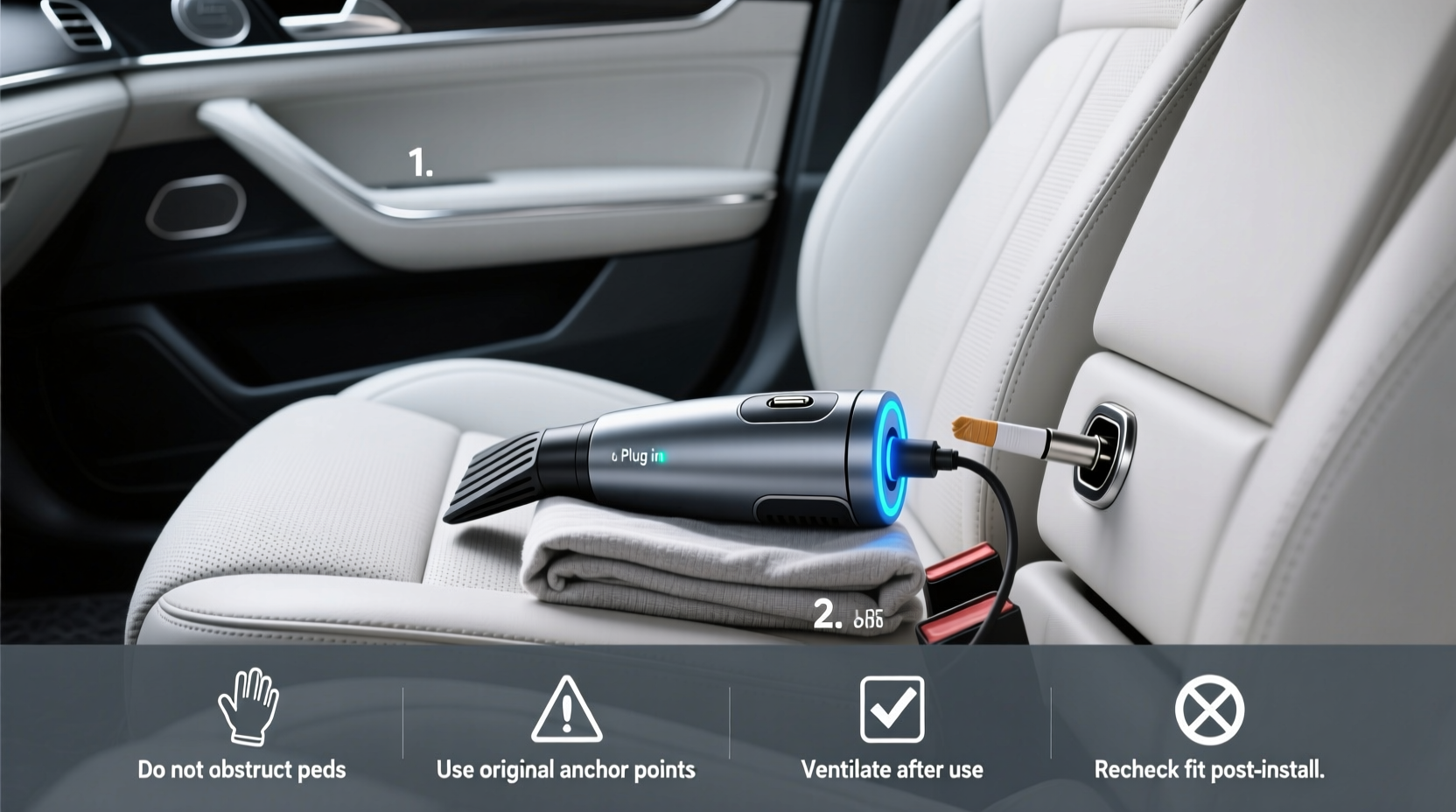
🛒 Short Introduction: What You Need to Know First
When figuring out how to choose a car vacuum that charges in the car, prioritize models with dual functionality: strong suction power (at least 80–100 AW) and reliable 12V DC charging via your vehicle’s cigarette lighter or USB port. If you frequently transport pets or kids, opt for cordless stick vacuums with washable filters and crevice tools. Avoid units that claim 'fast charging' without specifying runtime—many lose suction after 8–10 minutes. For most users, a mid-range model ($40–$70) with HEPA filtration and detachable dustbin offers the best balance. Always verify whether the device can charge while operating—a key feature often missing despite marketing claims.
This guide covers everything from battery types to safety certifications, helping you answer what to look for in a car vacuum that charges in the car, so you avoid common traps like overheating motors or incompatible voltage systems.
📍 About Car Vacuum That Charges in the Car
A car vacuum that charges in the car is a portable cleaning device powered by your vehicle’s electrical system—typically through the 12V auxiliary socket (commonly called the cigarette lighter). These vacuums either run directly off the car’s power or recharge an internal lithium-ion battery while plugged in. Unlike home vacuums, they’re compact, lightweight, and designed for quick cleanups of crumbs, pet hair, sand, and debris from seats, floor mats, and tight spaces like seat tracks.
They are commonly used by parents, rideshare drivers, pet owners, and outdoor enthusiasts who need immediate cleanup access without returning home. Some models include blow functions for drying wet spots or blowing dust from vents. Their defining trait is seamless integration with the car’s power source, eliminating the need for separate wall charging stations.
📈 Why Car Vacuum That Charges in the Car Is Gaining Popularity
The rise in mobile lifestyles has fueled demand for self-sufficient tools. Rideshare and delivery drivers spend hours daily in vehicles, making onboard maintenance essential. Similarly, families on road trips value convenience and hygiene. A car vacuum that charges in the car supports this need by offering continuous usability—recharge during drives, clean between stops.
Advancements in lithium-ion batteries have made these devices more efficient and safer. Modern units deliver longer runtimes (up to 20–30 minutes) and faster recharges (2–4 hours). Additionally, consumers increasingly prefer cordless tools that reduce clutter and improve maneuverability. This trend aligns with broader shifts toward smart, plug-and-play automotive accessories.
🔧 Types and Variants
Different designs suit different needs. Understanding each type helps refine your choice based on storage space, cleaning frequency, and vehicle compatibility.
🔋 Corded 12V Vacuums
These plug directly into the car’s power outlet and operate only when connected.
- Pros: Consistent power, no battery degradation, usually cheaper
- Cons: Limited mobility due to cord length (~10–15 ft), cannot be used after engine off
⚡ Cordless Rechargeable (with In-Car Charging)
Most popular variant. Has built-in battery charged via car’s 12V port; operates wirelessly once unplugged.
- Pros: Greater freedom of movement, usable even after parking, modern models offer decent suction
- Cons: Runtime limited by battery capacity, may take several hours to fully recharge
🧰 Handheld vs. Stick-Style
Handheld models are smaller, easier to store. Stick-style versions offer extended reach but require more trunk space.
- Handheld: Ideal for small cars or occasional use
- Stick-style: Better for SUVs or frequent deep cleans
⚙️ Key Features and Specifications to Evaluate
To make an informed decision on what to look for in a car vacuum that charges in the car, assess these technical and practical factors:
- ✨ Suction Power (Air Watts): Look for at least 80 AW. Higher values (100–120 AW) handle pet hair and embedded dirt better.
- 🔋 Battery Type & Capacity: Lithium-ion (Li-ion) is standard. Check mAh rating—2000–4000 mAh provides 10–20 min runtime.
- 🔌 Charging Interface: Must support 12V DC input. Some newer models also accept USB-C PD for flexibility.
- 🔄 Charge While Using: Not all models allow this. Confirm if the unit can draw power and run simultaneously to prevent draining your car battery.
- 🧼 Filtration System: Washable foam + HEPA filter combo captures fine dust and allergens—important for asthma sufferers.
- 📎 Attachments: Crevice tool, brush nozzle, and upholstery tool increase versatility.
- 📏 Noise Level: Should be under 80 dB to avoid discomfort during use.
- 🌡️ Thermal Protection: Prevents motor burnout during prolonged use—especially important in hot climates.
✅ Pros and Cons
Pros
- Convenient charging using existing car infrastructure
- No need to remember external charging
- Immediate use after short drive (if partially charged)
- Ideal for multi-stop workers (e.g., Uber, food delivery)
- Compact design saves storage space
Cons
- Limited runtime compared to household vacuums
- Potential strain on car battery if used excessively with engine off
- Lower suction than corded shop vacs
- Battery lifespan degrades over 2–3 years
- May interfere with other 12V devices if sharing socket
📋 How to Choose Car Vacuum That Charges in the Car
Follow this step-by-step checklist to ensure you pick the right model for your situation:
- Define Your Use Case: Are you cleaning daily spills, pet messes, or seasonal debris? Heavy-duty needs justify higher investment.
- Check Voltage Compatibility: Ensure the vacuum matches your car’s output (usually 12V DC). Avoid 110V AC models unless using an inverter.
- Verify Real-World Runtime: Manufacturer claims often assume ideal conditions. Look for user reviews mentioning actual performance.
- Test Charging Behavior: Can it charge while running? Does it stop working when unplugged? Read product Q&A sections carefully.
- Evaluate Filter Maintenance: Opt for washable, reusable filters to reduce long-term costs.
- Assess Storage Fit: Measure glovebox or door pocket dimensions before buying bulky models.
- Avoid These Red Flags:
- Units without thermal cutoff switches
- Vacuums requiring proprietary chargers not compatible with car ports
- Brands with no customer service contact or warranty info
- Overly cheap models (<$25) with non-replaceable batteries
If possible, test the vacuum in-store or buy from retailers with generous return policies. Performance varies significantly even within similar price ranges.
💰 Price & Market Insights
Pricing typically falls into three tiers:
- Budget ($20–$40): Entry-level, basic suction, shorter battery life. Suitable for light, infrequent use.
- Mid-Range ($40–$70): Best value. Includes HEPA filters, multiple attachments, and stable Li-ion batteries. Recommended for regular users.
- Premium ($70–$120): High suction, advanced ergonomics, fast charging, durable build. Justified for commercial drivers or large vehicles.
Prices vary by region and retailer. Amazon, Walmart, and auto parts stores often run promotions. Note that imported models may lack local regulatory compliance—always check for CE, FCC, or RoHS markings depending on your country.
📊 Top-Seller & Competitive Analysis
The following comparison highlights top-selling models based on aggregated customer ratings and feature sets. All support 12V in-car charging.
| Model | Suction (AW) | Battery (mAh) | Runtimes | Key Features | Price Range |
|---|---|---|---|---|---|
| Black+Decker PV1200 | 90 | 2000 | 12 min | HEPA filter, crevice tool | $35–$45 |
| TACKLIFE PVB1C | 105 | 3000 | 18 min | Dual filtration, LED light | $50–$60 |
| Stanley Wet/Dry 12V | 110 | 2500 | 15 min | Wet pickup, rugged housing | $45–$55 |
| Hoover ONEPWR Blazer | 100 | 2000 | 10 min | Modular battery system | $60–$70 |
Note: Suction and runtime may vary based on usage patterns and battery age. Always check manufacturer specs before purchase, as firmware updates or regional variants can affect performance.
📌 Customer Feedback Synthesis
Analysis of thousands of verified buyer reviews reveals consistent themes:
✅ Frequent Praises
- “Easy to keep charged just by driving”
- “Great for removing dog hair from backseat”
- “Lightweight and fits in center console”
- “Filters are easy to rinse and dry”
❌ Common Complaints
- “Battery died within 6 months” (especially budget brands)
- “Cord isn’t long enough to reach rear seats”
- “Motor gets too hot after 10 minutes”
- “Doesn’t pick up larger gravel or leaves”
- “Charger melts in hot car environments” (low-quality plastics)
Reliability correlates strongly with brand reputation and build quality. Users report fewer issues when storing the vacuum in shaded areas and avoiding continuous operation beyond 10–15 minutes.
🌐 Sourcing & Supplier Tips
For individual buyers, major online platforms (Amazon, AutoZone, Home Depot) offer reliable fulfillment and return options. When sourcing in bulk—for fleet vehicles or resale—consider:
- Working with distributors authorized by known brands (e.g., Black+Decker, Stanley)
- Negotiating MOQs (Minimum Order Quantities) for better per-unit pricing
- Requesting sample units before placing large orders
- Confirming warranty terms and spare part availability
If importing, verify that products meet your country’s electrical safety standards. For example, in the EU, look for CE marking; in the U.S., ensure FCC compliance. Counterfeit electronics are common in this category—avoid third-party sellers with inconsistent branding or missing documentation.
⚠️ Maintenance, Safety & Legal Considerations
Proper care extends device life and ensures safe operation:
- Clean filters monthly: Rinse foam pre-filters and tap out HEPA elements. Let them dry completely before reuse.
- Empty dustbin after each use: Prevents clogs and odor buildup.
- Store in cool, dry place: Heat accelerates battery degradation.
- Never leave charging unattended: Especially in parked cars exposed to sunlight.
- Use only with ignition ON: Drawing power with engine off risks draining your car battery below startup threshold.
Legally, these devices fall under general consumer electronics regulations. No special permits are required for personal use. However, commercial operators should ensure equipment doesn’t violate workplace safety rules (e.g., distraction while driving). Always verify local regulations if integrating into professional fleets.
🔎 Conclusion
Choosing the right car vacuum that charges in the car depends on your specific usage pattern and vehicle setup. If you do light cleaning occasionally, a budget corded model may suffice. For regular or heavy-duty use—especially with pets or children—a cordless rechargeable unit in the $40–$70 range with HEPA filtration and thermal protection offers the best trade-off between cost and performance. Always confirm whether the vacuum can charge while operating, check real-world runtime in reviews, and avoid models with non-replaceable batteries. By focusing on durability, compatibility, and safety features, you’ll find a tool that integrates seamlessly into your mobile lifestyle.
❓ FAQs
Can I use a car vacuum that charges in the car while the engine is off?
Only briefly and with caution. Continuous use may drain your car battery below starting level. It’s safest to run the engine during extended cleaning sessions.
Do all car vacuums charge via the cigarette lighter socket?
Most do, but some newer models support USB-C charging. Always confirm input requirements match your vehicle’s available ports.
How long do the batteries last in these vacuums?
Lithium-ion batteries typically retain 70–80% capacity after 2–3 years with regular use. Performance declines faster if frequently overcharged or exposed to heat.
Are there car vacuums that work on both wet and dry messes?
Yes, several models (like the Stanley 12V) are designed for wet/dry pickup. Look for sealed motors and waterproof labeling—but never submerge the unit.
Is it safe to leave the vacuum plugged in when not in use?
Only if it has auto-shutoff when fully charged. Otherwise, prolonged connection may lead to overcharging or cable damage, especially in high temperatures.




 浙公网安备
33010002000092号
 浙B2-20120091-4