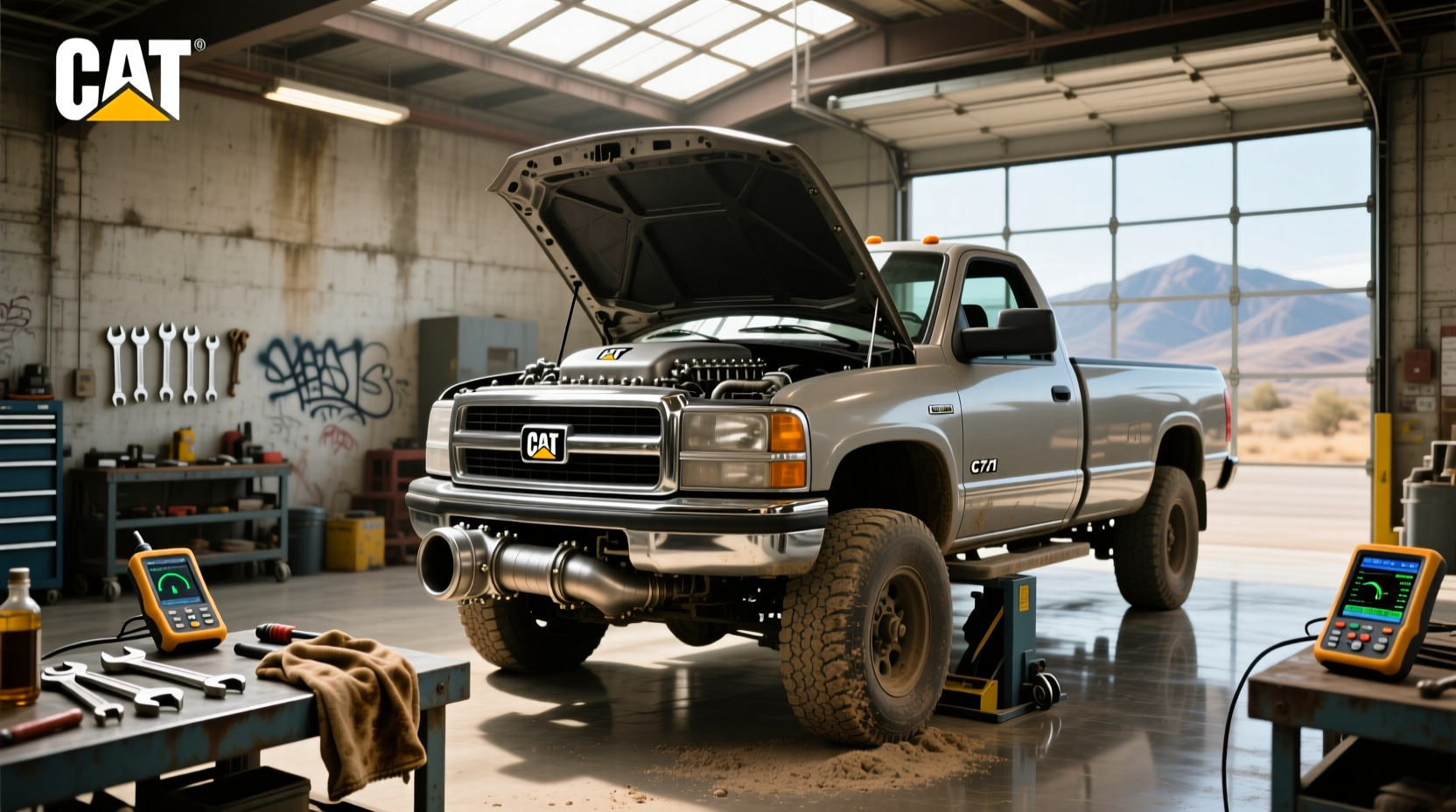
Lately, interest in Cat diesel engines for pickup trucks has resurged—not because Caterpillar is launching a new consumer model, but because owners are re-evaluating what true durability means. If you’re asking what to look for in a heavy-duty diesel engine, the answer isn’t just horsepower or torque—it’s long-term access to parts, repair simplicity, and whether the engine was designed for constant load cycles. The reality? Most Cat engines like the C13 and C15 were built for mining rigs and Class 8 trucks, not daily-driven pickups. While legendary for endurance under industrial stress, they’re often oversized, fuel-thirsty, and incompatible with modern emissions systems in consumer chassis. If you’re a typical user, you don’t need to overthink this: unless you’re converting a commercial chassis or running extreme off-grid loads, a Cummins, Duramax, or Power Stroke will serve better. Over the past year, searches for ‘Cat diesel engines for pickup trucks’ have spiked, but most leads end at remanufactured units for custom builds—not OEM offerings.
This piece isn’t for keyword collectors. It’s for people who will actually use the product.
About Cat Diesel Engines
Caterpillar has never mass-produced a diesel engine specifically for light- or medium-duty pickup trucks. Their reputation stems from industrial and commercial applications—earthmoving equipment, marine propulsion, and long-haul freight. Engines like the 3406E, C12, C13, and C15 dominate conversations about reliability because they’ve logged millions of miles in garbage trucks, fire apparatus, and regional haulers. These are inline-six, direct-injected diesels known for robust castings, conservative tuning, and mechanical simplicity in earlier models. But that doesn’t mean they belong in your Ford F-350 or Ram 3500.
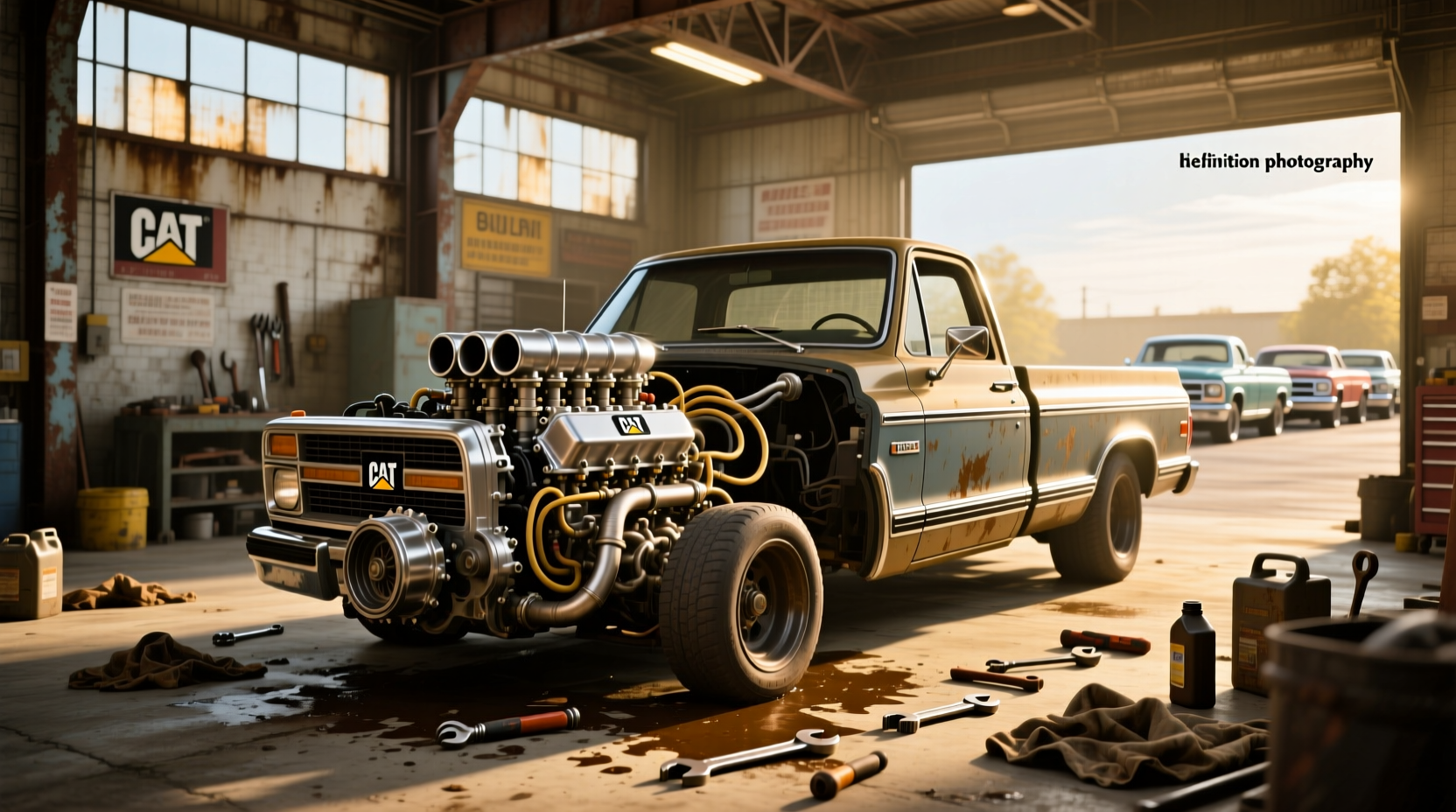
The confusion arises when enthusiasts see a ‘Cat-powered’ pickup on social media. These are almost always custom conversions—often using retired truck engines mated to aftermarket adapters, transmissions, and cooling systems. There’s no factory warranty, emissions certification, or dealer support. If you’re considering this path, understand it’s a project, not a purchase.
Why Cat Engines Are Gaining Popularity
Over the past year, videos showcasing ‘unstoppable’ Cat-powered trucks have gone viral. The appeal is emotional: a sense of invincibility, mechanical purity, and defiance of planned obsolescence. This isn’t just nostalgia—it reflects growing frustration with modern diesel complexity. Today’s engines rely heavily on exhaust gas recirculation (EGR), diesel particulate filters (DPF), and selective catalytic reduction (SCR). These systems improve emissions but add failure points and maintenance costs. Older Cat engines, especially pre-ACERT models, lack these components, making them attractive to off-grid users and DIY mechanics.
But popularity doesn’t equal practicality. The surge in interest hasn’t been matched by increased availability or compatibility. If you’re a typical user, you don’t need to overthink this: wanting a simple, durable engine is valid—but so is recognizing that modern diesels, despite their complexity, offer better fuel economy, smoother operation, and emissions compliance without sacrificing longevity.
Types and Variants
Cat never made a ‘pickup-specific’ diesel, but several models appear in custom installations:
3406B / 3406E
- Pros: Legendary durability, mechanical fuel system, high torque at low RPM, widely supported in commercial sectors
- Cons: Heavy (over 2,000 lbs), large footprint, poor fuel economy (~6–8 mpg in a converted truck), no OEM integration with modern electronics
C12 / C13
- Pros: Improved efficiency over 3406, available in ACERT and non-ACERT versions, common in school buses and delivery fleets
- Cons: ACERT versions have EGR/DPF complications; non-ACERT units are scarce. Requires extensive fabrication for pickup fitment
C15 / C16
- Pros: Massive displacement (15.2L), capable of 600+ hp in stock form, ideal for heavy continuous loads
- Cons: Extremely heavy, requires reinforced chassis, enormous cooling demands, fuel consumption can exceed 5 mpg under load
C7 / C9
- Pros: Smaller and lighter, some success in medium-duty conversions, easier to package
- Cons: Less torque than larger siblings, still requires custom mounts, wiring, and transmission pairing
If you’re a typical user, you don’t need to overthink this: none of these engines come with a pickup warranty, emissions sticker, or plug-and-play installation kit.
Key Features and Specifications to Evaluate
When assessing a Cat engine for a pickup conversion, focus on:
- Horsepower and Torque Curves: Industrial engines peak at lower RPMs. Ensure your intended use—towing, stationary power, off-roading—matches the power band.
- Weight and Dimensions: A C13 weighs nearly twice as much as a 6.7L Cummins. Verify frame strength and suspension capacity.
- Fuel System Type: Mechanical HEUI (hydraulic electronic unit injection) vs. electronic unit pumps. Mechanical systems are simpler but harder to tune.
- Emissions Compliance: Pre-2007 models avoid DPF/EGR but may not be legal for road use in many states. Post-ACERT engines bring complexity back.
- Cooling and Exhaust Requirements: Industrial engines generate more heat. Expect to install larger radiators, oil coolers, and high-flow exhaust.
When it’s worth caring about: If you’re building a dedicated work platform (e.g., remote well-drilling rig, mobile workshop) where uptime matters more than fuel cost.
When you don’t need to overthink it: If you’re upgrading a daily driver for towing—modern OEM diesels are already optimized for this.
Pros and Cons
| Aspect | Pros | Cons |
|---|---|---|
| Durability | Proven in 10,000+ hour industrial cycles | Overbuilt for typical pickup use |
| Serviceability | Mechanical systems easier to diagnose | Few technicians trained on Cat in consumer settings |
| Fuel System | Robust injectors, high-pressure pumps | Repairs expensive; parts may require core exchange |
| Availability | Used units plentiful from decommissioned trucks | No new sales channel for pickup integration |
| Tuning Potential | High headroom for power increases | Requires standalone engine management, not OBD2-compatible |
This piece isn’t for keyword collectors. It’s for people who will actually use the product.
How to Choose a Cat Diesel Engine for a Pickup
Follow this checklist if you’re serious about a conversion:
Step-by-Step Checklist
- Define Your Use Case: Is this for occasional towing, daily driving, or off-grid power generation?
- Verify Chassis Compatibility: Can your frame handle the weight? Will the engine bay fit it?
- Source the Engine: Look for low-hour, well-documented units from fleet withdrawals.
- Plan Ancillaries: Budget for custom radiator, exhaust, motor mounts, and transmission adapter.
- Engine Management: Decide between keeping factory ECM (limited tuning) or switching to standalone (expensive but flexible).
- Legal & Registration: Check if your state allows non-OEM engine swaps on public roads.
Decision Flow
- If you need reliability for light-duty use → stick with OEM Cummins, Duramax, or Power Stroke.
- If you need extreme durability for off-grid/commercial work → consider a Cat C13 or 3406E with full conversion plan.
- If you want high resale value or warranty support → avoid Cat conversions entirely.
Recommendations by Scenario
- Overland Build: C7 or C9 with hybrid cooling setup.
- Heavy Towing: Stick with factory 6.7L Cummins or L5P Duramax.
- Stationary Power: 3406E with sound-dampened enclosure.
Red Flags / What to Avoid
- Engines with unknown maintenance history—especially turbo or injector issues.
- ACERT engines marketed as ‘simple’—they still have EGR, DPF, and complex diagnostics.
- Vendors claiming ‘plug-and-play’ kits for half-ton pickups—this is misleading.
- Units without emission certification in your region—could block registration.
If you’re a typical user, you don’t need to overthink this: the emotional appeal of a Cat engine is strong, but the logistical burden is stronger.
Price & Market Insights
Prices for used Cat engines vary widely by model, condition, and region. A low-hour C13 may cost $8,000–$15,000, while a 3406E can range from $4,000 to $10,000. These figures do not include installation, adapters, or supporting modifications—which can double the total. New remanufactured units are available through authorized dealers but are priced for industrial buyers, not consumers. Market availability may vary by region/model/seller. Always check manufacturer specs and verify with supplier documentation before purchase.
Top-Seller & Competitive Analysis
No Cat diesel engine is a top-seller in the pickup market because none are sold as OEM options. In contrast, the 6.7L Cummins (Ram), 6.6L Duramax (GM), and 7.3L Power Stroke (Ford) dominate consumer sales. These engines benefit from integrated design, factory warranties, and nationwide service networks.
| Engine | Primary Use | OEM Pickup Availability | Estimated Longevity |
|---|---|---|---|
| Cat C13 | Commercial/Custom | No | 500k+ miles (industrial) |
| 6.7L Cummins | Consumer/HD Towing | Yes (Ram) | 300k–500k miles |
| 6.6L Duramax L5P | Consumer/HD Work | Yes (Chevy/GMC) | 300k+ miles |
| 7.3L Power Stroke | Consumer/Fleet | Yes (Ford) | 400k+ miles |
If you’re a typical user, you don’t need to overthink this: choosing an engine with factory backing reduces risk and increases resale flexibility.
Customer Feedback Synthesis
Owners of Cat-powered custom trucks report:
- Positive: “Runs all day under load with no issues,” “Simple mechanical design inspires confidence,” “Parts last forever when maintained.”
- Negative: “Fuel costs killed the project,” “No mechanic in town knows the system,” “Had to rebuild the entire cooling setup,” “Couldn’t register it in California.”
Satisfaction correlates strongly with technical expertise and realistic expectations. Enthusiasts who treat the build as a long-term hobby tend to report higher satisfaction than those seeking a practical upgrade.
Sourcing & Supplier Tips
When sourcing a Cat engine:
- Purchase from reputable remanufacturers or fleet liquidators with service records.
- Avoid auctions with no history—compression tests and oil analysis reports are essential.
- Confirm whether the engine includes ECM, harness, and accessories.
- Ask about core return policies and warranty terms (typically 6–12 months).
- Consider shipping costs—these engines are heavy and require forklift handling.
If you’re a typical user, you don’t need to overthink this: the cheapest engine online often becomes the most expensive mistake.
Maintenance, Safety & Legal Considerations
Maintenance intervals for Cat engines follow industrial standards—every 250–500 hours or annually, whichever comes first. Key tasks include oil and filter changes, valve adjustments, and fuel system inspections. Use only Cat-approved fluids or equivalents meeting SAE 15W-40 with API CI-4 or later.
Safety concerns include high-pressure fuel lines (injection pressures exceed 30,000 psi), hot surfaces, and heavy lifting during service. Always depressurize the system before working.
Legally, engine swaps may affect vehicle registration. In the U.S., EPA regulations allow replacement engines only if they are the same age or newer than the original and certified for that application. Some states (e.g., California) enforce strict anti-tampering laws. Confirm local regulations before proceeding.
Conclusion
If you need a dependable, hassle-free diesel pickup for towing, commuting, or general use, choose a modern OEM engine like the Cummins, Duramax, or Power Stroke. If you’re building a specialized, off-grid work platform and have the skills and budget to support it, a Cat C13 or 3406E conversion can deliver unmatched endurance. But if you’re a typical user, you don’t need to overthink this: the myth of the ‘ultimate’ diesel engine often overlooks the value of simplicity, support, and compatibility.
Everything You Need to Know
❓ Can I buy a new pickup truck with a Cat diesel engine?
No. Caterpillar does not manufacture or install diesel engines in consumer pickup trucks. Any Cat-powered pickup is a custom conversion, not a factory model.
❓ How reliable are Cat diesel engines in trucks?
Extremely reliable in industrial applications—mining, construction, and freight—where they operate under constant load. However, their size, weight, and fuel consumption make them less practical for typical pickup use.
❓ What is the most reliable Cat diesel engine for trucks?
The 3406E and C15 are widely regarded as the most durable due to their mechanical fuel systems and robust construction. They’ve proven themselves over decades in severe-service roles.
❓ Are Cat diesel engines street legal in conversions?
It depends on the engine’s emissions certification and your state laws. In the U.S., EPA rules require replacement engines to be certified for the vehicle’s model year or newer. Many older Cat engines do not meet these requirements. Always confirm with local DMV and environmental agencies.
❓ How much does a Cat engine swap cost?
Total costs typically range from $15,000 to $30,000, including engine, transmission adapter, cooling upgrades, and labor. Prices may vary by region/model/seller. Always get detailed quotes and verify return policies before committing.




 浙公网安备
33010002000092号
 浙B2-20120091-4