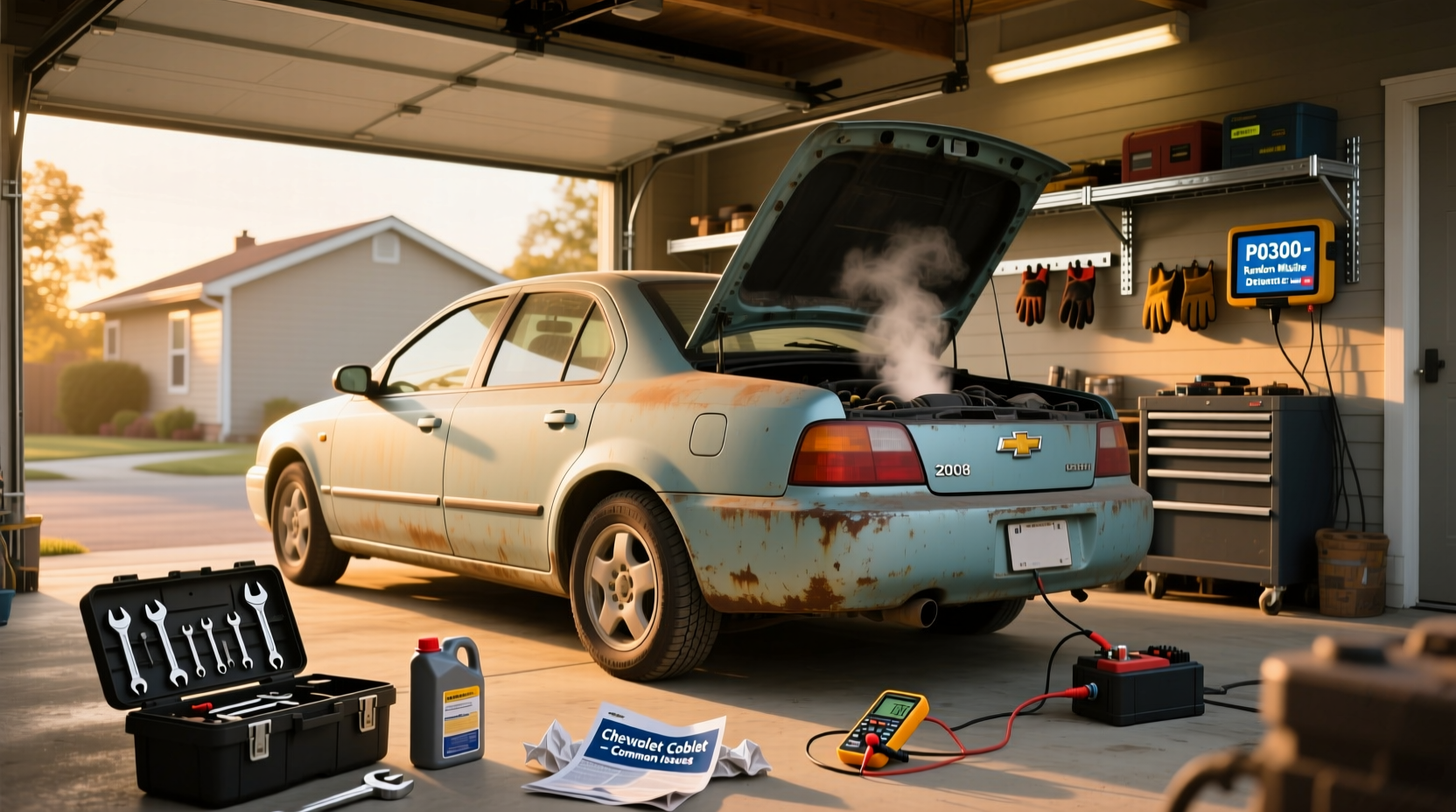
If you're asking how to choose a Chevrolet Cobalt or wondering what is the most common problem with the Chevy Cobalt?, here’s the critical answer upfront: avoid model years 2005–2008 due to widespread mechanical failures. The 2005–2007 models are especially risky because of frequent power steering failure and ignition switch defects that led to major recalls 1. If you must consider a used Cobalt, prioritize 2009 or 2010 models, always verify recall completion, and insist on a pre-purchase inspection by a trusted mechanic. This guide will walk you through every key factor—from model-year pitfalls to maintenance red flags—so you can make an informed decision when evaluating how to choose a Chevrolet Cobalt based on reliability, safety, and long-term ownership costs.
About the Chevrolet Cobalt and Its Most Common Problems
The Chevrolet Cobalt was a compact car produced by General Motors from 2005 to 2010 as a replacement for the Cavalier. Marketed for affordability and fuel efficiency, it came in sedan and coupe body styles and was available with manual or automatic transmissions. While initially popular among budget-conscious buyers and first-time car owners, the Cobalt gained notoriety for serious reliability and safety issues—especially in early model years.
When researching what to look for in a Chevrolet Cobalt, the central concern is its history of critical component failures. The most frequently reported issue across forums and consumer databases is electric power steering failure, particularly in 2005–2007 models. Drivers experienced sudden loss of steering assistance, making the vehicle difficult to control at low speeds or during emergency maneuvers 2. This wasn't just an inconvenience—it posed a real safety hazard.
Why Understanding Cobalt Reliability Is Important for Buyers
Despite being out of production, the Chevrolet Cobalt still appears in the used car market, often at attractively low prices. This makes it tempting for buyers seeking an inexpensive commuter car. However, its reputation for mechanical problems means that choosing one without proper research can lead to costly repairs and safety risks.
Interest in the Cobalt today largely stems from nostalgia, DIY repair communities, or budget constraints. Some enthusiasts modify the Cobalt SS (supercharged version) for performance tuning. But for average consumers, the primary motivation is cost savings. That’s why a detailed Chevrolet Cobalt buying guide is essential: the cheapest upfront price may carry the highest long-term risk.
Model Years and Variants: Key Differences
The Cobalt was sold from 2005 to 2010, with each year introducing minor updates. However, reliability varies dramatically by model year. Below is a breakdown of the main variants and their known issues:
- ⚙️ 2005–2007: These early models use an electric power steering system prone to motor failure. The 2005 model year is widely considered the worst, with over 400 complaints and six separate recalls 1.
- ⚙️ 2008: Introduced transmission issues, including grinding during gear shifts due to faulty synchronizers or low fluid levels. Average failure occurred around 24,000 miles, indicating premature wear 3.
- ⚙️ 2009–2010: Later models show improved reliability but are not immune to problems. The 2010 model had reports of rusted fuel lines, which could lead to leaks and fire hazards 4.
Trim levels included LS, LT, and the high-performance Cobalt SS. The SS model, while more powerful, shares the same platform vulnerabilities and requires even more diligent maintenance.
Key Features and Specifications to Evaluate
When assessing how to choose a Chevrolet Cobalt, focus on these technical and mechanical factors:
- 🔍 Power Steering System: Confirm whether the electric power steering motor has been replaced or repaired. Look for service records and check for warning lights.
- 🔧 Ignition Switch: A defective switch could cause unexpected stalling and disable airbags. GM recalled millions of vehicles for this issue—verify if the car received the fix 5.
- 📊 Transmission Type: Manual transmissions generally lasted longer than automatics, which were more prone to grinding and slipping.
- ⛽ Fuel System Integrity: Inspect undercarriage for rust, especially on 2010 models where gas lines corroded prematurely.
- 📋 Recall History: Use the VIN to check NHTSA’s database for unresolved recalls. Many Cobalts never received critical fixes.
Pros and Cons of Owning a Chevrolet Cobalt
Advantages ✅
- Affordable purchase price on the used market
- Good fuel economy (up to 33 mpg highway)
- Simple design makes some repairs accessible for DIYers
- Compact size ideal for city driving and parking
Disadvantages ❗
- High risk of power steering failure in 2005–2007 models
- Potential ignition switch defect leading to stalling and non-deploying airbags
- Limited safety features by modern standards
- Poor long-term reliability and resale value
- Rust issues in later models affecting fuel lines
Best for: Budget buyers who plan to perform frequent maintenance or use the car short-term.
Not recommended for: Families, long-distance commuters, or anyone prioritizing safety and dependability.
How to Choose a Chevrolet Cobalt: Step-by-Step Buying Guide
Follow this checklist to minimize risk when considering a used Cobalt:
- 📍 Avoid High-Risk Model Years: Steer clear of 2005–2008 models unless they have full service documentation proving major repairs.
- 🔍 Run the VIN: Use the National Highway Traffic Safety Administration (NHTSA) website to check for open recalls related to power steering, ignition switches, or airbags.
- 🧰 Inspect Power Steering: Test drive the car and pay attention to steering effort. If it suddenly becomes heavy, the system may be failing.
- 📎 Review Maintenance Records: Look for evidence of timely fluid changes, belt replacements, and any power steering motor upgrades.
- 🛠️ Get a Pre-Purchase Inspection: Have a certified mechanic evaluate the ignition system, transmission, and undercarriage for rust.
- 📌 Negotiate Based on Risk: Even if recalls were completed, factor in the likelihood of future issues when offering a price.
Price & Market Insights
Used Chevrolet Cobalts typically sell between $1,000 and $4,000, depending on condition, mileage, and location. Earlier models (2005–2007) are often priced lower—sometimes under $2,000—but carry higher repair risks. Later models (2009–2010) may cost $3,000–$4,000 if well-maintained.
While the low entry price is appealing, consider total cost of ownership. Repairing a failed power steering motor can cost up to $1,000 1, and transmission work may exceed $2,500. For many buyers, spending slightly more on a more reliable compact car (like a Honda Civic or Toyota Corolla from the same era) offers better long-term value.
Top Models and Competitive Comparison
Within the Cobalt lineup, the 2009 and 2010 models are the most viable options for cautious buyers. They avoided the worst of the early electrical issues and benefited from ongoing refinements.
| Model Year | Most Common Issue | Avg. Repair Cost | Avg. Mileage at Failure | Buyer Recommendation |
|---|---|---|---|---|
| 2005 | Power Steering Failure | $1,000 | 61,000 mi | Avoid |
| 2006 | Key Stuck in Ignition | $300 | 59,000 mi | Avoid |
| 2007 | Power Steering Fails | $500 | 63,000 mi | Avoid |
| 2008 | Transmission Grinding | $2,600 | 24,000 mi | High Risk |
| 2010 | Gas Line Rust | $700 | 91,000 mi | Proceed with Inspection |
Customer Feedback Synthesis
Analysis of owner reviews and complaint databases reveals consistent patterns:
Common Complaints ❌
- Sudden loss of power steering, especially at low speeds
- Keys getting stuck in the ignition after turning off the engine
- Unexpected engine stalling linked to ignition switch defects
- Transmission grinding in automatic models
- Rust on fuel lines in northern climates due to road salt exposure
Occasional Praise ✅
- Fuel efficiency meets or exceeds EPA estimates
- Easy interior access and simple controls
- Some owners report trouble-free operation after major component replacements
Overall sentiment is mixed, with many owners expressing regret due to repair costs outweighing initial savings.
Sourcing and Purchase Tips
When sourcing a used Cobalt:
- 🌐 Check platforms like CarGurus, Autotrader, or local Facebook Marketplace.
- 🔍 Request the full VIN and run it through NHTSA.gov/recalls to confirm recall completion.
- 📝 Ask for service records—proof of power steering or ignition switch replacement adds value.
- 🚗 Prefer private sellers who can provide maintenance history over dealerships selling “as-is” units.
Maintenance, Safety & Legal Considerations
Maintaining a Cobalt requires vigilance. Regular checks should include:
- Power steering motor function (listen for whining or erratic behavior)
- Ignition switch operation (ensure key turns smoothly and doesn’t stick)
- Transmission fluid levels and condition
- Undercarriage inspection for rust, especially near fuel lines
Safety-wise, know that many Cobalts were involved in a massive recall due to a defect that could disable airbags during a crash 5. Even if repaired, residual risk may exist. Legally, ensure the vehicle passes your state’s emissions and safety inspections before registration.
Conclusion: Should You Buy a Chevrolet Cobalt?
The Chevrolet Cobalt can be a functional vehicle, but only under specific conditions. If you need an ultra-low-budget commuter car and are prepared for potential repairs, a 2009 or 2010 model with verified recall completion and a clean inspection report may suffice. However, if safety, reliability, or long-term ownership cost is a priority, consider other compact cars from Toyota, Honda, or Mazda from the same era.
Ultimately, knowing what is the most common problem with the Chevy Cobalt—and which years to avoid—is the foundation of smart decision-making. Use this guide to evaluate risk, inspect thoroughly, and make a choice that aligns with your needs and tolerance for mechanical uncertainty.
Frequently Asked Questions
What is the most common problem with the Chevy Cobalt?
The most common issue is electric power steering failure, especially in 2005–2007 models. This can cause sudden loss of steering assistance while driving, creating a serious safety hazard.
Which Chevy Cobalt years should I avoid?
You should avoid 2005–2008 models due to high rates of power steering failure, ignition switch defects, and transmission problems. The 2005 model year is the most problematic.
Can I safely drive a Chevrolet Cobalt today?
Yes, but only if it's a 2009 or 2010 model with confirmed recall repairs and a clean mechanical inspection. Older models pose significant safety and reliability risks.
How much does it cost to fix power steering on a Cobalt?
Repair costs range from $500 to $1,000 depending on the model year and labor rates. Parts and labor vary by region and shop.
Was there a recall on the Chevy Cobalt?
Yes, GM issued multiple recalls for the Cobalt, including one affecting 2.6 million vehicles due to a defective ignition switch and another for power steering motor failure 5.




 浙公网安备
33010002000092号
 浙B2-20120091-4