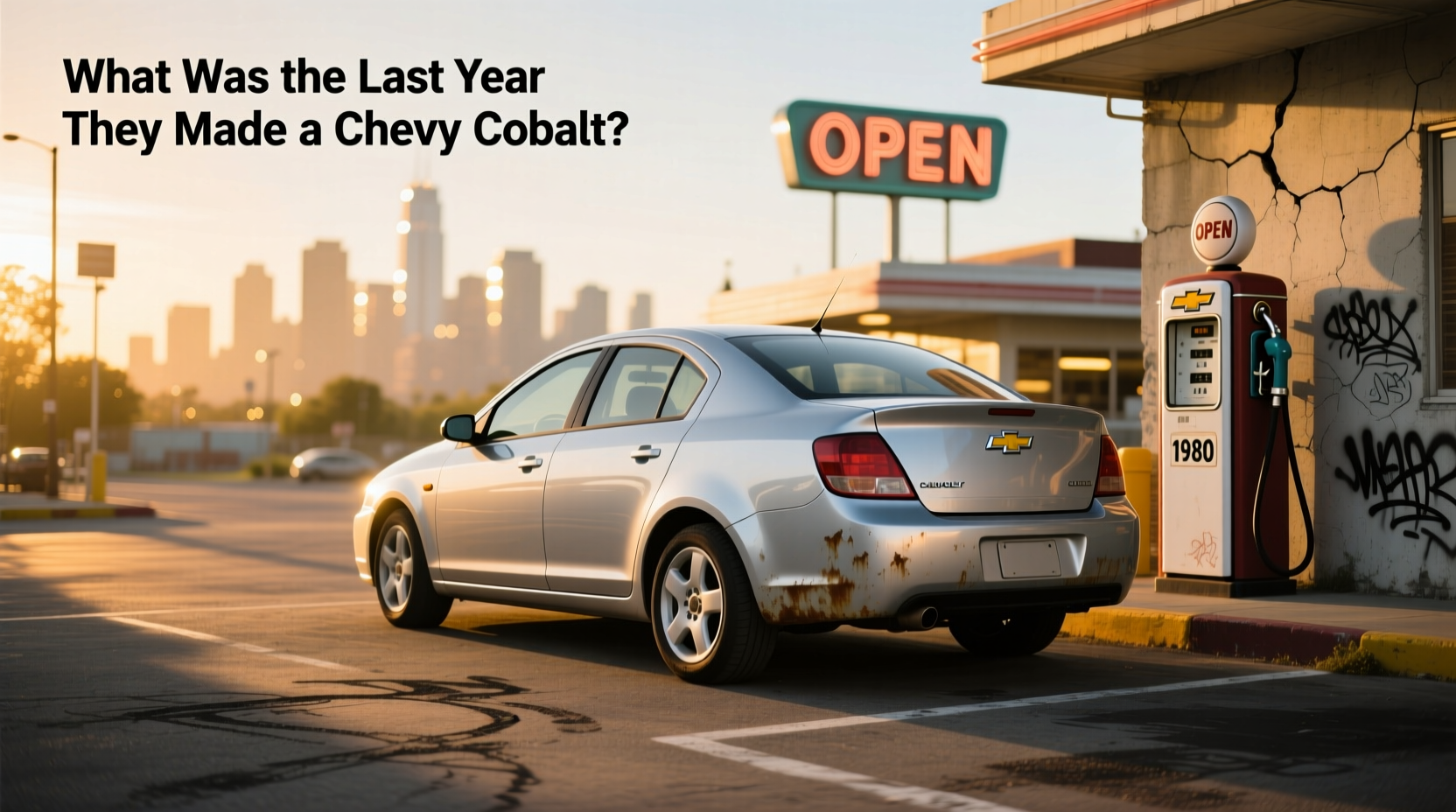
If you're asking how to choose a Chevrolet Cobalt or wondering what is the last year they made a Chevy Cobalt?, here's the key answer upfront: the final model year for the Chevrolet Cobalt in North America was 2010. After that, it was replaced by the Chevrolet Cruze 1. While production continued in Brazil until 2019 and in Uzbekistan until 2020, U.S. and Canadian buyers should focus on models from 2005 to 2010. When selecting a used Cobalt, prioritize later model years (2008–2010), especially those with the turbocharged 2.0L engine in the SS trim, which offers strong performance for its class. Watch for known issues like ignition switch failures and transmission problems—always verify service history and consider a pre-purchase inspection. This guide covers what to look for in a Chevrolet Cobalt, including trim differences, reliability concerns, and value considerations.
About the Chevrolet Cobalt: Definition and Typical Use Cases ✅
The Chevrolet Cobalt was introduced in 2005 as a compact sedan and coupe, replacing the long-running Cavalier. It was marketed as an affordable, fuel-efficient option for first-time car buyers, urban commuters, and budget-conscious drivers. Available in both two-door coupe and four-door sedan configurations, the Cobalt targeted individuals seeking basic transportation with modest styling and decent handling.
Primary use cases included daily commuting, city driving, and entry-level personal vehicles for teens or young adults. The high-performance Cobalt SS variant, particularly the 2008–2009 models with the 260-horsepower turbocharged 2.0L engine, attracted enthusiasts looking for a sporty compact car at a low price point. These were often modified for street performance or used in amateur motorsports.
Today, the Cobalt exists only in the used market. Buyers interested in this vehicle are typically searching for low-cost transportation, parts compatibility with other GM platforms, or a simple project car. Its front-wheel-drive layout, compact size, and availability of manual transmissions make it relevant for learners or DIY mechanics.
Why the Chevrolet Cobalt Is Still Relevant ⚙️
Though no longer in production, interest in the Chevrolet Cobalt persists due to its affordability and mechanical simplicity. Used car shoppers on tight budgets may consider a well-maintained Cobalt as a short-term commuter vehicle. Additionally, the Cobalt SS has developed a cult following among import tuner communities for its potent turbocharged engine and lightweight chassis.
User motivations include minimizing upfront cost, ease of repair, and parts availability through salvage yards and aftermarket suppliers. Some buyers also seek the Cobalt for fleet usage in regions where newer vehicles are less accessible. In international markets such as Latin America and Central Asia, rebranded versions of the Cobalt (like the Daewoo Gentra or Ravon Nexia) remain in circulation, contributing to ongoing global relevance.
Types and Variants of the Chevrolet Cobalt 📋
The Cobalt was offered in several trims and body styles across its production run. Understanding these variants is essential when evaluating which model best fits your needs.
🔧 Base LS and LT Trims (2005–2010)
Engine: 2.2L inline-four (145 hp)
Transmission: 5-speed manual or 4-speed automatic
Body Styles: Sedan and coupe
Pros: Simple design, lower purchase price, easier maintenance.
Cons: Underpowered compared to modern compacts, fewer standard safety features in early models.
⚡ Cobalt SS (2005–2010)
Engine: Supercharged 2.0L (205 hp, 2005–2007), Turbocharged 2.0L (260 hp, 2008–2009)
Transmission: 5-speed manual only
Features: Sport suspension, larger brakes, unique interior trim
Pros: High horsepower for class, engaging driving dynamics.
Cons: Higher maintenance costs, potential for abuse by previous owners, limited availability.
Notably, the SS nameplate was briefly dropped in 2008 (replaced by "Sport" trims) but returned in 2009. The 2010 model year saw the discontinuation of the SS entirely.
Key Features and Specifications to Evaluate 📊
When assessing a used Cobalt, examine the following specifications closely:
- Engine Type: The 2.2L is reliable but underpowered. The turbocharged 2.0L SS engine delivers strong acceleration but requires careful maintenance history.
- Transmission: Manual transmissions are more durable than the 4-speed automatic, which can suffer from shifting delays and fluid leaks.
- Safety Equipment: Side-impact airbags became standard in 2008. Earlier models lack this feature, reducing crash protection.
- Fuel Economy: EPA estimates range from 24 mpg city / 33 mpg highway (manual) to 22/31 (automatic).
- Interior Condition: Check for worn seats, non-functional electronics, and HVAC performance—common failure points include climate control modules.
Pros and Cons of Owning a Chevrolet Cobalt ✨
✅ Advantages
- Affordable purchase price (often under $3,000)
- Widespread parts availability
- Simple mechanical layout ideal for DIY repairs
- SS model offers surprising performance
- Compact size aids parking and maneuverability
❌ Drawbacks
- Outdated safety technology
- Known ignition switch defect linked to recalls
- Transmission issues in high-mileage examples
- Limited cargo space and rear seat room
- No factory support or warranty coverage
How to Choose a Chevrolet Cobalt: Step-by-Step Buying Guide 🛒
Selecting the right Cobalt involves a structured approach. Follow this checklist to avoid costly mistakes:
- Determine Your Use Case: Are you looking for a beater car, a daily driver, or a performance project? Match the trim accordingly.
- Target Model Years 2008–2010: These include updated safety features and improved engine tuning.
- Verify Recall Completion: Chevrolet issued a major recall (14V-354) for faulty ignition switches that could disable power while driving 2. Confirm the vehicle’s VIN is clear via NHTSA’s website.
- Inspect Maintenance Records: Look for consistent oil changes, transmission flushes, and timing chain inspections (the 2.2L uses a timing chain, not belt).
- Test Drive Thoroughly: Check for vibrations, unusual noises, delayed shifts, and electrical glitches.
- Obtain a Pre-Purchase Inspection: Have a trusted mechanic inspect for engine health, suspension wear, and frame integrity.
Red Flags to Avoid:
- Vehicles with salvage titles or flood damage
- High mileage (>150,000 miles) without documented service history
- SS models modified for racing or drag use
- Missing owner’s manual or incomplete paperwork
Price & Market Insights 💵
As of 2024, typical prices for operational Cobalts vary widely based on condition, location, and trim:
- Base Models: $1,500 – $3,500
- Cobalt SS (Stock): $3,000 – $6,000
- Modified SS Models: Prices vary significantly; some sell higher based on build quality.
Prices may be lower in regions with harsh winters due to rust concerns. Always compare listings locally and consider negotiation room. Remember, a slightly higher price with full service records often provides better long-term value than the cheapest option.
Top Models & Competitive Analysis 🏁
While the Cobalt competes with contemporaries like the Honda Civic, Toyota Corolla, and Ford Focus, its main appeal lies in price rather than refinement. Below is a comparison of key models from the same era:
| Model | Engine | Horsepower | Fuel Economy (city/hwy) | Reliability Score |
|---|---|---|---|---|
| Chevrolet Cobalt LS | 2.2L I4 | 145 | 24/33 | ⭐⭐☆☆☆ |
| Chevrolet Cobalt SS | 2.0L Turbo I4 | 260 | 23/30 | ⭐⭐⭐☆☆ |
| Honda Civic EX | 1.8L I4 | 140 | 25/36 | ⭐⭐⭐⭐☆ |
| Toyota Corolla LE | 1.8L I4 | 126 | 27/35 | ⭐⭐⭐⭐☆ |
| Ford Focus SE | 2.0L I4 | 140 | 24/32 | ⭐⭐⭐☆☆ |
Note: Reliability ratings based on aggregated consumer reports and industry averages 3. The Cobalt SS leads in performance but trails in long-term dependability.
Customer Feedback Synthesis 🗣️
Analysis of owner reviews and forum discussions reveals recurring themes:
Common Praises:
- "Great on gas for a daily driver."
- "Easy to work on—perfect first car for learning repairs."
- "The SS feels fast and handles well for a front-driver."
Frequent Complaints:
- "Ignition switch failed multiple times despite recall fix."
- "Transmission started slipping around 90,000 miles."
- "Plastic interior parts cracked within five years."
- "Poor crash test ratings compared to rivals."
Owners generally appreciate the Cobalt’s affordability and simplicity but express concern over longevity and safety.
Sourcing and Purchase Tips 📍
Buyers should explore private-party sellers, online marketplaces (e.g., Craigslist, Facebook Marketplace), and local dealerships specializing in used economy cars. Auctions and salvage yards may offer project candidates at steep discounts, but require thorough vetting.
For bulk purchases or resale purposes, ensure all titles are clean and verify odometer readings. Conduct a vehicle history report using services like Carfax or AutoCheck. If importing a Cobalt previously sold in Brazil or Uzbekistan, confirm compliance with local emissions and safety standards—modifications may be required.
Maintenance, Safety & Legal Considerations 🔧
Routine maintenance includes oil changes every 5,000 miles, coolant flushes every 100,000 miles, and brake inspections. The 2.2L engine uses a timing chain (no scheduled replacement), but tensioner wear can occur beyond 120,000 miles.
Safety-wise, remember that the Cobalt lacks modern driver aids like stability control (standardized after 2012). Its IIHS frontal crash rating is marginal, so defensive driving is crucial.
Legally, ensure the vehicle passes any required state inspections. Verify that all recalls have been addressed—this is not only a safety issue but may affect registration eligibility in some jurisdictions. Always check local regulations before registering an older imported model.
Conclusion: Final Recommendations 📌
The Chevrolet Cobalt ended U.S. production in 2010, making it a used-only option today. If you need an ultra-low-cost commuter car and are prepared for potential repairs, a well-maintained 2008–2009 Cobalt SS with documented service history could be a fun and functional choice. For basic transportation, a base-model 2010 sedan might suffice—but only if inspected thoroughly. However, if safety, fuel efficiency, or long-term reliability are top priorities, consider newer alternatives like the Honda Fit or Toyota Yaris. The Cobalt remains viable for budget buyers who value simplicity and DIY accessibility, but proceed with caution and due diligence.
FAQs ❓
What is the last year Chevrolet made the Cobalt?
The last model year for the Chevrolet Cobalt in North America was 2010. Production continued in Brazil until 2019 and in Uzbekistan until 2020.
Is the Chevrolet Cobalt reliable?
Reliability varies. Base models with regular maintenance can last over 150,000 miles, but common issues include transmission problems and ignition switch defects. The SS trim demands more attentive upkeep.
Which Cobalt model has the turbocharged engine?
The 2008–2009 Cobalt SS features a 2.0L turbocharged engine producing 260 horsepower. The 2005–2007 SS used a supercharged 2.0L with 205 hp.
Was there a recall on the Chevrolet Cobalt?
Yes. A major recall (14V-354) addressed defective ignition switches that could unintentionally turn off the engine while driving, disabling airbags. Check your VIN at nhtsa.gov/recalls to confirm repair status.
Can I still buy parts for a Chevrolet Cobalt?
Yes. Many components are interchangeable with other GM Delta-platform vehicles (e.g., Pontiac G5, Saturn Ion). OEM and aftermarket parts remain available through auto retailers and salvage networks.




 浙公网安备
33010002000092号
 浙B2-20120091-4