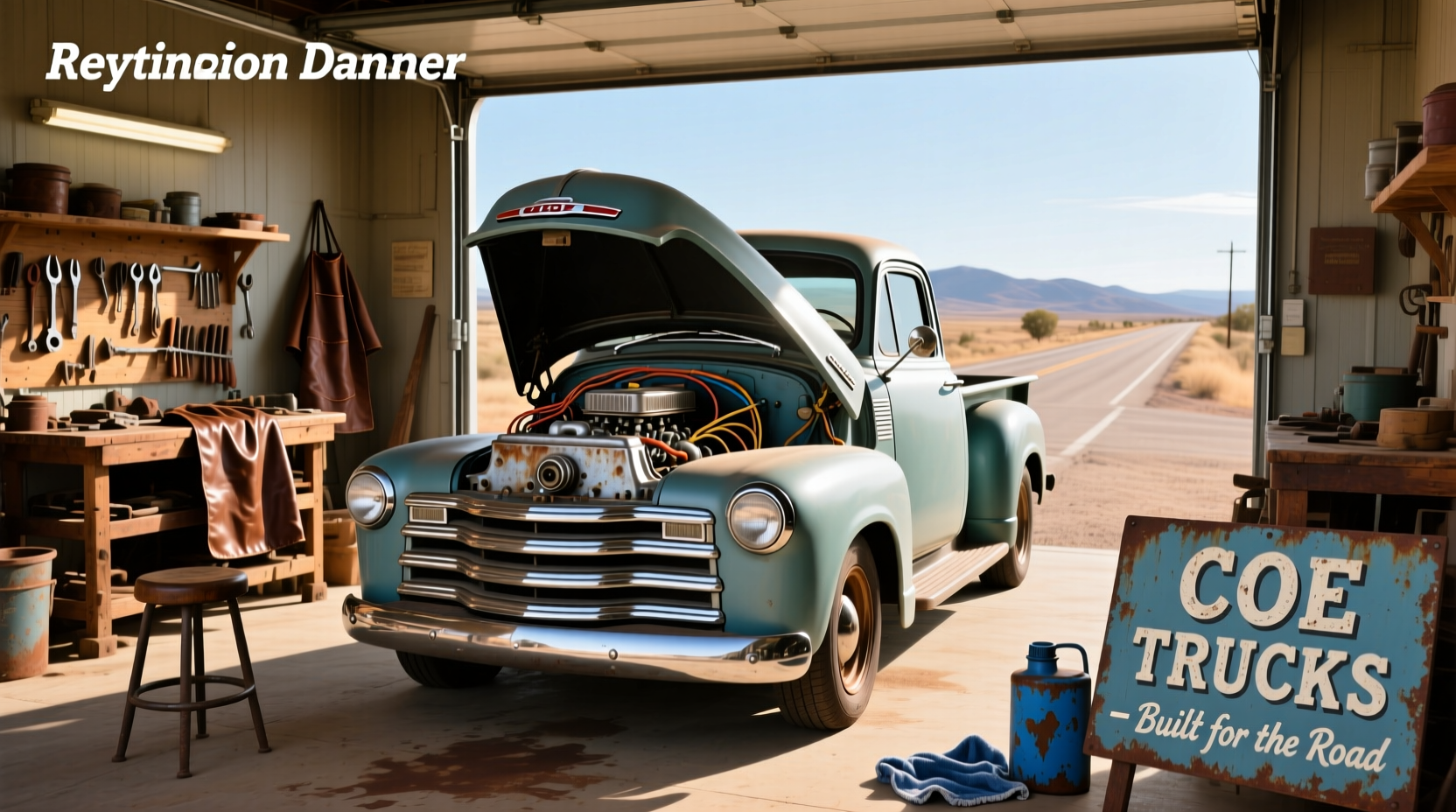
If you're looking for a vintage commercial truck with compact footprint and high customization potential, a Chevy COE (Cab Over Engine) from the 1940s–1950s series is a strong candidate. How to choose a Chevy COE truck comes down to three things: intended use (show, haul, or daily driver), structural integrity of the frame, and engine compatibility for restoration. Most buyers overvalue originality—unless you're aiming for concours-level authenticity, modern drivetrains often improve reliability without sacrificing character. If you’re a typical user, you don’t need to overthink this. Focus on rust-free frames, availability of replacement parts, and whether the wheelbase suits your storage or maneuverability needs. Avoid trucks with welded-in floors or patched axles—these are red flags that may hide deeper structural issues.
About Chevy COE Trucks
A Chevy COE truck stands for "Cab Over Engine," meaning the driver’s cab sits directly above the front axle and engine compartment. This design eliminates the long hood found in conventional trucks, creating a flat, vertical front end and maximizing cargo space within a shorter overall length 1. First produced by Chevrolet in the late 1930s and most notably between 1941 and 1955, these trucks were built for utility—used by small businesses, delivery services, and farms where tight turning radius and load efficiency mattered more than comfort.
The term "COE" isn't exclusive to Chevrolet—it's a configuration used across brands like Ford, Dodge, and International Harvester—but among collectors, "Chevy COE" refers specifically to models like the AK-series (1947–1955) and earlier KB-series. These vehicles feature a distinct high seating position, narrow track width, and a ladder frame chassis designed for durability. While originally powered by inline-six engines, many have since been retrofitted with V8s or even diesel swaps for improved performance.
This piece isn’t for keyword collectors. It’s for people who will actually use the product.
Why Chevy COE Trucks Are Gaining Popularity
Lately, interest in vintage COE trucks has grown beyond niche restoration circles. Over the past year, online searches and social media engagement around Chevy COEs have increased, driven partly by visibility in pop culture—most notably the 1941 Chevy COE featured as the Creeper’s vehicle in the horror film *Jeepers Creepers* 2. That heavily modified example sparked curiosity about the model’s rugged proportions and customization possibilities.
Beyond nostalgia, practical factors contribute to renewed appeal. Urban zoning and tighter parking make the short wheelbase of a COE more attractive for custom builds. Additionally, the rise of "modern classic" restomods—where vintage bodies meet LS engines, independent suspension, and updated braking systems—has made these trucks more viable as functional drivers rather than static showpieces.
If you’re a typical user, you don’t need to overthink this. The emotional draw of a flat-nose truck is real, but your decision should hinge on usability, not just aesthetics.
Types and Variants
Chevy produced several COE variants, primarily differentiated by payload rating, wheelbase, and production year. Understanding these helps avoid mismatched expectations when shopping.
1. 1941–1947 KB-Series COE
- Pros: Rarer, highly collectible; simpler mechanicals easier for purist restorations
- Cons: Limited parts availability; outdated steering and braking; lower ground clearance
- When it’s worth caring about: If building a historically accurate pre-war or wartime-era truck.
- When you don’t need to overthink it: For street-driven restomods—later models offer better ergonomics and safety.
2. 1947–1955 AK-Series COE
- Pros: Wider aftermarket support; improved visibility; more cabin space; compatible with modern drivetrain swaps
- Cons: Higher demand means higher prices; some models suffer from frame sag after decades of heavy use
- When it’s worth caring about: For daily drivers or long-distance touring builds.
- When you don’t need to overthink it: If you only want a weekend show truck—any solid example will suffice.
3. Custom-Bodied COEs (Post-1960s Modifications)
- Pros: Often include modern suspensions, air conditioning, and upgraded interiors; built for comfort and reliability
- Cons: May lack originality; value depends heavily on build quality, not factory specs
- When it’s worth caring about: When prioritizing drivability over collector status.
- When you don’t need to overthink it: If you're not planning to resell at premium auctions.
Key Features and Specifications to Evaluate
When assessing a Chevy COE, focus on elements that affect function and longevity—not just appearance.
Frame and Chassis Condition
Rust, especially along the frame rails and floor mounts, is the top threat. Check for patch welds, misalignment, or drooping behind the cab—signs of fatigue. A straight, unmodified frame ensures safe handling and proper alignment.
Engine Bay Accessibility
Because the cab tilts forward to access the engine, verify the hinge mechanism works smoothly. Stuck or corroded hinges complicate maintenance. Also confirm there's enough clearance once tilted—some lowered builds restrict tilt range.
Drivetrain Compatibility
Original inline-six or straight-eight engines are period-correct but less efficient. Many owners swap in small-block V8s or modern crate motors. If considering a swap, ensure the transmission tunnel and crossmember can accommodate it—or budget for modification.
Braking System
Most early COEs came with drum brakes and manual systems. Upgrading to power-assisted discs improves safety significantly. Verify brake lines aren’t cracked and the master cylinder functions properly.
If you’re a typical user, you don’t need to overthink this. Prioritize structural soundness over cosmetic perfection—repaints cost less than frame replacements.
Pros and Cons
Pros
- 🚚 Compact footprint ideal for city driving and tight garages
- ✨ Unique visual presence—highly recognizable at shows and events
- 🔧 Proven platform for restomodding with extensive aftermarket support
- ✅ High resale demand among enthusiasts keeps value stable
Cons
- ⚠️ Limited passenger space and poor ergonomics by modern standards
- 🛠️ Maintenance requires tilting the entire cab—awkward without proper tools
- 🌧️ Older models prone to water leaks around windshield and floor seams
- 📉 Fuel economy typically under 10 mpg, especially with V8 conversions
How to Choose a Chevy COE Truck
Selecting the right COE means aligning the truck’s condition and configuration with your actual use case. Follow this checklist to avoid costly mistakes.
Step-by-Step Checklist
- Define primary use: show, hauling, or daily driving?
- Inspect frame for rust, cracks, or prior repairs
- Test tilt mechanism for smooth operation
- Verify engine type and service history
- Check for electrical system functionality (lights, gauges, wipers)
- Evaluate interior condition—especially floor pans and seat mounts
- Determine if title is clean, restored, or salvage
- Review documentation: service records, build receipts (for customs)
Decision Flow
- If using for shows: prioritize originality, correct badging, and matching numbers
- If using for driving: invest in disc brakes, seat belts, and reliable cooling
- If budget-limited: consider non-running projects with solid frames over shiny-but-rotten examples
Recommendations by Scenario
- First-time buyer: Look for a 1953–1955 AK-series with documented restoration
- Restomod builder: Source a complete donor with intact cab and frame
- Investor: Target low-mileage, original-condition KB-series models from dry climates
- Trucks advertised as "roller" with no engine—may indicate hidden mechanical issues
- Floor replaced with thin sheet metal instead of structural steel
- Inconsistent VIN tags or mismatched serial numbers
- No ability to tilt cab due to missing or damaged hinges
- Price significantly below market average—likely conceals major repair needs
Price & Market Insights
Prices for Chevy COE trucks vary widely based on year, condition, modifications, and location. A basic project truck with a solid frame may start around $15,000, while fully restored examples regularly sell for $40,000–$70,000 at auction 3. Heavily customized builds, especially those inspired by pop culture (like the Jeepers Creepers replica), can exceed $100,000.
Market trends suggest steady demand, particularly for 1950s models with clean titles and mechanical transparency. However, prices may vary by region/model/seller—always check comparable recent sales through platforms like eBay Motors or Barrett-Jackson auction archives. Verify seller return policies if buying online, and inspect in person whenever possible.
Top-Seller & Competitive Analysis
While no new manufacturers produce true COE pickups, several companies specialize in restoring or replicating them. Below is a comparison of common sources:
| Source Type | Typical Price Range | Pros | Cons |
|---|---|---|---|
| Private Sellers (eBay, Facebook) | $12k–$30k | Direct negotiation, varied inventory | Inconsistent documentation, risk of undisclosed damage |
| Specialty Restoration Shops | $40k–$80k | Warranty, detailed build logs, quality control | Premium pricing, longer wait times |
| Auction Houses (Barrett-Jackson) | $25k–$100k+ | High visibility, third-party inspections | Buyer fees, competitive bidding inflates cost |
| Custom Fabricators | $50k+ (project-dependent) | Full customization, modern integration | Requires clear scope; overruns common |
If you’re a typical user, you don’t need to overthink this. Buying from a reputable shop reduces risk, but private deals offer better value—if you know what to inspect.
Customer Feedback Synthesis
Analysis of owner forums, YouTube comment sections, and marketplace reviews reveals consistent themes.
Most Frequent Praise
- “Head-turning everywhere I go—people constantly stop me at gas stations.”
- “Surprisingly easy to park downtown compared to my F-150.”
- “After adding power steering and discs, it drives way better than expected.”
Most Common Complaints
- “Tilting the cab every oil change gets old fast.”
- “Found major rust under the carpet—wish I’d lifted it before buying.”
- “Parts for the original blower motor are impossible to find.”
Sourcing & Supplier Tips
Finding a trustworthy source requires diligence. Stick to sellers who provide full photo documentation of frame, floor, and engine bay. Platforms like eBay Motors and dedicated Facebook groups (e.g., “Classic Chevy Trucks”) host active communities where members share leads and warnings 4.
For parts, consider:
- Old Chevy Trucks – Niche supplier for trim, badges, and interior components 5
- Holley and Year One – Support for modern engine swaps and electrical upgrades
- Local scrapyards – Sometimes hold donor vehicles for hard-to-find brackets or hinges
Always check manufacturer specs for compatibility, and confirm local regulations if modifying emissions or lighting systems.
Maintenance, Safety & Legal Considerations
Maintenance on a COE differs from conventional trucks. The tilting cab requires periodic lubrication of pivot points and inspection of hydraulic or mechanical lifts. Electrical connections must remain flexible to avoid wire strain during tilting.
Safety upgrades—such as seat belts, improved lighting, and modern brakes—are strongly advised, even if not legally required for antique vehicles. Some states exempt pre-1970 vehicles from certain FMVSS rules, but this may affect insurance coverage or roadworthiness in multi-state travel.
To verify compliance: check with your state DMV for historic vehicle classifications, review insurance provider requirements, and consult a certified mechanic familiar with vintage commercial trucks.
Conclusion
If you need a head-turning, compact vintage truck with strong community support and customization options, a 1947–1955 Chevy COE is a logical choice. If you plan to drive it regularly, prioritize models with upgraded brakes and a reliable modern engine. If you're entering the market purely for investment, focus on originality and provenance. But for most users, function matters more than pedigree. If you’re a typical user, you don’t need to overthink this.
Everything You Need to Know




 浙公网安备
33010002000092号
 浙B2-20120091-4