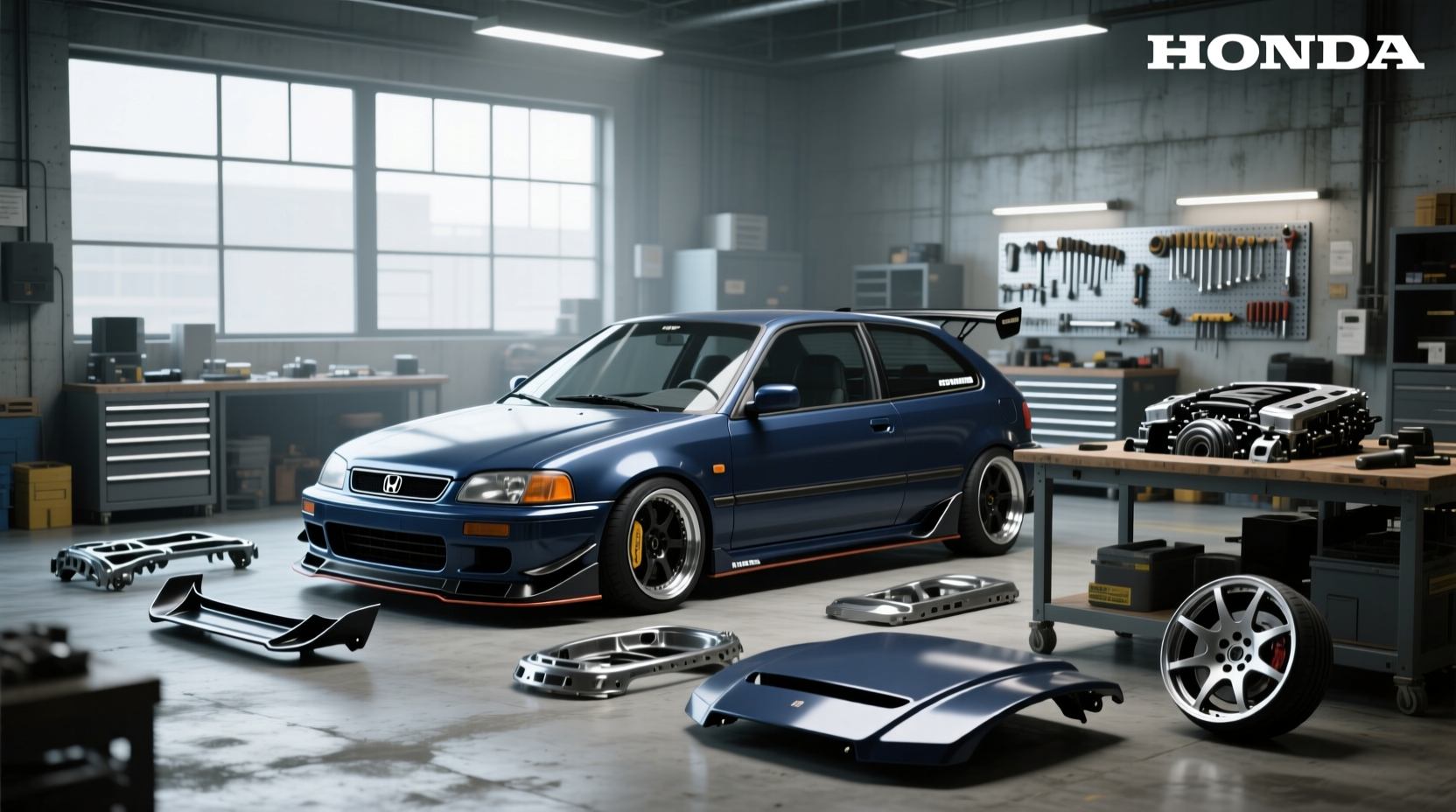
Short introduction
If you're restoring or modifying a 1996–2000 Honda Civic EK hatchback, choosing the right parts isn't about chasing rarity—it's about matching function to your actual use. Over the past year, demand for OEM-spec and JDM-sourced EK hatchback components has grown steadily, driven by tighter emissions rules in some regions that make newer performance swaps harder to register. This means more builders are focusing on period-correct upgrades, which changes how you should evaluate parts today.
For most users, factory-replacement body panels, suspension arms, and interior trim from verified OEM suppliers are sufficient. If you’re doing a track-focused build, look for reinforced subframes or welded strut towers—but know they complicate daily driving. When shopping for honda civic ek hatchback parts, prioritize fitment over finish: many aftermarket fenders claim "direct bolt-on" but require trimming due to differences in inner reinforcement. If you’re a typical user, you don’t need to overthink this. Stick with suppliers who provide dimensional schematics or test-fit videos.
About honda civic ek hatchback parts
The Honda Civic EK generation (1996–2000) remains a favorite among grassroots tuners and preservationists. The three-door hatchback variant, especially the EK4 and EK9 models, offers a lightweight platform with proven reliability. Parts for this chassis fall into three categories: OEM replacements, JDM imports, and aftermarket performance components.
OEM parts cover everything from door handles to control arms—designed to match factory specifications. JDM (Japanese Domestic Market) parts often come from low-mileage donor vehicles and may include rare trim-specific pieces like fog light bezels or rear wiper motors. Aftermarket includes upgraded coilovers, polyurethane bushings, and aesthetic modifications such as projector headlights or widebody kits.
This piece isn’t for keyword collectors. It’s for people who will actually use the product.
Why honda civic ek hatchback parts is gaining popularity
Lately, interest in mechanical simplicity and serviceability has revived older platforms like the EK hatchback. Unlike modern Civics with integrated electronics and bonded panels, the EK allows full disassembly using common tools. That accessibility makes it ideal for learners, budget builds, and markets where repair infrastructure is limited.
Additionally, emissions compliance in certain urban areas has made high-modification engines harder to license. As a result, many owners are opting for mild NA (naturally aspirated) refreshes—rebuilding D-series engines with quality gaskets and balanced rotating assemblies—rather than forced induction. This shift increases demand for reliable, compatible parts rather than flashy add-ons.
Types and variants
OEM Replacement Parts
- Pros: Guaranteed fit, standardized corrosion protection, widely available
- Cons: May lack durability improvements over original design
If you’re replacing a rusted control arm or cracked bumper, OEM-spec is usually the right call. If you’re a typical user, you don’t need to overthink this.
JDM Imports
- Pros: Often lower mileage, unique trim features (e.g., SiR badging), better material preservation
- Cons: Higher shipping cost, potential language barrier in listings, unclear accident history
Worth considering if you’re aiming for authenticity or need discontinued items like factory short-throw shifters.
Aftermarket Performance Parts
- Pros: Improved strength, adjustability (e.g., camber plates), weight savings
- Cons: Risk of poor fitment, inconsistent quality control, higher installation complexity
Only pursue these if your use case demands them—track days, drift setups, or show builds. For street-only use, gains are often negligible.
Aesthetic Upgrades
- Pros: Visual impact (e.g., SPEC-D Projector Headlights), improved nighttime visibility with proper beam pattern
- Cons: Some designs block washer nozzles, others fail to focus correctly without lens alignment
When it’s worth caring about: if you drive at night frequently and want cleaner light output. When you don’t need to overthink it: if you’re only upgrading for looks and already have functional stock lights.
Key features and specifications to evaluate
- Material Type: Steel vs. aluminum vs. ABS plastic—impacts weight and longevity
- Fitment Standard: OEM-matched dimensions vs. modified clearances (common in wide fenders)
- Corrosion Resistance: Look for e-coating or galvanization, especially in humid climates
- Mounting Compatibility: Bolt patterns must match EK chassis; avoid adapters unless necessary
- Regulatory Compliance: Headlights and lighting mods should allow proper beam cutoff to pass inspections
If you’re a typical user, you don’t need to overthink this. Prioritize dimensional accuracy and mounting integrity over brand names.
Pros and cons
Overall Advantages
- Wide availability of core mechanical components
- Strong community support for troubleshooting
- Lower total ownership cost compared to newer performance cars
- Simple diagnostics using basic OBD2 scanners
Common Drawbacks
- Fading availability of NOS (new old stock) interior trim
- Inconsistent QC in non-OEM electrical connectors
- Some suspension upgrades reduce ride comfort without measurable handling gain
How to choose honda civic ek hatchback parts
Step-by-step checklist
- Define your use case: daily driver, restoration, track use?
- Confirm chassis code (EK3, EK4, EK9) and model year
- Check part number against OEM database or FSM (Factory Service Manual)
- Verify physical dimensions if not buying from dealer
- Review return policy in case of misfit
- Test electrical components before final installation
Decision flow
Need a fender? → Is it damaged beyond repair? → Yes → Choose OEM steel if budget-constrained, JDM if color-matched. No → Repair instead.
Upgrading headlights? → Are stock units yellowed or dim? → Yes → Consider SPEC-D or equivalent with proper beam adjustment. No → Skip.
Recommendations by scenario
- Daily Driver: OEM replacement parts with updated rubber seals
- Street-Tuned Build: Hybrid setup—OEM chassis + tested aftermarket intake/exhaust
- Show Car: NOS trim, JDM badges, projector headlights with halo rings
- Track Use: Welded suspension mounts, roll center adjusters, braided lines
Red flags / what to avoid
- Parts advertised as “universal fit” for EK chassis
- No clear manufacturer ID or contact information
- Photos showing rough welds or uneven paint
- Claims of “OEM quality” without material specification
- Sellers refusing to provide measurement details
Price & market insights
Prices vary significantly by region, seller type, and condition. A used OEM front bumper may cost $80 in North America but exceed $150 shipped from Japan due to import fees. New reproduction fenders range from $120–$220 depending on manufacturing origin. Performance coilovers can reach $800 for fully adjustable units, though reliable entry-level options exist around $350.
If you’re a typical user, you don’t need to overthink this. Focus on total cost of ownership—including shipping, taxes, and potential returns—rather than upfront price alone.
Top-seller & competitive analysis
| Part Type | Brand Example | Key Strength | Known Limitation |
|---|---|---|---|
| Front Bumper | Motion Racing | Affordable, multiple finishesMay require minor trimming for fog light fit||
| Projector Headlights | SPEC-D | Sharp cutoff, modern LED integrationSome units need shims for perfect alignment||
| Rear Control Arm | Mopar (OEM supplier) | Exact factory spec, durable bushingsLess compliant than poly versions on rough roads||
| Short Shifter | Nengun Performance | JDM-sourced, tight throw reductionNot compatible with all EK submodels
Customer feedback synthesis
Most frequent positive comments: “Perfect fit,” “arrived undamaged,” “saved hours of fabrication.” Users appreciate suppliers who include installation tips or alignment marks.
Most common complaints: “Doesn’t align with adjacent panel,” “paint too thin,” “missing hardware.” These issues cluster around non-OEM body panels and imported electrical modules.
When it’s worth caring about: if you lack tools for modification or time to troubleshoot. When you don’t need to overthink it: if you’re experienced with trial-and-error fitting and have backup solutions.
Sourcing & supplier tips
- Use VIN lookup tools to confirm OEM part compatibility
- Buy JDM parts through established exporters with English support
- Avoid auctions with vague descriptions—look for sellers who list exact model years and photos of part numbers
- Join EK-specific forums to get real-world fitment reports
- Verify whether warranty covers fitment errors
Check manufacturer specs before purchase. Return policies may vary by region/model/seller.
Maintenance, safety & legal considerations
Regular inspection of suspension arms and subframe bolts is critical, especially after installing stiffer components. Misaligned headlights can blind oncoming traffic—always check beam angle post-installation. Modifications affecting emissions (e.g., intake systems) may not be legal in all jurisdictions.
To verify compliance: consult local transport authority guidelines or work with licensed inspection stations. Never assume a part is road-legal just because it fits.
Conclusion
If you need dependable transportation with modest character, stick to OEM or well-reviewed replacement parts. If you're building a dedicated performance or show vehicle, invest in verified JDM or high-tier aftermarket components—but validate every fitment detail first. If you’re a typical user, you don’t need to overthink this. Focus on compatibility, condition, and clarity from the seller.
FAQs
What years does the Honda Civic EK hatchback cover?
The EK generation was produced from 1996 to 2000. The three-door hatchback was available across multiple trims including DX, VX, and the high-performance EK9 Civic Type R in select markets.
Are JDM parts worth it for a Civic EK hatchback?
JDM parts are valuable when seeking rare factory options or low-mileage mechanicals. However, weigh shipping costs and verification difficulty. For common items like mirrors or switches, domestic replacements are often more practical.
How do I verify if a headlight will fit my EK Civic?
Compare the housing shape and mounting points with your current unit. Check whether the bulb type (9005/9006) and turn signal socket match. Look for installation reviews or videos specific to your model year.
Can I mix OEM and aftermarket suspension parts?
You can, but mismatched stiffness (e.g., stiff front with soft rear) may create unpredictable handling. Use full-system kits or consult tuning guides to maintain balance.
Where should I buy honda civic ek hatchback parts online?
Reputable sources include OEM dealerships with online catalogs, JDM exporters with customer service, and specialty shops focused on 90s Hondas. Avoid marketplaces with no return policy or unclear seller ratings.




 浙公网安备
33010002000092号
 浙B2-20120091-4