
Short introduction
If you're trying to decide between the Honda Civic hatchback and sedan based on trunk functionality, here's the bottom line: choose the hatchback for maximum cargo flexibility and easier loading of bulky items; pick the sedan if you prioritize a quieter ride and secure, enclosed trunk space. Over the past year, more drivers have shifted toward hatchbacks—not because they’re inherently better, but because how we use cars has changed. People carry more gear, shop online more often, and value practicality over tradition.
When evaluating what to look for in a Civic trunk setup, focus on three things: usable volume, access width, and interior continuity. The hatchback offers around 24.5 cubic feet with rear seats up—nearly 10 more than the sedan’s 14.8 cu ft—and opens via a wide liftgate that lets you load tall or awkward items like strollers, boxes, or sports equipment without tilting. The sedan’s trunk is narrower, lower, and opens through a smaller lid, limiting what fits vertically. If you’re a typical user, you don’t need to overthink this. Real-world usability matters far more than brochure numbers.
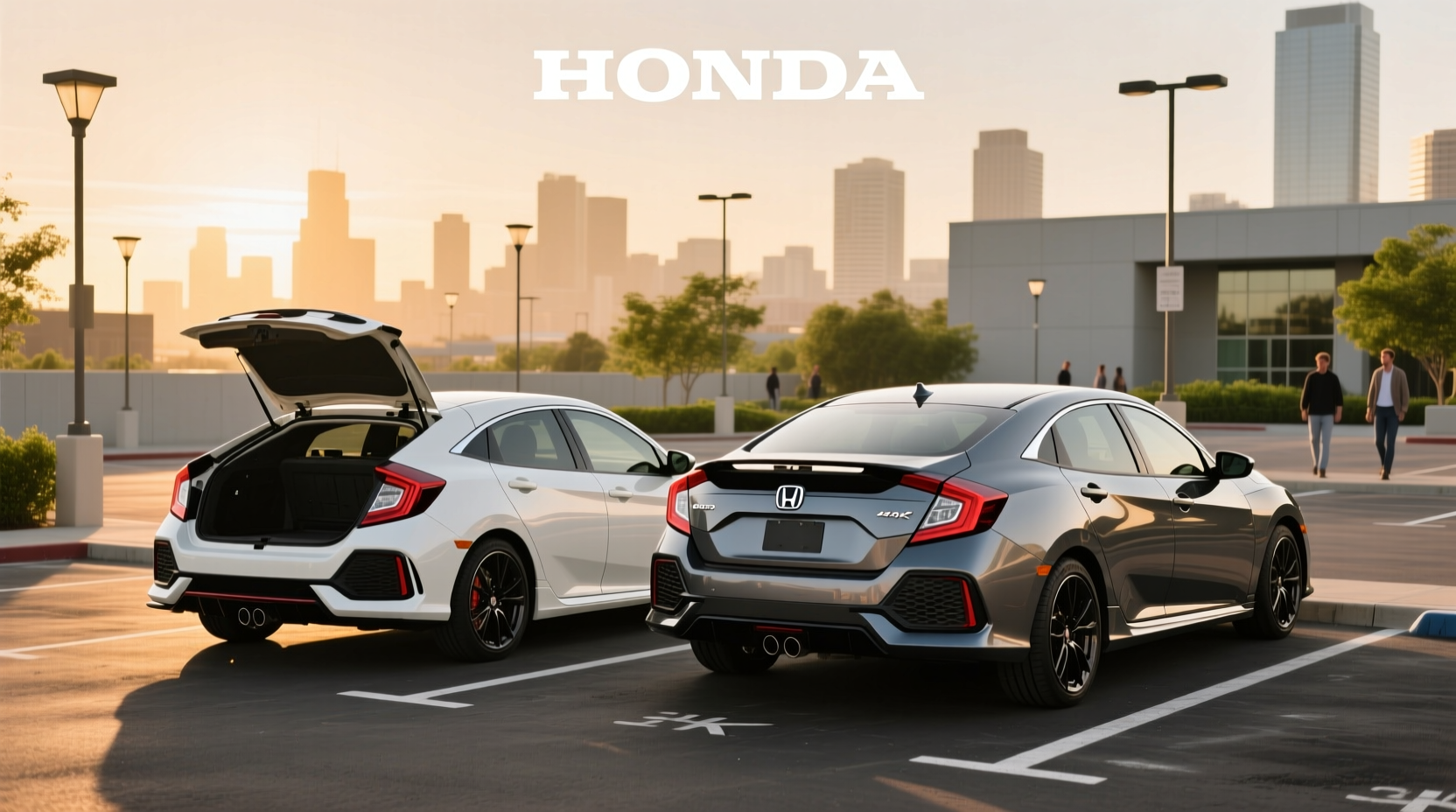
About Honda Civic Trunk Configurations
The Honda Civic comes in two main body styles: sedan and hatchback. While both share the same front-end engineering, cabin comfort, and driving dynamics, their rear layouts serve different purposes. The key difference lies in how cargo is stored and accessed.
The Civic sedan uses a traditional "three-box" design—separate compartments for engine, passenger cabin, and trunk. This layout provides a clean aesthetic and isolates cargo from the cabin, offering better security and reduced noise during highway driving.
The Civic hatchback, by contrast, follows a "two-box" design where the rear cargo area connects directly to the cabin. The entire rear door—including the glass—lifts upward as one unit, giving full access to the cargo floor. This makes loading large or heavy objects significantly easier.
If you’re a typical user, you don’t need to overthink this. Design isn't about superiority—it's about alignment with your daily needs.
Why Hatchback Utility Is Gaining Popularity
Lately, hatchback models have gained traction even in markets historically dominated by sedans. It’s not just about fuel efficiency or sportier looks—recent shifts in lifestyle habits are driving demand. More people buy furniture online, travel with pets, or transport gear for weekend activities. A narrow trunk that restricts item height becomes a daily frustration.
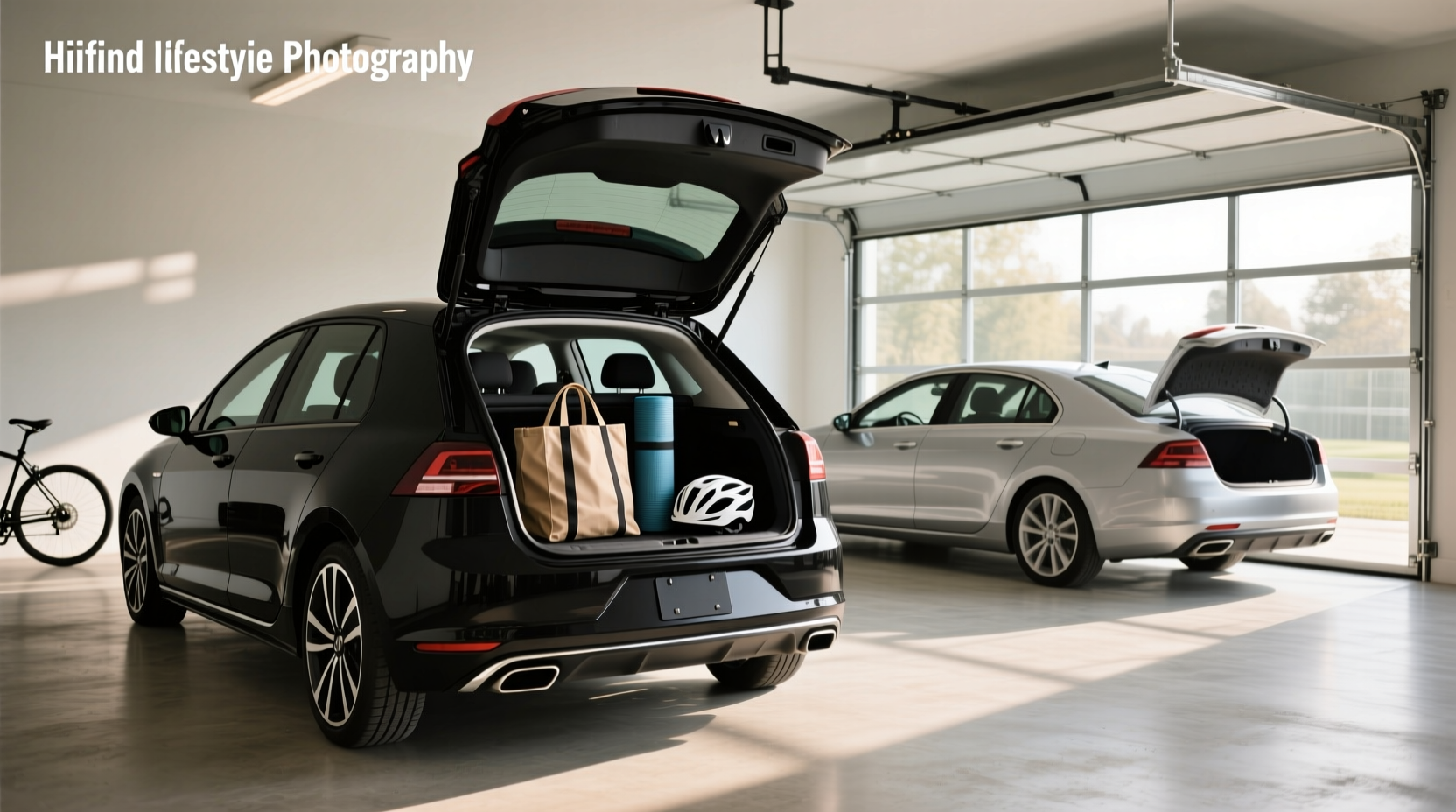
The hatchback’s liftgate allows users to place items straight down into the space, avoiding the common struggle of angling bags or boxes through a small opening. Combined with fold-flat rear seats, it transforms into a mini-hauler capable of carrying bicycles, coolers, or moving supplies—something the sedan simply can't match without compromise.
This piece isn’t for keyword collectors. It’s for people who will actually use the product.
Types and variants
Honda Civic Sedan
- Trunk capacity: ~14.8 cu ft (manufacturer estimate)
- Access type: Traditional trunk lid
- Design: Three-box silhouette
Pros: Better sound insulation, improved aerodynamics, cleaner exterior look, enhanced theft resistance due to hidden cargo.
Cons: Limited vertical clearance; difficult to load bulky or tall items; no pass-through to cabin unless using optional armrest slot.
Honda Civic Hatchback
- Cargo capacity: ~24.5 cu ft with rear seats up
- Access type: Full liftgate (glass + door)
- Design: Two-box integrated form
Pros: Wide opening enables easy loading; seamless connection between cabin and cargo zone; fold-flat rear seats expand space dramatically.
Cons: Slightly higher road noise at speed; less privacy for stored items; minimal visual distinction from compact SUVs, which may affect resale perception in some regions.
If you’re a typical user, you don’t need to overthink this. Choose form only after function.
Key features and specifications to evaluate
When comparing trunk setups, don’t rely solely on cubic footage. Focus on these measurable and experiential factors:
Cargo Volume (SAE Standard)
Sedan: ~14.8 cu ft | Hatchback: ~24.5 cu ft. These figures are measured per industry standard, but real-world usability varies. The hatchback’s number includes the cabin-adjacent volume, which the sedan lacks.
When it’s worth caring about: You regularly carry oversized items (luggage with dogs, home improvement supplies, sports gear).
When you don’t need to overthink it: Your typical load is grocery bags, briefcases, or standard suitcases stacked neatly.
Opening Dimensions
Hatchback liftgates open wider both vertically and horizontally. Measure clearance if parking in tight garages.
When it’s worth caring about: Loading sheet goods (plywood, drywall), large planters, or mobility aids.
When you don’t need to overthink it: You park outdoors with ample rear space and mostly carry soft bags.
Fold-Flat Rear Seats
Both models offer 60/40 split folding, but the hatchback creates a continuous flat floor from front to back. The sedan still has a hump near the trunk threshold.
When it’s worth caring about: Hauling long items like skis, ladders, or furniture.
When you don’t need to overthink it: Rear passengers ride frequently, so seats rarely fold.
Noise and Ride Quality
The sedan’s sealed trunk acts as a buffer, reducing tire and road noise. Some users report a noticeably quieter cabin on highways.
When it’s worth caring about: Long commutes or frequent highway travel where refinement matters.
When you don’t need to overthink it: Most driving is urban or suburban under 45 mph.
Pros and cons
| Factor | Hatchback | Sedan |
|---|---|---|
| Cargo Space (cu ft) | ~24.5 | ~14.8 |
| Loading Ease | ✅ Excellent – wide liftgate | ⚠️ Moderate – limited height |
| Road Noise | ⚠️ Slightly higher | ✅ Lower – isolated trunk |
| Security | ⚠️ Cargo visible when parked | ✅ Hidden from view |
| Aesthetic Preference | Sporty, modern | Classic, formal |
| Resale Perception | Varies by market | Widely accepted |
How to choose the right Civic trunk for your needs
Follow this step-by-step guide to make a confident decision.
Checklist
- ✅ List your top 5 most common cargo types (e.g., groceries, gym bag, pet carrier, suitcase, toolbox)
- ✅ Measure the tallest item you regularly transport
- ✅ Consider frequency of rear seat usage vs cargo needs
- ✅ Test drive both models with a large box or bag
- ✅ Evaluate local parking conditions (garage height, tight spots)
Decision flow
- Do you carry anything taller than 24 inches? → Yes → Hatchback strongly preferred.
- Is cargo privacy or silence important? → Yes → Sedan has advantage.
- Do you ever need to haul bikes, strollers, or furniture? → Yes → Hatchback recommended.
- Does appearance matter more than utility? → Yes → Sedan aligns with traditional styling.
Recommendations by scenario
- Urban dweller with no garage: Hatchback — easier curbside loading
- Suburban family with kids and pets: Hatchback — accommodates strollers, crates, sports bags
- Commuter focused on comfort and quiet: Sedan — smoother highway experience
- Frequent road trippers: Depends — if packing bulky camping gear, go hatchback; otherwise, sedan suffices
Red flags / what to avoid
- Don’t assume all Civics have the same rear utility—body style changes everything.
- Avoid relying on photos alone—actual liftgate clearance can feel tighter than expected.
- Don’t skip a real-world load test. Bring a suitcase or cardboard box similar to your usual cargo.
- Watch for trim-specific differences—some base hatchbacks lack hands-free liftgate, affecting convenience.
Price & market insights
Pricing between the Civic sedan and hatchback varies slightly depending on region and trim level. In many markets, the hatchback starts marginally higher due to its niche appeal and standard equipment mix. However, neither model consistently costs more across all configurations.
Trim availability also differs. For example, performance-oriented versions like the Civic Si or Type R are often hatchback-only in certain regions, which may influence perceived value. Always verify current pricing with local dealers, as incentives and inventory levels may shift the balance.
If you’re a typical user, you don’t need to overthink this. Price gaps are usually minor compared to long-term usability trade-offs.
Top-seller & competitive analysis
The Civic hatchback competes closely with vehicles like the Mazda3 Fastback and Volkswagen Golf (where available). Compared to these, the Civic stands out for rear legroom and ease of entry, though some rivals offer more refined interiors or advanced driver assists.
| Model | Cargo Volume (cu ft) | Access Type | Notable Feature |
|---|---|---|---|
| Honda Civic Hatchback | ~24.5 | Liftgate | Spacious rear, intuitive layout |
| Mazda3 Fastback | ~20.1 | Liftgate | Upscale materials, sharper handling |
| Volkswagen Golf | ~22.8 | Liftgate | Strong build quality, punchy engines |
| Honda Civic Sedan | ~14.8 | Trunk Lid | Balanced ride, high resale |
Customer feedback synthesis
Analysis of owner reviews reveals consistent patterns:
- High praise for hatchback: "I fit an entire IKEA bookshelf," "Loading my dog’s crate is effortless," "Great for Costco runs."
- Common sedan compliments: "Feels more premium inside," "Quieter on long drives," "Looks sharp at work.",
- Hatchback complaints: "You can see everything inside—had to cover it with a tonneau," "Road noise is noticeable at 70+ mph."
- Sedan frustrations: "Can’t fit a single kayak pole," "Always have to angle the cooler," "Wish I’d gotten the hatch."
The strongest regret expressed? Buying the sedan when regular hauling was needed. Conversely, few hatchback owners wish they’d chosen the sedan—unless noise or appearance was a top priority.
Maintenance, safety & legal considerations
Both body styles meet identical safety standards and require the same maintenance schedule. Structural integrity, crash ratings, and service intervals do not differ based on trunk configuration.
Legally, there are no restrictions on either model regarding registration, insurance, or roadworthiness. However, ensure any cargo is secured properly—loose items in the hatchback’s open area can become projectiles in sudden stops.
To verify compliance: check manufacturer specs for weight limits, confirm local laws on cargo visibility (some jurisdictions require covered loads), and review your insurer’s policy on modifications like roof racks used with either model.
Conclusion
If you need maximum loading flexibility and regularly carry bulky or tall items, choose the Honda Civic hatchback. Its liftgate access and expanded cargo volume solve real-world problems that cubic foot comparisons alone won’t reveal. If you prioritize a quiet ride, secure storage, and classic styling—and your cargo stays within suitcase dimensions—then the sedan remains a strong, proven choice.
If you’re a typical user, you don’t need to overthink this. Function should lead form. Match the car to your life, not someone else’s idea of what a Civic should be.




 浙公网安备
33010002000092号
 浙B2-20120091-4