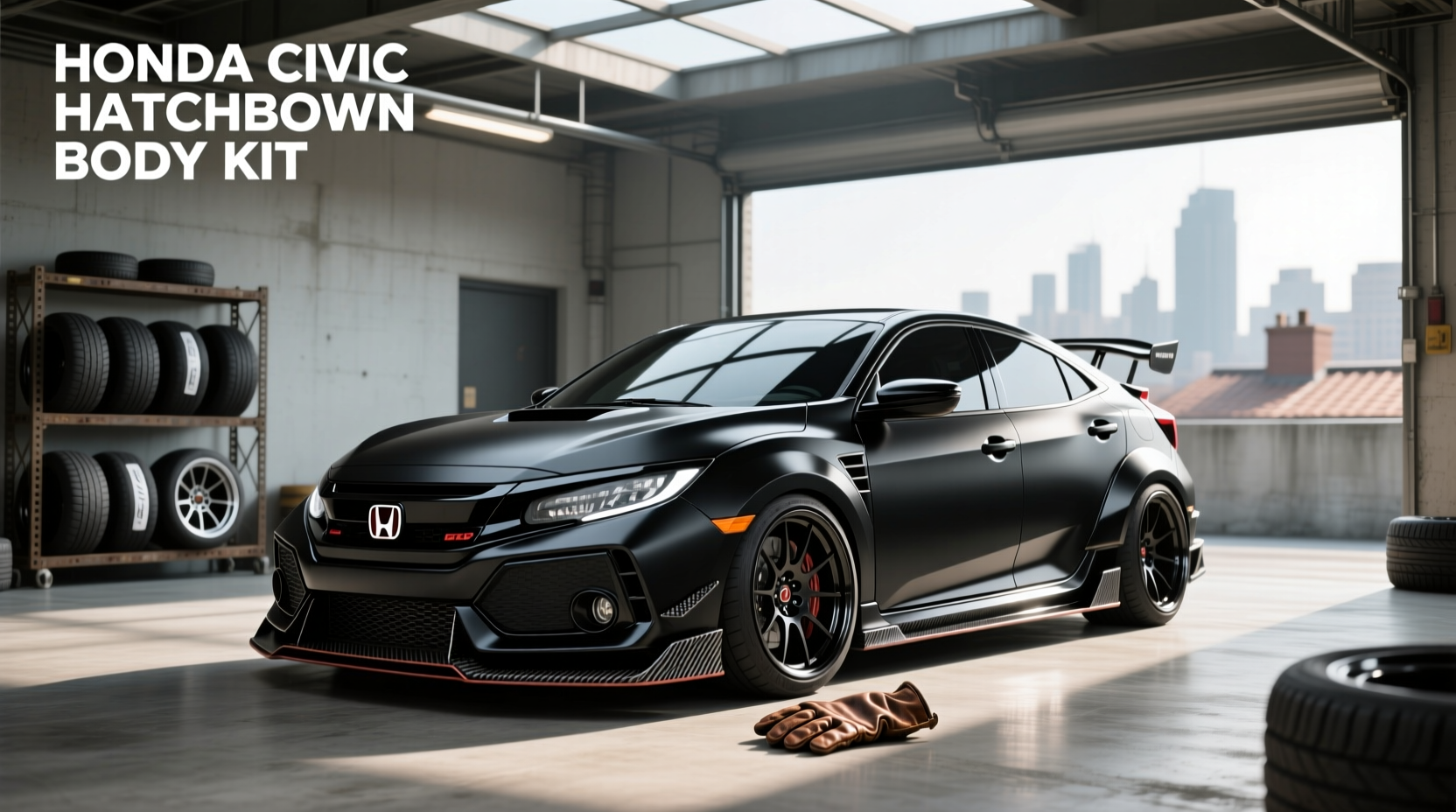
Short Introduction: How to Choose Honda Civic Hatchback Body Kit
If you're looking for how to choose a Honda Civic hatchback body kit, start here: focus on fitment for your model year (2022–2026 kits differ from older ones), material durability (PP or ABS for budget, carbon fiber for premium), and whether the kit requires painting. Over the past year, more owners have upgraded their hatchbacks with aftermarket kits to achieve a sportier stance without buying a Type R. If you’re a typical user, you don’t need to overthink this — most full kits under $400 from reputable suppliers offer good value if installed professionally. Avoid unpainted kits unless you can guarantee color matching. The biggest mistake? Choosing widebody designs without verifying local regulations or garage clearance.
About Honda Civic Hatchback Body Kit
A Honda Civic hatchback body kit enhances the vehicle’s visual aggression and aerodynamic profile through bolt-on components. These include front and rear bumpers, side skirts, spoilers, and diffusers. Unlike factory trims, aftermarket kits allow customization of shape, depth, and style—such as mimicking the high-performance Type R look. Kits may be sold as full sets or individual parts, giving flexibility in budget and design control. They are not structural modifications but affect aesthetics, airflow management, and sometimes sensor placement (like parking sensors).
Most modern kits are designed specifically for 11th-generation Civics (2022 onward), though earlier models (2016–2021) still see strong aftermarket support. When researching what to look for in a Honda Civic hatchback body kit, understand that compatibility is not universal—even within the same generation, sedan and hatchback variants have different panel dimensions.
Why Honda Civic Hatchback Body Kit Is Gaining Popularity
Lately, demand for Civic hatchback body kits has increased due to rising interest in affordable performance styling. The 11th-gen hatchback already has a sleek silhouette, making it an ideal canvas for subtle or aggressive enhancements. Social media and car culture platforms have amplified visibility of clean, track-inspired builds using off-the-shelf kits.
Additionally, manufacturers now offer better-engineered kits with improved mounting systems and material resilience. This reduces fitment issues that plagued earlier generations. If you’re a typical user, you don’t need to overthink this — today’s market offers plug-and-play solutions that align well with OEM gaps and panel tolerances, especially for non-widebody applications.
Real-World Appeal vs. Practicality
The appeal lies in personalization: turning a reliable daily driver into a head-turner. But popularity doesn't mean all kits are equal. Some prioritize looks over function — like deep front lips that scrape curbs. That’s why understanding trade-offs matters more than chasing trends.
Types and Variants
Type R-Inspired Kits
- Pros: Factory-coordinated look, integrates with OEM sensors, widely supported by brands
- Cons: Can appear generic; limited differentiation from stock R models
When it’s worth caring about: If you want instant recognition and resale appeal.
When you don’t need to overthink it: Most entry-level kits mimic this style — acceptable for mild upgrades.
Widebody Kits
- Pros: Dramatic stance, accommodates wider wheels/tires, maximum visual impact
- Cons: Requires fender rolling or modification, harder to install, may violate local laws
When it’s worth caring about: For dedicated show cars or track use with suspension upgrades.
When you don’t need to overthink it: Not needed for street-driven vehicles where practicality matters.
Modular Component Kits
- Pros: Mix and match parts (e.g., only front lip + rear diffuser), lower upfront cost
- Cons: Risk of mismatched finishes or styles between brands
When it’s worth caring about: Budget-conscious buyers who plan incremental upgrades.
When you don’t need to overthink it: If overall cohesion isn’t a priority.
Full Aero Packages (Front + Side + Rear)
- Pros: Complete transformation, balanced design, often tested for airflow
- Cons: Higher cost, longer installation time, paint-matching complexity
When it’s worth caring about: For cohesive, professional-looking results.
When you don’t need to overthink it: Entry-level full kits under $500 often deliver consistent quality across components.
Key Features and Specifications to Evaluate
Material Quality
- Polypropylene (PP): Lightweight, flexible, resistant to minor impacts. Common in budget-friendly kits like Yofer USA’s 11th-gen packages 1.
- ABS Plastic: Rigid, holds paint better, used for splitters and grilles. Found in SWA Auto Sports kits 2.
- Carbon Fiber: Premium choice for weight savings and gloss finish. Expensive but durable if properly sealed.
When it’s worth caring about: In regions with extreme temperature swings or frequent road debris.
When you don’t need to overthink it: PP and ABS perform similarly in normal driving conditions.
Fitment Accuracy
Kits must match your exact model year and body type. A 2022–2026 hatchback differs from pre-2022 models in bumper contours and mounting points. Misfit leads to panel gaps or misaligned sensors.
When it’s worth caring about: For maintaining weather sealing and aerodynamics.
When you don’t need to overthink it: Reputable brands publish fitment charts — just verify before buying.
Paint Requirements
Unpainted kits require professional painting to match your car. Pre-painted options exist but may not perfectly match faded or custom-colored vehicles.
When it’s worth caring about: On high-visibility panels like front bumpers.
When you don’t need to overthink it: If you're already planning a full repaint.
Pros and Cons
Advantages
- ✅ Enhances curb appeal and perceived performance
- ✅ Bolt-on installation (non-permanent)
- ✅ Wide range of styles and price points
- ✅ May improve downforce at speed (on functional designs)
Drawbacks
- ❌ Increases vulnerability to parking scrapes
- ❌ Adds cost beyond purchase (installation, paint)
- ❌ Potential insurance implications (check policy)
- ❌ Risk of poor fitment leading to wind noise or water leaks
If you’re a typical user, you don’t need to overthink this — the benefits outweigh risks when choosing moderate-profile kits from known suppliers.
How to Choose the Right Honda Civic Hatchback Body Kit
Step-by-Step Checklist
- Confirm your Civic’s generation and body type (hatchback vs sedan).
- Determine your goal: subtle enhancement or full transformation?
- Select material based on climate and budget (PP/ABS for most users).
- Decide whether to go painted or unpainted.
- Check supplier fitment guide and customer reviews.
- Estimate total cost including labor and paint.
- Schedule professional installation if complex (e.g., wiring for LED diffusers).
Decision Flow
Want aggressive look → Consider full kit
On tight budget → Start with front lip and rear diffuser
Plan to resell soon → Stick to OEM-style designs
Live in snowy area → Avoid low-clearance lips
Garage space limited → Measure width after installation
Recommendations by Scenario
- Daily Driver: Yofer USA Package A (PP/ABS, $279–$375) — balanced look, easy fit 3.
- Show Car: Carbon fiber full kit from SWA Auto Sports with LED integration.
- Track-Focused: GRP splitter from TRC Performance for FK2 Type R 4.
Red Flags / What to Avoid
- ❌ Kits priced below $200 claiming full coverage — likely thin material or missing parts
- ❌ No clear fitment chart or return policy
- ❌ Claims of "OEM quality" without evidence
- ❌ Instructions requiring drilling or permanent modification
If you’re a typical user, you don’t need to overthink this — stick to brands with documented compatibility and real-world installations.
Price & Market Insights
Prices vary significantly by region, seller, and included components. Full kits range from $289 to $749, while individual parts like front bumpers or diffusers sell for $119–$659 5. Carbon fiber commands a 40–100% premium over plastic equivalents.
Over the past year, inflation and supply chain adjustments have stabilized, but shipping costs remain volatile. Always check final price including duties and handling fees, especially when ordering internationally. May vary by region/model/seller — confirm with retailer before purchase.
Top-Seller & Competitive Analysis
| Supplier | Product Example | Price (USD) | Material | Fitment |
|---|---|---|---|---|
| Yofer USA | 11th Gen Hatchback Package A | $279–$375 | PP/ABS | 2022–2026 |
| SWA Auto Sports | Type-R Style Grill | $169 | Plastic | 2022–2025 |
| TRC Performance | FK2 Front Splitter | $125.88 | GRP | FK2 Type R |
| American Modified | Type R Front Bumper | $659.99 | Plastic | 2016–2021 |
Data sourced from public product listings 123. Yofer leads in value segment; American Modified targets older models with high-end reproductions.
Customer Feedback Synthesis
Based on aggregated reviews:
- Frequent Praise: Easy bolt-on process (for non-widebody), realistic Type R resemblance, good packaging preventing transit damage.
- Common Complaints: Mismatched paint on pre-painted kits, missing hardware, vague instructions for LED wiring.
- Surprise Insight: Many users report better-than-expected fitment on 11th-gen models compared to previous generations.
If you’re a typical user, you don’t need to overthink this — read recent reviews focused on your specific model year before buying.
Sourcing & Supplier Tips
- 🛒 Buy directly from brand websites or authorized dealers to avoid counterfeits.
- 📍 Check warehouse location — domestic suppliers reduce shipping time and import risk.
- 🔧 Look for suppliers offering installation templates or video guides.
- 🚚 Confirm return policy for damaged or incorrect items.
- 👥 Join Civic owner forums to get real-user recommendations.
Verify retailer return policy and check manufacturer specs before ordering. May vary by seller.
Maintenance, Safety & Legal Considerations
After installation, inspect fasteners every 3,000 miles — vibrations can loosen bolts. Clean with pH-neutral soap; avoid pressure washing near seams.
Safety-wise, ensure kits don’t block headlights, sensors, or license plate visibility. Test backup cameras and parking sensors post-install.
Legality varies by jurisdiction. Some areas regulate protruding parts or ground clearance. To stay compliant: consult your local DMV or transport authority website. Do not assume online sellers verify regional rules.
Conclusion
If you need a cost-effective, visually impactful upgrade for your 11th-gen Civic hatchback, choose a full PP/ABS kit from a trusted brand like Yofer USA. If you're pursuing a show-quality build, invest in carbon fiber with professional paint and fitment. If you’re a typical user, you don’t need to overthink this — prioritize fitment accuracy and reasonable pricing over exotic materials. Avoid modifications that compromise daily usability or legal compliance.
FAQs
Can I install a body kit myself?
Yes, if it's a simple add-on like a front lip or rear diffuser. Full kits with complex alignment or wiring (e.g., LED lights) should be handled by a professional shop to prevent damage and ensure proper fit.
Do body kits affect fuel efficiency?
Minimal impact in real-world driving. Aerodynamic kits may slightly improve stability at highway speeds, but gains are negligible for most users. Aggressive designs can increase drag if not properly engineered.
Are body kits covered under warranty?
No. Aftermarket modifications typically void related portions of factory warranty. Check with your dealer and insurer before installation.
How long do body kits last?
With proper care, 5+ years. PP and ABS resist cracking; carbon fiber lasts longer but can delaminate if chipped. Repaint may be needed after 3–5 years due to fading.
Will a body kit increase my insurance?
Possibly. Insurers may adjust premiums for modified vehicles. Declare the upgrade to avoid claim denials later. Policies vary by provider — confirm with your agent.




 浙公网安备
33010002000092号
 浙B2-20120091-4