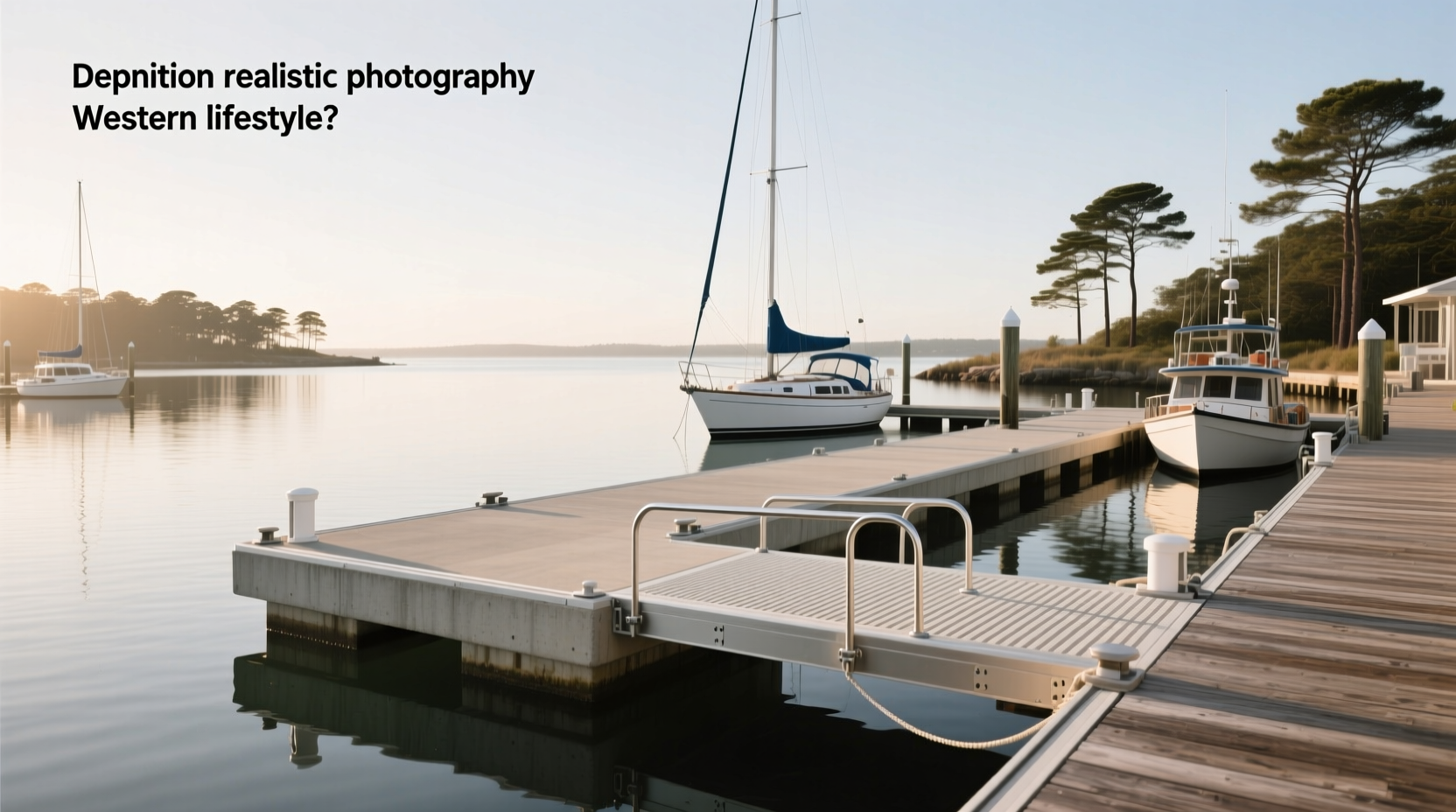
If you're asking how much does a concrete dock cost?, expect $30–$75 per square foot or $180–$250 per linear foot for fixed installations — significantly higher than wood or aluminum alternatives. When evaluating how to choose concrete pontoon options, prioritize durability and load capacity if building for commercial marinas or high-traffic areas. However, due to heavy weight and complex installation requiring cranes or barges, avoid DIY attempts and always verify local permitting rules early. For residential use with tidal fluctuation, consider floating docks made from HDPE or aluminum instead.
🛒 About Concrete Pontoon, How Much Does a Concrete Dock Cost?
A concrete pontoon is a buoyant structural element used in dock construction, typically made from reinforced concrete designed to float while supporting substantial loads. These pontoons form the foundation of permanent or semi-permanent docking systems, especially where long-term stability and resistance to environmental wear are critical 1. Unlike traditional wooden floats or metal frames, concrete pontoons offer superior longevity and require minimal maintenance over decades of service.
The broader question — how much does a concrete dock cost? — encompasses not just material pricing but also engineering design, transportation, and specialized labor. Concrete docks are most commonly found in commercial ports, marinas, ferry terminals, and industrial waterfront facilities due to their ability to withstand constant vessel impact, harsh marine environments, and heavy equipment operation.
📈 Why Concrete Pontoon, How Much Does a Concrete Dock Cost? Is Gaining Popularity
The global docks market was valued at approximately USD 1.91 billion in 2025 and is projected to reach USD 2.55 billion by 2033, growing at a compound annual growth rate (CAGR) of 3.8% 2. A key driver behind this growth is increasing demand for durable infrastructure that can endure climate variability, rising sea levels, and intensified recreational boating activity.
Concrete pontoons are gaining favor because they resist rot, UV degradation, insect infestation, and fire — issues that commonly affect wood-based structures. Additionally, their low lifecycle maintenance costs make them economically viable despite higher initial investment. In regions like Florida, where saltwater corrosion and hurricane exposure challenge conventional materials, contractors increasingly specify concrete for new builds 3.
🔧 Types and Variants
Understanding the different types of concrete pontoon systems helps clarify which configuration suits your project scope and budget.
✅ Fixed Concrete Docks
These docks are anchored directly into the seabed using steel or concrete piles. They remain stable regardless of water level changes, making them ideal for deep-water applications.
- ✔️ Extremely stable under heavy loads
- ✔️ Minimal vertical movement
- ✖️ High installation cost due to pile driving
- ✖️ Not suitable for areas with large tidal swings
✅ Floating Concrete Pontoons
Although less common, some engineered designs use hollow concrete sections as floating modules. These rely on sealed air chambers for buoyancy and are tethered to guide piles.
- ✔️ Adaptable to fluctuating water levels
- ✔️ Long lifespan with proper sealing
- ✖️ Risk of water ingress if cracks develop
- ✖️ Require regular inspection for integrity
✅ Hybrid Systems
Some modern docks combine concrete pontoons with composite decking or aluminum railings to balance strength and weight.
- ✔️ Optimizes performance across components
- ✔️ Reduces overall structural stress
- ✖️ More complex engineering required
- ✖️ Potential for galvanic corrosion between dissimilar materials
📋 Key Features and Specifications to Evaluate
When determining what to look for in concrete pontoon, how much does a concrete dock cost?, focus on measurable technical criteria rather than aesthetics alone.
- Load Capacity: Check maximum live load (people, boats, equipment) and dead load (structure self-weight). Commercial docks often require 100+ psf (pounds per square foot).
- Buoyancy Reserve: Ensure pontoons have sufficient freeboard (height above waterline) even when fully loaded.
- Reinforcement Type: Look for epoxy-coated rebar or fiber-reinforced polymer (FRP) to prevent internal corrosion.
- Sealing Method: Waterproofing membranes or integral crystalline admixtures improve longevity in saline environments.
- Connection System: Evaluate how pontoons link together — bolted vs. welded vs. interlocking — for ease of assembly and repair.
- Design Life: Reputable manufacturers should provide expected service life (often 50+ years for well-maintained concrete).
⚖️ Pros and Cons
Pros ✅
- Durability: Resists weathering, marine borers, and physical impacts better than wood or plastic.
- Low Maintenance: No need for staining, painting, or replacement of rotted timbers.
- Fire Resistance: Non-combustible material enhances safety near fuel storage or electrical systems.
- High Load Tolerance: Supports heavy machinery, large vessels, and dense pedestrian traffic.
Cons ❌
- High Initial Cost: Material and installation expenses exceed those of wood or aluminum docks.
- Weight Challenges: Requires heavy-lift equipment for transport and placement.
- Vulnerability to Cracking: Thermal expansion or ground settlement may cause structural fractures over time.
- Environmental Impact: Installation may disrupt aquatic ecosystems; permits often required.
🔍 How to Choose Concrete Pontoon, How Much Does a Concrete Dock Cost?
Follow this step-by-step guide to ensure informed decision-making when considering a concrete dock system.
- Assess Your Use Case: Determine whether you need a private residential dock, community access point, or commercial facility. Heavy-use scenarios justify concrete’s upfront cost.
- Evaluate Site Conditions: Measure water depth, tidal range, wave action, and bottom composition. Soft sediments may require deeper pilings, increasing costs 4.
- Obtain Permits Early: Contact local authorities about zoning, environmental regulations, and setback requirements. Permitting can take weeks and cost $1,000–$5,000 depending on jurisdiction 5.
- Get Multiple Quotes: Request detailed bids from at least three licensed marine contractors, including breakdowns for materials, labor, equipment rental, and contingency fees.
- Verify Engineering Plans: Confirm that structural drawings include load calculations, anchoring details, and corrosion protection strategies.
- Review Warranty Terms: Ask about coverage for cracking, sinking, or loss of buoyancy.
🚩 Red Flags to Avoid
- Contractors who don’t require site surveys or engineering approval.
- Proposals lacking itemized cost estimates.
- Promises of “maintenance-free” performance without caveats.
- Use of non-marine-grade concrete mix or uncoated steel reinforcement.
💰 Price & Market Insights
To answer how much does a concrete dock cost?, consider both unit pricing and total project scope.
| Material | Average Cost per Sq Ft (USD) |
|---|---|
| Concrete | $30 – $75 |
| Wood | $10 – $30 |
| Aluminum | $20 – $50 |
| HDPE Plastic | $25 – $60 |
For linear measurements, fixed concrete docks average $180–$250 per linear foot, reflecting complexity in foundation work and crane-assisted installation 1.
Total project costs typically range from $5,000 for small residential docks to over $30,000 for commercial installations. Remember that these figures often exclude permits, utility hookups (electricity, water), lighting, railings, or boat lifts — each adding thousands more.
Regional variations exist: Florida saw a 15% increase in dock construction prices from 2023 to 2025 due to supply chain pressures and labor shortages 3. Always request location-specific quotes.
📊 Top-Seller & Competitive Analysis
While specific branded models are rarely marketed directly to consumers, certain design standards dominate the industry.
| Dock Type | Material | Cost per Linear Foot | Typical Use |
|---|---|---|---|
| Fixed Dock | Concrete | $180–$250 | Commercial marinas |
| Floating Dock | Aluminum | $130–$200 | Lakes, tidal zones |
| Floating Dock | HDPE | $150–$210 | Saltwater areas |
| Pile-Supported | Composite | $160–$240 | High-traffic piers |
This comparison highlights that while concrete commands the highest price, it fills a niche where permanence and resilience outweigh cost concerns. For seasonal or moderate-use settings, aluminum or HDPE floating docks offer compelling value.
📝 Customer Feedback Synthesis
Based on aggregated reviews and contractor reports:
✅ Frequent Positive Feedback
- “Still looks new after 15 years with only minor cleaning.”
- “Handles large charter boats daily without shifting.”
- “No worries about termites or dry rot unlike our old wooden pier.”
❌ Common Complaints
- “Installation took twice as long as promised due to barge scheduling.”
- “Had to pay extra for environmental mitigation measures not initially quoted.”
- “Crack appeared after first winter — needed epoxy injection repair.”
🌐 Sourcing & Supplier Tips
There are few off-the-shelf concrete pontoon kits. Most projects involve custom fabrication by regional precast manufacturers or marine construction firms.
- Seek suppliers with proven experience in marine-grade precast concrete.
- Ask for references from past clients with similar water conditions.
- Confirm delivery logistics — oversized loads may require special permits.
- Inspect units upon arrival for surface defects, misalignment, or damaged seals.
- For bulk purchases (e.g., municipal projects), negotiate staged production schedules to manage cash flow.
🧼 Maintenance, Safety & Legal Considerations
Despite being low-maintenance, concrete docks still require periodic care:
- Inspect annually for cracks, spalling, or rust stains indicating rebar corrosion.
- Clean surfaces to prevent algae buildup, which can create slip hazards.
- Ensure handrails meet current ADA or local safety codes for height and spacing.
- Verify compliance with coastal zone management laws, especially in ecologically sensitive areas.
- Install proper lighting and signage for nighttime safety.
Always consult a professional engineer before modifying an existing structure or adding significant weight (e.g., a boat lift).
📌 Conclusion
If you’re weighing how to choose concrete pontoon solutions, recognize that concrete docks deliver unmatched durability and load-bearing capability — ideal for commercial operations or locations demanding decades of service. However, their high initial cost ($30–$75/sq ft) and logistical demands mean they’re often unsuitable for casual homeowners or temporary setups. For private lakefront properties with variable water levels, explore floating alternatives like aluminum or HDPE. Ultimately, success depends on thorough planning, verified permits, and working with experienced marine contractors who specialize in heavy-duty installations.
❓ FAQs
- How much does a basic concrete dock cost?
- A standard 10×20-foot concrete dock starts around $5,000 for materials and fabrication, but total installed cost — including permits, labor, and equipment — can exceed $15,000 depending on location and site complexity.
- Are concrete docks worth the investment?
- Yes, for commercial or high-use applications where longevity and minimal maintenance are priorities. Over a 50-year lifespan, the lower upkeep can offset higher initial costs compared to wood or composites.
- Can I install a concrete dock myself?
- No. Due to extreme weight and precision required in positioning and anchoring, installation requires specialized marine equipment and trained personnel. Attempting DIY poses serious safety and structural risks.
- What affects the final price of a concrete dock?
- Key factors include size, water depth, soil conditions, permit requirements, distance to supplier, and added features like lighting or utilities.
- Do concrete docks crack over time?
- Minor hairline cracks may appear due to curing or thermal shifts. Proper reinforcement and waterproofing minimize risk, but any significant cracking should be inspected and repaired promptly to prevent water intrusion.




 浙公网安备
33010002000092号
 浙B2-20120091-4