
Short introduction
If you’re a typical Corolla Hatchback owner planning weekend trips or seasonal gear transport, start with factory-style crossbars. They’re lighter, quieter, and more than capable for bikes, skis, or small cargo boxes. How to choose a roof rack for a Corolla hatchback? Focus on compatibility with door jamb mounts, weight capacity under 165 lbs, and low wind resistance. Avoid assuming a full platform rack is better—it often adds noise and drag without real benefit for light loads. If you’re a typical user, you don’t need to overthink this. Over the past year, more owners have shifted toward minimalist setups after realizing that bulky rooftop systems rarely pay off unless carrying tents or large crates regularly.
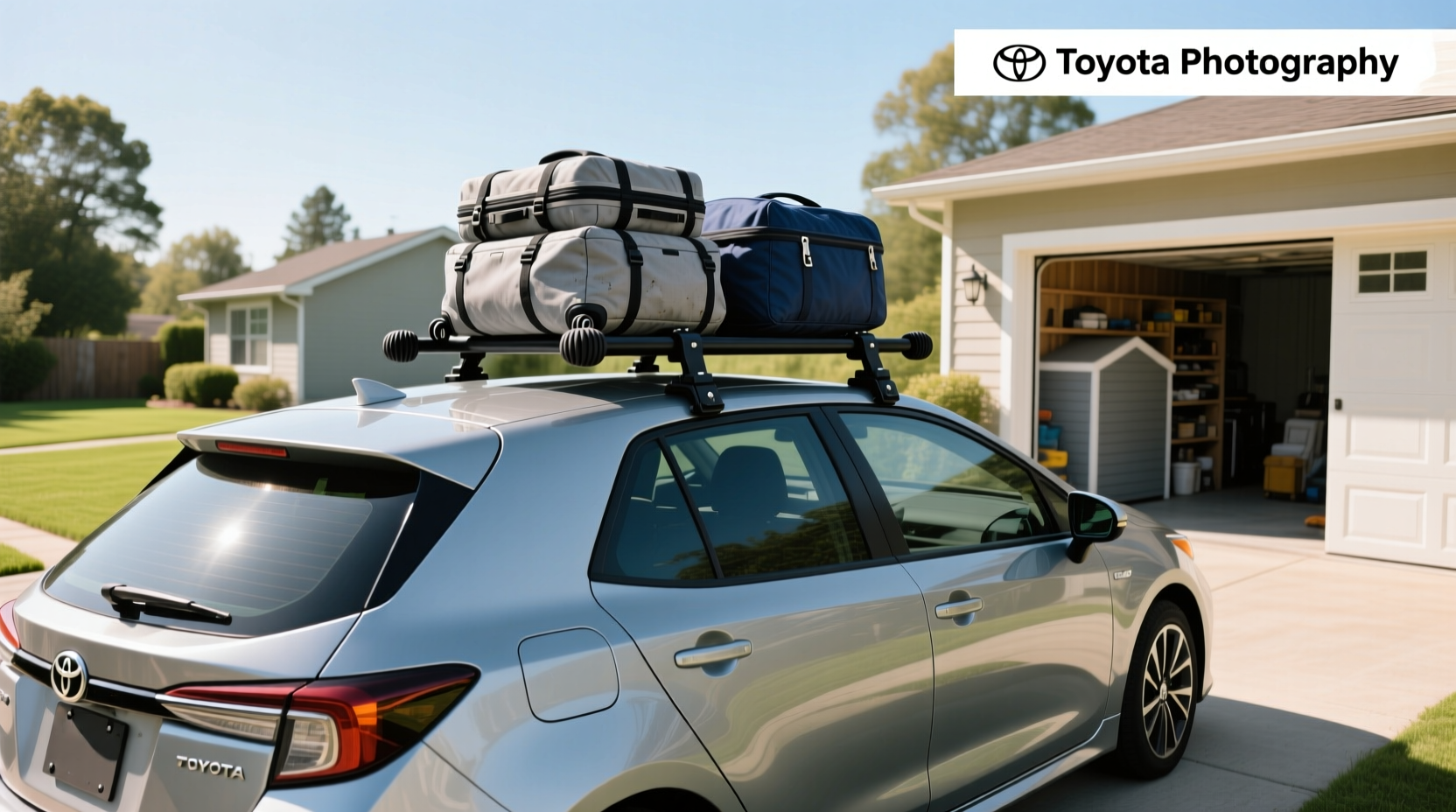
About Toyota Corolla Hatchback Roof Racks
The Toyota Corolla Hatchback comes with pre-drilled mounting points or integrated door jamb pins depending on trim level, allowing direct attachment of crossbars without drilling. These are not full roof rails but anchor points that accept OEM or compatible aftermarket bars. Most systems rely on tension-mounted crossbars that lock into the door frame, preserving paint and enabling quick removal.
“Roof rack” is often used loosely. Technically, it refers to the entire load-carrying system. For the Corolla, that usually starts with two crossbars spanning the roof width. From there, users add accessories like bike trays or ski holders. A full platform rack replaces those bars with a solid deck—offering more surface area but significantly altering aerodynamics.
Why This Is Gaining Popularity
Lately, urban adventurers and outdoor hobbyists have turned to compact cars like the Corolla Hatchback for efficient, agile travel. With limited trunk space, roof solutions become essential for gear like mountain bikes, kayaks, or camping equipment. Recent trends show a preference for modular, reversible setups—especially among renters or those avoiding permanent vehicle modifications.
This shift aligns with rising fuel costs and awareness of aerodynamic drag. Many now realize that oversized racks can reduce fuel economy by up to 15% at highway speeds 1. As a result, leaner crossbar systems are gaining favor—not because they carry more, but because they interfere less when not in use.
Types and variants
Crossbars (Base Rack Systems)
- Pros: Lightweight, easy to install/remove, minimal wind noise, affordable ($80–$250), compatible with most carriers
- Cons: Limited flat surface; requires additional attachments for cargo boxes or baskets
- Best for: Bikes, skis, kayaks, lightweight rooftop pods
Platform Racks (Full Decks)
- Pros: Solid surface for bulky items, secure for rooftop tents or large storage bins
- Cons: Heavier (adds 30+ lbs), increases wind noise noticeably, harder to store when removed, higher cost ($300–$600+)
- Best for: Frequent campers, off-grid travelers, those hauling irregularly shaped loads
OEM vs Aftermarket
- Genuine Toyota (OEM): Designed specifically for Corolla’s anchor points, clean look, moderate price. May lack upgrade paths.
- Aftermarket (Thule, Yakima, Rhino-Rack): Wider accessory ecosystem, higher weight ratings, longer warranties—but require careful fit verification.
If you’re a typical user, you don’t need to overthink this. The majority of Corolla owners never exceed 100 lbs of rooftop load annually. For them, OEM crossbars cover nearly every scenario.
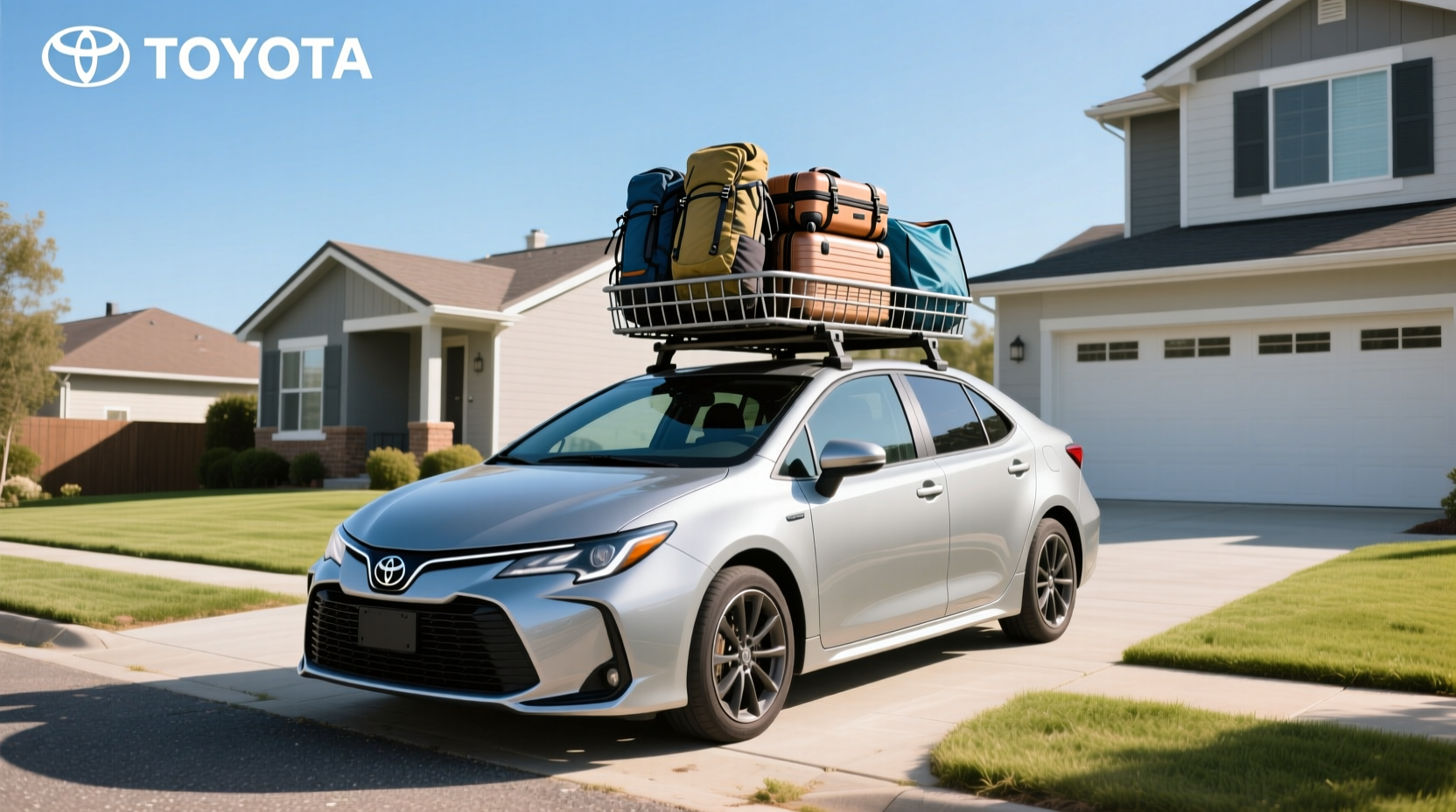
Key features and specifications to evaluate
Weight Capacity
Check both bar rating and vehicle limit. The Corolla Hatchback typically allows 165 lbs dynamic load (while moving). Exceeding this risks damage to mounts or roof structure. Static capacity (parked) may be higher, but irrelevant for travel.
When it’s worth caring about: Hauling heavy gear like metal baskets, tools, or water containers.
When you don’t need to overthink it: Carrying one or two bikes, inflatable kayaks, or soft luggage.
Aerodynamics & Noise
Boxy platforms create turbulence, increasing cabin noise and fuel use. Sleek crossbars disrupt airflow less. Some models feature fairings to further reduce drag.
When it’s worth caring about: Long-distance drivers or those sensitive to wind hum.
When you don’t need to overthink it: Occasional use under 50 miles.
Installation Method
Most Corolla-compatible systems use door jamb clamps. No drilling required. Ensure rubber pads protect paint. Quick-release levers improve usability.
When it’s worth caring about: Renters or shared vehicles where permanence matters.
When you don’t need to overthink it: Owner-driven cars with no plans for resale concerns.
Accessory Compatibility
Crossbars must match carrier footpacks (e.g., Thule Rapid Traverse fits square bars). Measure bar shape and spacing before buying add-ons.
When it’s worth caring about: Planning multiple gear types (bike + ski + box).
When you don’t need to overthink it: Single-purpose use (e.g., only bike transport).
Pros and cons
| Aspect | Crossbars | Platform Racks |
|---|---|---|
| Weight | Light (10–15 lbs) | Heavy (30–50 lbs) |
| Noise Level | Low to moderate | Moderate to high |
| Fuel Impact | Minor (1–3 mpg loss) | Noticeable (3–5+ mpg loss) |
| Storage | Easily removable, compact | Bulky, needs garage space |
| Cost | $80–$250 | $300–$600+ |
| Versatility | High (with add-ons) | High (direct loading) |
| Load Surface | Minimal (only on bars) | Full roof coverage |
How to choose a roof rack for your Corolla Hatchback
Step-by-step checklist
- Confirm your Corolla has factory anchor points or door jamb compatibility
- Determine primary use: bike/ski transport vs bulk cargo
- Select crossbars if load is under 120 lbs and intermittent
- Choose platform only if regularly carrying rooftop tents or large crates
- Verify bar shape matches future carrier needs
- Check return policy in case of fit issues
Decision flow
- Do you need to carry a rooftop tent? → Platform rack
- Will you haul over 150 lbs frequently? → Reinforced crossbars or platform
- Is noise or fuel economy a concern? → Crossbars
- Are you renting or sharing the car? → Removable crossbars
- Only transporting bikes or skis seasonally? → OEM crossbars
Recommendations by scenario
- Urban commuter with occasional weekend trips: Genuine Toyota crossbars
- Ski enthusiast: Aftermarket crossbars + ski carrier (Yakima or Thule)
- Camper with rooftop tent: Aluminum platform rack with high static rating
- Family with inflatable kayak: Crossbars with universal J-hooks
Red flags / what to avoid
- Universal kits without Corolla-specific verification — poor clamp alignment damages door seals
- Unbranded steel racks — prone to rust, heavier, unclear weight limits
- Assuming all crossbars fit OEM anchors — some aftermarket bars require adapters
- Ignoring roof load limits — always refer to owner’s manual, not just rack rating
If you’re a typical user, you don’t need to overthink this. Most people buy based on aesthetics or assumed capacity, then discover they’ve overbuilt. Start simple. Upgrade only when needed.
Price & market insights
Prices vary significantly by region, seller, and brand authenticity. OEM Toyota crossbars typically range from $180–$240. Aftermarket options like Thule or Yakima start around $200 and go beyond $400 for aerodynamic or locking models. Platform racks begin at $300 for basic aluminum decks and exceed $600 for premium modular systems.
Availability may vary by region/model. Some dealers bundle roof racks with outdoor packages. Online retailers offer lower prices but limited fit guarantees. Always check return policy and verify dimensions against your specific Corolla year and trim.
Top-seller & competitive analysis
Based on community feedback and product availability, three configurations dominate the Corolla Hatchback market:
| Product | Type | Price Range | Key Strength | User Feedback |
|---|---|---|---|---|
| Genuine Toyota Accessory Crossbars | Crossbars | $180–$240 | Precise fit, clean design | High satisfaction for ease of install; praised in Reddit threads 2 |
| Thule WingBar Edge | Aero Crossbars | $350–$420 | Quiet performance, tool-free install | Favored by long-distance drivers; integrates with full Thule ecosystem |
| Rhino-Rack Vortex Aero | Aftermarket Crossbars | $220–$280 | Balanced price-to-performance | Strong reviews for durability; minor fit tweaks sometimes needed |
This piece isn’t for keyword collectors. It’s for people who will actually use the product.
Customer feedback synthesis
Analysis of recent user discussions reveals consistent patterns:
- High praise: OEM crossbars for “plug-and-play” installation, quiet ride, and reasonable pricing. Many note they expected more complexity but were done in under 10 minutes.
- Common complaints: Wind noise from poorly fitted aftermarket bars, difficulty storing removed racks, and confusion over weight limits leading to cautious driving.
- Surprise insight: Several users returned platform racks after realizing they used them fewer than five times per year—opting instead for rental gear carriers when needed.
Sourcing & supplier tips
For reliable sourcing:
- Buy OEM parts through authorized Toyota dealers or verified online storefronts (e.g., ToyotaPartsDeal.com)
- For aftermarket, purchase directly from Thule, Yakima, or Rhino-Rack websites to ensure correct fit kits
- Avoid third-party marketplaces unless seller provides Corolla-specific compatibility confirmation
- Consider used racks from trusted forums or Facebook groups—many are lightly used and well-maintained
Always verify fit using manufacturer lookup tools. Even within the same model, 2019 vs 2023 Corolla Hatchbacks may differ slightly in anchor geometry.
Maintenance, safety & legal considerations
Maintain rubber gaskets on clamps to prevent paint scratches. Clean bars periodically to remove salt, debris, or nesting insects. Inspect tightness every few months, especially after high-speed drives.
Safety-wise, secure all loads properly. Use tie-down straps rated for dynamic stress. Never exceed combined weight limits of rack and vehicle.
Legality varies by jurisdiction. While roof racks are generally permitted, some areas restrict height (often 13 feet max). To confirm local regulations, check state/provincial transportation department websites—not municipal summaries.
Conclusion
If you need to carry bikes, skis, or an occasional cargo box, choose OEM or quality aftermarket crossbars. They’re simpler, quieter, and sufficient for most Corolla Hatchback owners. If you regularly haul rooftop tents or bulky construction materials, invest in a platform rack. But if you’re a typical user, you don’t need to overthink this. The data shows most people overbuy once and underuse forever.




 浙公网安备
33010002000092号
 浙B2-20120091-4