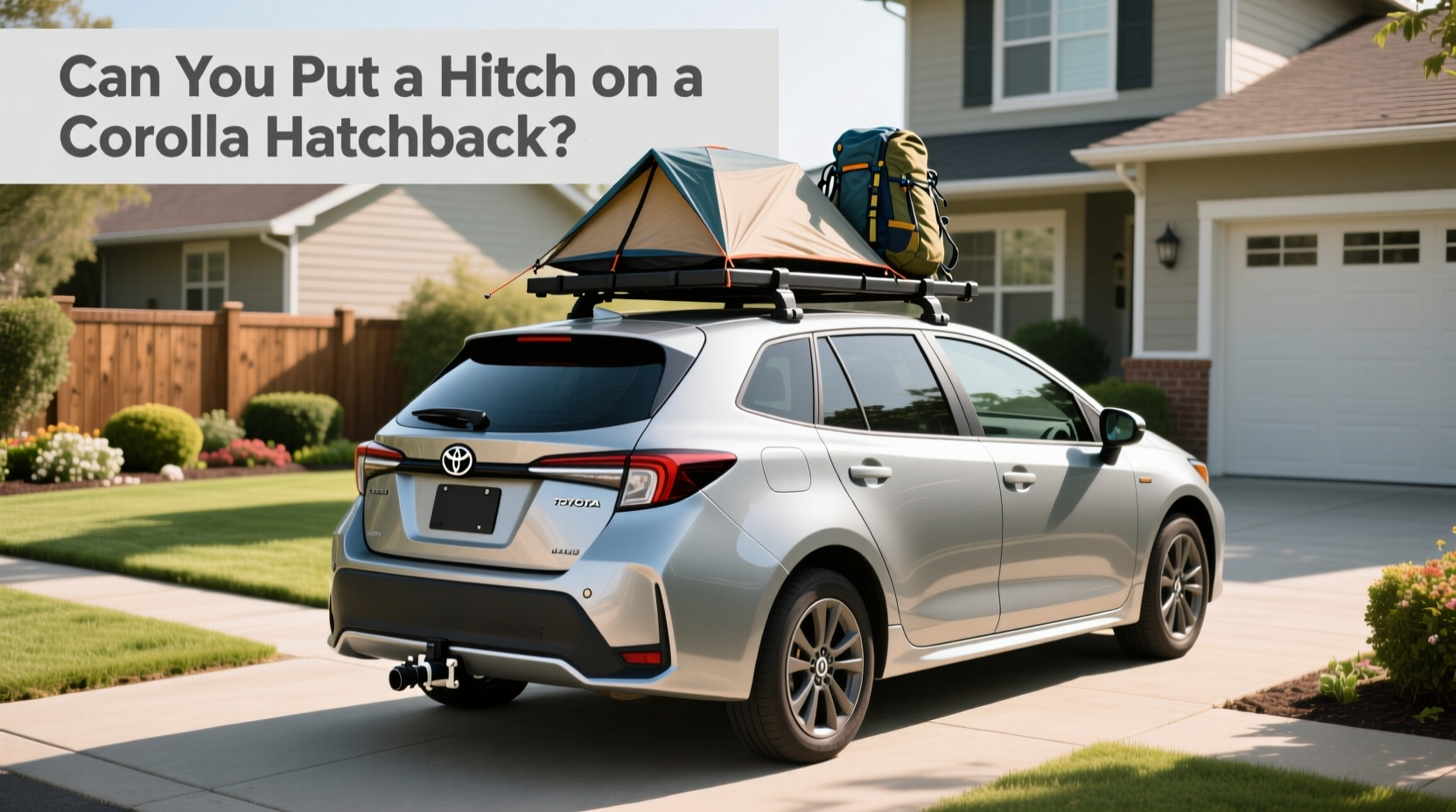
If you’re a typical user, you don’t need to overthink this. For most Corolla hatchback owners adding gear transport, a roof rack is simpler and more versatile than a hitch—especially if you're carrying bikes, cargo boxes, or outdoor equipment. How to choose a roof rack or hitch comes down to three real-world factors: what you’re carrying, how often, and whether your car has factory mounting points or requires aftermarket bars. Over the past year, more owners have opted for roof-mounted systems due to easier installation and no impact on rear aesthetics. A Class I hitch like the Curt #C11567 1 fits 2019–2026 models (excluding center exhaust), but only if you need to tow light trailers or use a hitch-mounted bike rack. If you’re a typical user, you don’t need to overthink this.
About Roof Racks and Hitches for the Corolla Hatchback
The Toyota Corolla hatchback supports both roof racks and trailer hitches, but they serve different purposes and require different installations. Roof racks attach to the top of the vehicle via fixed mounting points or door-frame clamps, enabling secure transport of bulky items like kayaks, skis, or rooftop cargo boxes. Hitches, meanwhile, bolt to the rear frame and provide a receiver for bike racks, cargo carriers, or small trailers. While neither is standard on all trims, both are widely available as aftermarket add-ons.
Recent updates in accessory availability and modular mounting systems have made it easier to customize the Corolla hatchback for adventure use. This piece isn’t for keyword collectors. It’s for people who will actually use the product.
Why Roof Racks and Hitches Are Gaining Popularity
Lately, compact hatchbacks like the Corolla have become go-to choices for urban adventurers who want fuel efficiency without sacrificing utility. As more drivers use their daily cars for weekend trips, demand for flexible cargo solutions has risen. Roof racks offer high capacity without taking up interior space. Hitches appeal to those who prioritize ground-level loading or plan to tow small trailers.
Manufacturers like Thule, Yakima, and Rhino-Rack now offer trim-specific kits that install quickly and remove cleanly. Similarly, Class I hitches from brands like Curt and Draw-Tite are engineered to match the Corolla’s chassis design, minimizing modification. The trend reflects a broader shift: people expect their commuter cars to handle more than just groceries.
Types and Variants
Roof Rack Systems
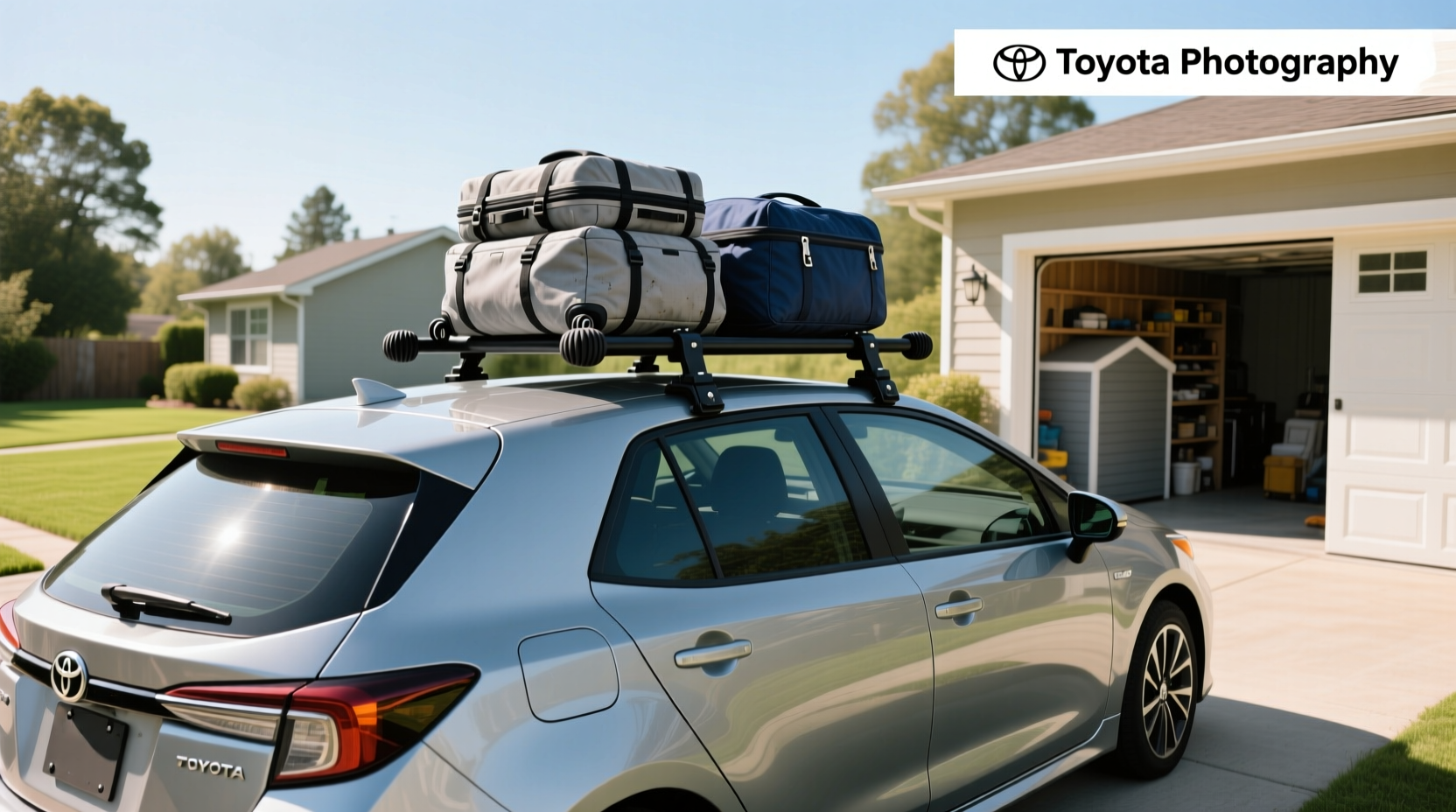
- Fixed-Point Mounts: Use factory-installed side rails. Most secure and aerodynamic.
- Clamp-On Bars: Attach to door frames. No drilling, but may leave marks over time.
- Gutter-Mounted: Rare on modern Corollas; not recommended unless verified for your model.
Hitch Types
- Class I (1-1/4” receiver): Rated for up to 2,000 lbs towing and 200 lbs tongue weight. Fits Corolla hatchbacks; used for bike racks or small cargo trays.
- Draw-Bar Style: Requires separate ball mount and pin. Adds flexibility but more parts to manage.
If you’re a typical user, you don’t need to overthink this. Most won’t exceed the limits of a Class I hitch, and many find roof racks sufficient for their needs.
Key Features and Specifications to Evaluate
When comparing options, focus on these measurable traits:
- Weight Capacity: Roof racks typically support 165–220 lbs dynamic load. Hitches handle higher vertical loads but are limited by vehicle GVWR.
- Compatibility: Confirm fit with your model year and trim. Some 2023+ Corollas have center exhaust, which blocks hitch installation.
- Aerodynamics: Roof systems increase wind resistance; expect 5–10% drop in fuel economy at highway speeds.
- Clearance: Hitch-mounted carriers extend 24–36 inches behind bumper. Check garage fit and backup camera visibility.
For what to look for in a Corolla-compatible system, prioritize tested fit over price. A poorly matched rack can rattle, leak, or fail under stress.
Pros and Cons
| System | Pros | Cons |
|---|---|---|
| Roof Rack | Versatile, works with boxes/bikes/kayaks; keeps hitch free; easy to remove | Harder to load heavy items; affects fuel economy; clearance issues in garages |
| Hitch + Carrier | Easier loading/unloading; lower center of gravity; good for frequent use | Takes up receiver space; visible when not in use; potential exhaust interference |
If you’re a typical user, you don’t need to overthink this. The best choice aligns with your actual usage—not hypothetical scenarios.
How to Choose: Buying Guide
Step-by-Step Checklist
- Determine primary use: bikes, cargo box, kayak, or towing?
- Check if your Corolla has factory roof rails.
- Verify model year and exhaust layout (center vs. side).
- Select compatible type: fixed-point, clamp-on, or hitch.
- Confirm weight of gear and compare to rack/hitch ratings.
- Review installation method: DIY or professional?
- Test fit with existing accessories (e.g., trunk opening, parking sensors).
Decision Flow
- Need to carry >2 bikes or a cargo box? → Roof rack.
- Carry one or two lightweight bikes occasionally? → Hitch-mounted rack.
- No factory rails and avoid drilling? → Clamp-on bars.
- Want to keep rear clean and preserve resale? → Roof system.
- Plan to tow a small trailer? → Verify hitch compatibility first.
Recommendations by Scenario
- Urban commuter with weekend hikes: Yakima SkyLine bars with cage-style bike carrier.
- Frequent road trips with family gear: Thule Motion XT roof box + foot pack.
- Bike-heavy household: Curt hitch + Swagman dual bike tray.
Red Flags / What to Avoid
- Universal-fit hitches that claim ‘no drill’ but require frame modification.
- Racks with vague weight limits or no independent testing data.
- Used systems with worn rubber seals or stripped mounting hardware.
- Products requiring permanent modifications to body panels.
- Any listing that doesn’t specify model-year compatibility.
If you’re a typical user, you don’t need to overthink this. Stick to known-fit systems from reputable suppliers.
Price & Market Insights
Prices vary significantly by brand, region, and retailer. Roof rack kits range from $250 for basic clamp-on sets to $600+ for full Thule or Yakima systems with aerodynamic bars. Hitch assemblies start around $180 (Curt #C11567) and reach $350 installed at dealerships. Cargo carriers and bike trays add $150–$400 depending on features.
Costs may vary by region/model/seller. Always check manufacturer specs and verify return policies before ordering. Some online vendors offer fitment guarantees only if installation is done through certified partners.
Top-Seller & Competitive Analysis
Based on customer volume and fit reliability, these configurations dominate the market:
| Product | Type | Fit Range | Notable Feature |
|---|---|---|---|
| Yakima SkyLine Towers + CoreBars | Roof Rack | 2019–2026 Corolla Hatchback | Steel crossbars, tool-free tensioning |
| Thule AeroBlade Edge | Roof Rack | 2019–2026 (with adapter) | Low noise, sleek profile |
| Curt Class I Hitch #C11567 | Trailer Hitch | 2019–2026 (excl. center exhaust) | Bolt-on, no frame drilling |
| Rhino-Rack Vortex GT | Roof Rack | 2019–2026 | Aluminum bars, integrated locks |
All listed products are confirmed compatible through independent retailers like etrailer 2, though final fit depends on exact vehicle configuration.
Customer Feedback Synthesis
Analysis of recent owner discussions reveals consistent themes:
- High Praise: Easy installation of bolt-on hitches; confidence in Thule/Yakima durability; appreciation for removable systems.
- Common Complaints: Clamp-on racks shifting during highway driving; difficulty loading heavy roof boxes alone; reduced MPG with roof cargo.
- Surprising Insight: Many users report better real-world clearance with roof boxes than expected, thanks to the hatchback’s low profile.
If you’re a typical user, you don’t need to overthink this. Real-world performance matters more than theoretical specs.
Sourcing & Supplier Tips
Purchase from suppliers that provide:
- Year-specific fit guides.
- Clear installation instructions.
- Warranty coverage (minimum 3 years).
- Return policy for incompatible items.
etrailer.com and the manufacturer direct sites (e.g., yakima.com) are reliable sources with detailed compatibility filters. Avoid third-party marketplaces where fit descriptions are vague or copied across models.
Maintenance, Safety & Legal Considerations
Maintain both systems with regular checks:
- Inspect roof rack bolts and seals every 6 months for leaks or looseness.
- Grease hitch ball and receiver annually if used frequently.
- Remove roof racks when not in use to reduce wear and improve fuel economy.
- Secure cargo properly—shifting loads cause most failures.
Legality varies by jurisdiction. While roof height and rear visibility limits exist, enforcement is generally complaint-driven. To stay compliant:
- Ensure cargo doesn’t block lights or license plate.
- Keep rooftop loads within 4 feet above roofline.
- Confirm local rules on trailer towing requirements (brakes, lighting).
Verify local regulations through official transportation department websites.
Conclusion
If you need maximum versatility and already have factory roof rails, choose a quality roof rack system. If you prefer easy access and minimal roof clutter, and your model lacks center exhaust, a Class I hitch is a solid option. If you’re a typical user, you don’t need to overthink this. Focus on what you’ll actually carry, how often, and whether installation complexity fits your comfort level.
Everything You Need to Know
Can you put a roof rack on a Toyota Corolla hatchback? ✅+
Yes, most Toyota Corolla hatchbacks from 2019–2026 support roof racks. Models with factory side rails accept direct-mount systems from Thule, Yakima, or Rhino-Rack. If your car lacks rails, clamp-on bars are available. Installation is typically DIY with basic tools. Check manufacturer specs to confirm compatibility with your exact trim and year.
Can you install a hitch on a Corolla hatchback? ⚙️+
Yes, a Class I trailer hitch like the Curt #C11567 fits 2019–2026 Toyota Corolla hatchbacks—provided the vehicle does not have a center exhaust. Installation usually involves bolting to the frame without drilling. It supports hitch-mounted bike racks or cargo carriers, with a max tongue weight of 200 lbs. Verify fit using your VIN before purchasing.
Which is better: roof rack or hitch for bikes? 🚴+
It depends on your use case. A roof rack works well for lighter bikes and keeps the hitch free for other uses. However, loading bikes overhead can be difficult. A hitch-mounted rack is easier to load, lowers the center of gravity, and is better for heavier e-bikes. If you carry bikes frequently, a hitch may be more practical. If you value clean aesthetics and occasional use, go roof-mounted.
Does a roof rack affect fuel economy? ⛽+
Yes, a roof rack increases aerodynamic drag, especially with crossbars exposed. Expect a 5–10% reduction in fuel efficiency at highway speeds. Removing the rack when not in use restores normal MPG. Adding a fairing or using aerodynamic bars can reduce drag slightly.
Can I tow with a hitch on my Corolla hatchback? 🚚+
The Corolla hatchback is not designed for heavy towing. With a Class I hitch, you can tow up to 2,000 lbs, but only if your vehicle’s engine, transmission, and cooling system are rated for it. Most base models lack a tow package. Consult your owner’s manual before attempting to tow any trailer. Even within limits, frequent towing stresses components not built for sustained load.




 浙公网安备
33010002000092号
 浙B2-20120091-4