
If you're deciding between used or new Corolla hatchbacks, focus on the 2019–present E210 generation for modern safety, driving dynamics, and long-term reliability. Earlier models like the 2003–2008 E120 exist but lack standard driver aids and structural rigidity now considered baseline. When evaluating older hatchbacks, what to look for in a Toyota Corolla hatchback includes frame integrity, accident history, and whether it was maintained under harsh conditions. If you’re a typical user, you don’t need to overthink this: unless budget forces an older model, the current version delivers significantly better daily usability and ownership confidence.
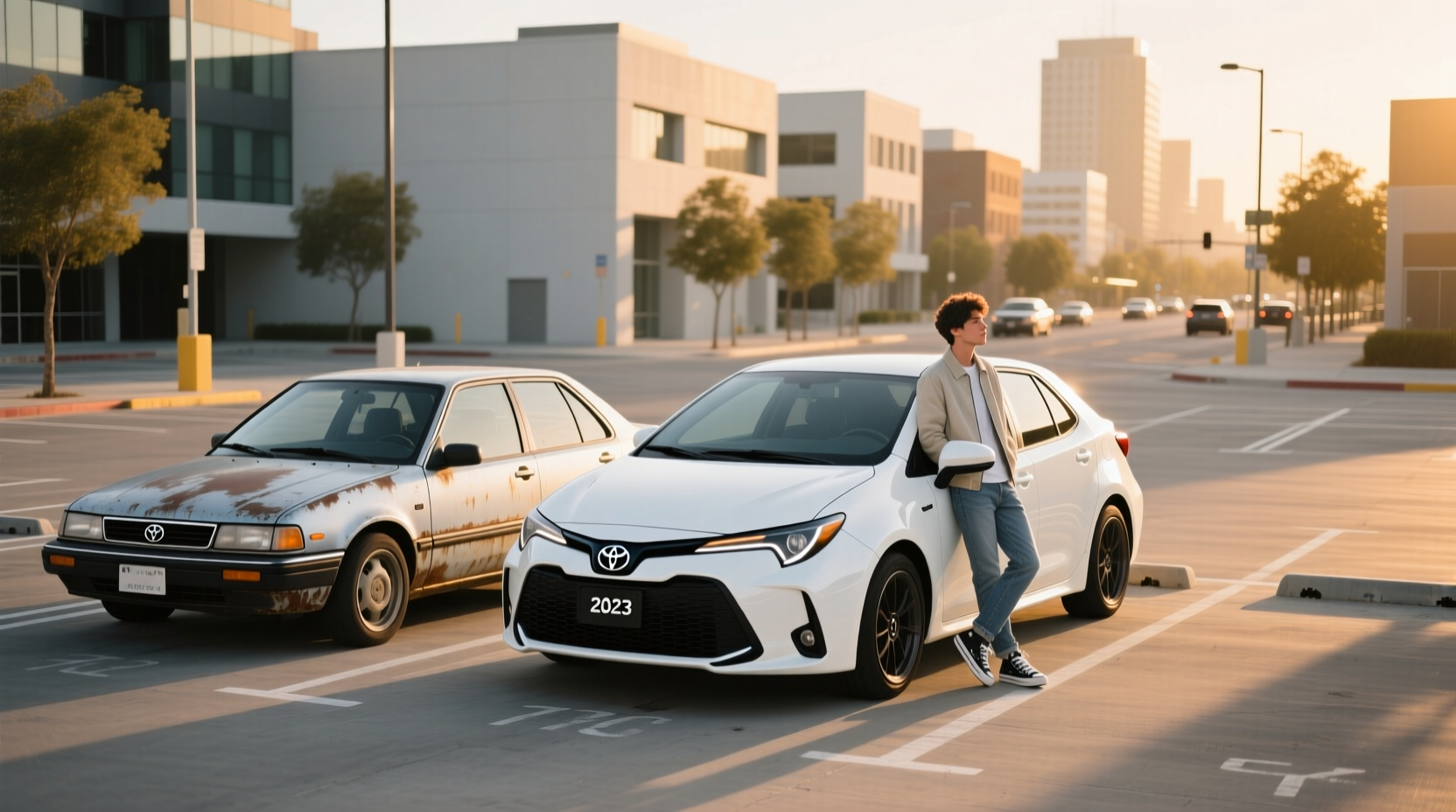
About Corolla Hatchback Years
The Toyota Corolla has offered hatchback variants intermittently since the 1970s, though availability varied by region and naming convention. In North America, dedicated Corolla hatchbacks appeared in distinct waves: from 1975–1988 (third through fifth generations), then again from 2003–2008 as part of the E120 series 1. During some periods, such as the 2010s, Toyota sold a similar vehicle under the Auris name outside North America.
The current Corolla Hatchback returned officially for the 2019 model year (E210 generation), marking a full revival of the nameplate in North American markets. Built on Toyota’s TNGA-C platform, this version shares engineering with the Prius and C-HR, offering improved ride quality, handling, and crashworthiness compared to predecessors.
Why Corolla Hatchback is Gaining Popularity
Lately, demand for compact hatchbacks has shifted toward vehicles that balance efficiency, cargo flexibility, and tech integration—needs the current Corolla Hatchback meets without premium pricing. Over the past year, rising fuel costs and urban congestion have made smaller, maneuverable cars more appealing, especially among city dwellers and first-time buyers.
This isn’t just about size. The change signal lies in how Toyota redefined the segment: where earlier hatchbacks were economy-focused compromises, the 2019+ model competes directly on refinement. Standard Toyota Safety Sense 2.0, available all-wheel drive, and a responsive 2.0L engine make it viable even against sportier rivals. If you’re a typical user, you don’t need to overthink this: functionality no longer comes at the expense of comfort or capability.
Types and Variants
The Corolla Hatchback has been offered across four major production eras globally, though only select versions reached North America:
E120 Generation (2003–2008)
- Pros: Simple mechanics, low purchase price, easy repairs
- Cons: Outdated safety features, limited cargo space, no standard stability control
Often sold alongside the Toyota Matrix—a mechanically identical vehicle with different styling—this generation appeals mainly to budget buyers or enthusiasts seeking basic transportation.
E210 Generation (2019–Present)
- Pros: Modern chassis, standard advanced safety suite, available AWD, strong resale value
- Cons: Firmer ride than sedan variant, base engine lacks punch in hilly terrain
This is the only generation currently in production. Offered in SE, XSE, and hybrid trims in some markets, it represents Toyota’s updated approach to compact mobility.
Key Features and Specifications to Evaluate
When comparing Corolla hatchback model years, prioritize these factors based on your use case:
Safety Systems
When it’s worth caring about: If you frequently carry passengers, drive in mixed traffic, or want reduced insurance premiums.
When you don’t need to overthink it: For occasional local use with short trips and minimal risk exposure.
The 2019+ models include Toyota Safety Sense 2.0 (TSS-2): pre-collision system with pedestrian detection, lane departure alert, adaptive cruise control, and automatic high beams. Earlier models lack integrated radar-based systems entirely.
Platform & Ride Quality
When it’s worth caring about: On highways, rough roads, or if you value steering precision.
When you don’t need to overthink it: For low-speed commuting on well-maintained streets.
The TNGA-C platform improves torsional stiffness by over 60% compared to prior architectures. This translates to less noise, better cornering, and improved crash energy management. If you’re a typical user, you don’t need to overthink this: newer doesn’t just mean updated—it means structurally superior.
Powertrain Options
When it’s worth caring about: In mountainous regions or when towing light trailers.
When you don’t need to overthink it: For flat-area driving with light loads.
The current 2.0L Dynamic Force engine produces 169 hp—adequate for most scenarios. However, drivers expecting brisk acceleration may find it merely sufficient. No turbocharged option exists, unlike competitors like the Mazda3 Turbo.
Pros and Cons
Advantages of Choosing a Corolla Hatchback
- ✅ Proven long-term reliability across generations
- ✅ Lower maintenance costs than most rivals
- ✅ Strong residual values, especially for 2019+ models
- ✅ Efficient fuel economy (28–36 mpg combined depending on year)
- ✅ Spacious rear seats and usable cargo area despite compact footprint
Drawbacks to Consider
- ⚠️ Base infotainment lacks wireless connectivity (wired only)
- ⚠️ Interior materials are functional but not premium
- ⚠️ Limited performance tuning options for enthusiasts
- ⚠️ Some early 2019 units had software glitches in instrument cluster
- ⚠️ Hatch insulation is thinner than class leaders, increasing road noise
How to Choose the Right Corolla Hatchback Year
Selecting the right model year involves matching your priorities with generational strengths. Follow this checklist:
Step-by-Step Checklist
- Determine primary use: daily commuter, family runabout, or occasional driver?
- Set budget ceiling including taxes, registration, and potential repairs
- Identify non-negotiables: AWD, Apple CarPlay, safety suite?
- Check VIN history reports for accidents or title issues (especially for pre-2019 models)
- Verify service records—consistent oil changes matter more than mileage alone
- Test drive both older and newer models back-to-back to feel differences in NVH (noise, vibration, harshness)
Decision Flow
- If safety and tech are top priorities → 2019 or newer
- If budget limits you below $10,000 → Evaluate 2005–2008 E120, but inspect thoroughly
- If you want AWD → Only available starting 2020 model year
- If you prefer manual transmission → Available only on SE trim (2019–2022)
Recommendations by Scenario
- Urban commuter: 2020–2023 SE FWD – balanced feature set, good fuel economy
- Family secondary vehicle: 2021+ XSE with Safety Sense – extra comfort and protection
- Enthusiast driver: 2019–2022 SE manual – engaging shift feel and sport suspension
- Low-budget buyer: 2006–2008 E120 – verify timing belt replacement and rust condition
Red Flags / What to Avoid
- Avoid unexplained dashboard warning lights during test drive
- Steering pull or uneven tire wear suggests poor alignment history
- Cars with salvage titles or rebuilt engines—even if cheap
- Vehicles missing owner’s manuals or service documentation
- Dealers who refuse independent pre-purchase inspection

Price & Market Insights
Pricing varies significantly by model year, trim, region, and supply conditions. As of 2024, new Corolla Hatchbacks start around $24,000 MSRP for the SE trim and exceed $28,000 fully loaded. Used prices depend heavily on mileage and geographic location:
- 2019 models: $16,000–$20,000 (may vary by region/model/seller)
- 2020–2021: $18,000–$22,000 (AWD models command ~$1,500 premium)
- 2005–2008 E120: $4,000–$8,000 (subject to mechanical condition)
Market tightness post-pandemic inflated prices temporarily, but depreciation has normalized. Always check manufacturer specs and compare dealer quotes locally before committing.
Top-seller & Competitive Analysis
The Corolla Hatchback competes primarily with the Honda Civic Hatchback, Mazda3 Hatchback, and Volkswagen Golf (before its U.S. discontinuation). Below is a comparison of key attributes:
| Model | Safety Suite | Available AWD | Starting HP | Infotainment |
|---|---|---|---|---|
| Toyota Corolla Hatchback (2023) | TSS 3.0 | Yes | 169 | Wired Apple CarPlay/Android Auto |
| Honda Civic Hatchback (2023) | Honda Sensing | No | 158 | Wireless compatibility |
| Mazda3 Hatchback (2023) | i-Activsense | No | 155 | Wired only |
| Volkswagen Golf (2021 final) | IQ.DRIVE | Yes (4Motion) | 147–228 | Wireless options |
The Corolla stands out for offering AWD in its class—an increasingly rare feature. While rivals offer wireless smartphone integration earlier, Toyota’s safety tech is consistently rated among the best in segment.
Customer Feedback Synthesis
Analysis of owner forums, dealership reviews, and third-party surveys reveals consistent themes:
Most Frequent Praise
- Reliability beyond 150,000 miles with routine care
- Seat comfort for long drives
- Clarity of digital instrumentation (2020+)
- Fuel efficiency meeting or exceeding EPA estimates
- Dealer network accessibility for service
Common Complaints
- Base stereo system sounds thin at higher volumes
- No rain-sensing wipers even on top trims
- Limited voice command functionality
- Hatch opening requires two-handed operation in cold weather
- Small center console storage compartment
Sourcing & Supplier Tips
When sourcing a Corolla Hatchback, consider:
- Buying certified pre-owned (CPO) from Toyota dealerships for extended warranty coverage
- Using VIN decoders to confirm factory-installed options
- Checking regional climate impact—vehicles from snowy areas may have hidden corrosion
- Negotiating add-ons like floor liners or window tint rather than paying upfront
If possible, source from private sellers with full maintenance logs. Dealers may mark up prices, but offer financing convenience and return windows. Always verify retailer return policy before signing.
Maintenance, Safety & Legal Considerations
Routine maintenance intervals are standardized across Toyota dealers: oil changes every 5,000–10,000 miles depending on driving conditions. The 2.0L engine uses a timing chain (not belt), eliminating periodic replacement costs.
Safety-wise, all 2019+ models earned Top Safety Pick ratings from the IIHS. Older models were never retested under modern protocols and should not be assumed safe by today’s benchmarks.
To confirm compliance with local regulations (e.g., emissions testing, modifications), check official state DMV guidelines or consult a licensed inspector. Modifications affecting lighting or emissions may not be legal in certain jurisdictions.
Conclusion
If you need dependable daily transportation with low ownership costs and modern safety, choose the 2019 or newer Corolla Hatchback. If budget restricts you to older platforms, prepare for trade-offs in crash protection and convenience. This piece isn’t for keyword collectors. It’s for people who will actually use the product.
Everything You Need to Know
Toyota has produced Corolla hatchbacks in multiple generations. In North America, notable runs include 1975–1988, 2003–2008 (E120), and the current model starting with the 2019 model year (E210). The latest design marks a full return after an absence and is built on the modern TNGA platform.
Yes, particularly the 2019 and newer models. These benefit from Toyota’s updated engineering, robust powertrain, and proven electronics. Earlier models are mechanically simple but lack modern redundancy systems. Long-term reliability depends heavily on maintenance history regardless of year.
All-wheel drive became available starting with the 2020 model year on SE and XSE trims. It's designed for improved traction in wet or snowy conditions, not off-road use. Prior generations do not offer AWD.
The Toyota Matrix (2003–2008) shared its platform and mechanics with the E120 Corolla hatchback but featured different styling and marketing as a youth-oriented wagon. They are functionally equivalent in reliability and repair costs. The current Corolla Hatchback has no direct Matrix counterpart.
Manual transmissions were available on the SE trim from 2019 through 2022. As of 2023, Toyota discontinued the manual option for the hatchback in North America. If a stick shift is essential, consider the 2019–2022 used market.




 浙公网安备
33010002000092号
 浙B2-20120091-4