
If you’re shopping for a used compact hatchback with decent cargo space and predictable reliability, the Toyota Corolla iM may be worth considering. Over the past year, interest in this model has grown among urban drivers who want practicality without sacrificing style. How to choose a reliable used Corolla iM? Focus on three things: brake wear history, infotainment functionality, and unexplained starting issues. If you’re a typical user, you don’t need to overthink this. Most owners report long-term satisfaction, but a few face recurring electronic quirks that can disrupt daily use.
The Corolla iM, originally sold as the Scion iM before Toyota discontinued that brand, combines European-inspired handling with Toyota’s reputation for durability. It’s ideal for commuters needing a fuel-efficient car with hatchback versatility. However, it’s not immune to specific pain points—especially around the CVT transmission, USB ports, and premature brake degradation. When evaluating one, prioritize real-world usability over spec sheets. If you’re a typical user, you don’t need to overthink this.
About the Corolla iM
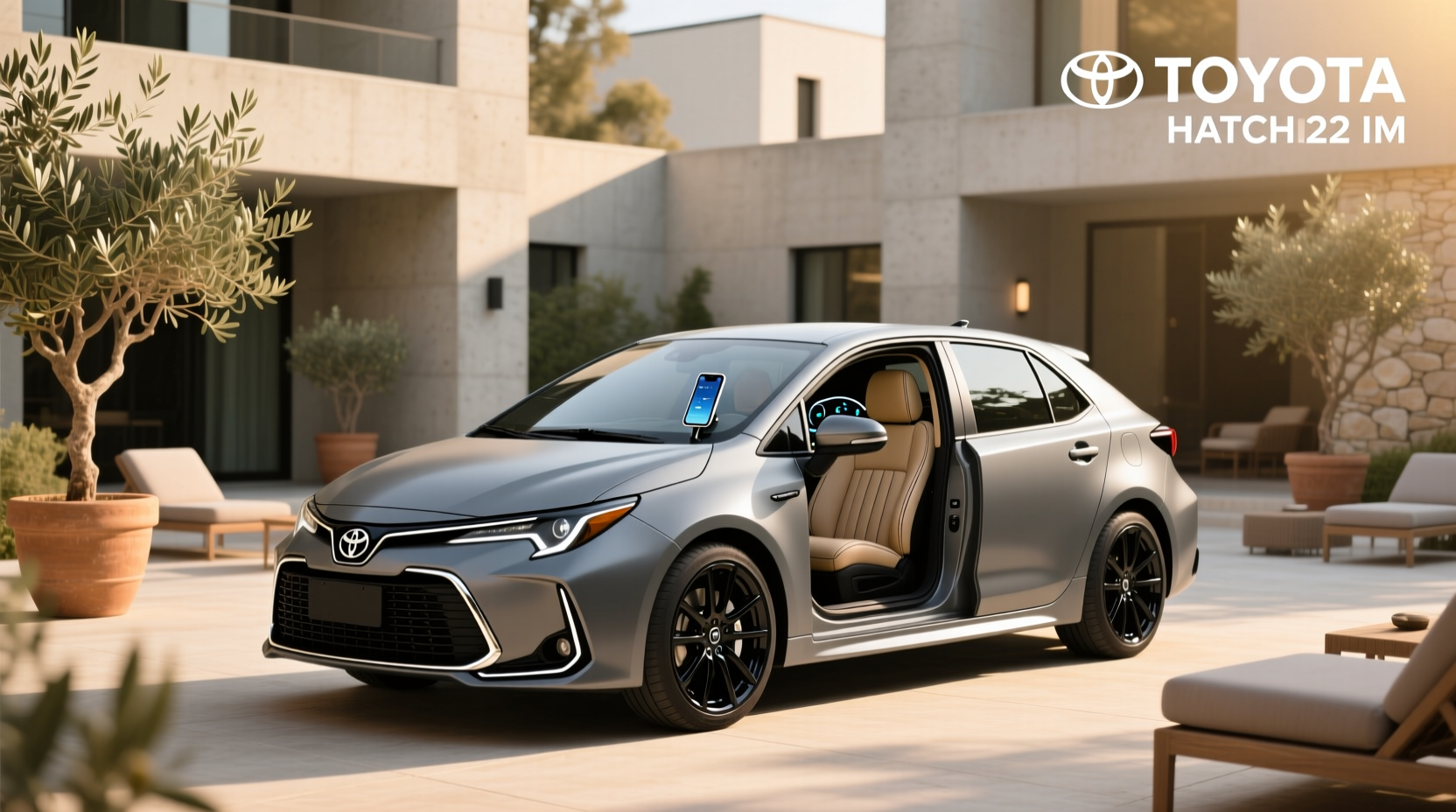
The Toyota Corolla iM (2016–2018) is a rebadged version of the Scion iM, which itself was developed from the international Toyota Auris. Positioned as a sportier, more stylish alternative to the standard Corolla sedan, the iM offers a five-door hatchback design, a 137-horsepower 1.8L four-cylinder engine, and front-wheel drive. It came paired exclusively with a continuously variable transmission (CVT), though Sport Mode adds simulated shift points for more responsive feel.
Despite its name, the Corolla iM shares more DNA with global Toyota models than the traditional Corolla lineup. Its suspension tuning delivers sharper cornering than most economy cars, earning praise for being “zippy” and engaging 1. At the same time, it avoids radical styling or performance claims, keeping ownership costs relatively low. This balance makes it appealing to buyers who want something slightly different without straying into higher-risk imports.
Why the Corolla iM Is Gaining Popularity
Lately, the Corolla iM has seen renewed attention in used car markets. While never a high-volume seller, its combination of hatchback utility, strong resale value, and relative rarity gives it niche appeal. Urban dwellers appreciate the compact footprint and easy parking, while young professionals like the modern interior layout and smartphone integration.
A subtle shift in consumer preference toward small hatchbacks—driven by rising fuel prices and tighter city parking—has also helped. Unlike SUVs, the iM doesn’t sacrifice efficiency or maneuverability. And because it’s built on Toyota’s proven platform, it benefits from widespread service availability and affordable parts. The change isn’t dramatic, but it’s noticeable: search volume and forum discussions about the iM have increased steadily since 2022.
If you’re a typical user, you don’t need to overthink this. The popularity bump reflects real usability, not hype. This piece isn’t for keyword collectors. It’s for people who will actually use the product.
Types and Variants
The Corolla iM was offered in two primary trims during its production run (2017–2018): L and LE. There were no major mechanical differences between them, but feature availability varied.
L Trim (Base Model)
- Pros: Lower purchase price, includes essential tech like Bluetooth and a rearview camera
- Cons: Manual air conditioning, fabric seat upgrades optional, no push-button start
LE Trim (Higher Spec)
- Pros: Push-button ignition, automatic climate control, upgraded Entune audio system, available navigation
- Cons: Slightly higher depreciation, some early units had glitchier infotainment due to added software layers
No performance variants or all-wheel-drive versions exist. All models use the same powertrain: a 1.8L inline-four mated to a CVT. Enthusiasts sometimes compare it to the later Corolla Hatchback (E210), but that car has a different chassis and optional 2.0L engine—don’t conflate the two.
Key Features and Specifications to Evaluate
When assessing a used Corolla iM, focus on these areas—not because they frequently fail, but because when they do, repairs aren’t always straightforward.
Infotainment System
The Entune 3.0 system supports Apple CarPlay and Android Auto (on 2018 models), but older units may lack updates. Check if the backup camera activates only in reverse. Some owners report it turning on randomly while driving—a safety concern 2.
When it’s worth caring about: If you rely on voice commands or frequently park in tight spaces.
When you don’t need to overthink it: If you mostly use a phone mount and auxiliary input.
Brake Wear
Multiple owners note brake pads lasting only 10,000–15,000 miles under normal city driving. Rotors may warp sooner than expected due to heat buildup.
When it’s worth caring about: If you live in a hilly area or do frequent stop-and-go commuting.
When you don’t need to overthink it: If you drive mostly highway miles and can budget for earlier-than-expected service.
Transmission Behavior
The CVT is tuned conservatively. Acceleration feels sluggish off the line, especially when merging. Sport Mode improves responsiveness slightly.
When it’s worth caring about: If you regularly drive on steep inclines or carry heavy loads.
When you don’t need to overthink it: If your commute is flat and traffic-paced.
Road Noise
Tire roar becomes prominent at speeds above 65 mph. Factory tires are not optimized for noise reduction.
When it’s worth caring about: If you take regular road trips or value cabin quietness.
When you don’t need to overthink it: If you replace tires with touring-grade rubber within the first year.
Electrical Gremlins
Intermittent starting issues—dash lights flickering, no crank—have been reported. Some link it to fuse box corrosion or battery sensor faults. No recall covers this broadly.
When it’s worth caring about: If the car sits unused for days or weeks.
When you don’t need to overthink it: If you drive it daily and keep the battery maintained.
Pros and Cons
| Aspect | Pros | Cons |
|---|---|---|
| Reliability | Generally durable powertrain; low incidence of engine failure | Spotty electronic reliability; sporadic no-start events |
| Fuel Economy | 30–35 mpg combined—efficient for daily driving | Real-world results drop significantly with aggressive acceleration |
| Cargo Space | Hatchback design offers 20+ cu ft behind rear seats; fold-flat rear seats expand capacity | No underfloor storage or cargo cover included |
| Handling | Precise steering and minimal body roll enhance confidence in curves | Firm ride quality transmits road imperfections |
| Maintenance Cost | Parts widely available; labor rates competitive | Dealership diagnostics often required for infotainment resets |
How to Choose a Used Corolla iM
Follow this checklist to avoid costly surprises and ensure you get a dependable example.
Step-by-Step Checklist
- Inspect maintenance records: Look for consistent oil changes and timing of brake jobs.
- Test the infotainment: Plug in a USB device, check camera activation, try Bluetooth pairing.
- Drive at highway speed: Listen for excessive wind or tire noise above 60 mph.
- Simulate cold start: If possible, restart after several hours off to test for hesitation.
- Scan for codes: Use an OBD2 reader to check for pending or stored error messages.
Decision Flow
- Need maximum cargo flexibility → Prioritize LE trim with rear seat folded
- Concerned about electronics → Avoid early 2017 models; prefer late 2018 with updated firmware
- Budget-constrained → Accept L trim but plan for brake replacement within 12 months
- Long-term holder → Confirm extended warranty eligibility or consider third-party coverage
Recommendations by Scenario
- First-time buyer: Choose a certified pre-owned (CPO) unit under 60k miles with remaining factory warranty.
- City commuter: Accept higher brake wear as trade-off for maneuverability and parking ease.
- Rural driver: Ensure the CVT holds steady on long inclines; test on hills if possible.
Red Flags / What to Avoid
- 🚗 Frequent unexplained no-start incidents—even if “fixed” temporarily
- 🔧 Aftermarket stereo installations that bypass original wiring (risk of short circuits)
- 📱 Persistent USB port issues, especially if devices charge erratically or overheat
- 📉 Seller refuses a pre-purchase inspection by an independent mechanic
If you’re a typical user, you don’t need to overthink this. A clean title, full service history, and functional tech outweigh minor cosmetic flaws.
Price & Market Insights
As of 2024, average asking prices range from $8,500 (high-mileage 2016 L trim) to $13,000 (low-mileage 2018 LE with CPO). Prices may vary by region/model/seller depending on local demand and climate conditions (e.g., salt-free areas command premiums).
To verify fair pricing:
- Compare listings on Cars.com and KBB
- Check auction data via NICB or NADA guides
- Confirm whether the vehicle qualifies for Toyota’s CPO program (adds ~$1,000 value)
Depreciation has stabilized, making now a reasonable entry point for budget-focused buyers.
Top-Seller & Competitive Analysis
The Corolla iM competes indirectly with the Honda Fit, Mazda3 Hatchback, and Hyundai Elantra GT. While sales volume was lower than rivals, owner loyalty remains strong.
| Model | Strengths | Weaknesses | iM Comparison |
|---|---|---|---|
| Honda Fit | Legendary interior flexibility (“Magic Seat”), peppy engine | CVT buzz under load, firm ride | iM offers better build quality and quieter cabin (except road noise) |
| Mazda3 Hatchback | Luxury-like interior, sharp handling | Premium price, smaller trunk | iM is cheaper but less refined overall |
| Hyundai Elantra GT | More standard features, longer warranty | Softer steering response, less engaging | iM wins on driving dynamics but lags in tech reliability |
If you’re a typical user, you don’t need to overthink this. The iM isn’t the most feature-rich, but it balances fun-to-drive with cost of ownership better than most.
Customer Feedback Synthesis
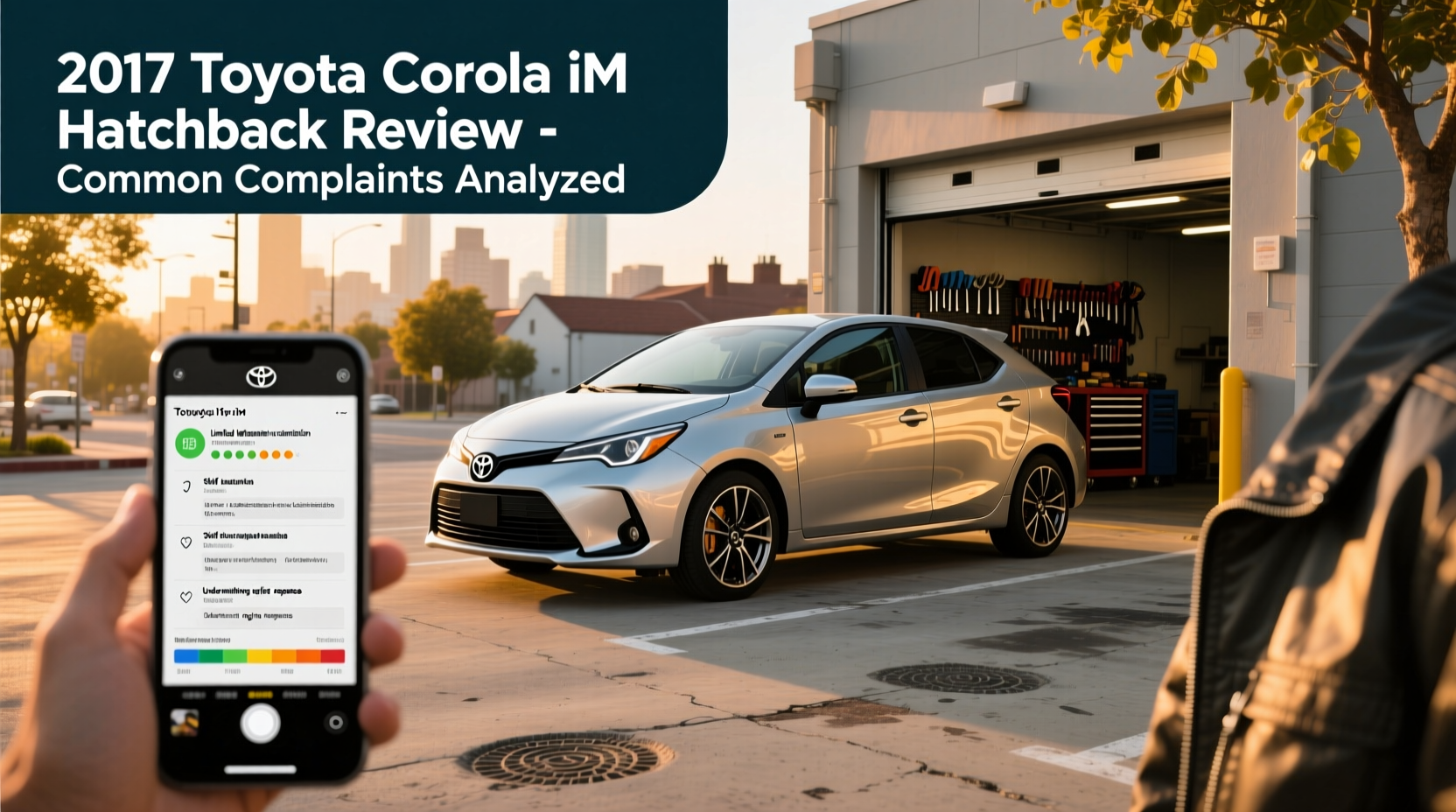
Analyzing hundreds of owner reviews from Cars.com, Consumer Reports, and Reddit reveals consistent patterns.
Most Frequent Praises ✅
- “Great handling for a daily driver”
- “Love the hatchback space—fits my bike with rear seats down”
- “Easy to maintain; parts are cheap and everywhere”
Most Common Complaints ❗
- “Backup camera turns on randomly while driving”
- “USB port started whistling and fried my phone charger”
- “Had to replace brakes twice in three years—city driving kills them”
- “Car wouldn’t start one morning—dealer said nothing was wrong”
Notably, satisfied owners tend to keep the car long-term, while dissatisfied ones cite isolated but disruptive issues—mostly electronic—that erode trust despite mechanical soundness.
Sourcing & Supplier Tips
When sourcing a used Corolla iM:
- Prioritize private sellers who can provide full maintenance logs
- Consider CPO models from Toyota dealerships—they include multi-point inspections and limited warranties
- Avoid salvage-title vehicles, even if repaired; frame integrity cannot be fully verified
- Use Toyota’s VIN lookup tool to confirm original equipment and recall completion
If you’re a typical user, you don’t need to overthink this. A well-documented history matters more than low mileage alone.
Maintenance, Safety & Legal Considerations
The Corolla iM comes with standard safety features for its era: ABS, stability control, multiple airbags, and a rearview camera. It earned top scores in IIHS crash tests when tested under its Scion iM designation.
For maintenance:
- Replace brake pads every 15,000–20,000 miles in city use
- Inspect EVAP system if check engine light appears after 90k miles
- Service CVT fluid every 60,000 miles (often overlooked)
No known legal restrictions apply to ownership or import. To verify compliance:
- Check manufacturer specs for emissions certification in your state
- Confirm local regulations regarding aftermarket modifications
- Verify retailer return policy if buying online
Conclusion
If you need a compact, efficient hatchback with above-average driving engagement, the Corolla iM is a sensible choice—provided you inspect for known electronic quirks and brake wear. If you’re prioritizing tech flawlessness or ultra-quiet cruising, look elsewhere. But if you’re a typical user, you don’t need to overthink this. For most people, the Corolla iM delivers exactly what it promises: honest transportation with a touch of flair.
Everything You Need to Know
The most frequently reported issues include intermittent starting problems, backup camera malfunctions, USB port failures (including whistling noises and device damage), premature brake wear (as early as 10,000 miles), and CVT-related hesitation during acceleration. While not universal, these should be checked during a test drive or inspection.
Yes, generally. The engine and drivetrain are durable and align with Toyota’s reputation for longevity. However, electronic subsystems—particularly infotainment and sensors—show more variability. With proper maintenance and attention to known weak points, many owners report trouble-free ownership beyond 150,000 miles.
The iM offers a hatchback body style with improved cargo flexibility, sportier suspension tuning, and slightly more premium interior materials. Mechanically, both share the same 1.8L engine and CVT, but the iM handles better due to its lower center of gravity and wider stance. Fuel economy is nearly identical. Choose the iM for versatility and driving enjoyment; the sedan for simplicity and potentially lower repair frequency.
Early 2017 models (built before mid-2016) appear more prone to infotainment glitches and unexplained electrical faults. Late 2018 models benefit from minor software updates and improved QC. If choosing between similar-condition vehicles, opt for a 2018 LE trim with documented service history. There are no major mechanical differences across the three model years.
The CVT can be replaced, either with a remanufactured unit or a dealer-reconditioned one, though it's a costly repair ($3,000+). No official upgrade path exists, and aftermarket performance CVTs are not available for this model. Preventative care—like regular fluid changes and avoiding prolonged high-RPM operation—is the best strategy to extend its life.




 浙公网安备
33010002000092号
 浙B2-20120091-4