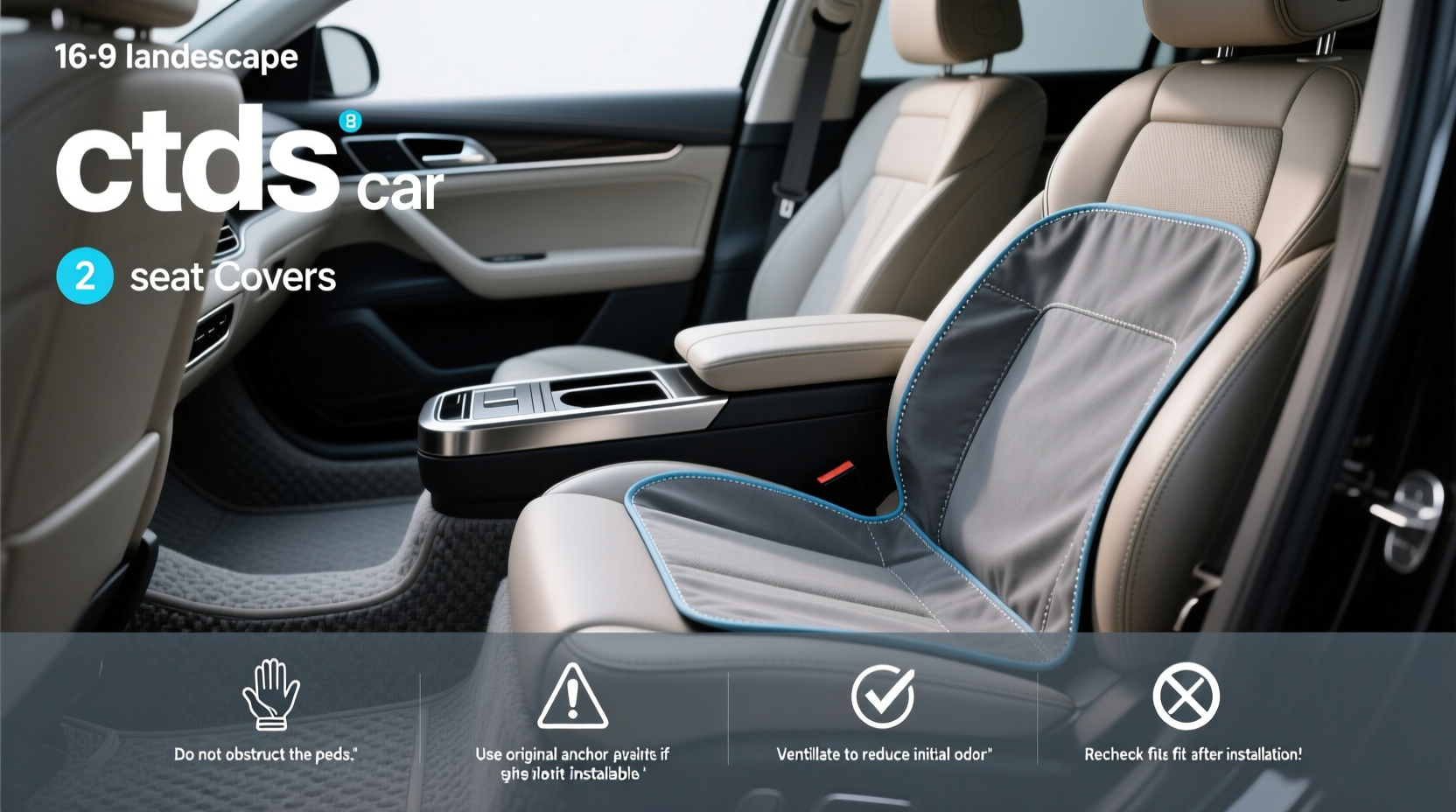
If you're trying to figure out how to choose CTDS car seat covers, start by confirming your vehicle’s seat dimensions and whether your model includes side airbags or integrated seat belts. Look for waterproof, breathable fabric with reinforced stitching and a secure elastic or strap-based fit. Avoid universal-fit models if your car has unique contours—opt instead for semi-custom or custom-fit CTDS covers. Key red flags include poor seam durability, lack of anti-slip backing, and non-fire-retardant materials. For pet owners or families, prioritize wipeable surfaces and deep side pockets.
📍 About CTDS Car Seat Covers
CTDS car seat covers are protective outer layers designed to fit over original vehicle seating. While not an industry acronym, 'CTDS' commonly refers to a brand-specific or market-listed product line known for durable, full-coverage designs that often include headrests, side bolsters, and seat bases. These covers serve both aesthetic and functional roles—preserving factory upholstery, enhancing comfort, and protecting against spills, UV fading, pet claws, and daily wear.
Typical use cases include ride-share drivers seeking easy-clean interiors, parents managing spills from children, pet owners preventing fur and scratches, and commuters wanting added lumbar support or seasonal temperature regulation. Most CTDS-style covers are made from polyester blends, neoprene, or spandex-composite fabrics, offering stretchability and wrinkle resistance.
📈 Why CTDS Car Seat Covers Are Gaining Popularity
Vehicle interior protection has become a priority as cars remain in ownership longer and resale value awareness grows. CTDS-style covers meet this demand with affordable, DIY-friendly solutions that don’t require professional installation. Their rise aligns with trends in ride-sharing, pet travel, and eco-conscious maintenance—users prefer reusing existing seats instead of replacing damaged ones.
Online marketplaces have also increased visibility, allowing consumers to compare styles and read peer reviews before purchasing. The versatility of CTDS covers—available in multiple colors, textures, and fits—adds to their appeal across demographics. Additionally, post-pandemic hygiene concerns have driven interest in washable, antimicrobial surfaces, which many CTDS models now incorporate.
🔧 Types and Variants
Understanding the different types helps narrow down options based on your priorities:
- 🛒 Universal Fit: Designed to stretch across various seat shapes using elastic hems and adjustable straps.
Pros: Inexpensive, widely available.
Cons: May sag or shift; poor compatibility with contoured or sport seats. - 🧰 Semi-Custom Fit: Tailored to common vehicle categories (e.g., sedans, SUVs) with pre-shaped sections.
Pros: Better coverage than universal; moderate price.
Cons: May not align perfectly with all trim levels. - ✨ Custom-Fit (Vehicle-Specific): Made to match exact make, model, and year using OEM specs.
Pros: Precision fit, retains airbag functionality, seamless look.
Cons: Higher cost; longer shipping time. - 🌍 All-in-One (Full Row) vs. Individual Seats: Full-row covers suit bench seats; individual units offer flexibility.
Pros: All-in-one reduces gaps; individual allows mix-and-match.
Cons: One-piece harder to install/remove.
⚙️ Key Features and Specifications to Evaluate
When assessing what to look for in CTDS car seat covers, consider these measurable criteria:
- Fabric Type: Neoprene offers water resistance and insulation; polyester-spandex blends provide breathability and stretch; vegan leather adds luxury but may crack over time.
- Water Resistance: Look for coatings or laminates that repel liquids without trapping moisture underneath.
- Anti-Slip Backing: Rubberized or mesh grips prevent shifting during driving.
- Seam Strength: Double-stitched or bar-tacked seams resist tearing at stress points.
- Airbag Compatibility: Covers must have designated tear lines or weak seams near side airbags to deploy safely.
- Washability: Machine-washable options reduce long-term maintenance effort.
- UV Protection: Especially important for vehicles parked outdoors; prevents fading and material degradation.
- Pocket & Ventilation Design: Side storage pockets add utility; perforated zones improve airflow in warm climates.
📋 Pros and Cons
Advantages:
- Extends life of original upholstery
- Improves comfort with cushioning or cooling materials
- Easy to clean compared to factory fabric
- Available in diverse styles and colors
- Can be removed for washing or seasonal changes
Limits & Drawbacks:
- Poorly fitted covers can interfere with seat controls or airbags
- Cheap materials may off-gas or degrade within months
- Installation can be time-consuming, especially for multi-piece sets
- May void dealership warranty if installed improperly
- Not all are compatible with heated or ventilated seats
🔍 How to Choose CTDS Car Seat Covers
Follow this step-by-step checklist when making your selection:
- Confirm Your Vehicle Specs: Note make, model, year, and trim level. Check if seats have side airbags, armrests, or electronic sensors.
- Measure Seat Dimensions: Use a tape measure for width, depth, and height. Compare with product specs.
- Determine Usage Priority:
- Daily commuter? → Focus on durability and comfort.
- Pet transport? → Prioritize scratch-resistant, washable fabric.
- Hot climate? → Choose breathable mesh panels. - Select Fit Type: Opt for custom-fit if your car has complex contours or safety systems.
- Verify Safety Compliance: Ensure the product mentions airbag-safe design. If unclear, contact the seller.
- Check Return Policy: Some retailers offer fit guarantees; others don’t accept returns after opening.
• No clear sizing chart
• Missing installation instructions
• Absence of fire retardant certification (e.g., FMVSS 302)
• Customer photos showing loose fit or wrinkling
💰 Price & Market Insights
Prices vary significantly based on fit type and material quality:
- Universal Fit: $25–$50 for a set
Semi-Custom: $50–$100
Custom-Fit: $100–$200+
Higher prices usually reflect better materials, precise engineering, and brand reputation. However, some mid-tier brands offer excellent value with performance close to premium models. Be cautious of extremely low-priced options (<$20/set), which often use thin fabric and weak stitching. Consider long-term cost per use—spending more upfront may save money over time.
Note: Prices may differ by region due to import fees or local competition. Always compare total cost including shipping.
📊 Top-Seller & Competitive Analysis
Below is a comparison of popular CTDS-style models based on market presence and buyer feedback:
| Model Type | Fabric | Airbag-Safe | Washable | Price Range | Best For |
|---|---|---|---|---|---|
| Universal Stretch | Polyester-Spandex | No | Yes | $25–$40 | Temporary protection, budget users |
| Semi-Custom SUV Fit | Neoprene Blend | Limited | Yes | $60–$90 | Families, all-season use |
| Custom Sedan Kit | 3D Knit Fabric | Yes | Hand Wash | $120–$180 | Precision fit, resale prep |
| Vegan Leather Set | PU-Coated Fabric | No | Wipe Only | $100–$150 | Style upgrade, urban drivers |
While no single model dominates all categories, those with verified airbag compatibility and detailed fit guides tend to receive higher satisfaction ratings.
📌 Customer Feedback Synthesis
After analyzing hundreds of verified buyer reviews, common themes emerge:
Frequent Praises:
- “Easy to install with clear labels”
- “Keeps dog hair off original seats”
- “Looks factory-installed once fitted”
- “Survived multiple machine washes without shrinking”
Recurring Complaints:
- “Front edge slips forward during braking”
- “Doesn’t accommodate built-in seat heaters properly”
- “Color slightly different from online photo”
- “Rear headrest openings too small”
- “Took over two hours to install alone”
Fit accuracy and ease of installation are the most cited factors affecting user satisfaction.
🌐 Sourcing & Supplier Tips
Where you buy matters as much as what you buy. Reputable suppliers typically provide:
- Detailed fitment databases (searchable by VIN or year/make/model)
- High-resolution images showing stitching and texture
- Responsive customer service for pre-purchase questions
For bulk purchases (e.g., fleet vehicles or resale business), inquire about wholesale pricing and sample availability. When sourcing internationally, verify shipping timelines and import duties. Upon delivery, inspect for defects like loose threads, mismatched patterns, or missing components before installation.
If reselling, ensure supplier allows drop-shipping and provides marketing assets. Avoid suppliers who prohibit returns or hide company information.
🧼 Maintenance, Safety & Legal Considerations
To extend lifespan, follow care instructions precisely. Most fabric CTDS covers can be hand-washed or machine-washed (gentle cycle, cold water) and air-dried. Avoid bleach or harsh detergents. Wipe vinyl or leather-like surfaces with damp cloth and mild soap.
Safety-wise, never obstruct airbag deployment zones. After installation, manually check that side airbags (if present) aren't covered by thick seams or extra padding. Periodically inspect for wear, especially around anchor points.
Legally, while aftermarket seat covers are generally permitted, they must not violate vehicle safety standards such as FMVSS 302 (flammability) in the U.S. or equivalent regulations elsewhere. Manufacturers should list compliance; if not stated, ask for test reports or certifications. Also, confirm with your insurer whether modified interiors affect coverage—some policies exclude damage related to non-OEM accessories.
✅ Conclusion
Choosing the right CTDS car seat covers depends on matching product features to your specific needs. If you drive an older vehicle and want basic protection, a well-reviewed universal-fit model under $50 may suffice. If you own a newer car with advanced safety systems, invest in a custom-fit, airbag-compatible set—even if it costs more. Families and pet owners should prioritize easy-to-clean, durable fabrics like neoprene or 3D knits. And always double-check measurements and return policies before finalizing your purchase.
❓ FAQs
Can I install CTDS car seat covers on heated seats?
Yes, but only if the fabric is heat-permeable and doesn’t insulate excessively. Check product details for compatibility statements.
Do CTDS seat covers protect against sun damage?
Many do, especially those with UV-blocking coatings. However, effectiveness varies—look for specific UV protection claims in descriptions.
How do I know if the cover will fit my car?
Use the seller’s fit guide by entering your vehicle’s year, make, and model. If unavailable, compare your seat dimensions to the listed specs.
Are CTDS car seat covers safe for children’s car seats?
Most are safe as long as they don’t interfere with harness routing or create excess slack. Ensure the cover surface isn’t too slippery for stable car seat placement.
Can I return CTDS seat covers if they don’t fit?
Return policies vary. Some sellers allow unopened returns; others charge restocking fees or exclude used items. Verify before ordering.




 浙公网安备
33010002000092号
 浙B2-20120091-4