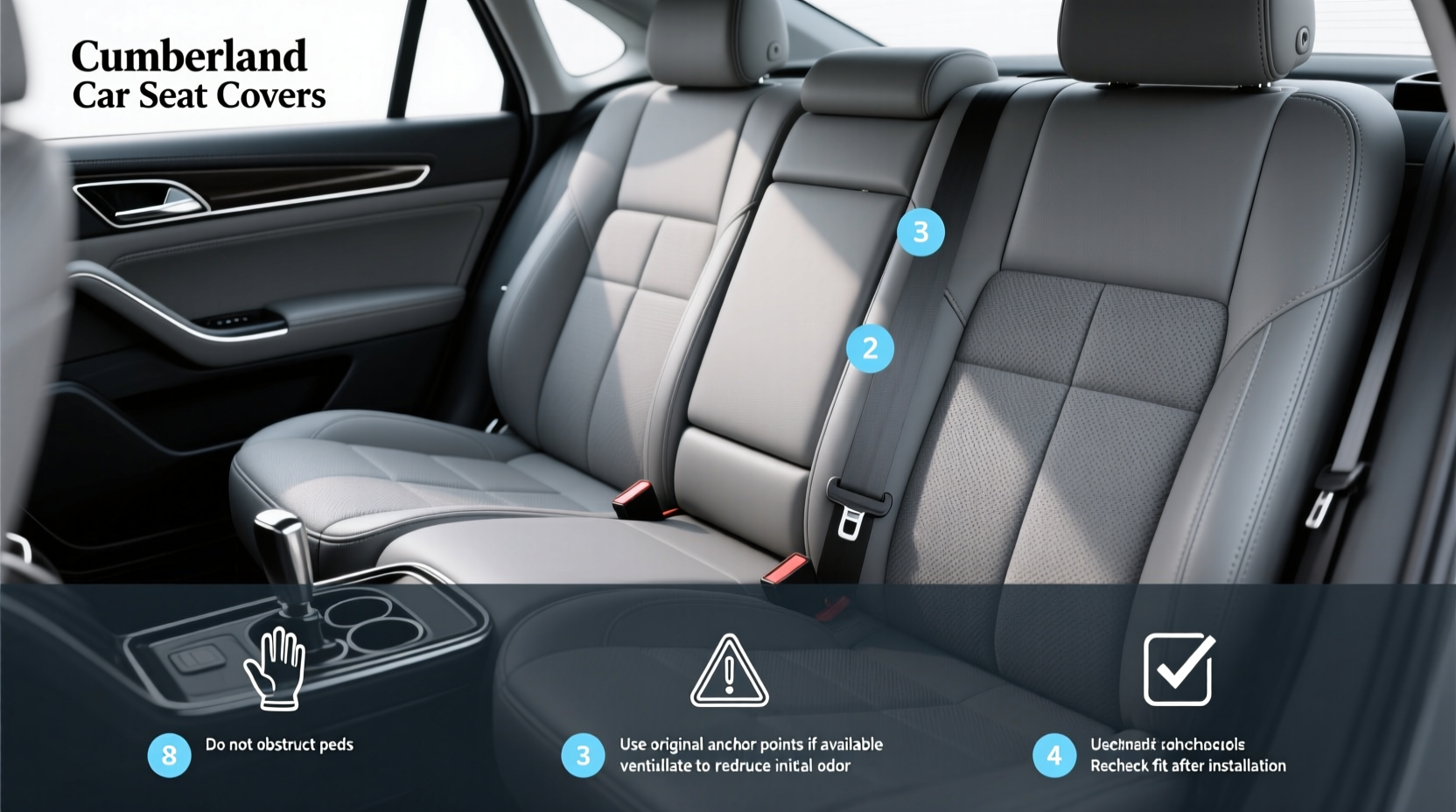
🛒 Short Introduction: What to Look for in Cumberland Car Seat Covers
When you're trying to figure out how to choose cumberland car seat covers, start by matching your vehicle's seat dimensions and style (bench vs. bucket) with a cover that offers precise fitment. Most buyers benefit from waterproof, breathable materials like neoprene or polyester blends—especially if you have kids, pets, or drive in wet climates. Avoid universal-fit models if your car has side airbags or integrated seat controls; these require custom-patterned covers to ensure safety and functionality. Always verify compatibility with your make and model before purchasing, and prioritize options with non-slip backing and reinforced stitching for long-term durability.
If comfort, protection, and resale value preservation are your goals, focus on elasticized edges, full-back coverage, and UV-resistant fabrics. For commercial fleets or ride-share drivers, look into heavy-duty twill or vinyl variants that withstand daily wear. This guide breaks down every decision point—from materials to installation—so you can confidently select the right cumberland car seat covers without overpaying or compromising safety.
📍 About Cumberland Car Seat Covers
Cumberland car seat covers refer to protective fabric overlays designed to fit over original vehicle seating. While \"Cumberland\" may denote a brand, product line, or regional market term, in common usage it often describes durable, tailored-fit seat protectors made from advanced textiles such as neoprene, canvas, or performance polyester. These covers serve both aesthetic and functional roles: shielding factory upholstery from spills, stains, fading, and abrasion while enhancing comfort through padding or breathability features.
Typical use cases include personal vehicles exposed to frequent passenger traffic, pet owners needing scratch resistance, parents managing spills from children, and fleet operators aiming to maintain interior condition across high-mileage usage. They’re commonly used in sedans, SUVs, trucks, and minivans—particularly where OEM seats lack built-in protection. Installation is generally tool-free, relying on stretch-to-fit systems, straps, or hook-and-loop fasteners for secure attachment.
📈 Why Cumberland Car Seat Covers Are Gaining Popularity
Rising interest in cumberland car seat covers buying guide content reflects growing consumer awareness about vehicle maintenance and cost-effective customization. With new cars retaining higher residual values when interiors remain pristine, many drivers invest in seat covers as preventive care. Additionally, lifestyle changes—such as increased pet travel, remote work commutes, and gig economy driving—have amplified demand for practical, washable, and comfortable seating solutions.
Social media and online reviews highlight real-world benefits: users report easier cleanup after muddy paws or coffee spills, improved comfort during long drives, and better temperature regulation in hot climates. The trend also aligns with sustainability efforts; extending the life of factory seats reduces waste and avoids costly reupholstery. As manufacturers offer more color-matched, low-profile designs, aesthetic concerns diminish, making these covers a mainstream choice rather than an aftermarket necessity.
🔧 Types and Variants
Different styles cater to distinct needs. Understanding the differences helps narrow choices based on your priorities.
✅ Custom-Fit (Semi-Bespoke)
- Pros: Tailored to specific vehicle makes/models; maintains factory look; compatible with side airbags and seat heaters.
- Cons: Higher price point; longer shipping times; limited availability for older or rare models.
✅ Universal Stretch
- Pros: Affordable; widely available; easy to install; fits most bench and bucket seats.
- Cons: May shift during use; less precise alignment; not recommended for seats with airbags or complex contours.
✅ Neoprene/All-Weather
- Pros: Waterproof; stain-resistant; insulating in cold weather; ideal for outdoor enthusiasts or rainy regions.
- Cons: Can retain heat; heavier than fabric options; requires ventilation to prevent condensation.
✅ Mesh/Breathable Performance
- Pros: Promotes airflow; reduces sweating; lightweight; excellent for warm climates.
- Cons: Less insulation; minimal spill protection unless coated; lower durability under sharp claws.
✅ Heavy-Duty Twill or Vinyl
- Pros: Extremely durable; easy wipe-down; preferred in commercial fleets or industrial settings.
- Cons: Stiff feel; noisy when moving; poor breathability; may crack over time in extreme temperatures.
⚙️ Key Features and Specifications to Evaluate
To effectively assess what to look for in cumberland car seat covers, consider these measurable criteria:
- Fabric Composition: Check blend percentages (e.g., 80% polyester / 20% spandex). Natural fibers absorb moisture but fade faster; synthetics resist wear and shrinkage.
- Water Resistance Rating: Look for hydrophobic coatings or laminated layers. Some list mm/mm² ratings; higher numbers indicate better barrier performance.
- Fit Accuracy: Confirm whether the model uses laser-scanned patterns for your vehicle year/make/model. Misfitting covers can interfere with seat mechanisms.
- Airbag Compatibility: Covers installed over side-impact airbags must have seam weakening or tear-away stitching to allow deployment.
- Backing Type: Non-slip silicone or rubberized undersides prevent slippage. Smooth backs may slide during braking.
- Washability: Machine-washable is ideal. Spot-clean only options limit hygiene control.
- UV Protection: UPF-rated fabrics resist sun degradation, preserving color and elasticity.
- Edge Reinforcement: Double-stitched seams and elastic perimeters improve longevity and tension retention.
📋 Pros and Cons
Understanding trade-offs ensures realistic expectations.
✨ Advantages
- Protects original upholstery from permanent damage
- Improves seating comfort with added cushioning or cooling mesh
- Enhances cabin appearance with modern textures/colors
- Easy removal and cleaning reduce maintenance effort
- Potentially increases resale value by minimizing wear
❗ Limitations
- Poorly fitted covers can obstruct seat adjustments or airbag function
- Thick materials may trap heat or create discomfort in summer
- Low-quality stitching leads to premature fraying
- Universal fits rarely accommodate integrated electronics correctly
- May void dealer warranty if improper installation damages sensors
🧰 How to Choose Cumberland Car Seat Covers
Follow this step-by-step checklist to avoid common mistakes:
- Identify Your Vehicle Model: Note exact year, make, model, and trim level. Some vehicles (e.g., certain Fords or Toyotas) have multiple seat configurations within the same model year.
- Check Seat Type: Determine if you have bucket seats, split-folding benches, or captain’s chairs. Include rear and front rows if covering all.
- Assess Usage Needs: Will you carry pets? Children? Work tools? Choose material accordingly (e.g., neoprene for spills, mesh for airflow).
- Verify Airbag & Electronics Clearance: If your seats have side airbags, heating elements, or occupancy sensors, only select covers explicitly labeled as compatible.
- Review Installation Method: Prefer stretch-and-grip systems for simplicity, or strap-based for stability. Avoid adhesive-backed products—they damage upholstery.
- Examine Return Policy: Ensure the seller accepts returns if fit is inaccurate. Measure your seats manually even if ordering a 'custom' fit.
- Read Care Instructions: Confirm washing method. Hand-wash-only items increase long-term inconvenience.
🚫 Red Flags to Avoid
- No clear fit guarantee or vehicle database lookup
- Vague material descriptions (e.g., “premium fabric” without composition)
- Lack of airbag safety certification statements
- Customer photos showing loose or bunched fabric
- Prices significantly below market average—often indicates thin materials or poor construction
💰 Price & Market Insights
Prices vary widely depending on type, brand, and region. As of 2024:
- Universal Stretch Sets: $25–$50 for front pair
- Custom-Fit Fabric Sets: $60–$120
- Neoprene/All-Weather: $80–$160
- Commercial-Grade Twill/Vinyl: $100–$200+
Premium pricing usually reflects better fit accuracy, denser weave, and enhanced safety testing. However, mid-tier options ($70–$100) often deliver optimal value for personal use. Be aware that prices may differ between North America, Europe, and Asia due to import duties and local manufacturing costs. Always factor in shipping fees and return eligibility when comparing deals.
📊 Top-Seller & Competitive Analysis
Popular models emphasize balance between fit, durability, and ease of care. Below is a comparison of frequently purchased types:
| Model Type | Fabric | Airbag Safe? | Washable? | Avg. Price |
|---|---|---|---|---|
| Custom Semi-Bespoke | Polyester-spandex blend | Yes | Machine washable | $95 |
| Universal Stretch | Elastic knit composite | No | Hand wash recommended | $38 |
| All-Weather Neoprene | Neoprene + mesh lining | Limited (check model) | Spot clean or machine gentle | $130 |
| Mesh Ventilated | 3D Air Mesh | Yes | Machine washable | $75 |
| Heavy-Duty Twill | 600D Polyester Twill | Yes (industrial standard) | Wipe-down only | $175 |
Note: Availability and specifications may vary by retailer and geographic region. Always check manufacturer specs before purchase.
👥 Customer Feedback Synthesis
Analysis of verified buyer reviews reveals consistent themes:
✅ Frequent Praises
- “Perfect fit for my 2022 Honda CR-V—no sliding.”
- “Spills wipe right off; great for my dog.”
- “Looks factory-installed; didn’t know they were aftermarket.”
- “Easy to install alone in under 20 minutes.”
- “Still looks new after six months of daily use.”
❌ Common Complaints
- “Front edge lifts when reclining—needs stronger grip.”
- “Color mismatched my interior slightly.”
- “Too warm in summer; wish I’d chosen mesh.”
- “Instructions unclear for headrest removal.”
- “One cover arrived stained—had to return.”
The most recurring issue involves partial misfit around seatbacks or bolsters, emphasizing the need for accurate vehicle matching.
🌐 Sourcing & Supplier Tips
Buyers have several options:
- Online Retailers (Amazon, eBay): Offer wide selection and user reviews but vary in authenticity. Prioritize sellers with ≥4.5-star ratings and responsive support.
- Specialty Auto Parts Stores: Often carry trusted brands with vetted compatibility databases.
- Direct-from-Manufacturer Websites: Provide best fit guarantees and access to newer models, though shipping may take longer.
- Bulk Wholesalers: Suitable for fleet managers or resellers. Minimum orders typically apply.
For bulk purchases, request samples first. Inspect stitching quality, fabric thickness, and labeling clarity. Verify whether packaging includes individual wrapping to prevent transit damage. When sourcing internationally, confirm voltage compatibility if covers include powered components (rare but possible).
🧼 Maintenance, Safety & Legal Considerations
Proper upkeep extends lifespan and ensures ongoing safety.
- Clean according to label instructions. Over-washing neoprene can degrade its waterproof layer.
- Inspect monthly for loose threads, slipping, or interference with seat movement.
- Never block airbag zones—even with removable cushions or aftermarket additions.
- While no universal law bans seat covers, some jurisdictions regulate modifications affecting safety systems. Always confirm local regulations if using in commercial transport or rental fleets.
- If your vehicle has weight sensors for passenger airbags, test them post-installation to ensure proper detection.
📌 Conclusion: Matching Needs to Choices
Selecting the right cumberland car seat covers depends on your specific situation. If you want maximum protection and drive in variable weather, go for neoprene or all-weather variants with verified airbag compatibility. If comfort and breathability matter most, choose 3D mesh or ventilated fabric models. For families or pet owners, prioritize waterproofing, machine-washability, and non-slip backing. Fleet operators should invest in heavy-duty twill for longevity despite higher upfront cost.
Avoid universal-fit covers if your vehicle has advanced safety features. Always double-check compatibility, read return policies, and inspect upon arrival. By focusing on fit, material integrity, and intended use, you’ll make a choice that protects your investment and enhances daily driving experience.
❓ FAQs
Can I install cumberland car seat covers myself?
Yes, most models are designed for DIY installation using stretch bands, straps, or clips. No tools are required, though removing headrests may help achieve a tighter fit.
Do seat covers affect airbag deployment?
They can—if not designed properly. Only use covers labeled as airbag-compatible, which include engineered weak seams to allow side curtain or torso bag release.
How do I clean cumberland car seat covers?
Follow care labels. Many fabric types are machine washable in cold water; neoprene often requires spot cleaning or gentle cycle. Always air dry to prevent shrinkage.
Will these covers fit heated seats?
Yes, if specifically rated for use with heating elements. Look for heat-resistant backing materials and ventilation to prevent overheating.
Are there legal restrictions on using seat covers?
Generally no, but modifications impacting airbag function or occupant detection may violate local safety codes—especially in commercial vehicles. Check your regional transportation authority guidelines.




 浙公网安备
33010002000092号
 浙B2-20120091-4