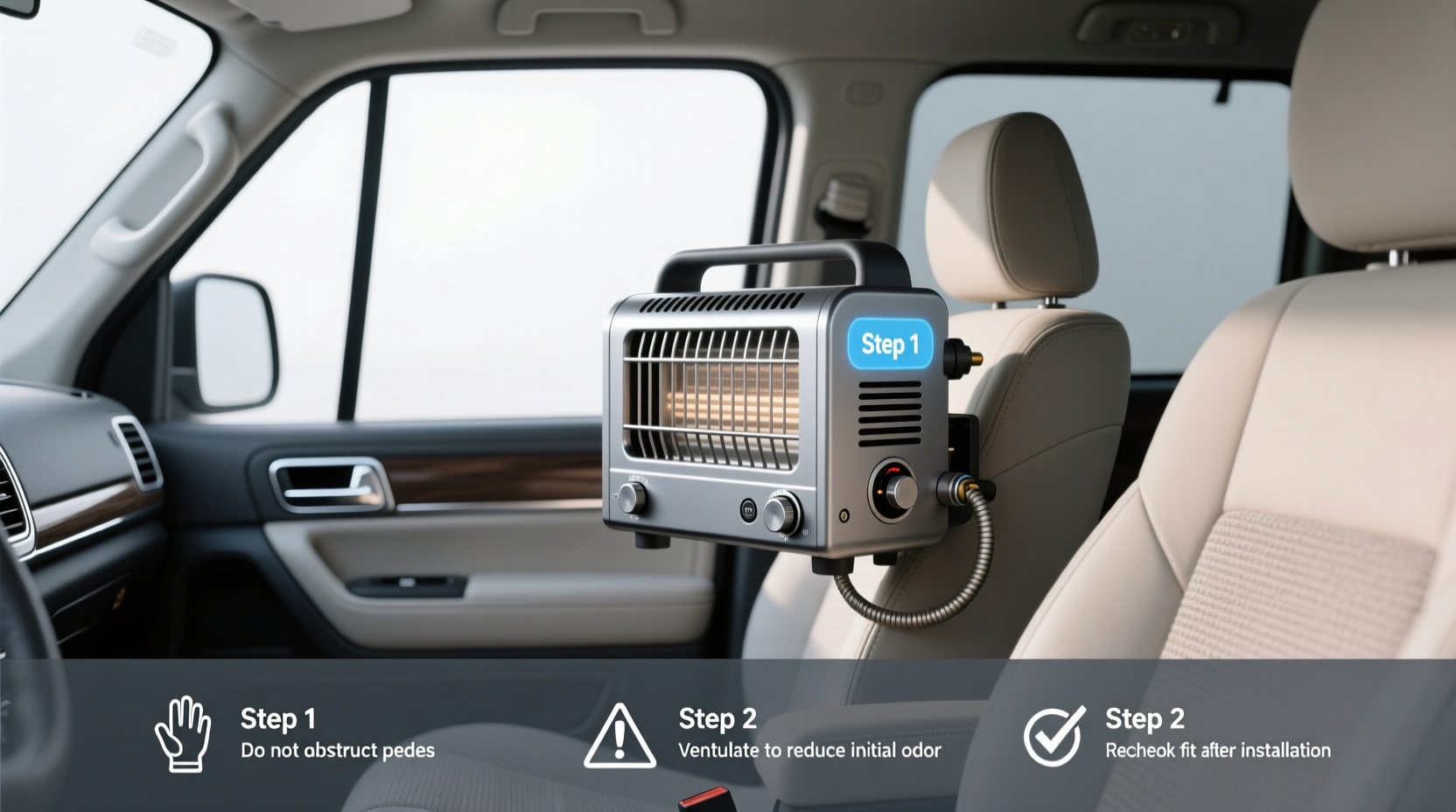
🛒 Short Introduction: What You Need to Know First
If you're asking how to choose diesel heater for car camping, start here: prioritize safety-certified models with automatic shut-off, CO detection, and low power draw (under 12W). For most off-grid users, a 2kW–4kW air diesel heater offers the best balance of warmth and fuel efficiency. Avoid uncertified imports—many lack proper ventilation controls or fail emissions standards1. Always verify compatibility with your vehicle’s battery system and check local regulations before installation. Key factors like noise level, startup time, and ease of maintenance often outweigh raw heating power in real-world use.
This guide breaks down every decision point—from types and specs to sourcing and safety—so you can confidently select a reliable, efficient diesel heater suited to your camping style, climate, and vehicle setup.
📍 About Diesel Heater for Car Camping
A diesel heater for car camping is a compact combustion unit designed to provide controlled interior heating using diesel fuel, typically drawn from your vehicle’s main tank or an auxiliary supply. Unlike propane or electric heaters, diesel units generate heat through direct combustion of diesel, making them ideal for cold-weather overlanding, winter van life, or extended off-grid stays where electricity is limited.
These heaters are commonly mounted in vans, RVs, trucks, or overland vehicles and vent exhaust outside while circulating warm air inside. They operate independently of the engine, allowing overnight heating without idling. Most modern units integrate with 12V or 24V DC systems and include digital thermostats, remote controls, or smartphone connectivity.
Typical use cases include maintaining cabin temperature during sub-zero nights, defogging windows, drying damp gear, and ensuring comfort in alpine or Arctic environments where ambient temperatures drop below freezing.
📈 Why Diesel Heater for Car Camping Is Gaining Popularity
Diesel heaters are rising in popularity among overlanders and full-time van lifers due to their energy efficiency, reliability in extreme cold, and long runtime. With growing interest in self-sufficient travel and remote work, campers seek solutions that don’t rely on grid power or flammable gases like propane.
Diesel fuel stores longer than gasoline and is less volatile than propane, reducing fire risk. Additionally, many off-road vehicles already run on diesel, simplifying fuel logistics. Modern units also boast quiet operation and precise temperature control, enhancing livability.
Environmental awareness has also driven innovation—newer models meet Euro 6 or EPA Tier 4 emissions standards, minimizing soot and NOx output2. As a result, diesel heaters are now seen not just as survival tools but as integrated climate systems for mobile living.
🔧 Types and Variants
Diesel heaters fall into two primary categories: air heaters and water heaters. Each serves different needs and installation setups.
Air Diesel Heaters ⚙️
These blow heated air directly into the cabin. Common in vans and small campers.
- Pros: Fast warm-up (3–5 minutes), simple installation, lower cost ($200–$600)
- Cons: Can create dry air, less even heat distribution, audible fan noise
Water (Coolant) Diesel Heaters 🌐
Heat engine coolant, which then circulates through a heat exchanger or radiator inside the cabin.
- Pros: Silent operation, consistent radiant heat, integrates with engine pre-heating
- Cons: Slower initial heat-up (~10 mins), complex plumbing, higher cost ($800–$2,000+)
Combination Systems ✨
Some advanced units combine both air and water heating, offering flexibility. These are common in expedition builds but require expert installation.
Portable plug-in models exist but are rare and generally discouraged due to safety risks and poor performance.
✅ Key Features and Specifications to Evaluate
When evaluating a diesel heater, consider these technical and practical aspects:
- Heating Power (kW): 2kW suits small vans; 4kW+ for large RVs or extreme cold.
- Fuel Consumption: Ranges from 0.1L/h (low setting) to 0.4L/h (high). Lower = longer runtime.
- Power Draw: Should be ≤12W to avoid draining starter batteries overnight.
- Noise Level: Look for <45 dB for quiet operation.
- Startup Temperature: Some models start reliably below -20°C (-4°F).
- Thermostat & Controls: Digital thermostats improve efficiency. Remote or app-based controls add convenience.
- Ventilation Design: Coaxial exhaust-intake pipes prevent backdrafting.
- Certifications: CE, RoHS, ISO 9001 indicate quality manufacturing. UL or ETL marks enhance safety credibility.
🛠️ Pros and Cons
👍 Pros
- High efficiency in cold climates
- Fuel readily available for diesel vehicles
- Low electrical load compared to electric heaters
- Can run unattended safely (with proper sensors)
- Long operational lifespan (5,000+ hours with maintenance)
👎 Cons
- Requires professional installation for optimal safety
- Exhaust piping must be correctly routed outside
- Potential carbon monoxide risk if malfunctioning or poorly maintained
- Higher upfront cost than electric options
- Not legal in all regions—check local codes
📋 How to Choose Diesel Heater for Car Camping
Follow this step-by-step checklist when selecting a model:
- Assess Your Space: Measure interior volume. A 4m³ van needs ~2kW; larger spaces need 4kW or dual units.
- Determine Fuel Source: Will it tap into main tank (requires lift pump) or use secondary tank? Secondary tanks simplify removal and reduce theft risk.
- Evaluate Electrical System: Ensure your battery bank can support continuous 12V draw. Consider adding a voltage cutoff switch.
- Check Safety Features: Mandatory: overheat protection, flame failure sensor, tilt switch. Optional but recommended: CO detector integration.
- Review Installation Requirements: Air heaters need wall mounting and exhaust routing; water heaters require coolant lines and expansion tanks.
- Read Real-World Reviews: Focus on feedback about cold-weather starts and durability after 6+ months of use.
🚩 Red Flags to Avoid
- Unclear specifications (e.g., missing kW rating or fuel consumption data)
- No visible certifications or test reports
- Overly cheap models (<$180) with glowing Amazon reviews—possible fake listings
- Instructions only in Chinese without English manual or support
- Require modification to fit standard vehicles
If any of these apply, proceed with caution or skip the product entirely.
💰 Price & Market Insights
Prices vary widely based on type, brand, and region:
- Budget Tier ($150–$300): Entry-level air heaters, often from lesser-known Chinese brands. May lack robust safety features.
- Mid-Tier ($400–$800): Reliable air or basic water heaters with full certification and decent warranties (1–2 years).
- Premium Tier ($900–$2,500): High-efficiency water or combo units from established brands like Webasto, Eberspächer, or Espar.
Value isn't always tied to price—some mid-tier brands offer 90% of premium performance at half the cost. However, expect to pay more for quieter operation, better cold-start capability, and longer service intervals.
Be aware: prices may differ significantly between North America, Europe, and Australia due to import duties and compliance requirements.
📊 Top-Seller & Competitive Analysis
The following models represent common choices across user segments. Note: performance claims should be verified via independent testing.
| Model | Type | Power | Price Range | Key Strengths |
|---|---|---|---|---|
| Webasto Air Top 2000 | Air | 2kW | $500–$700 | Reliable cold start, OEM quality, wide support network |
| Eberspächer Hydronic D2 | Water | 2kW | $1,200–$1,600 | Silent, heats cabin + engine, excellent build |
| Espar D2 Elite | Air | 2.2kW | $450–$600 | Balanced price/performance, good aftermarket support |
| Fischer Panda D2.0 | Air | 2kW | $380–$520 | Strong value, includes digital controller |
When comparing top sellers, focus on service availability, spare parts cost, and software/firmware updates for smart models.
📌 Customer Feedback Synthesis
Based on aggregated user reviews across forums, retailers, and owner groups:
✅ Frequently Praised
- \"Started instantly at -18°C\" – reliable cold-weather performance
- \"Uses less than 0.2L/hour\" – fuel efficiency exceeds expectations
- \"Very quiet on low setting\" – enhances sleep quality
- \"Easy DIY install with included kit\" – well-documented setup process
❌ Common Complaints
- \"Took 3 weeks to ship from China\" – unreliable delivery times
- \"Manual is poorly translated\" – confusing setup instructions
- \"Fan became noisy after 4 months\" – bearing wear issues in budget units
- \"Wouldn’t restart after refueling\" – airlock problems in older designs
Recurring themes: reliability improves dramatically with branded components and proper maintenance.
🚚 Sourcing & Supplier Tips
You can buy diesel heaters through:
- Authorized Dealers: Best for warranty and technical support (e.g., Webasto-certified installers).
- Online Retailers: Amazon, eBay, Alibaba—convenient but verify seller reputation.
- Specialty Off-Road Shops: Often carry pre-configured kits with mounting hardware.
For bulk purchases or resale:
- Contact manufacturers directly for distributor agreements.
- Request sample units for testing before committing.
- Negotiate MOQs (Minimum Order Quantities) and shipping terms.
Always inspect units upon arrival: check for damaged packaging, missing parts, and presence of safety labels. Test ignition function before final installation.
🧼 Maintenance, Safety & Legal Considerations
To ensure safe and efficient operation:
- Maintenance: Clean the burner nozzle and heat exchanger every 100–150 hours. Replace fuel filters annually.
- Safety: Install a CO detector nearby. Never block intake or exhaust vents. Use only in well-ventilated areas.
- Legal Compliance: In some countries (e.g., USA, Canada, EU), vehicle modifications must meet road safety or emissions regulations. While auxiliary heaters are often exempt, they must not interfere with original equipment.
Verify legality by checking with your national transportation authority or vehicle inspection agency. Rules may vary by state or province.
🎯 Conclusion: Matching Needs to Solutions
If you need affordable, straightforward cabin heating for occasional winter trips, a certified 2kW air heater like the Espar D2 Elite or Fischer Panda model offers solid value. For full-time van dwellers in sub-arctic climates, investing in a water-based system such as the Eberspächer Hydronic provides superior comfort and integration. Always confirm compatibility with your vehicle’s electrical and fuel systems, prioritize units with comprehensive safety features, and avoid uncertified budget imports despite tempting prices.
Ultimately, choosing the right diesel heater for car camping comes down to matching your usage intensity, environmental conditions, and technical capacity with a reliable, maintainable product.
❓ FAQs
Yes, if you have mechanical aptitude and follow instructions carefully. However, improper exhaust routing or fuel line connections pose serious risks. Consider professional help for water heaters or complex setups.
All combustion heaters produce CO if malfunctioning or starved of oxygen. Proper installation, regular maintenance, and using a working CO detector minimize risk significantly.
At low output (1kW), up to 10 hours; at high output (4kW), around 2.5 hours. Actual runtime depends on model efficiency and ambient temperature.
Most allow them as long as exhaust is properly vented and noise doesn’t disturb others. Always check specific park rules before use.
Yes, but use a lift pump to avoid siphoning issues. Ensure the connection point is above the fuel level and includes a shut-off valve for safety.




 浙公网安备
33010002000092号
 浙B2-20120091-4