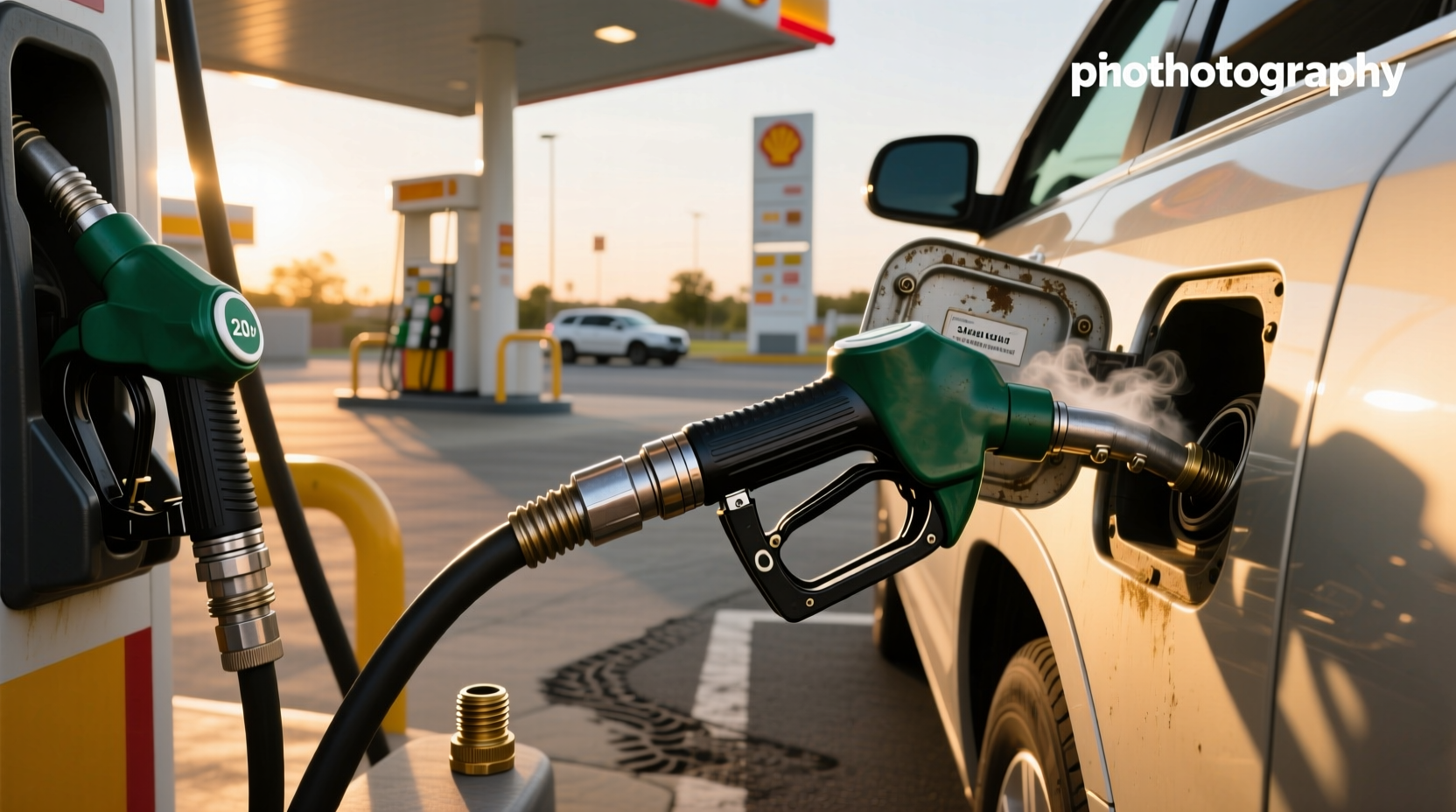
If you're wondering how to choose diesel hose and nozzle, one of the most critical factors is understanding that yes, a diesel fuel nozzle is indeed a different size than a gasoline nozzle. Diesel nozzles are typically larger—around 24–25 mm in diameter—compared to gasoline nozzles at about 21 mm 1. This physical difference prevents misfuelling by making it impossible to insert a diesel nozzle into a gasoline vehicle’s smaller filler neck. When selecting a diesel hose and nozzle setup, always verify compatibility with your equipment, check for proper flow rates (typically 16–70 GPM), ensure material resistance to diesel fuel, and prioritize safety certifications. Avoid cheap, non-standard nozzles that may not meet regional dispensing regulations or could risk engine damage due to improper fit.
About Diesel Hose and Nozzle: Is a Diesel Fuel Nozzle a Different Size?
🛒 A diesel hose and nozzle system refers to the assembly used to transfer diesel fuel from a storage tank or pump to a vehicle or machinery. It consists of a flexible hose made from materials resistant to diesel degradation (like synthetic rubber or thermoplastic) and a nozzle designed specifically for diesel dispensing. The key question—is a diesel fuel nozzle a different size?—has a clear answer: yes. Diesel nozzles are intentionally larger than gasoline nozzles to prevent cross-fuelling 2.
📍 This size distinction serves as a mechanical safeguard. Most diesel nozzles measure between 24 and 25 millimeters in diameter, while unleaded gasoline nozzles are approximately 21 mm. The larger diesel nozzle cannot fit into the narrower filler pipe of a gasoline-powered car, reducing the risk of accidentally filling a petrol engine with diesel—a common but avoidable error.
🔧 These systems are widely used in commercial fleets, agricultural operations, construction sites, marine refuelling, and industrial settings where on-site fuel storage and transfer are necessary. They can be part of standalone dispensers, mobile fuel carts, or integrated into bulk refuelling stations.
Why Diesel Hose and Nozzle Systems Are Gaining Popularity
🏭 As more businesses operate diesel-powered machinery—from delivery trucks to excavators—there's growing demand for efficient, safe, and compliant fuel handling solutions. On-demand refuelling reduces downtime and eliminates trips to public stations, especially valuable in remote locations or large worksites.
👥 Additionally, rising awareness of misfuelling risks has increased interest in standardized, foolproof equipment. The physical incompatibility between diesel and gasoline nozzles provides a reliable first line of defence against costly mistakes. High-flow diesel nozzles also improve operational efficiency by enabling faster refuelling of vehicles with large tanks.
⚡ With advancements in material durability and ergonomic design, modern diesel hoses and nozzles offer longer service life, better user control, and enhanced leak protection—making them a practical investment for both small operators and large enterprises.
Types and Variants of Diesel Hoses and Nozzles
- ✅ Standard Manual Nozzles: Basic trigger-operated nozzles commonly found at gas stations. Affordable and reliable, but require constant user attention during fueling.
- Pros: Low cost, simple operation, widely available
- Cons: No automatic shutoff, higher spill risk, slower for large tanks
- ✅ Automatic (Self-Closing) Nozzles: Feature an internal mechanism that stops fuel flow when the tank is full, similar to automotive pumps.
- Pros: Reduces overflow risk, allows hands-free filling, improves safety
- Cons: Higher initial cost, requires maintenance, may not work optimally with all tank geometries
- ✅ High-Flow Nozzles: Designed for rapid dispensing, often used in fleet depots or heavy equipment yards.
- Pros: Fast refuelling (up to 70 GPM), increases productivity
- Cons: Requires robust hose and pump support, louder operation, greater splash risk if not handled carefully
- ✅ Vapor-Recovery Nozzles: Include seals and channels to capture fuel vapors during dispensing, required in some environmental zones.
- Pros: Meets emissions standards, safer in enclosed spaces
- Cons: More complex, expensive, needs compatible infrastructure
Key Features and Specifications to Evaluate
When evaluating options for how to choose diesel hose and nozzle, consider these technical and functional criteria:
- 📏 Nozzle Diameter: Confirm it matches standard diesel specifications (~24–25 mm). Verify it won’t fit into gasoline vehicle filler necks.
- 📊 Flow Rate: Ranges from 10 GPM (standard) to over 60 GPM (high-flow). Match to your pump capacity and typical refuelling needs.
- 🧵 Hose Material: Look for ethanol- and diesel-resistant compounds like EPDM, NBR, or PTFE-lined hoses. Avoid PVC-only hoses which degrade over time.
- 📏 Hose Length: Common lengths are 10 ft, 15 ft, and 25 ft. Longer hoses offer flexibility but increase pressure drop and tripping hazards.
- 🔒 Breakaway Couplings: Safety feature that disconnects under tension, preventing spills and equipment damage.
- ⚙️ Nozzle Tip Design: Should have a minimum straight section of 63 mm and retaining spring placement per U.S. EPA guidelines 3.
- 🌍 Regional Compliance: Some areas mandate specific nozzle designs or vapor recovery. Always check local requirements before purchase.
Pros and Cons of Diesel Hose and Nozzle Systems
| Aspect | Advantages | Limitations |
|---|---|---|
| Fuel Safety | Reduces misfuelling via size mismatch | Gasoline nozzle can still fit diesel tank (riskier scenario) |
| Efficiency | High-flow models speed up refuelling | Requires adequate pump and power supply |
| Durability | Modern hoses resist cracking and permeation | Poor-quality hoses degrade quickly with UV/fuel exposure |
| Cost | Long-term savings through on-site refuelling | Initial setup cost can be high for certified systems |
| Maintenance | Simple cleaning and inspection routines | Automatic nozzles may need periodic servicing |
How to Choose Diesel Hose and Nozzle: Step-by-Step Buying Guide
To make an informed decision on what to look for in diesel hose and nozzle, follow this checklist:
- 📌 Confirm Compatibility: Ensure the nozzle fits your existing dispenser or pump. Check thread type (e.g., 3/4" NPT) and flow alignment.
- 📌 Verify Nozzle Size: Measure or confirm the outer diameter is ~24–25 mm. This ensures it cannot enter gasoline vehicle tanks.
- 📌 Select Appropriate Flow Rate: For personal or light use, 10–20 GPM is sufficient. For fleets or heavy machinery, consider 30+ GPM.
- 📌 Choose Hose Length Wisely: Balance reach with manageability. Use reels for longer hoses to reduce kinking and wear.
- 📌 Inspect Material Quality: Opt for multi-layer, reinforced hoses with UV and abrasion resistance.
- 📌 Include Safety Features: Prioritize models with breakaway couplings, drip-free shutoffs, and secure latches.
• Nozzles without clear size markings
• Extremely low-priced kits with unknown materials
• Lack of compliance labels (e.g., EPA, CARB, or UL)
• Inconsistent color coding (green isn't universal for diesel)
• Missing documentation or manufacturer contact info
Price & Market Insights
💸 Prices vary significantly based on quality, flow rate, and features:
- 💰 Basic Kits: $80–$150 – Includes manual nozzle, 10–15 ft hose, basic fittings. Suitable for occasional use.
- 📈 Mid-Range Systems: $180–$300 – Features automatic shutoff, reinforced hose, and better ergonomics. Ideal for small fleets.
- 🏭 Professional/High-Flow: $350–$700+ – Includes vapor recovery, breakaways, and industrial-grade components. Used in commercial depots.
Prices may differ by region and supplier. Always compare total system cost—including adapters, filters, and mounting hardware—before deciding. While higher upfront cost doesn’t guarantee longevity, extremely cheap options often fail prematurely or pose safety risks.
Top-Seller & Competitive Analysis
Below is a comparison of popular diesel hose and nozzle configurations based on market availability and performance metrics:
| Model Type | Flow Rate (GPM) | Hose Length | Key Features | Ideal Use Case |
|---|---|---|---|---|
| Standard Manual | 10–20 | 10–15 ft | Low cost, durable tip | Home garages, tractors |
| Auto-Shutoff | 15–25 | 15–25 ft | Hands-free fill, drip seal | Fleet vehicles, vans |
| High-Flow Industrial | 40–70 | 25–50 ft | Breakaway, heavy-duty hose | Construction, mining |
| Vapor Recovery | 20–30 | 20 ft | Emissions-compliant, sealed | Enclosed facilities, CA |
Customer Feedback Synthesis
Based on aggregated reviews and industry reports, here are common observations:
- ⭐ Frequent Praises:
- "The auto-shutoff saved me from spilling when I got distracted."
- "Heavy-duty hose hasn’t cracked after two winters outdoors."
- "Nozzle fits perfectly and clearly won’t go into my pickup’s gas tank."
- ❗ Common Complaints:
- "Cheap plastic latch broke within months."
- "Hose kinks easily and is hard to rewind."
- "Nozzle didn’t meet local vapor recovery rules—had to return it."
The most consistent feedback emphasizes build quality and regulatory alignment over brand name.
Sourcing & Supplier Tips
🌐 Diesel hose and nozzle units are available through industrial suppliers, online marketplaces, and specialized fuel equipment vendors. For bulk purchases or resale:
- 🔍 Request product specifications and compliance certificates before ordering.
- 🚚 Consider working with distributors who offer warranties and technical support.
- 🧰 Inspect samples for material thickness, nozzle finish, and smooth trigger action.
- 📋 Verify return policies in case the nozzle doesn’t meet size or performance expectations.
- 📎 For OEM integration or private labelling, confirm minimum order quantities (MOQs) and customization options.
Maintenance, Safety & Legal Considerations
🧼 Regular maintenance extends lifespan and ensures safe operation:
- Inspect hoses monthly for cracks, bulges, or leaks.
- Clean nozzle tips regularly to prevent clogging.
- Store hoses coiled properly to avoid kinks and UV exposure.
- Test automatic shutoff mechanisms periodically.
⚠️ Safety practices include grounding the system during fuel transfer to prevent static discharge, using spill containment trays, and training personnel on emergency procedures.
⚖️ While there is no global standard, many regions follow EPA or equivalent regulations regarding nozzle dimensions and vapor control 3. Always check manufacturer specs and confirm local regulations before installation, especially in environmentally sensitive or urban areas.
Conclusion
If you need a reliable solution for transferring diesel fuel, choosing the right hose and nozzle starts with understanding that a diesel fuel nozzle is a different size—specifically larger—to prevent dangerous misfuelling. For light-duty applications, a standard manual nozzle with a 10–15 ft hose may suffice. If you manage a fleet or operate heavy machinery, invest in an automatic or high-flow model with safety features like breakaways and drip prevention. Prioritize material durability, correct nozzle diameter (~24–25 mm), and compliance with local standards. By focusing on these factors, you’ll select a system that enhances safety, efficiency, and long-term value.
Frequently Asked Questions
- Is a diesel fuel nozzle really a different size?
Yes, diesel nozzles are typically 24–25 mm in diameter, making them too large to fit into the smaller filler necks of gasoline vehicles, which helps prevent misfuelling. - Can a gasoline nozzle fit into a diesel vehicle?
Yes, unfortunately, the smaller gasoline nozzle can often fit into a diesel filler neck, posing a serious risk since putting gasoline into a diesel engine causes severe damage. - Does nozzle color indicate fuel type?
Not reliably. While green is often used for diesel in North America, color coding varies globally. Always rely on nozzle size and label verification instead. - What flow rate do I need for my equipment?
For cars or small trucks, 10–20 GPM is adequate. For larger machinery or fleet operations, consider 30–70 GPM systems to reduce refuelling time. - How often should I inspect my diesel hose and nozzle?
Inspect hoses and nozzles at least once a month for signs of wear, leakage, or damage, and perform functional tests on automatic shutoffs every few months.




 浙公网安备
33010002000092号
 浙B2-20120091-4