🛒 Short Introduction: What You Need to Know First
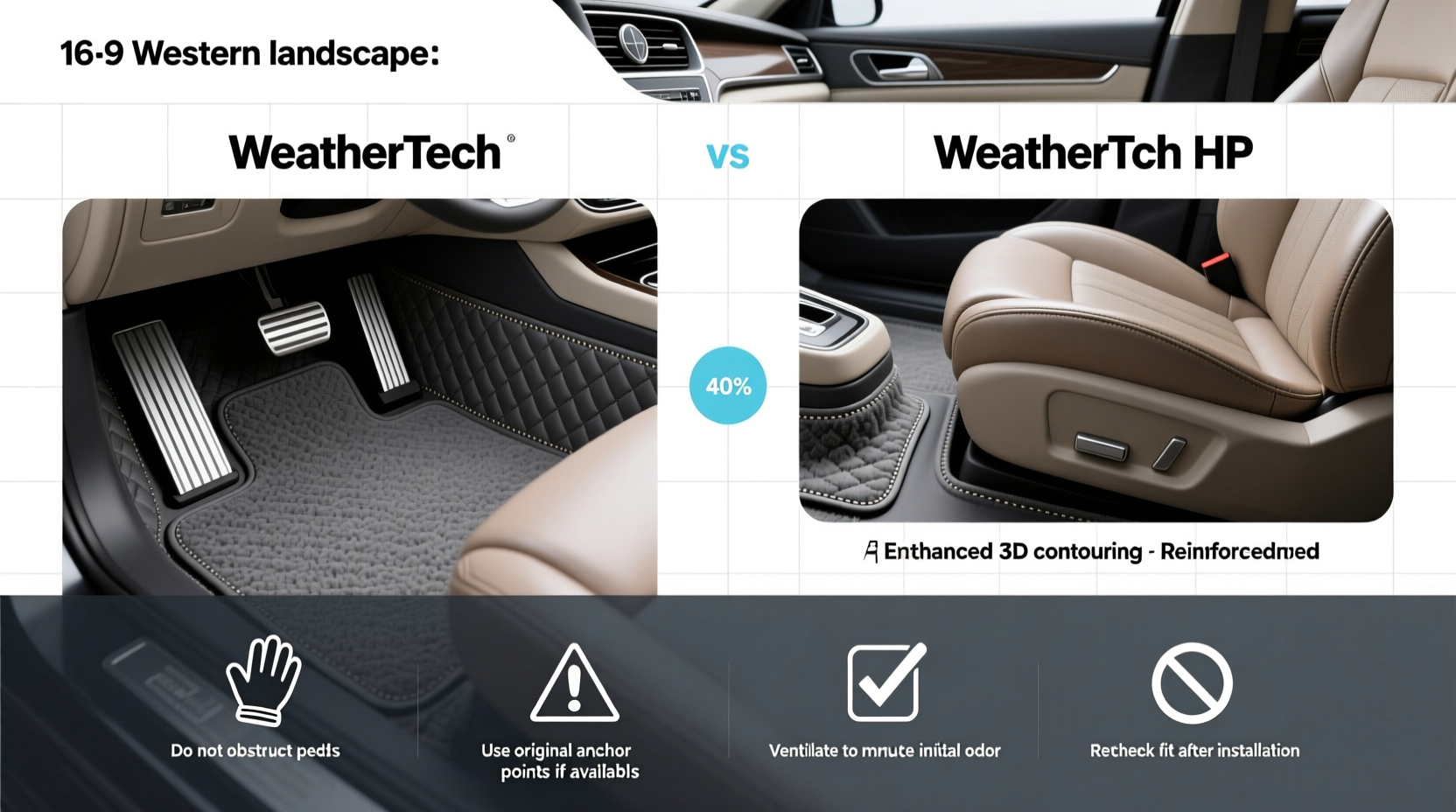
When deciding how to choose difference between weathertech and weathertech hp, the key distinction lies in material composition, texture, and intended use. Both are premium automotive floor mat lines from WeatherTech, but the HP (High Performance) series uses a softer, more flexible thermoplastic elastomer (TPE) blend designed for enhanced comfort and noise reduction, while the original Weathertech mats use a firmer, more rigid TPE that excels in extreme weather protection and deep channel drainage. If you prioritize maximum spill containment and durability in harsh climates, standard Weathertech is often the better pick. However, if you want quieter rides and a more refined interior feel without sacrificing too much protection, Weathertech HP may be ideal.
What to look for in difference between weathertech and weathertech hp includes fit precision, edge height, chemical resistance, and ease of cleaning. Avoid assuming both perform identically—HP mats have shallower channels and slightly less rigidity, which can affect liquid retention during heavy snowmelt or mud entry. Always verify compatibility with your specific vehicle model, as misfitting mats can interfere with pedals—a critical safety issue 1. For most drivers in moderate climates, Weathertech HP offers a balanced upgrade in comfort. In extreme conditions, stick with the original.
📍 About difference between weathertech and weathertech hp: Definition & Typical Use Cases
The difference between Weathertech and Weathertech HP refers to two distinct product lines under the same brand, each engineered for different driving environments and user preferences. Standard Weathertech floor mats are made from a patented tri-extruded TPE compound known for its rigidity, UV resistance, and ability to withstand extreme temperatures—from -40°F to over 200°F. These mats feature deeply sculpted channels (up to 1 inch deep) that trap water, snow, mud, and debris effectively.
Weathertech HP (High Performance), introduced later, maintains custom-fit precision but uses a modified TPE formula that’s softer to the touch and quieter underfoot. It’s marketed toward luxury vehicle owners or those who value cabin refinement. While still waterproof and odor-resistant, HP mats have slightly reduced channel depth (around 0.75 inches) and are more pliable, making them easier to install and remove.
Typical use cases:
- ✅ Standard Weathertech: Ideal for trucks, SUVs, rural drivers, pet owners, and regions with heavy snowfall or muddy terrain.
- ✅ Weathertech HP: Preferred by sedan drivers, urban commuters, and luxury car owners seeking premium aesthetics and reduced road noise.
📈 Why difference between weathertech and weathertech hp is gaining popularity
Consumers increasingly seek tailored solutions rather than one-size-fits-all accessories. The growing awareness of material science in automotive interiors has driven interest in understanding the difference between Weathertech and Weathertech HP. As vehicles become more personalized, buyers expect floor protection that aligns with their lifestyle—not just function, but comfort and design.
Social media reviews, YouTube comparisons, and dealership upsells have amplified visibility. Drivers now compare not only fit and protection but also secondary factors like sound dampening and interior harmony. Additionally, rising vehicle customization budgets allow more owners to invest in OEM-plus accessories. This trend supports niche variants like HP, which cater to those wanting subtle upgrades without compromising on core performance.
🔧 Types and Variants: Common Models and Key Differences
Both lines offer similar configurations but differ in execution:
| Variant | Material | Channel Depth | Firmness | Best For |
|---|---|---|---|---|
| Standard Weathertech (Front/Rear) | Tri-Extruded Rigid TPE | ~1 inch | High | All-weather protection |
| Weathertech HP (Front/Rear) | Soft-Touch Flexible TPE | ~0.75 inch | Medium | Comfort & quiet ride |
| DigitalFit (Standard) | Rigid TPE | 1 inch | High | Precise fit for modern EVs/hybrids |
| DigitalFit HP | Flexible TPE | 0.75 inch | Medium | Luxury EVs needing soft interior touchpoints |
Pros and Cons by Type:
- ⚙️ Standard Mats
✔ Excellent fluid retention
✔ Durable in freezing temps
✔ Resists warping under heat
✘ Can be noisy when walked on
✘ Harder to roll for storage - ✨ HP Mats
✔ Softer underfoot feel
✔ Reduced footstep noise
✔ Easier installation/removal
✘ Less effective in deep slush
✘ May sag slightly over time in hot climates
📊 Key Features and Specifications to Evaluate
To make an informed decision on the difference between Weathertech and Weathertech HP, assess these measurable criteria:
- 🔍 Fit Accuracy: Both use laser-scanned vehicle data, but verify anchor compatibility with seat positions and floor humps.
- 🧼 Cleanability: Both are hose-washable and compatible with mild detergents. HP may retain odors longer if not dried fully due to denser material porosity.
- 🌍 Environmental Resistance: Standard mats resist cracking in sub-zero temps better; HP performs well above 15°F.
- 🚚 Weight & Portability: HP mats weigh ~10–15% less and are easier to carry or store seasonally.
- 🌐 Odor Control: Neither emits strong smells out of packaging, though some users report a faint rubber scent initially—dissipates within days.
- 📌 Edge Height & Lip Design: Higher lips prevent overflow. Standard has taller walls, reducing spill risk during heavy rain entry.
✅ Pros and Cons: Balanced Assessment
When Standard Weathertech Is Better:
- You live in a region with heavy winter precipitation.
- Your vehicle sees frequent off-road or construction site use.
- You transport pets or children regularly (maximum containment).
- You prioritize longevity over softness.
When Weathertech HP Is Better:
- You drive a luxury sedan or coupe where cabin ambiance matters.
- Road noise is a concern (e.g., long commutes).
- You frequently switch mats for cleaning or seasonal use.
- You prefer a sleeker, less industrial appearance.
Avoid either if your vehicle lacks factory mat anchors or if pedal interference cannot be ruled out after installation.
📋 How to Choose difference between weathertech and weathertech hp: Step-by-Step Guide
Follow this checklist to decide based on your needs:
- 🔎 Identify Your Primary Use Case: Off-road? City driving? Family vehicle?
- 🚗 Confirm Vehicle Compatibility: Use the official configurator tool on weathertech.com—enter exact year, make, model, and trim.
- 🌧️ Assess Climate Demands: Below-freezing winters favor standard; milder zones allow HP flexibility.
- 👂 Evaluate Interior Comfort Needs: Test samples if possible—some find HP noticeably quieter.
- 🧰 Check Installation Requirements: Ensure no interference with parking brake, clutch, or accelerator pedal movement.
- ❗ Red Flags to Avoid:
- Third-party sellers claiming \"OEM equivalent\" without certification.
- Listings missing batch numbers or material specs.
- No return policy for fitment issues.
Always request proof of authenticity and cross-check part numbers with WeatherTech’s database.
💸 Price & Market Insights
Prices vary by vehicle size and configuration. As of 2024:
- 💰 Standard Weathertech Sets: $180–$260 (sedans/SUVs), up to $300+ for full-size trucks.
- 💰 Weathertech HP Sets: Typically $200–$290, reflecting slight premium positioning.
The HP line often costs 10–15% more due to marketing as a “premium” option. However, material cost differences are minimal. Value depends on application: for daily-driven luxury cars, HP may justify the price via improved experience. For work vehicles, standard provides better ROI.
Discounts appear seasonally (pre-winter, Black Friday). Authorized dealers sometimes bundle with cargo liners. Beware of deep discounts on third-party marketplaces—counterfeits exist.
⭐ Top-Seller & Competitive Analysis
Top-selling models include:
- Weathertech Front & Rear DigitalFit (Standard) – Toyota RAV4, Ford F-150
- Weathertech HP Perfect Fit – Tesla Model 3, BMW 3 Series
Comparison of bestsellers:
| Model | Price Range | Customer Rating | Key Strength | Common Complaint |
|---|---|---|---|---|
| Weathertech Standard (F-150) | $249 | 4.8/5 | Extreme durability | Noise on passenger side step-in |
| Weathertech HP (Model 3) | $279 | 4.6/5 | Quiet, elegant look | Slush overflow in heavy storms |
Competitors like Husky Liners X-Act Contour or Lloyd Mats EcoWorx offer alternatives, but lack the precise fit and full perimeter coverage of WeatherTech’s molded designs.
👥 Customer Feedback Synthesis
Based on aggregated reviews across retail platforms (Amazon, AutoZone, brand site):
Most Frequent Praises:
- Precision fit with no shifting.
- Easy to clean with hose or pressure washer.
- Superior protection compared to carpet or universal mats.
- HP praised for quiet operation and modern appearance.
Most Common Complaints:
- Standard mats can creak or squeak when stepped on repeatedly.
- HP mats occasionally shift slightly without accessory anchors.
- Higher price point vs. generic brands.
- Rear seat access hindered in some hatchbacks due to rear mat size.
Long-term durability feedback shows both types last 5+ years with proper care, though UV exposure accelerates fading on dark-colored HP versions.
🔗 Sourcing & Supplier Tips
Buy from authorized retailers such as:
- weathertech.com (official)
- Crutchfield
- Tire Rack
- Amazon (sold/shipped by WeatherTech or authorized partner)
For bulk purchases (fleet vehicles, dealerships), contact WeatherTech’s commercial sales team directly. Avoid gray-market importers offering significantly lower prices—these may be expired stock or non-compliant variants.
When receiving shipment:
- Verify holographic authentication tag.
- Inspect for warping or surface defects.
- Test fit before permanent installation.
🛠️ Maintenance, Safety & Legal Considerations
Maintenance Tips:
- Remove and rinse monthly; air dry completely before reinstalling.
- Use non-abrasive cleaners (avoid bleach or citrus-based solvents).
- Store flat in cool, shaded area when not in use.
Safety Notes:
- Ensure mats do not obstruct pedal movement—this is a federal safety requirement in the U.S. 1.
- Check local regulations if modifying factory-installed restraint systems (e.g., removing clips).
- Do not leave unsecured mats loose—they can become projectiles in sudden stops.
Compliance: Both lines meet California Proposition 65 standards for phthalates and heavy metals. Confirm current certifications via product datasheets.
📌 Conclusion: Clear Recommendations Based on Needs
If you need maximum all-weather protection and drive in extreme climates, choose standard Weathertech. Its rigid structure and deep channels provide unmatched spill control. If you prioritize cabin comfort, reduced noise, and own a luxury or commuter vehicle in a moderate climate, go with Weathertech HP. While slightly less robust in severe conditions, it delivers a refined experience without major trade-offs in daily usability. Ultimately, the difference between Weathertech and Weathertech HP comes down to environment versus ergonomics—evaluate your real-world usage, not just specs.
❓ FAQs
Can I use Weathertech HP in a truck bed or cargo area?
No, neither standard nor HP floor mats are designed for cargo areas. Use WeatherTech's separate Cargo Liners for those spaces.
Are there color differences between Weathertech and HP lines?
Both come in black, gray, tan, and red accents. HP offers a slightly glossier finish, giving a more polished appearance.
Do HP mats wear faster than standard ones?
Under normal use, both last 5–7 years. HP may show surface scuffing earlier due to softer texture, but structural integrity remains comparable.
Is there a warranty on both types?
Yes, WeatherTech offers a limited lifetime warranty covering manufacturing defects. Wear, misuse, or improper cleaning voids coverage.
How do I confirm I’m buying authentic WeatherTech products?
Look for the holographic security label on packaging and purchase from authorized sellers listed on weathertech.com.




 浙公网安备
33010002000092号
 浙B2-20120091-4