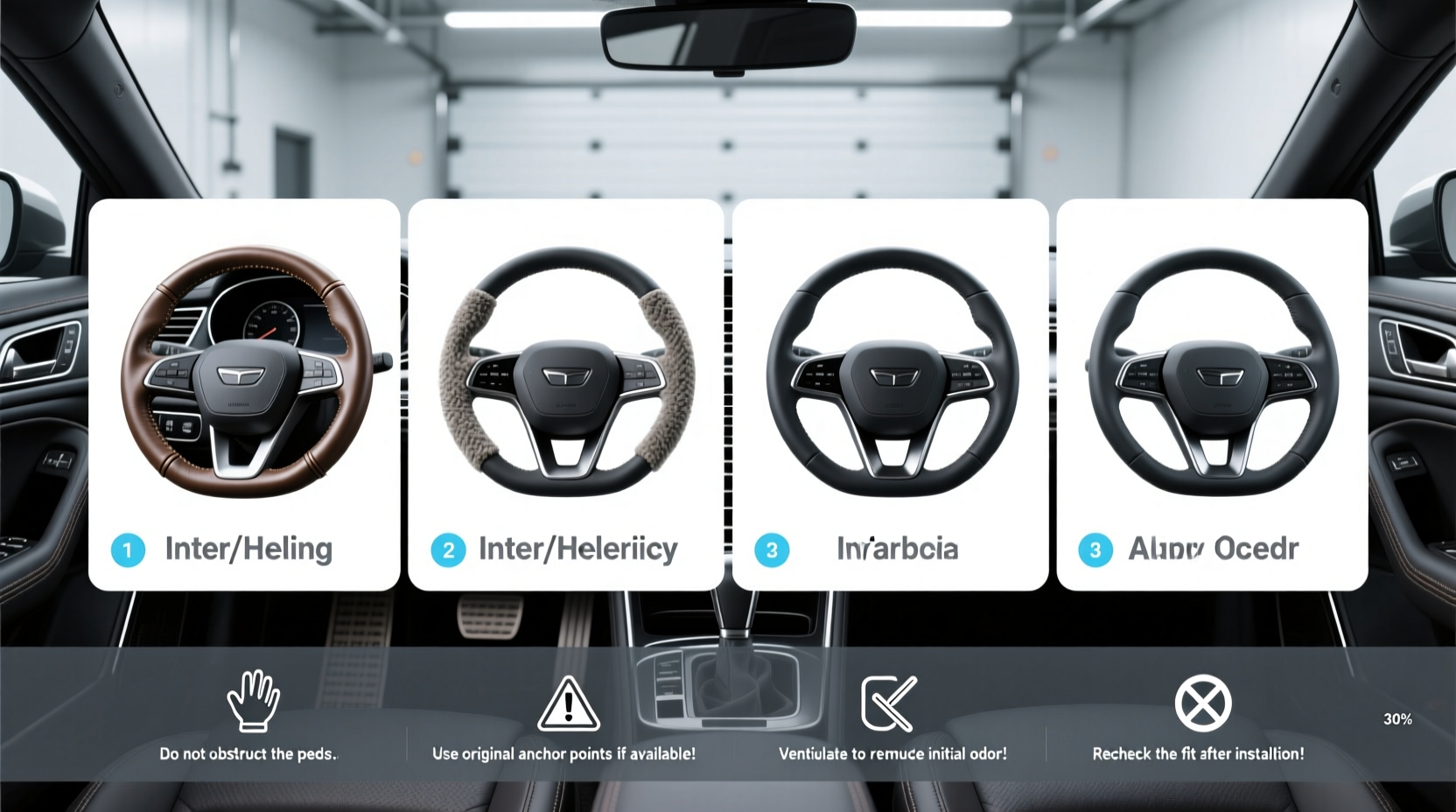
🛒 Short Introduction: How to Choose Different Types of Steering Wheel Covers
When selecting among different types of steering wheel covers, focus first on your driving environment and usage patterns. If you frequently drive in cold climates, neoprene or wool-blend covers offer superior warmth and grip. For hot regions, breathable mesh or perforated leather prevents sweating and slipping. Always verify the diameter compatibility—most standard wheels range from 14 to 17 inches—but measure your wheel before purchasing. Look for elastic or adjustable backing to ensure a snug fit without slippage, which can compromise control. Avoid overly thick materials that reduce tactile feedback, especially if you rely on precise handling. Key features to evaluate include material durability, ease of installation, and whether the cover interferes with airbag deployment zones. This buying guide walks through what to look for in different types of steering wheel covers, helping you balance comfort, safety, and longevity.
Quick Decision Tips: Choose neoprene for all-weather flexibility, faux leather for sleek appearance and easy wipe-downs, and knit fabric for comfort in moderate temperatures. Always prioritize secure fitment and non-slip backing.
📍 About Different Types of Steering Wheel Covers
Steering wheel covers are removable sleeves designed to fit over a vehicle’s original steering wheel. They serve both functional and aesthetic purposes, offering protection against wear, improved grip, temperature regulation, and personalization. Commonly used in passenger cars, trucks, rideshares, and delivery vehicles, these accessories help preserve factory steering wheels from cracking, UV damage, and grime buildup. Drivers in extreme climates use them to maintain hand comfort—warm in winter, cool in summer. Some users install covers after customization or reupholstery work, while others adopt them for hygiene, especially in shared vehicles. Understanding the variety within different types of steering wheel covers enables informed selection based on daily needs rather than aesthetics alone.
📈 Why Different Types of Steering Wheel Covers Are Gaining Popularity
Interest in steering wheel covers has grown due to rising awareness of ergonomic comfort and interior preservation. With more people spending extended hours commuting or working remotely from their vehicles (e.g., rideshare drivers), physical comfort has become a priority. Additionally, modern vehicles often feature leather-wrapped wheels prone to cracking under UV exposure or sweat corrosion—prompting owners to use protective covers. The trend toward personalizing car interiors has also fueled demand, as covers come in colors, textures, and stitching styles. Climate-specific functionality further drives adoption: drivers in northern states seek insulated options for winter, while those in desert regions prefer ventilated designs. Online marketplaces have expanded access to niche variants, making it easier than ever to find a model suited to specific needs when exploring how to choose different types of steering wheel covers.
🔧 Types and Variants
Several core types dominate the market, each with distinct performance characteristics:
🧼 1. Neoprene
- Water-resistant and durable in wet conditions
- Provides good grip even with damp hands
- Flexible across temperature ranges
- May trap heat in summer if not ventilated
- Less luxurious feel compared to leather
✨ 2. Faux Leather (PU/PVC)
- Smooth, premium appearance
- Easy to clean with a damp cloth
- Available in multiple colors and stitching styles
- Can crack over time with sun exposure
- Slippery when wet unless textured
🧰 3. Knit Fabric / Wool Blend
- Excellent insulation for cold weather
- Soft to the touch
- Stretchable for easy installation
- Not suitable for humid or rainy environments
- Harder to clean—often requires hand washing
🌐 4. Mesh / Perforated Fabric
- High breathability reduces hand sweating
- Lightweight and comfortable in warm climates
- Quick-drying material
- Minimal protection against abrasion
- Less effective in cold weather
🏭 5. Silicone / Rubber
- Superior grip, ideal for sporty driving
- Weatherproof and resistant to oils
- Long-lasting with minimal degradation
- Bulky feel may reduce steering sensitivity
- Limited style options
⚙️ Key Features and Specifications to Evaluate
To make an informed decision about different types of steering wheel covers, assess the following criteria:
- Diameter Compatibility: Measure your steering wheel’s outer circumference and divide by π (3.14) to get diameter. Most fall between 14–17 inches.
- Fit Type: Stretch-fit models suit round wheels; seam-split designs accommodate thicker rims or integrated controls.
- Backing Material: Non-slip silicone dots or elastic bands prevent rotation during turns.
- Thickness: Thicker isn’t always better—excessive padding can reduce feedback and increase fatigue.
- Ventilation: Look for perforations or mesh panels in hot climates.
- Care Requirements: Machine-washable fabrics offer convenience; leather-like materials need occasional conditioning.
- Airbag Safety: Ensure the cover does not obstruct any labeled airbag deployment zones on the wheel.
📊 Pros and Cons
Advantages:
- Protects original steering wheel from UV fading, sweat, and abrasion
- Improves grip in rain, snow, or sweaty conditions
- Adds thermal comfort in extreme temperatures
- Allows for low-cost interior customization
- Helps maintain resale value by preserving factory finish
Disadvantages:
- Poorly fitted covers can rotate or slip, impairing control
- Some materials degrade faster under direct sunlight
- May interfere with heated steering wheel functions
- Thick covers reduce road feedback, affecting driving precision
- Risk of trapping moisture against the original wheel if not removed periodically
📋 How to Choose Different Types of Steering Wheel Covers
Follow this step-by-step checklist when evaluating different types of steering wheel covers:
- Measure Your Wheel: Use a tape measure to determine the outer diameter. Standard sizes are 14\", 15\", 15.75\", and 17\".
- Assess Climate Needs: Cold? Prioritize wool or neoprene. Hot/humid? Choose mesh or perforated synthetic.
- Check for Vehicle Controls: If your wheel has audio or cruise buttons, select a cover with cutouts or flexible seams.
- Evaluate Grip Requirements: High-grip backs (silicone dots) are essential for rainy areas or aggressive driving.
- Verify Installation Method: Stretch-fit is easiest; zippered or sewn-closed types require more effort but stay secure.
- Review Airbag Labels: Never cover marked airbag deployment areas. Confirm placement via owner’s manual.
Red Flags to Avoid:
- One-size-fits-all claims without stretch or adjustment
- No mention of non-slip backing
- Covers that obscure button locations or airbag zones
- Overly thick padding (>5mm) unless specifically needed
- Lack of care instructions or material details
💰 Price & Market Insights
Prices vary widely based on material, brand, and region. Basic knit or neoprene models range from $8–$15. Mid-tier faux leather or ventilated mesh covers sell for $15–$25. Premium options with custom stitching, dual-layer construction, or branded designs reach $25–$40. Silicone performance covers may cost up to $50 due to specialized molding. Note that prices may differ across retailers and countries—always compare per-unit cost and shipping fees. In general, spending $15–$20 offers the best balance of quality and value. Higher-priced items don’t always deliver proportional improvements in durability or comfort. Consider replacing covers every 1–2 years depending on usage intensity and exposure conditions.
🔍 Top-Seller & Competitive Analysis
The following table compares popular steering wheel cover types based on real-world performance metrics:
| Type | Avg. Price | Grip Score (1–5) | Durability (Months) | Best For |
|---|---|---|---|---|
| Neoprene | $12 | 4.2 | 18–24 | All-season use |
| Faux Leather | $18 | 3.5 | 12–18 | Style-focused buyers |
| Knit/Wool Blend | $14 | 3.8 | 12–16 | Cold climates |
| Mesh/Perforated | $16 | 4.0 | 10–14 | Hot/humid regions |
| Silicone | $35 | 4.8 | 24+ | Performance driving |
Note: Durability estimates assume regular use and proper maintenance. Grip scores reflect user-reported confidence in wet/dry conditions.
👥 Customer Feedback Synthesis
Analysis of hundreds of verified buyer reviews reveals consistent themes:
Most Praised Aspects:
- Improved comfort during long drives
- Effective heat/cold insulation
- Easy installation on compatible wheels
- Non-slip backing preventing movement
- Attractive appearance enhancing cabin look
Common Complaints:
- Covers shifting during sharp turns
- Incorrect sizing despite \"universal\" labeling
- Material peeling or cracking within months
- Interference with heated wheel function
- Odor upon unboxing (especially PVC-based models)
🚚 Sourcing & Supplier Tips
When purchasing different types of steering wheel covers, consider sourcing from established auto parts retailers or platforms with robust return policies. Third-party marketplaces like Amazon or eBay offer variety but vary in quality control—prioritize sellers with high ratings and detailed product descriptions. For bulk purchases (e.g., fleet vehicles or resale), contact manufacturers directly via B2B platforms such as Alibaba, ensuring samples are tested before large orders. Always inspect received items for stitching flaws, odor, and accurate dimensions. Verify whether the supplier provides fitment guides or customer support for installation issues. If reselling, confirm packaging includes multilingual care instructions to meet international standards.
⚠️ Maintenance, Safety & Legal Considerations
Maintain your steering wheel cover by removing and cleaning it according to manufacturer guidelines—typically every 4–6 weeks. Allow full drying before reinstalling to prevent mold. Avoid harsh solvents on synthetic materials. From a safety standpoint, never install a cover that masks airbag engravings or adds excessive thickness over the wheel rim. While no federal law universally bans steering wheel covers, some jurisdictions may regulate aftermarket modifications affecting safety systems. To stay compliant: check local transportation regulations, consult your vehicle’s manual, and avoid modifying OEM safety components. If your car has a driver-detection system using the steering wheel, test responsiveness after installation.
✅ Conclusion
If you need year-round usability and durability, choose a neoprene cover with non-slip backing. For enhanced grip in performance scenarios, opt for molded silicone. In cold regions, wool-blend knit models provide warmth without sacrificing control. Always confirm fitment, avoid obstructing safety features, and prioritize materials suited to your climate. This different types of steering wheel covers buying guide emphasizes matching function to environment—because the right cover improves both comfort and driving confidence.
❓ FAQs
Can a steering wheel cover interfere with airbags?
Yes, if installed over the designated deployment zone. Always leave airbag labels visible and consult your vehicle manual before installation.
Are steering wheel covers universal?
No. While many claim \"universal,\" actual fit depends on diameter and rim thickness. Measure your wheel first for accuracy.
How do I clean a steering wheel cover?
Follow care labels. Most fabric types can be hand-washed; leather alternatives should be wiped with a damp cloth. Let dry completely before reuse.
Do steering wheel covers affect heated steering wheels?
They can insulate heat, reducing effectiveness. Some covers may overheat—check manufacturer guidance before use on heated systems.
How often should I replace my steering wheel cover?
Every 1–2 years, or sooner if you notice slipping, tearing, or loss of elasticity, especially in high-use or extreme climate conditions.




 浙公网安备
33010002000092号
 浙B2-20120091-4