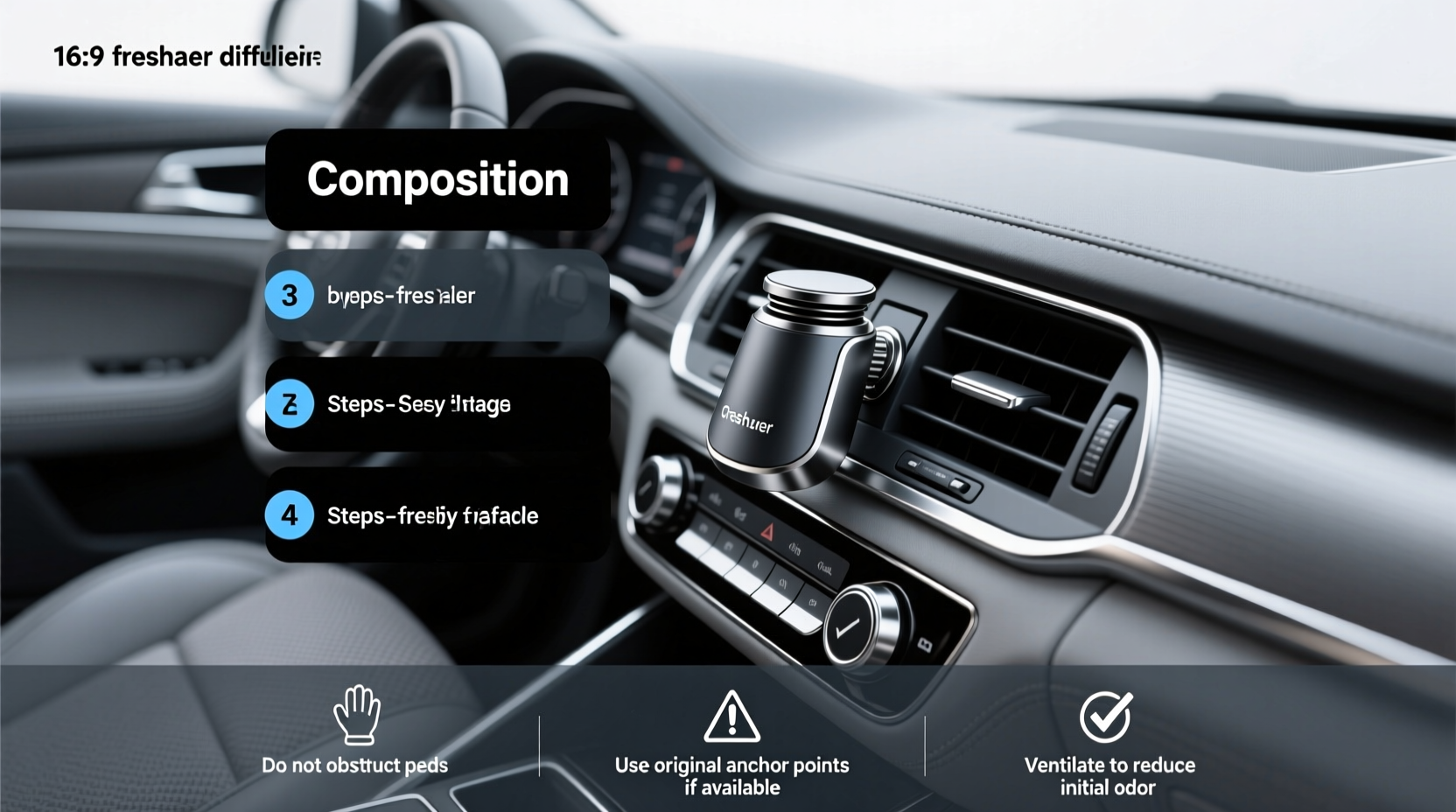
🛒 Short Introduction: What You Need to Know First
If you're trying to figure out how to choose diffuser automotive, start by identifying your primary use case—odor removal, air freshening, or cabin comfort enhancement. The right choice depends on vehicle size, power source availability (12V socket vs. USB), and whether you prefer essential oils or synthetic fragrances. Avoid models with unclear oil compatibility; some damage plastic interiors. Opt for low-noise (<40 dB) units if using during commutes. For small cars, compact passive diffusers work well; larger SUVs benefit from active fan-based systems. Always verify voltage compatibility—most operate on 12V DC but check before purchase.
📍 About Diffuser Automotive
An automotive diffuser is a compact device designed to disperse fragrance or essential oils within a vehicle’s interior. Unlike home versions, these are engineered for smaller, enclosed spaces with temperature fluctuations and limited power sources. They connect via cigarette lighter sockets, USB ports, or function passively without electricity. Common uses include neutralizing food, pet, or smoke odors; enhancing driving comfort; and creating a calming atmosphere during long trips. Some models integrate with HVAC systems, while others sit on dashboards or hang from vents. These devices are especially popular among ride-share drivers, families with children, and individuals sensitive to strong smells.
📈 Why Diffuser Automotive Is Gaining Popularity
As people spend more time in their vehicles—commuting, working remotely from parked cars, or road-tripping—the demand for improved cabin air quality has risen 1. Consumers increasingly view the car as an extension of personal space, prompting interest in ambient wellness solutions. Diffusers offer a low-cost way to manage persistent odors without masking them with overpowering sprays. Additionally, growing awareness of essential oil benefits—like peppermint for alertness or lavender for relaxation—has fueled adoption. Urban drivers in high-traffic areas use diffusers to counter exhaust fumes, while parents appreciate natural alternatives to chemical air fresheners. This shift reflects broader trends toward holistic lifestyle products that fit mobile environments.
🔧 Types and Variants
Different diffuser types suit different needs, power access levels, and budgets. Here's a breakdown:
| Type | How It Works | Pros | Cons |
|---|---|---|---|
| Passive Vent Clips | Absorbs oil into a pad; airflow disperses scent through AC vents | No power needed, silent, inexpensive | Weak scent throw, short lifespan (1–2 weeks) |
| Fan-Driven Electric | Uses small motor to blow air through scented cartridge or oil reservoir | Stronger dispersion, adjustable intensity, longer runtime | Requires 12V/USB power, audible fan noise (~35–50 dB) |
| Ultrasonic/Aroma Mist | Creates fine mist using water-oil mix and ultrasonic vibration | Pleasant visible mist, dual humidification + fragrance | Larger size, risk of liquid spill, higher cost |
| Hanging Gel Diffusers | Gel base slowly evaporates fragrance over weeks | No installation, decorative, child-safe | Non-adjustable, may degrade in heat, limited scent options |
| Integrated HVAC Systems | Connects directly to vehicle’s ventilation system (OEM or aftermarket) | Even distribution, professional finish, programmable | Expensive, complex installation, not portable |
⚙️ Key Features and Specifications to Evaluate
When assessing how to choose diffuser automotive models, consider these measurable factors:
- Power Source: Most plug into 12V sockets or USB-A/USB-C ports. Confirm compatibility with your vehicle’s outlet type and amperage.
- Noise Level: Fan-based units should be under 45 dB for quiet operation. Check product specs or user reviews for sound complaints.
- Scent Intensity Control: Look for adjustable settings (low/medium/high) or intermittent modes to avoid overwhelming the cabin.
- Tank Capacity & Runtime: Larger tanks (≥5 mL) last longer between refills. Battery-powered models typically run 4–12 hours per charge.
- Oil Compatibility: Some accept only proprietary cartridges; others allow third-party essential oils. Verify material resistance—citrus oils can degrade rubber seals.
- Size & Mounting Style: Dashboard, vent-mount, or cupholder designs affect visibility and stability. Measure available space before buying.
- Safety Features: Auto-shutoff when empty, leak-proof chambers, and overheating protection reduce risks.
- Material Quality: ABS plastic is common; medical-grade silicone seals improve durability. Avoid units with strong off-gassing smells.
✅ Pros and Cons
Advantages: Continuous odor control, customizable scents, potential mood enhancement, non-aerosol delivery (no propellants), and ease of use.
Drawbacks: Risk of over-saturation in small cabins, possible interference with dashboard sensors (if poorly placed), electrical load on battery when engine off, and inconsistent performance in extreme temperatures. Not recommended for individuals with asthma or fragrance sensitivities unless using hypoallergenic oils.
📋 How to Choose Diffuser Automotive
Follow this step-by-step checklist to make a confident selection:
- Define Your Goal: Are you eliminating odors, improving focus, or adding ambiance? Choose oil type accordingly (e.g., tea tree for disinfecting, eucalyptus for clarity).
- Check Power Availability: Does your car have a working 12V port or accessible USB outlet? If not, consider passive or battery-operated options.
- Select Type Based on Use: Daily commuters → fan-driven; occasional users → gel or vent clip; luxury setups → integrated systems.
- Verify Dimensions: Measure where you plan to place it. Avoid blocking gauges, airbags, or HVAC vents.
- Review Oil Requirements: Open-tank models save money but require careful filling. Cartridge-based ones are mess-free but cost more long-term.
- Test Noise Tolerance: Read customer feedback about operational sound. Units above 50 dB may distract during phone calls or music.
- Evaluate Safety Certifications: Look for FCC, CE, or RoHS markings indicating basic electrical safety standards.
Red Flags to Avoid:
❗ No clear instructions on oil dilution
❗ Reports of leaking in temperature extremes
❗ Poorly secured vent clips that fall during turns
❗ Claims of 'ionization' or 'air purification' without HEPA/carbon filters (often misleading)
❗ Missing auto-off feature in liquid models
💰 Price & Market Insights
Pricing varies significantly by technology and brand origin:
- $5–$15: Passive clips, gel diffusers, basic fan units (often no-name brands). Suitable for trial use but expect shorter lifespans.
- $16–$35: Mid-tier electric diffusers with adjustable fans, LED lighting, and refillable tanks. Best value for regular users.
- $36–$70: Advanced models with Bluetooth controls, app integration, or dual-chamber systems. Found in specialty auto stores or online platforms.
- $70+: OEM-integrated or custom-installed HVAC-compatible systems. Typically sold through dealerships or professional installers.
Price doesn’t always reflect quality—some affordable models outperform pricier ones in scent distribution and build. Consider total cost of ownership: cartridge-only systems can cost $3–$8 per refill every 2–4 weeks. Refillable tanks let you use cheaper essential oils at ~$0.50 per mL.
📊 Top-Seller & Competitive Analysis
Below is a comparison of frequently purchased models across major retail platforms:
| Model | Type | Power | Runtime | Noise Level | Refillable? | Avg. Price |
|---|---|---|---|---|---|---|
| AutoMist Pro 2000 | Fan-Driven | 12V | Continuous (engine on) | 38 dB | Yes | $22 |
| VentAroma Clip S3 | Passive Vent | None | 14 days | 0 dB | No (pad replacement) | $8 |
| AuraCar Mini Ultrasonic | Ultrasonic | USB-C | 6 hours (battery) | 32 dB | Yes | $29 |
| ScentFlow Elite X1 | Fan-Driven + App | 12V | 8 hrs (on battery mode) | 41 dB | Yes | $55 |
| OEM Fragrance Module (Aftermarket) | HVAC Integrated | Direct Wire | On demand | 28 dB | No (cartridge) | $120 |
Note: Performance claims like 'up to 8 hours' depend on setting and ambient temperature. Always cross-check with recent buyer reviews.
📌 Customer Feedback Synthesis
Based on aggregated user reviews across e-commerce sites:
Common Praises:
• Effective at reducing stale food and pet odors
• Easy setup—plug-and-play functionality
• Pleasant, consistent fragrance release
• Compact design fits most dashboards
• LED lights add aesthetic appeal (especially at night)
Frequent Complaints:
• Oil leakage after temperature changes (especially in parked cars)
• Weak scent output despite high settings
• Vent clips break or lose grip over time
• Strong initial plastic smell upon unboxing
• Cartridges incompatible across 'compatible' brands
Top-rated models consistently score well on reliability and scent accuracy. Negative experiences often stem from mismatched expectations—e.g., expecting whole-cabin coverage from a mini clip.
🔗 Sourcing & Supplier Tips
For individual buyers, Amazon, Walmart, and auto parts retailers (e.g., AutoZone) offer wide selections with return policies. When sourcing in bulk (for fleet vehicles or resale):
- Request samples before ordering large quantities.
- Work with suppliers who provide spec sheets including voltage, wattage, and material composition.
- Prefer vendors with clear warranty terms (at least 6 months).
- For international shipping, confirm plug type compatibility (e.g., North American vs. European 12V sockets).
- If reselling, ensure packaging includes multilingual instructions and safety warnings.
To verify authenticity, compare model numbers with manufacturer websites. Beware of counterfeit listings mimicking popular designs.
🧼 Maintenance, Safety & Legal Considerations
Clean diffusers every 2–4 weeks to prevent clogs and mold growth, especially in humid climates. For liquid models, empty unused oil and wipe reservoir with isopropyl alcohol. Replace pads or cartridges as recommended. Never leave ultrasonic models unattended with water inside.
Safety-wise, ensure the unit doesn’t obstruct driver visibility or interfere with airbag deployment zones. Keep away from direct sunlight to avoid pressure buildup in sealed chambers. While most consumer-grade diffusers don’t violate regulations, modified or high-output industrial units might fall under local emissions or electrical codes.
To stay compliant:
- Check manufacturer specs for certifications
- Verify retailer return policy in case of malfunction
- Confirm local regulations if installing wired systems (may require professional certification in some regions)
✨ Conclusion
Choosing the right diffuser automotive depends on balancing convenience, performance, and safety. If you want a hassle-free option for short drives, go for a passive vent clip. For consistent, adjustable fragrance in daily commutes, select a quiet, refillable fan-driven model under $35. Families or pet owners should prioritize leak-proof designs and natural oils. Luxury vehicle owners might explore integrated HVAC solutions despite higher costs. Always test one unit first before bulk purchases. Remember: effectiveness isn’t just about strength—it’s about suitability for your driving habits and cabin environment.
❓ FAQs
No—check the manual. Some oils (like citrus or pine) degrade plastics or rubber seals. Use only oils labeled safe for plastic components.
Minimal risk when engine is running. But continuous use with engine off (e.g., parked listening to radio) can deplete battery over hours. Models with auto-off reduce this risk.
Possible for sensitive individuals. Strong scents may trigger headaches or respiratory irritation. Use mild concentrations and ventilate periodically.
Every 2–4 weeks, or immediately if changing oil types. Residue buildup reduces efficiency and may cause odors.
Avoid placing devices directly over dashboard sensors (e.g., rain/light sensors) or airbag zones. Steam or physical obstruction could impair function.




 浙公网安备
33010002000092号
 浙B2-20120091-4