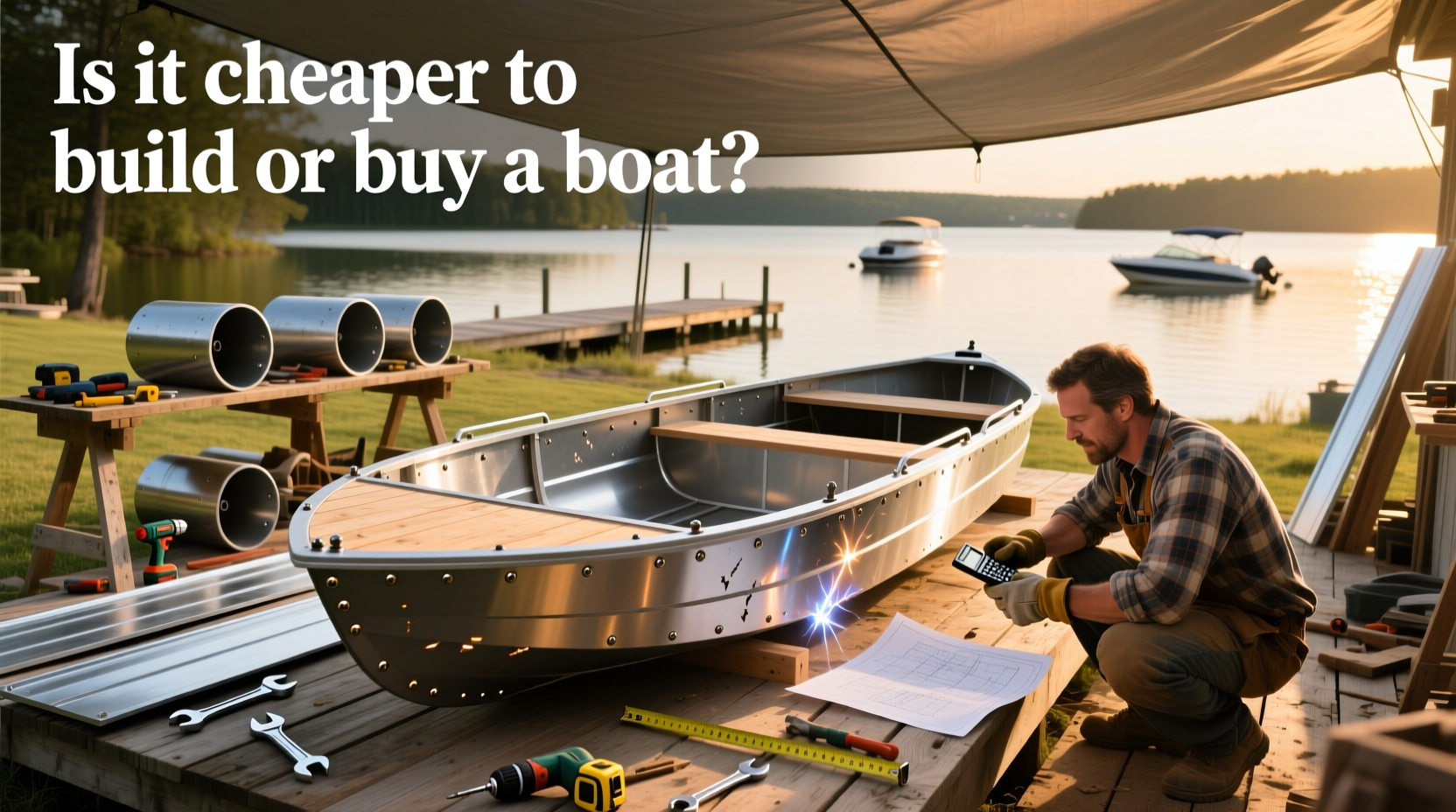
Short Introduction: Should You Build or Buy a Pontoon Boat?
When considering how to choose a DIY pontoon boat and whether it’s cheaper to build or buy a boat, the answer depends on your skills, time, and priorities. Building a pontoon boat from a kit can save money upfront—a basic DIY mini pontoon kit starts around $1,649 for pontoons, brackets, and hardware 1. However, you must supply the deck, fasteners, marine carpet, and tools. In contrast, a new mid-level pre-built pontoon boat starts at approximately $35,000 and can exceed $55,000 with upgrades 2. While building may seem cheaper, hidden costs like materials, labor value, and potential errors can close the gap. If you have tools, welding skills, and time, DIY could offer savings and full customization ✨. But if you want reliability, warranty, and immediate use, buying is often more cost-effective in the long run ⏱️.
About DIY Pontoon Boats: What They Are and Who Uses Them
A DIY pontoon boat refers to a vessel assembled by the owner using a kit or raw materials rather than purchasing a factory-built model. These boats typically consist of two or three aluminum pontoons, a frame, decking, and seating—all sourced and assembled independently. 🛠️
They are popular among hobbyists, weekend anglers, lake homeowners, and budget-conscious boaters who want a simple platform for fishing, lounging, or short cruises. Because they’re modular, DIY pontoons are often smaller (e.g., 8–16 feet) and less complex than commercial models. Some kits, like the 4' x 8' mini pontoon, serve as swim platforms or tender boats rather than primary vessels 🚤.
The core appeal lies in control: you decide the size, layout, materials, and features. This makes them ideal for niche uses where off-the-shelf models don’t fit—like shallow ponds or space-limited docks.
Why DIY Pontoon Boats Are Gaining Popularity
Interest in building pontoon boats has grown due to rising retail prices, supply chain delays, and increased access to online tutorials and kits 🔧. Platforms like YouTube and forums such as PontoonForums.com provide step-by-step guidance, lowering the barrier to entry.
Additionally, economic uncertainty has pushed more consumers toward cost-saving alternatives. A DIY approach allows buyers to spread expenses over time and avoid dealer markups. Customization is another driver—owners can integrate solar panels, custom lighting, or specialized fishing mounts not available in standard models ✅.
Environmental awareness also plays a role: some builders repurpose materials or design lightweight boats that require smaller, fuel-efficient motors ⚡.
Types and Variants of DIY Pontoon Boats
Different configurations suit various needs. Below are common types:
- Mini Pontoon Kits (4’ x 8’): Compact and affordable, these are often used as swim platforms or dock extensions. Pros: Low cost (~$1,649), easy to assemble. Cons: Not suitable for open water or high-speed use.
- Two-Tube Pontoons: Most common design. Stable and efficient for lakes and calm rivers. Pros: Good balance of performance and simplicity. Cons: Less stability than tri-toons in waves.
- Tri-Toon (Three-Tube) Designs: Offer enhanced buoyancy and smoother rides. Pros: Better handling at speed. Cons: More expensive materials and complex alignment during assembly.
- Fishing-Focused Builds: Include rod holders, live wells, and casting decks. Often built on longer frames (14–18 ft). Pros: Tailored to angler needs. Cons: Require careful weight distribution planning.
- Luxury-Custom Builds: High-end DIY versions with premium finishes, LED lighting, and integrated sound systems. Pros: Unique aesthetics. Cons: Can exceed pre-built prices if using top-tier components.
Key Features and Specifications to Evaluate
When comparing how to choose a DIY pontoon boat versus buying one, assess these technical aspects:
- Pontoon Material & Gauge: Marine-grade aluminum (typically 0.080” to 0.125”) resists corrosion. Thicker walls last longer but cost more.
- Frame Design: Galvanized steel or aluminum frames must be rust-resistant and properly welded.
- Decking Material: Options include marine plywood, composite decking, or aluminum grating. Must withstand moisture and foot traffic.
- Weight Capacity: Check total displacement minus boat weight. Ensure it supports passengers, gear, and motor.
- Motor Compatibility: Verify transom strength for outboard motors (usually up to 25–40 HP for DIY builds).
- Buoyancy Foam: Closed-cell foam inside pontoons adds safety in case of leaks.
- Assembly Complexity: Kit-based models reduce guesswork; raw builds demand engineering knowledge.
Pros and Cons of Building vs Buying
| Pros of Building | Cons of Building |
|---|---|
| Cost Savings Potential: Lower initial kit cost | Hidden Costs: Materials, tools, paint, fasteners add up |
| Full Customization: Choose every component and layout | Time Investment: Can take weeks or months |
| Skill Development: Learn welding, marine systems, design | No Warranty: Repairs are your responsibility |
| Pride of Ownership: Unique, handcrafted result | Risk of Errors: Structural flaws affect safety and performance |
Best for DIY: Skilled individuals with free time, tools, and desire for customization.
Best for Buying: Those prioritizing convenience, durability, and resale value.
How to Choose: Step-by-Step Buying Guide
Follow this checklist to decide between building and buying:
- Assess Your Skills ⚙️: Do you have experience with metalwork, electrical wiring, or fiberglass? If not, expect a steep learning curve.
- Estimate Total DIY Cost 💰: Add kit price + estimated materials (decking, carpet, hardware) + tools (if not owned). Compare to pre-built options.
- Value Your Time ⏱️: At $25/hour, 100 hours of labor = $2,500. Factor this into your budget.
- Define Use Case 🎯: Will you fish, cruise, or host guests? Larger, heavier-use scenarios favor proven pre-built models.
- Check Local Regulations 📌: Some areas require registration, safety equipment, or inspections—even for homemade boats.
- Review Warranty Needs ✅: Pre-built boats often include 3–5 year structural warranties.
- Using non-marine-grade materials (risk of rust/failure)
- Skipping buoyancy calculations (safety hazard)
- Ignoring proper sealing or grounding (electrical/fire risk)
- Overlooking weight distribution (instability risk)
Price & Market Insights
Understanding pricing helps evaluate true value:
- DIY Kits: $1,600–$5,000 (base only; excludes deck, motor, seats)
- Materials & Tools: $1,000–$4,000+ depending on quality and size
- Pre-Built Entry-Level: $35,000–$45,000 (22–23 ft, 150 HP motor)
- Mid-to-High Range Models: $45,000–$70,000+ with luxury features
While DIY appears cheaper initially, total out-of-pocket costs can reach $6,000–$8,000 for a well-finished boat. This is still far below most new pre-builts, but doesn't account for labor or long-term reliability. Used pre-built pontoons (5–10 years old) may offer better value than DIY if maintenance history is known.
| Feature | DIY Pontoon Kit | Pre-Built Pontoon |
|---|---|---|
| Base Price | ~$1,649 | $35,000+ |
| Total Estimated Cost | $4,000–$8,000 | $35,000–$55,000+ |
| Assembly Required | Full (you build) | None |
| Customization Level | High | Limited |
| Warranty | None | Yes (typically 3–5 years) |
| Time to Launch | Several weeks | Immediate |
Top-Seller & Competitive Analysis
Popular pre-built brands include Bennington, Harris, and Sun Tracker. These offer proven designs, dealer networks, and financing. For DIY, Pond King and Northern Tool sell kits aimed at beginners.
When reviewing top-sellers, consider:
- Resale Value: Factory models hold value better.
- Dealer Support: Helpful for maintenance and upgrades.
- Proven Designs: Tested hulls and weight distributions reduce risk.
DIY kits lack standardized reviews, so rely on community feedback from forums and videos.
Customer Feedback Synthesis
Analysis of user discussions reveals consistent themes:
- Positive Feedback:
- “I saved thousands building my own.”
- “Love the custom layout—exactly what I wanted.”
- “Great project for retirees with time.”
- Common Complaints:
- “Underestimated material costs—it added $2k.”
- “Spent 3 months fixing alignment issues.”
- “No support when a weld failed after six months.”
Many DIY builders report satisfaction with the process but acknowledge challenges in precision and finishing.
Sourcing & Supplier Tips
For DIY projects:
- Buy kits from reputable suppliers like Pond King or marine specialty stores.
- Source aluminum from local metal suppliers; verify marine-grade certification.
- Use marine-rated fasteners (stainless steel or coated).
- If ordering online, confirm return policies and shipping damage coverage.
- Inspect all components upon arrival for dents, cracks, or missing parts.
For pre-built boats, compare dealers regionally—off-season sales or floor models can yield 10–20% discounts 🚚.
Maintenance, Safety & Legal Considerations
All boats—homemade or factory-built—require routine care:
- Cleaning: Rinse with fresh water after each use to prevent corrosion.
- Inspections: Check welds, fittings, and pontoons annually for leaks or stress.
- Safety Gear: Life jackets, fire extinguisher, sound-signaling device required in most regions.
- Registration: Homemade boats usually need titling and registration. Check with your state’s DMV or equivalent agency.
- Insurance: May be harder to insure a DIY boat; insurers often require proof of safe construction.
Always follow U.S. Coast Guard or local maritime authority guidelines where applicable.
Conclusion: Which Option Is Right for You?
So, is it cheaper to build or buy a pontoon boat? Building can be cheaper—but only if you already have tools, skills, and time. The initial kit cost is low, but final expenses depend on material choices and labor investment. For those seeking reliability, warranty, and immediate use, buying a pre-built model remains the more predictable choice.
If you enjoy hands-on projects and want full creative control, DIY offers unmatched customization and personal satisfaction ✨.
If you prioritize safety, durability, and minimal hassle, a factory-built pontoon is likely worth the higher price tag ⚖️.
Ultimately, your decision should align with your budget, timeline, skill level, and intended use.
Frequently Asked Questions
- Can I register a DIY-built pontoon boat?
- Yes, most jurisdictions allow registration of homemade boats. You’ll need to provide proof of construction, dimensions, and hull identification number (HIN). Check with your local motor vehicle or boating authority for specific requirements.
- How long does it take to build a DIY pontoon boat?
- Typically 40–100 hours depending on size and complexity. Beginners may take longer, especially if learning welding or electrical systems. Allocate extra time for unexpected issues.
- Are DIY pontoon boats safe?
- They can be, if built correctly using marine-grade materials and proper techniques. Critical factors include watertight seals, correct buoyancy, structural integrity, and adherence to safety standards. Always inspect thoroughly before launching.
- Do DIY pontoon kits include everything needed?
- No. Most kits include pontoons, brackets, and hardware only. You must supply decking, railing, seats, flooring, and motor. Confirm contents with the supplier before purchase.
- Can I finance a DIY pontoon boat project?
- Traditional marine loans typically cover registered, titled vessels. Since DIY boats aren’t pre-approved assets, financing is rare. Most builders use personal savings or credit lines.




 浙公网安备
33010002000092号
 浙B2-20120091-4