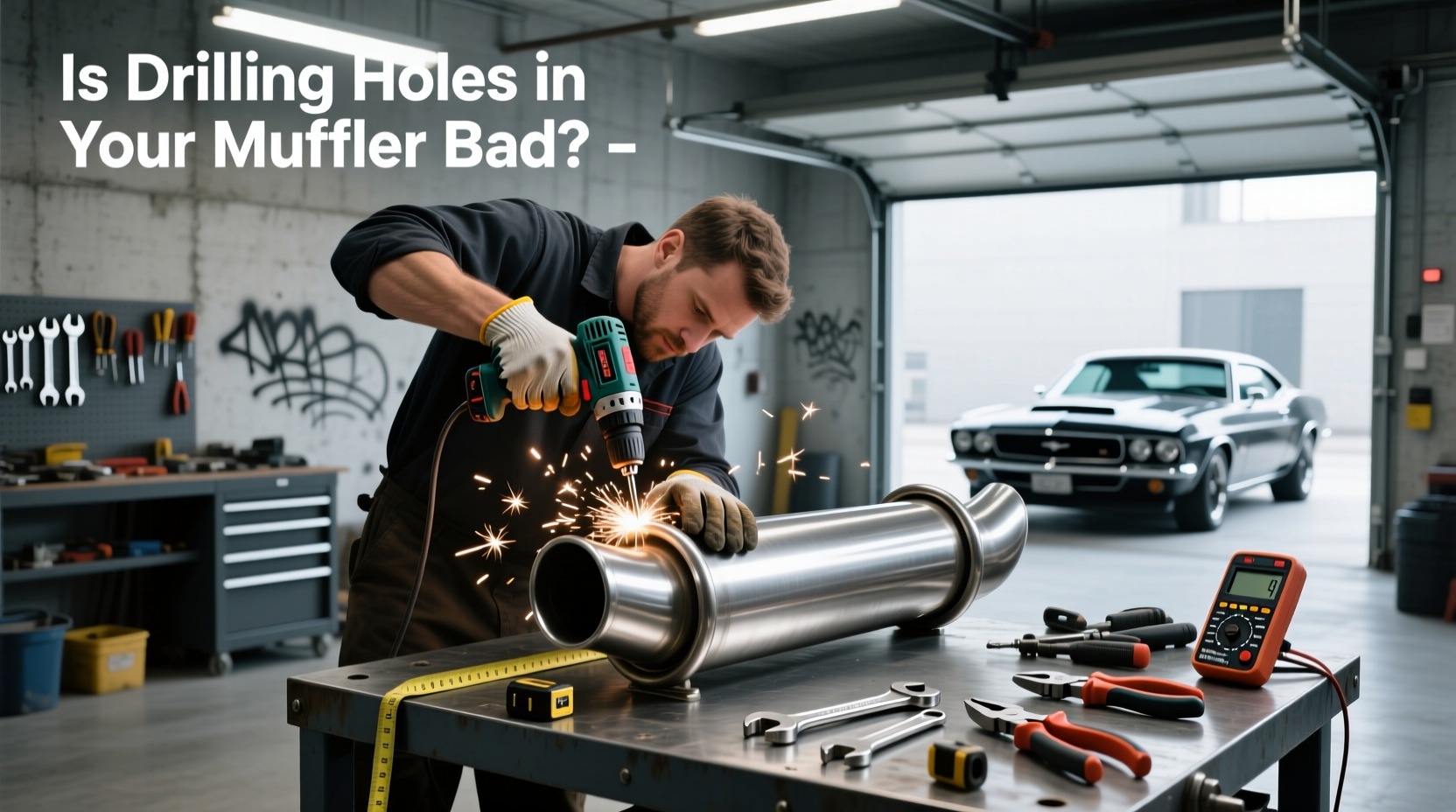
If you're asking how to choose a drill muffler or wondering is drilling holes in your muffler bad?, the short answer is: yes, drilling holes poses serious safety, legal, and mechanical risks. While some attempt this DIY method to make their vehicle louder, it compromises carbon monoxide containment, increases emissions, and may reduce engine performance due to altered backpressure 1. Instead of damaging your existing muffler, consider purpose-built aftermarket options like performance mufflers or bypass valves that deliver desired sound safely and legally. Key factors include material durability, sound profile, compatibility with your vehicle’s exhaust system, and local noise regulations.
About Drill Muffler, Is Drilling Holes in Your Muffler Bad?
The term "drill muffler" typically refers not to a product but to a controversial modification—intentionally drilling holes into an existing muffler to amplify exhaust noise. This practice is often confused with factory-drilled drain holes designed to release condensation 2. However, creating new holes changes the acoustics and structural integrity of the muffler. Common scenarios include enthusiasts seeking a sportier sound without investing in full exhaust upgrades. Despite its low cost, this approach undermines the core functions of a muffler: noise reduction and safe exhaust gas routing away from the cabin.
Why Drill Muffler, Is Drilling Holes in Your Muffler Bad? Is Gaining Popularity
Despite known risks, modifying mufflers by drilling remains popular due to three main motivations: ✨ perceived aggressive sound enhancement, 💰 low upfront cost compared to aftermarket systems, and 🏎️ the belief in improved engine performance through reduced backpressure 3. Social media and automotive forums have amplified this trend, showcasing modified vehicles with deep, rumbling exhaust notes. However, many users later report dissatisfaction due to excessive drone, failed emissions tests, or safety concerns. The appeal lies in accessibility—anyone with a drill can attempt it—but long-term consequences outweigh short-term gratification for most drivers.
Types and Variants
While there's no commercial "drill muffler," several legitimate alternatives exist:
- Straight-Through Mufflers: Allow minimal obstruction, producing a loud, aggressive tone. Best for performance builds but may increase cabin drone.
- Glasspack Mufflers: Use layered insulation to absorb high frequencies while allowing bass notes. Offer moderate volume increase with smoother sound.
- Chambered Mufflers: Feature internal baffles that reflect sound waves destructively. Provide balanced tone and effective noise control.
- Performance Exhaust Tips: Decorative tips with perforations or flares that slightly amplify sound without altering backpressure.
- Bypass (Cutout) Valves: Electric or manual valves that redirect exhaust flow around the muffler on demand, offering switchable loud/quiet modes 5.
Each type varies in sound output, installation complexity, and cost. Unlike drilled mufflers, these are engineered to maintain system integrity.
Key Features and Specifications to Evaluate
When considering modifications, assess these criteria:
- Material (Stainless Steel vs. Aluminized Steel): Stainless resists corrosion longer but costs more. Aluminized offers decent lifespan at lower price.
-
: Check manufacturer dB ratings if available. Aim for levels compliant with local ordinances. - Diameter and Fitment: Must match your vehicle’s exhaust pipe size (commonly 2–3 inches).
- Backpressure Balance: High-flow designs minimize restriction without eliminating necessary backpressure for engine efficiency.
- Installation Method: Bolt-on systems are easier than weld-required setups.
- Emissions Compliance: Ensure modifications don’t interfere with catalytic converters or OBD-II monitoring.
Always verify compatibility using your vehicle’s make, model, and year before purchase.
Pros and Cons
| Aspect | Pros | Cons |
|---|---|---|
| Drilling Holes | Low cost, immediate result | Risk of CO poisoning, fire hazard, illegal noise, reduced fuel economy |
| Aftermarket Muffler | Engineered sound, durable, maintains safety | Higher initial cost, professional install may be needed |
| Exhaust Cutout Valve | On-demand loudness, reversible setup | Complex plumbing, potential leak points |
Drilling holes is suitable only for temporary testing under controlled conditions—not daily driving. Aftermarket solutions suit those prioritizing longevity and legality.
How to Choose Drill Muffler, Is Drilling Holes in Your Muffler Bad?
To make an informed decision:
- Assess Your Goal: Want subtle aggression or race-car roar? Define your ideal sound profile.
- Avoid Drilling Permanent Holes: It voids warranties, risks health, and may fail inspections.
- Research Local Laws: Many areas cap exhaust noise at 95 dB measured at 50 feet. Exceeding limits risks fines 5.
- Check Emissions Requirements: Some states require original equipment exhaust configurations.
- Test Sounds Online: Watch video reviews comparing muffler types on similar vehicles.
- Consult a Mechanic: Get feedback on how modifications affect engine tuning and diagnostics.
❗ Red Flags to Avoid: Sellers claiming “more power from drilling,” lack of fitment guides, or products that block oxygen sensors.
Price & Market Insights
Prices vary widely based on material, brand, and design:
- Basic Glasspack Mufflers: $50–$120
- Premium Stainless Chambered Units: $150–$300
- Electronic Bypass Systems: $200–$500+
DIY drilling costs nearly nothing but risks thousands in repairs or medical emergencies. Mid-range performance mufflers offer best value for most users. Prices may differ by region and retailer, so compare multiple sources and confirm return policies before buying.
Top-Seller & Competitive Analysis
| Product Type | Sound Level | Installation | Lifespan | Legal Risk |
|---|---|---|---|---|
| Flowmaster 40 Series | High (aggressive) | Bolt-on/weld | 8+ years | Moderate |
| MagnaFlow Direct-Fit | Medium-high (smooth) | Bolt-on | 6–10 years | Low |
| Husky Liners Slash-Cut Tip | Minimal change | Clamp-on | 3–5 years | Negligible |
| VT Industries Cutout Kit | Adjustable (on/off) | Weld + electrical | 5–7 years | Depends on use |
Data reflects common user reports and product specs 5. Choose based on balance between sound, ease of install, and regulatory environment.
Customer Feedback Synthesis
Analysis of buyer reviews reveals consistent themes:
- Positive: Satisfaction with deep tone from chambered mufflers, appreciation for bolt-on convenience, praise for rust resistance in stainless units.
- Negative: Complaints about interior drone at highway speeds, issues with incorrect fitment, regret over loudness attracting police attention.
- Neutral: Mixed opinions on cutout valves—valued for flexibility but criticized for maintenance needs.
No major brand received widespread acclaim for solving all trade-offs; expectations management is key.
Sourcing & Supplier Tips
Purchase from reputable auto parts retailers or specialized exhaust suppliers. For bulk or resale:
- Verify warranty terms (typically 1–3 years limited).
- Request sample units to test fit and finish.
- Ensure supplier provides technical diagrams and compatibility charts.
- Use independent labs or tools to measure actual sound output if marketing claims seem exaggerated.
Always inspect packaging and weld quality upon delivery. Return policies should cover misfit or defects.
Maintenance, Safety & Legal Considerations
Maintain any exhaust system by checking for leaks, corrosion, and loose hangers every 12,000 miles. Never drive with a damaged muffler—risk of carbon monoxide entering the cabin is real 4. Legally, modifications must not increase emissions or exceed noise limits. Confirm rules via your state DMV or transportation authority. Even legal systems can draw complaints in residential areas—use discretion.
Conclusion
If you want a louder exhaust, skip drilling holes in your muffler—it’s unsafe and often illegal. Instead, choose a purpose-built performance muffler or valve system that matches your vehicle and local regulations. For budget-conscious buyers, glasspacks offer noticeable sound changes with moderate investment. Enthusiasts who want control should consider bypass valves. Always prioritize safety, emissions compliance, and long-term reliability over short-term auditory impact.
Frequently Asked Questions
- Can drilling holes in a muffler increase horsepower? Not significantly. While reducing backpressure might seem beneficial, modern engines are tuned for specific exhaust flow. Drilling often disrupts scavenging effects and can hurt efficiency 5.
- Are there any safe ways to make my car louder? Yes. Install a performance muffler, upgrade to a cat-back system, or add a cutout valve—all preserve exhaust integrity while enhancing sound.
- Will a hole in my muffler cause my engine light to come on? Possibly. Leaks near sensors can trigger OBD-II codes related to oxygen readings or fuel trim imbalances.
- How do I know if my exhaust modification is legal? Check your local noise ordinance and emissions requirements. When in doubt, consult a licensed inspection station or dealership service department.
- What’s the difference between a muffler delete and drilling holes? A delete removes the muffler entirely, increasing flow and noise drastically. Drilling creates leaks but leaves structure intact—both compromise safety, though deletes are more extreme.




 浙公网安备
33010002000092号
 浙B2-20120091-4