
If you’re a typical user, you don’t need to overthink this. You can wire two subwoofers to one amplifier—most commonly using parallel or series connections—to match your amp’s stable impedance (like 1 ohm, 2 ohm, or 4 ohm). Over the past year, more DIY audio builders have opted for dual subs on a single mono amplifier to save space and cost while boosting bass output. The key is knowing your sub’s voice coil configuration (SVC or DVC) and ensuring the final load doesn’t exceed your amp’s capabilities. If you're asking how to choose the right wiring setup or what to look for in dual subwoofer wiring, focus on three things: impedance matching, full coil utilization, and clean power delivery. Skip mismatched loads—they’re the top reason for blown amps.
About Dual Subwoofer Wiring
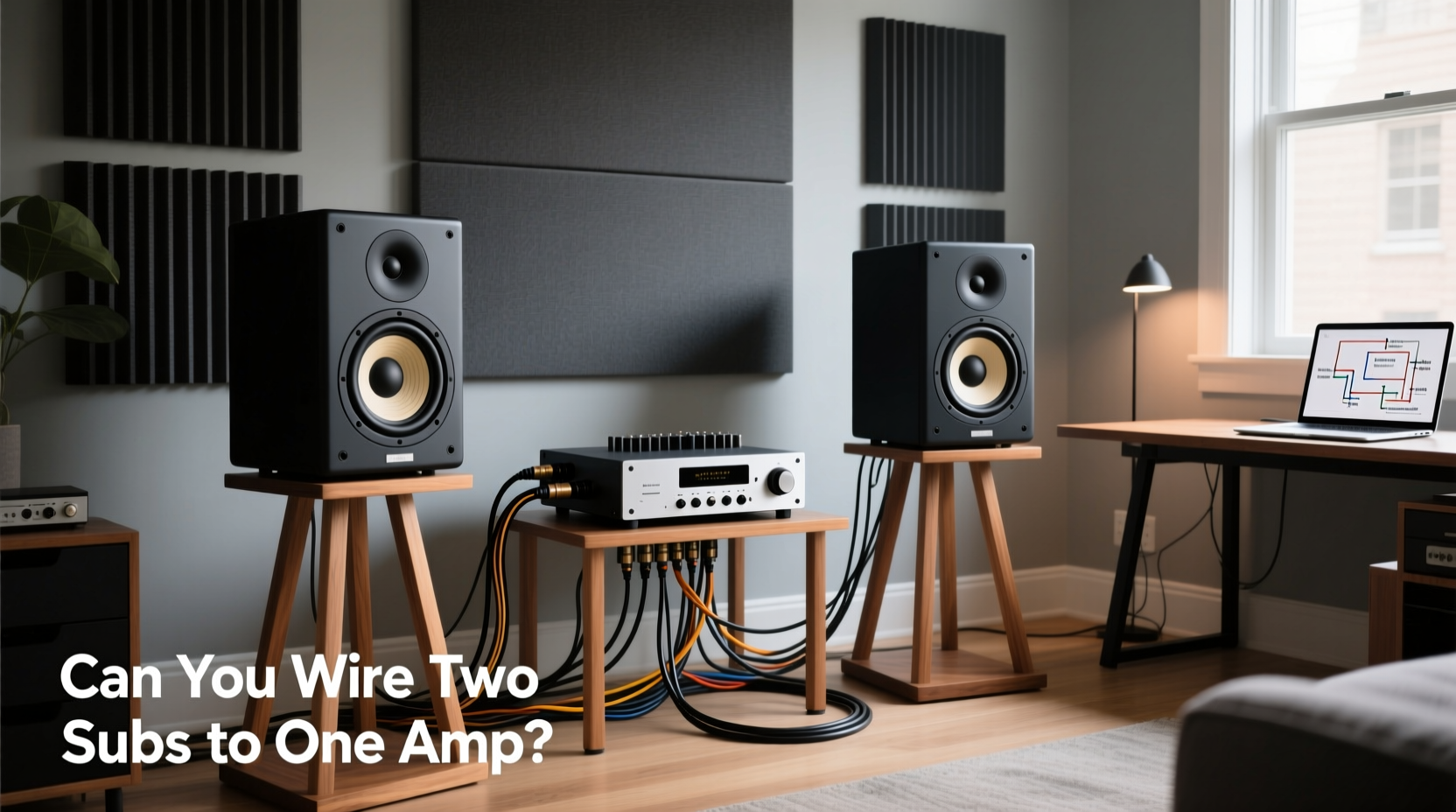
Wiring two subwoofers to a single amplifier isn’t about doubling hardware—it’s about optimizing electrical load for consistent, powerful bass. This setup is common in car audio systems where space and budget limit the use of multiple amplifiers. Instead, users connect two subs—either single voice coil (SVC) or dual voice coil (DVC)—to one mono block amp designed for low-impedance operation.
The core principle is impedance management. Amplifiers are rated for stability at specific ohm levels (commonly 1Ω, 2Ω, or 4Ω). Connecting two subs changes the total resistance (load) seen by the amp. Too low? Risk overheating or shutdown. Too high? Underpowered output. Your goal is alignment: configure the subs so their combined impedance matches what the amp handles best.
If you’re a typical user, you don’t need to overthink this. Most factory-grade mono amps work reliably with either 2-ohm or 1-ohm loads when paired correctly with DVC 4-ohm subs. Just avoid leaving voice coils unconnected—doing so distorts power distribution and risks thermal damage.
Why This Setup Is Gaining Popularity
Lately, compact yet powerful Class D mono amplifiers have made single-amp, dual-sub configurations more accessible. These amps efficiently drive low-impedance loads without excessive heat, enabling deeper bass from smaller enclosures. Enthusiasts appreciate the cleaner install—fewer components, less wiring clutter, lower power draw from the battery.
Another shift: more aftermarket subwoofers now come standard with dual voice coils, offering flexible wiring options. Combined with affordable multimeter tools and free online tutorials, even beginners can achieve professional-level setups.
This piece isn’t for keyword collectors. It’s for people who will actually use the product.
Types and Variants
Single Voice Coil (SVC) Subwoofers
SVC subs have one positive and one negative terminal per driver. Simpler to wire, but offer fewer impedance options.
- Pros: Easier to understand, less prone to wiring errors
- Cons: Limited flexibility in achieving low impedance; harder to fine-tune load for 1-ohm stable amps
Dual Voice Coil (DVC) Subwoofers
DVC subs feature two independent coils per driver, each with its own + and - terminals. This allows internal series or parallel wiring before connecting to the amp.
- Pros: Greater control over final impedance; ideal for dropping to 1 ohm with proper setup
- Cons: More complex wiring; risk of incorrect polarity or open circuits if not fully connected
If you’re a typical user, you don’t need to overthink this. For most, DVC 4-ohm subs wired in parallel across both drivers deliver the best balance of power and compatibility with modern mono amps.
Key Features and Specifications to Evaluate
Before buying or wiring, verify these specs:
- Amplifier Stability: Does it support 1-ohm, 2-ohm, or only 4-ohm loads? Never exceed minimum rating.
- Subwoofer Impedance: Are they 2-ohm or 4-ohm per coil? Total usable range depends on this.
- Power Ratings (RMS): Match amp output to sub handling. Don’t send 800W RMS to a 400W RMS sub.
- Voltage Handling: Use a voltmeter to test final load before powering on.
When it’s worth caring about: When mixing brands or older models where tolerances may vary.
When you don’t need to overthink it: If all components are new, same-brand, and labeled as compatible.
Pros and Cons
| Aspect | Pros | Cons |
|---|---|---|
| Cost Efficiency | One amp instead of two saves money | Higher-end mono amps capable of 1Ω may cost more |
| Space Saving | Fewer components fit tighter spaces | Heat buildup possible if ventilation poor |
| Bass Output | Dual subs increase cone area and air movement | Phase issues if wiring polarity reversed |
| Setup Complexity | Parallel wiring is straightforward for SVC | DVC requires careful planning to avoid short circuits |
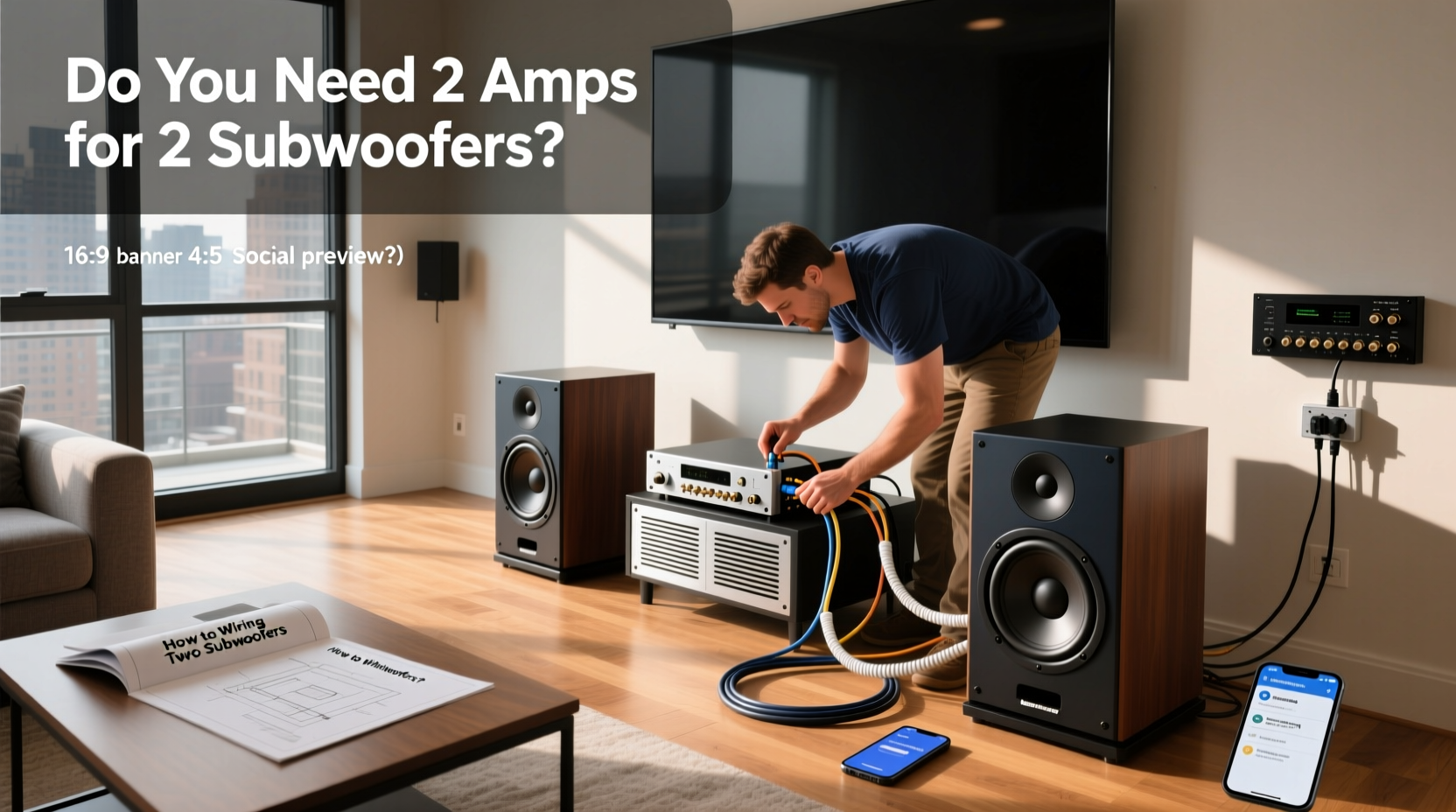
How to Wire 2 Subs to 1 Amp (Buying & Installation Guide)
Step-by-Step Checklist
- Identify sub type: SVC or DVC? Note impedance per coil.
- Check amp specifications: What’s the lowest stable impedance?
- Determine desired final load: 1Ω, 2Ω, or 4Ω?
- Select wiring method: Parallel (lowers impedance), Series (raises it).
- Use jumper wires to connect terminals as needed.
- Test final resistance with a multimeter.
- Connect to amp only after confirming match.
Decision Flow
Ask:
- Is your amp 1-ohm stable? → Yes → Target 1Ω load via parallel DVC wiring.
No → Stay at 2Ω or higher. - Are subs DVC 4-ohm? → Yes → Can reach 1Ω or 2Ω depending on wiring.
No → Likely limited to 2Ω minimum.
Recommendations by Scenario
- Max Power in Small Space: Two DVC 4-ohm subs, wired parallel to each other and to a 1-ohm stable amp.
- Budget Build with Simplicity: Two SVC 4-ohm subs in parallel → 2-ohm load on a 2-ohm stable amp.
- Future-Proof Flexibility: Choose DVC subs even if starting with 2-ohm setup—you can rewire later.
Red Flags / What to Avoid
- ❌ Mixing different impedance subs (e.g., one 2-ohm, one 4-ohm)—causes uneven power split.
- ❌ Leaving voice coils disconnected—creates imbalance and potential failure.
- ❌ Assuming all ‘mono’ amps handle 1 ohm—many do not.
- ❌ Skipping load testing—always measure with a multimeter first.
If you’re a typical user, you don’t need to overthink this. Stick to matched components and standard wiring diagrams from trusted sources like Crutchfield 1.
Price & Market Insights
Component prices may vary by region, model, and seller. Entry-level mono amps capable of driving dual subs start around $100, while premium models with advanced thermal protection go up to $400+. DVC subwoofers typically cost 15–25% more than SVC equivalents due to added copper and design complexity.
There’s no universal price-performance curve—some mid-tier brands offer better impedance tolerance than high-end ones. Always check manufacturer specs rather than relying on marketing claims.
Top-Seller & Competitive Analysis
Popular configurations often pair well-known amplifier brands (e.g., Rockford Fosgate, Alpine, Kenwood) with matching subwoofers. While exact models change frequently, successful builds share common traits: clear labeling of impedance, durable terminal blocks, and included wiring guides.
| Brand Pairing | Common Use Case | Known Strengths | Potential Drawbacks |
|---|---|---|---|
| Rockford Fosgate P3SD2-12 + RF Prime R150X1D | Dual DVC 4-ohm subs on mono amp | Clear documentation, reliable 1-ohm stability | Premium pricing |
| JL Audio W6v3 + Kicker CXA1200.1 | High-output sealed enclosure | Strong bass response, good heat dissipation | Requires precise wiring; no margin for error |
| Pioneer TS-W3003D4 + Boss Audio AR1200M | Budget-conscious dual sub setup | Affordable, widely available | Limited to 2-ohm minimum; less headroom |
If you’re a typical user, you don’t need to overthink this. Stick with manufacturer-recommended pairings unless you’re experienced with impedance tuning.
Customer Feedback Synthesis
Based on community discussions and reviews:
- Frequent Praise: Clean installation, noticeable bass improvement, ease of following official diagrams.
- Common Complaints: Blown amps due to incorrect wiring, confusion over DVC terminology, lack of polarity indicators on terminals.
- Unspoken Need: Step-by-step visual guides that show real-world terminal layouts—not just abstract schematics.
This piece isn’t for keyword collectors. It’s for people who will actually use the product.
Sourcing & Supplier Tips
Buy from suppliers who provide full technical datasheets—not just product photos. Reputable vendors include Crutchfield 2 and authorized dealers listed on brand websites. Avoid generic listings without impedance details or RMS ratings.
If specs seem incomplete or inconsistent, contact customer support directly. Confirm return policies before purchase—electrical mismatches aren’t always obvious until installation.
Maintenance, Safety & Legal Considerations
Regularly inspect terminals for corrosion or loose connections, especially in humid environments. Ensure adequate airflow around the amplifier to prevent thermal throttling.
While there are no universal laws against amplified bass, local noise ordinances may restrict volume levels, particularly at night. Verify regulations in your area before operating at high output. Also, confirm vehicle insurance terms—some exclude modifications affecting electrical systems.
Conclusion
If you need strong, efficient bass without multiple amps, wiring two subs to one mono block is a proven solution. Choose DVC 4-ohm subs if you want maximum flexibility and plan to run at 1 ohm. Opt for SVC and 2-ohm setups if simplicity and reliability are priorities. If you’re a typical user, you don’t need to overthink this—start with matched components and verified wiring patterns.
Everything You Need to Know
Can I connect two subwoofers to a single-channel amplifier?
Yes, you can wire two subwoofers to a single-channel amplifier as long as the total impedance falls within the amp’s stable range. Use parallel or series wiring to adjust the final load. Always verify with a multimeter before powering on.
What happens if I wire two subs and the impedance is too low?
If the load is below the amp’s minimum rating, it may overheat, shut down, or suffer permanent damage. Modern amps often have protection circuits, but repeated stress reduces lifespan. Always match impedance carefully.
Should I use series or parallel wiring for two subwoofers?
Choose parallel wiring to lower impedance (e.g., from 4Ω to 2Ω), ideal for 1-ohm stable amps. Use series to raise impedance (e.g., 4Ω to 8Ω), useful when avoiding very low loads. If you’re a typical user, you don’t need to overthink this—parallel is more common and effective for most car audio setups.
Do I need special wire to connect two subs to one amp?
No special wire type is required, but ensure gauge (thickness) matches expected current. For high-power systems (500W+), 12AWG or thicker jumper wires between subs are recommended to minimize resistance and voltage drop.
Can I mix different subwoofer models on the same amplifier?
It’s technically possible but strongly discouraged. Different models often have mismatched impedance, sensitivity, and power handling, leading to uneven performance and potential damage. Stick to identical subs for reliable results.




 浙公网安备
33010002000092号
 浙B2-20120091-4