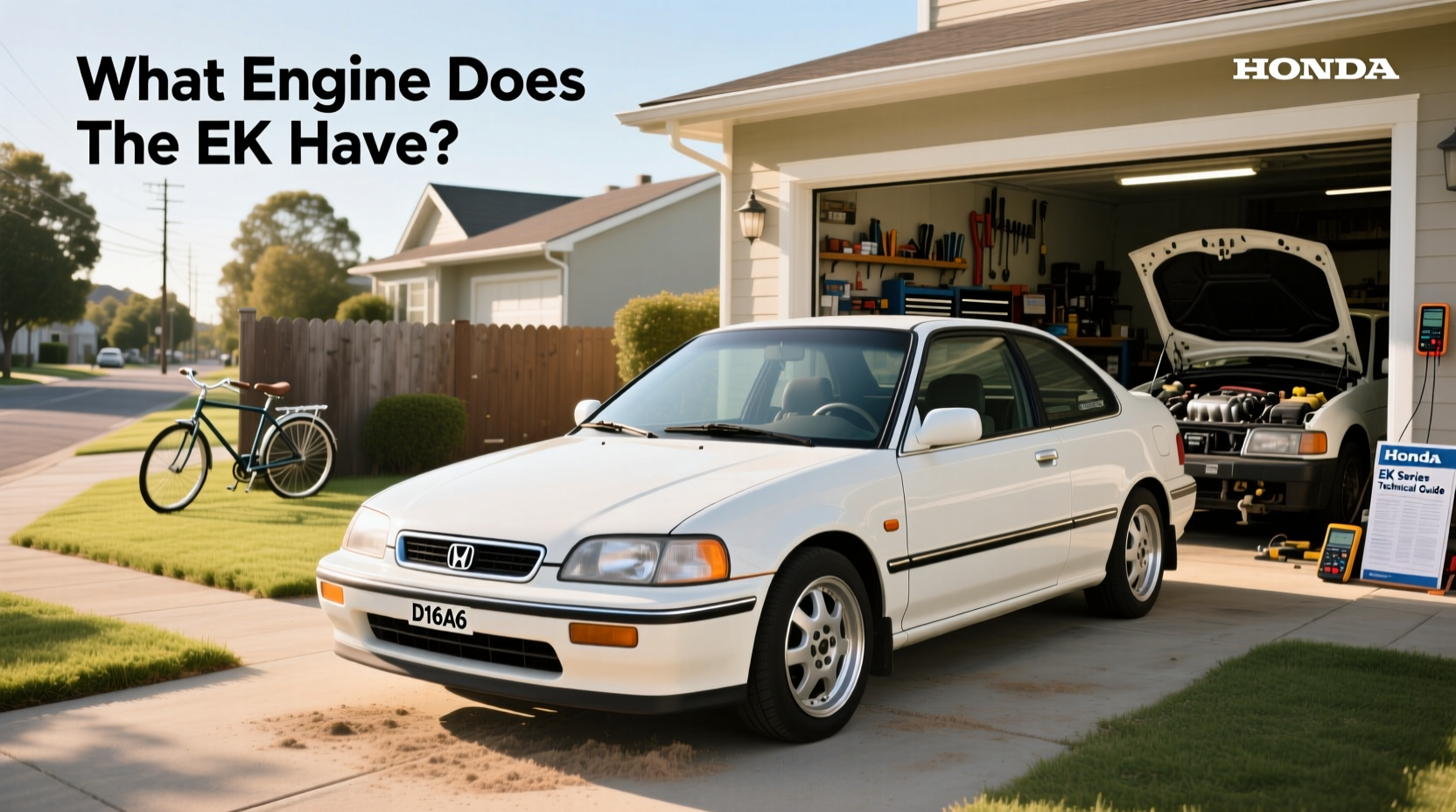
Short introduction
If you’re looking at a 2000 Honda Civic EK hatchback, here’s how to choose the right engine: North American models typically came with the D16Y7 (non-VTEC, ~106 hp) or D16Y8 (VTEC, ~127 hp). European and JDM versions may have the 1.4L D14Z2 or the high-revving B16B in the EK9 Type R. What to look for in an EK Civic engine? Focus on originality, oil consumption history, and whether VTEC engages cleanly. Avoid cars with mismatched VINs or swapped engines unless you’re prepared for verification work. If you’re a typical user, you don’t need to overthink this—most D-series engines are durable if maintained.
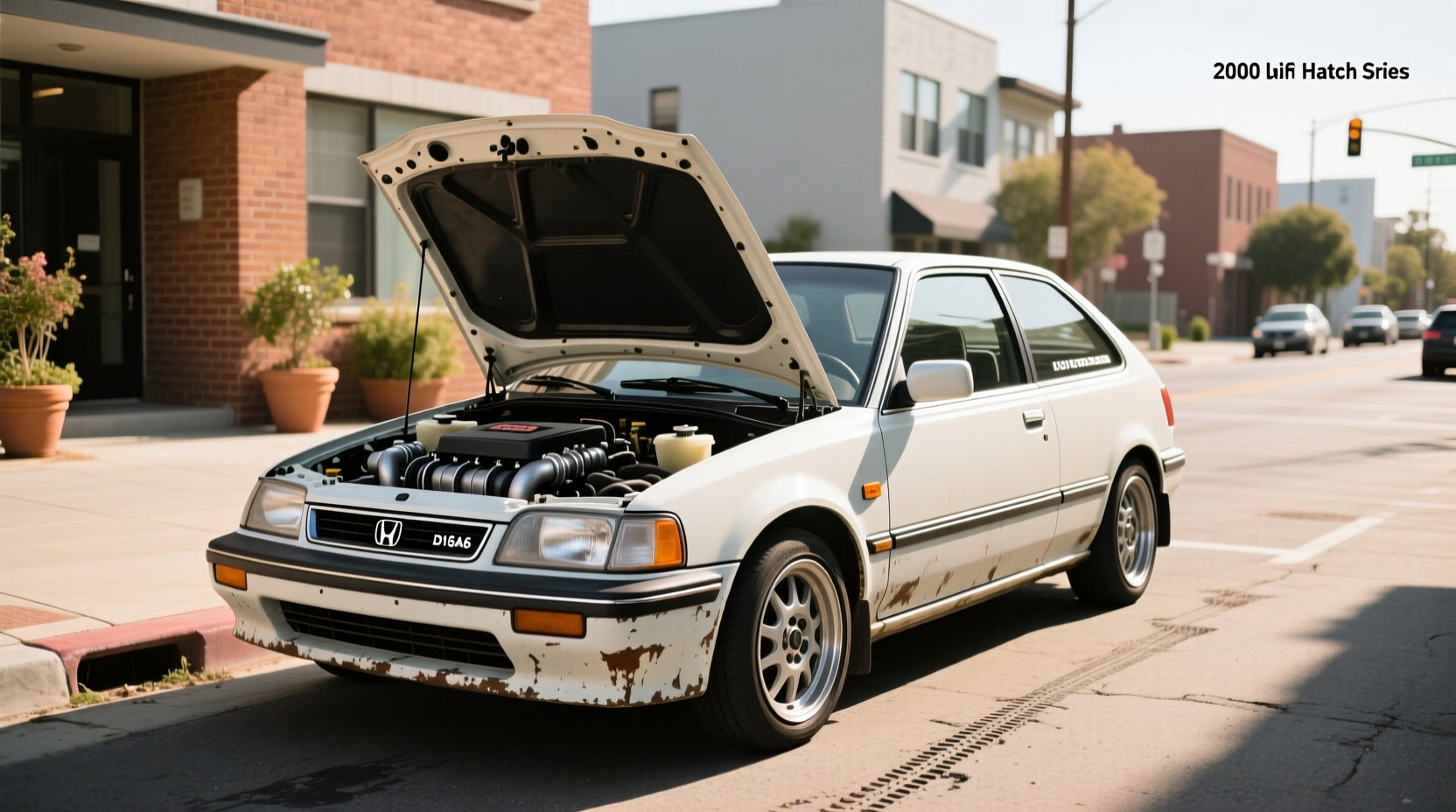
About the 2000 Honda Civic EK Hatchback
The 2000 Honda Civic EK is the sixth-generation hatchback model produced from 1996 to 2000. It replaced the EG series and brought updated styling, improved aerodynamics, and refined chassis dynamics. Available primarily as a 3- or 5-door hatchback, the EK platform was sold globally but varied significantly by region in trim, features, and engine options. In North America, it was offered as the DX, LX, HX, and EX trims. In Japan and Europe, the lineup included the performance-focused EK9 Type R—a lightweight, DOHC VTEC-powered hot hatch that remains iconic.
The EK chassis is known for its simplicity, fuel efficiency, and aftermarket support. Its compact size and low curb weight make it ideal for city driving and modification projects alike. If you’re a typical user, you don’t need to overthink this—many owners keep these cars stock and enjoy years of trouble-free commuting.
Why the EK Civic Is Gaining Popularity
Lately, interest in the 2000 Honda Civic EK has grown—not just among enthusiasts but also budget-conscious buyers and first-time DIY mechanics. Over the past year, used compact hatchbacks have gained attention due to rising fuel prices and demand for affordable transportation. The EK stands out because of its proven reliability, ease of repair, and widespread parts availability.
Another factor: social media and online communities have revived appreciation for '90s JDM culture. Platforms like Reddit 1 and Facebook groups frequently discuss EK builds, maintenance tips, and engine swaps. This visibility has made previously overlooked models more desirable. However, popularity doesn't always mean value—it pays to distinguish between sentiment and substance.
This piece isn’t for keyword collectors. It’s for people who will actually use the product.
Types and Variants
Engine options for the 2000 Honda Civic EK vary widely by market. Below are the most common configurations:
D16Y7 (1.6L SOHC non-VTEC)
Found in base DX and LX trims in North America. Produces around 106 horsepower. Simple, robust, and easy to maintain.
- ✅ Pros: Excellent fuel economy (~35 mpg highway), low repair cost, minimal complexity
- ❌ Cons: Lacks power for spirited driving, no VTEC engagement
When it’s worth caring about: If you prioritize reliability and low ownership costs.
When you don’t need to overthink it: For daily commuting or beginner mechanics—this engine lasts decades with basic care.
D16Y8 (1.6L SOHC VTEC)
Standard in the EX trim. Delivers approximately 127 horsepower thanks to VTEC technology that kicks in around 4,600 RPM.
- ✅ Pros: Noticeable mid-range punch, still efficient (~32 mpg highway), compatible with many D-series upgrades
- ❌ Cons: Slightly higher oil consumption than non-VTEC variants, VTEC solenoid can fail over time
When it’s worth caring about: If you want a balance of performance and practicality.
When you don’t need to overthink it: Most users won’t notice long-term issues if routine maintenance is followed.
D16Y5 (1.6L VTEC-E)
Used in the HX trim, optimized for fuel efficiency using lean-burn technology.
- ✅ Pros: Up to 40 mpg on highway, great for eco-conscious drivers
- ❌ Cons: Underpowered, narrow powerband, less responsive in hilly terrain
When it’s worth caring about: Only if maximizing fuel economy is your top priority.
When you don’t need to overthink it: Unless you drive long distances regularly, the real-world savings may not justify the lack of responsiveness.
B16A2 / B16B (1.6L DOHC VTEC)
Available only in specific markets. The B16A2 powered the EM1 Si coupe (not hatchback), while the B16B was exclusive to the JDM EK9 Type R, producing up to 182 hp.
- ✅ Pros: High specific output, redline at 8,400 RPM, legendary tuning potential
- ❌ Cons: More expensive to repair, requires precise maintenance, rare outside Japan/Europe
When it’s worth caring about: If you're building a track car or value high-RPM performance.
When you don’t need to overthink it: For average drivers, the extra cost and complexity outweigh benefits.
D14Z2 / D14Z6 (1.4L SOHC)
Common in European base models. Smaller displacement means lower power (~88–90 hp) but better tax efficiency in some countries.
- ✅ Pros: Cheaper to insure and tax in certain regions, adequate for city use
- ❌ Cons: Struggles with highway merging, ages poorly under heavy load
When it’s worth caring about: Only in markets where engine size affects registration costs.
When you don’t need to overthink it: Not recommended for frequent highway use or towing.
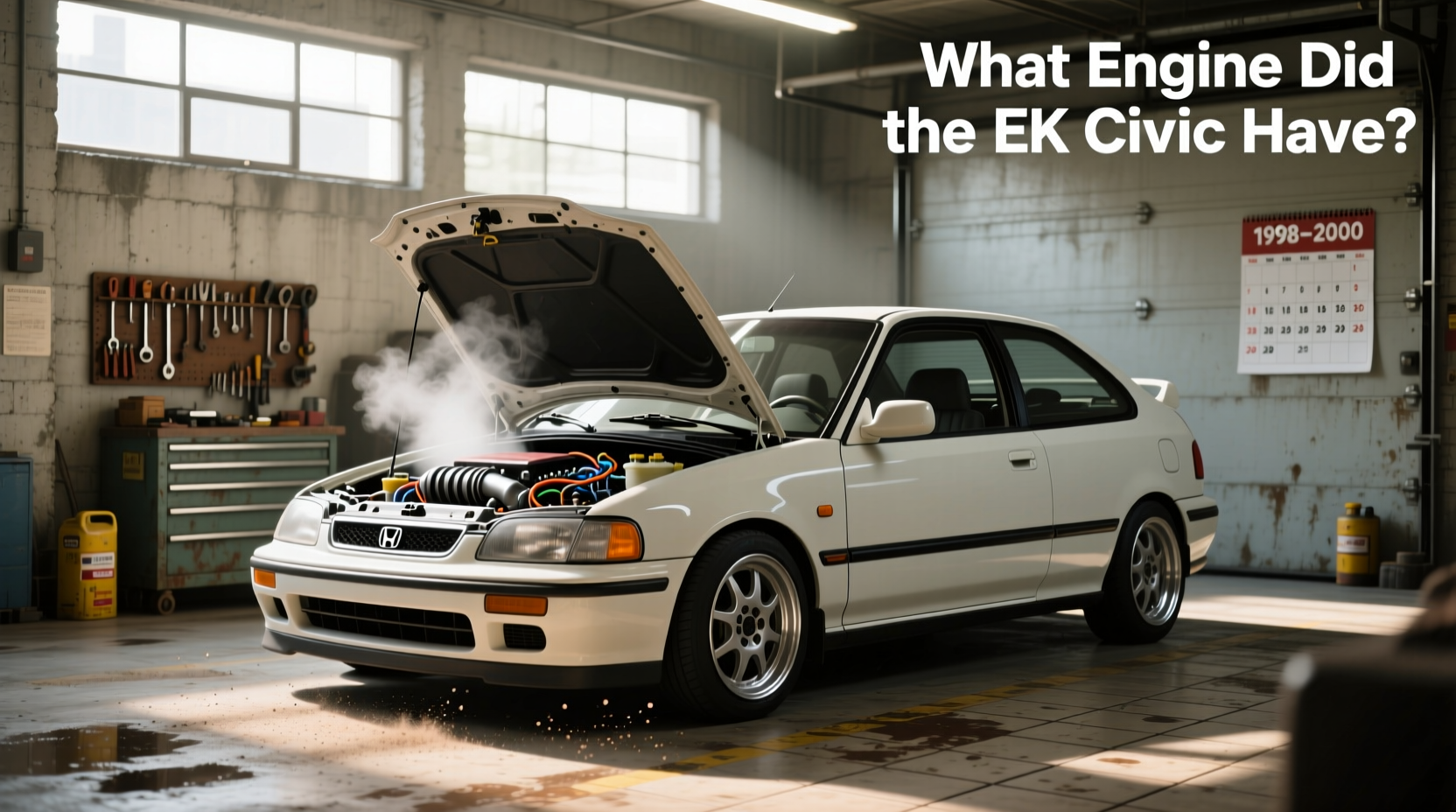
Key Features and Specifications to Evaluate
When assessing a 2000 Civic EK engine, focus on verifiable mechanical traits—not badges or claims.
- Engine Code Location: Check the block near the exhaust manifold. Real D16Y8 engines say "D16Y8" cast into metal.
- VTEC Engagement: Drive above 4,500 RPM. A smooth transition and slight surge indicate working VTEC.
- Oil Consumption: Ask for service records. Burning more than a quart per 1,500 miles suggests valve seals or piston rings are failing.
- Coolant Leaks: Inspect the thermostat housing and water pump—common failure points on older D-series engines.
- Timing Belt Condition: Should be replaced every 60,000–100,000 miles. Interference engine—failure can destroy internals.
If you’re a typical user, you don’t need to overthink this. A clean CARFAX report 2 and recent timing belt service go further than dyno numbers.
Pros and Cons
| Aspect | Advantages | Drawbacks |
|---|---|---|
| Reliability | D-series engines often exceed 200k miles with basic maintenance | Older units may burn oil; check compression if no history |
| Fuel Efficiency | 30–40 mpg depending on engine and driving style | Lower highway economy with VTEC if driven aggressively |
| Parts Availability | Aftermarket support is extensive; OEM parts still available | JDM-specific parts (like B16B) require import or salvage yards |
| Tuning Potential | D16Y8 responds well to intake/exhaust and ECU tweaks | Significant gains require head work or forced induction—adds cost |
| Resale Value | Stock EX models hold value better than DX/LX | Modified cars often sell below expectations unless professionally built |
How to Choose the Right EK Engine (Buying Guide)
Follow this step-by-step checklist to avoid costly mistakes.
Step-by-Step Checklist
- Verify the engine code on the block matches the advertised type.
- Request maintenance records—especially for timing belt and fluids.
- Test drive above 4,500 RPM to confirm VTEC engagement (if applicable).
- Inspect under hood for oil leaks, cracked hoses, or corrosion.
- Run a compression test or get a pre-purchase inspection.
- Check title status and VIN history via services like Carfax 3.
Decision Flow
- Need reliability and low cost? → D16Y7 (DX/LX)
- Want a bit more power without sacrificing efficiency? → D16Y8 (EX)
- Interested in modifications or performance? → Confirm original B16B (EK9) or plan a swap
- Driving mostly in city with tight budgets? → Consider D14Z2 (Europe only)
Recommendations by Scenario
- First car for teen: D16Y7 – simple, cheap to insure, hard to break
- Daily commuter: D16Y8 – responsive enough, still economical
- DIY project: Either D16Y8 or sourced B16B – both offer learning opportunities
- Collector interest: Authentic EK9 with B16B – verify JDM origin and documentation
Red Flags / What to Avoid
- Engine sounds rough or knocks at idle
- No service history or vague answers from seller
- VIN and engine number don’t match (possible theft or salvage rebuild)
- Recent paint job with signs of rust underneath
- Claims of "turbocharged" without visible intercooler or upgraded cooling
If you’re a typical user, you don’t need to overthink this. A clean, original example beats a modified one 9 times out of 10.
Price & Market Insights
Prices for 2000 Honda Civic EK hatchbacks vary significantly by region, condition, and engine type. In North America, unmodified DX/LX models typically sell between $1,500 and $3,500. EX trims with documented maintenance range from $3,000 to $5,000. True EK9 Type Rs, especially those imported from Japan, can reach $10,000+ depending on mileage and authenticity.
Values may vary by region/model/seller. Always check local listings and compare similar trims. Enthusiast forums and classifieds like Bring a Trailer or regional Facebook groups often reflect realistic pricing. Edmunds 4 provides baseline data but may not reflect current collector trends.
Top-Seller & Competitive Analysis
The 2000 Civic EK competes indirectly with other compact hatchbacks of the era, including the Toyota Corolla EE110, Nissan Sunny (P11), and Volkswagen Golf Mk4.
| Model | Engine | MPG (Combined) | Ownership Cost (Est.) | Tuning Support |
|---|---|---|---|---|
| Honda Civic EK (D16Y8) | 1.6L VTEC I4 | 30 | Low | Excellent |
| Toyota Corolla EE110 | 1.6L I4 (4A-FE) | 28 | Very Low | Limited |
| Nissan Sunny P11 | 1.4L/1.6L I4 | 27–29 | Low | Poor |
| VW Golf Mk4 (2.0L) | 2.0L I4 (AZG) | 24 | Moderate | Good |
Note: While the Golf offers more cabin space and modern features, it comes with higher maintenance demands. The Corolla wins on simplicity but lacks driving engagement. The Civic strikes a middle ground—practical yet fun.
Customer Feedback Synthesis
Based on owner discussions across Reddit, Facebook, and enthusiast sites:
- Highly Praised: Longevity of D-series engines, ease of DIY repairs, low fuel costs, responsive handling for size
- Common Complaints: Thin factory insulation (noisy at highway speeds), aging interiors crack in sun, weak stock audio systems, rust in northern climates
- Surprising Insight: Many owners report better real-world MPG than EPA estimates—especially with manual transmission and light footed driving.
If you’re a typical user, you don’t need to overthink this. Most complaints stem from age-related wear, not design flaws.
Sourcing & Supplier Tips
For replacement parts:
- OEM components: Use dealerships or authorized distributors. Verify part numbers before ordering.
- Aftermarket: Reputable brands include NTK (oxygen sensors), Denso (spark plugs), and SKF (seals/bearings).
- Performance parts: Brian Crower offers pistons, cams, and rods for D16 builds 5.
- Used engines: Salvage yards like b-parts.com list complete units with mileage data 6.
Always verify return policies and warranty terms. Parts may vary by region/model—double-check compatibility.
Maintenance, Safety & Legal Considerations
Regular maintenance extends life significantly. Key intervals:
- Oil change: Every 5,000 miles or annually
- Timing belt: Replace every 60,000–100,000 miles
- Coolant flush: Every 3–5 years
- Brake fluid: Every 2 years
Safety-wise, the 2000 EK lacks modern driver aids (ABS optional, no airbags in base trims). It hasn’t been crash-tested by IIHS. Drive defensively and maintain brakes and tires diligently.
Legally, modifications like turbocharging or engine swaps must comply with local emissions and safety regulations. Verify rules through your department of motor vehicles. This piece isn’t for keyword collectors. It’s for people who will actually use the product.
Conclusion
If you need a dependable, low-cost commuter, choose a well-maintained DX or LX with the D16Y7. If you want slightly better performance without compromising reliability, go for the EX with the D16Y8. Enthusiasts seeking a project should source a verified EK9 or accept the cost of a proper B-series swap. If you’re a typical user, you don’t need to overthink this—focus on vehicle history and mechanical condition over badge appeal.
Everything You Need to Know
❓ What engine does the 2000 Honda Civic EK hatchback have?
The 2000 Honda Civic EK hatchback came with several engines depending on market and trim. In North America, common engines include the 1.6L D16Y7 (non-VTEC, ~106 hp) in DX/LX models and the D16Y8 (VTEC, ~127 hp) in EX trims. European models often had a 1.4L D14 engine, while the JDM EK9 Type R featured the high-performance 1.6L B16B DOHC VTEC engine producing up to 182 hp.
❓ How do I know if my EK has a D16Y8 engine?
Locate the engine code stamped on the front of the engine block, near the exhaust manifold. If it reads "D16Y8," that confirms the engine type. You can also check the vehicle identification number (VIN) and cross-reference it with Honda's database or service manuals. Additionally, the EX trim usually came with the D16Y8, while DX/LX models had the D16Y7.
❓ Is the D16Y8 engine reliable?
Yes, the D16Y8 is considered highly reliable when properly maintained. With regular oil changes, coolant flushes, and timing belt replacements, it can last well beyond 200,000 miles. Some common issues include VTEC solenoid failure and minor oil seepage, but these are manageable with routine checks. If you’re a typical user, you don’t need to overthink this—just stick to basic maintenance.
❓ Can I turbocharge a D16Y8 engine?
Yes, the D16Y8 can be turbocharged, but it requires supporting modifications such as upgraded fuel injectors, ECU tuning, intercooling, and possibly forged internals for higher boost levels. Many DIY builders achieve 180–220 hp safely. However, improper installation can lead to engine damage. Verify local laws before modifying, and consider professional help for complex setups.
❓ Is the EK9 Type R engine interchangeable with other EK models?
The B16B engine from the EK9 Type R can be swapped into other EK chassis, but it requires a compatible transmission, wiring harness, ECU, and mounting brackets. While popular in the tuning community, the swap is labor-intensive and may affect registration in some regions. Ensure all components are legally compliant and properly documented.




 浙公网安备
33010002000092号
 浙B2-20120091-4